
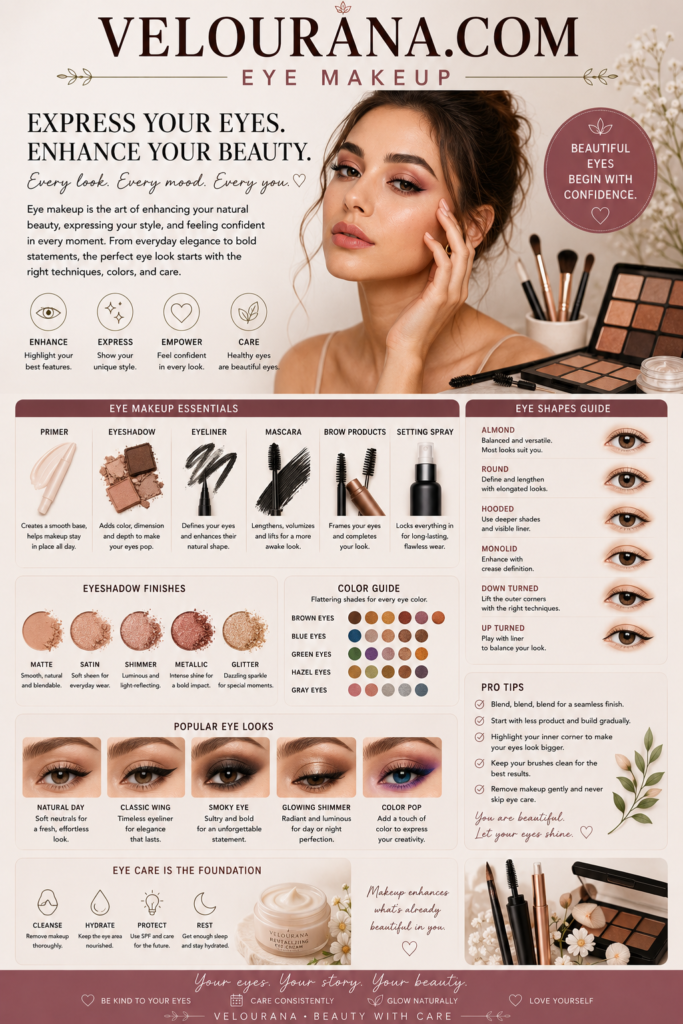
CATEGORY: Waterline Makeup
Waterline makeup occupies one of the smallest areas of the face, yet its influence on the appearance of the eyes can be remarkably powerful. A narrow line of color placed along the inner rim can make lashes appear denser, deepen the entire eye area, create a smoky intensity, visually alter the apparent size of the eyes, or introduce an unexpected flash of color. Unlike conventional eyeliner, which is usually applied above or below the lash line, waterline makeup works directly within the visual architecture of the eye. The result can be almost invisible as a technique while remaining unmistakable in its effect.
This is precisely what makes the waterline so interesting. It does not behave like an ordinary strip of skin. It is naturally moist, extremely close to the eye itself, and constantly affected by blinking and tears. A formula that performs beautifully across the upper lid may disappear rapidly when transferred to the inner rim. Application also demands considerably more restraint than drawing a wing or smudging a pencil beneath the lashes. There is very little room for error, and comfort must always remain more important than intensity.
Waterline makeup therefore combines aesthetics with precision. Understanding what different shades do, how texture influences wear, and how the waterline interacts with the surrounding lashes allows the technique to become much more sophisticated than simply placing a dark pencil inside the eye.
Why Such a Small Line Changes the Entire Eye
The visual impact of waterline makeup begins with contrast. The natural waterline is generally lighter than the lash line surrounding it. When a darker pigment is introduced, that light interruption is reduced and the eye becomes more strongly framed. The lashes can appear to begin closer to the eye itself, creating an impression of greater density even when no additional mascara has been applied.
Black is the most dramatic example. A deep black waterline visually connects the eye with the dark roots of the lashes and can produce an immediate sense of intensity. This effect explains its enduring association with smoky eye makeup, evening beauty and deliberately defined looks. The technique does not necessarily require elaborate eyeshadow. Even against relatively bare lids, a dark inner rim can provide enough contrast to make the eyes appear substantially more finished.
The same principle changes when the shade becomes softer. Brown, charcoal, muted plum and deep navy can define the inner rim without producing quite the same visual weight as black. Instead of creating an obvious dark boundary, they can reinforce the eye's natural shadows. This is particularly useful when the desired finish is polished rather than overtly dramatic.
Light shades work in the opposite direction. Beige, cream and softly flesh-toned pencils maintain or exaggerate the brightness of the inner rim. Because the waterline is not visually closed by a dark border, the visible eye can seem more open. Pure white creates a much stronger contrast and can produce a graphic or deliberately doll-like effect, while warmer nude shades usually integrate more naturally with the complexion.
These effects are optical rather than structural. Makeup cannot literally enlarge or reduce the eye, but it can change the boundaries that the viewer perceives. Waterline makeup is especially effective because those boundaries sit immediately beside the white of the eye and the iris, where differences in brightness are highly noticeable.
The upper and lower waterlines also contribute differently. Lower-waterline color is more immediately visible and therefore has a stronger decorative presence. Upper-waterline definition can be much more discreet, particularly when its purpose is to eliminate pale spaces beneath the upper lashes. Used carefully, it can make the lash base look fuller without producing an obvious conventional eyeliner line across the lid.
The sophistication of waterline makeup comes from recognizing that the technique is not inherently dark, smoky or dramatic. It is simply another way of controlling contrast around the eye.
Choosing Color According to the Desired Effect
Color selection determines whether waterline makeup becomes visible decoration or nearly invisible enhancement. Black remains the classic choice because it offers maximum contrast. Against lighter eye makeup, it creates a strong frame; within smoky makeup, it helps eliminate gaps that could otherwise interrupt the depth of the look. When black is repeated along both the lash line and waterline, the separate elements can merge into a continuous field of definition.
Yet maximum darkness is not always necessary. Dark brown often produces a more forgiving result because it retains definition while introducing less visual severity. Chocolate, espresso and deep neutral browns can work particularly well with bronzed, softly smoky or understated makeup. Charcoal offers another intermediate option, maintaining cool depth without the absolute density of black.
Colored dark tones create subtler transformations. Deep navy can make the whites of the eyes appear brighter through contrast while still reading almost like a neutral from a distance. Plum and aubergine can bring warmth or richness to the eye area without requiring conspicuously purple makeup across the lids. Forest green, burgundy and other near-neutral colors can perform similarly when chosen in sufficiently deep values.
Brighter colors move waterline makeup into a more expressive category. Cobalt, turquoise, emerald, violet and other saturated shades can transform otherwise minimal makeup because the color sits directly beside the iris. A bright lower waterline paired with understated lids allows the color to become the central feature without covering a large area of the face. This concentration can make vivid shades surprisingly wearable: the pigment is intense, but the physical amount of it remains small.
Pastel tones produce a different visual language. Pale blue, lavender, mint or soft pink can create an ethereal or editorial impression, particularly when the rest of the makeup repeats similar tonal ideas. Their success depends heavily on opacity because a translucent pastel may struggle against the naturally moist surface of the waterline.
Nude shades are among the most practical choices for subtle eye-opening effects. A beige or flesh-toned pencil close to the natural color of the waterline can neutralize visible redness and make the eye area appear fresher without announcing itself as eyeliner. The result is generally softer than white because it preserves the illusion that no obvious pigment has been added.
White, by comparison, is intentionally noticeable. It creates a sharp brightness that can suit graphic, retro, theatrical or highly stylized makeup. The difference between white and nude illustrates an important principle: two light shades may both brighten the waterline, but they do not communicate the same aesthetic.
Color should therefore be selected according to the relationship between the waterline and the complete eye look rather than according to a universal rule. The inner rim can disappear into surrounding darkness, contrast dramatically with it, echo the iris, complement the eyeshadow or become the single unexpected color in an otherwise neutral face.
Formula Matters More on the Waterline
The waterline is one of the most demanding environments for eye makeup. Its moisture can interfere with pigment adhesion, while blinking and natural tear production continually challenge the formula after application. For this reason, the texture and intended use of a pencil matter as much as its color.
A waterline product needs enough softness to deposit pigment without excessive pressure. A pencil that requires repeated dragging may be uncomfortable and can encourage unnecessary manipulation of a sensitive area. At the same time, extreme creaminess can create another problem: a formula that remains very mobile may transfer or disappear quickly.
The ideal balance is usually a smooth initial application followed by reasonably secure setting. Waterproof or long-wearing eye pencils are often chosen for this reason, although performance varies considerably among formulas. Some products create intense color immediately but fade rapidly in moisture; others initially seem slightly less creamy yet establish a more durable film.
Products should be intended and labeled as suitable for use around the eye, and manufacturer instructions concerning placement should be respected. Not every eyeliner formula designed for the external eyelid is necessarily intended for the inner rim. Glitter particles, unsuitable cosmetic products or formulas intended for other parts of the face should not be improvised for waterline application simply because their color is attractive.
Freshness and cleanliness are especially important because of the proximity to the eye. Eye pencils should not be shared. A pencil that has changed in smell, texture or appearance should not be treated as worth salvaging for such a sensitive location. Sharpenable pencils have the practical advantage of exposing a fresh surface when sharpened appropriately, while retractable formats can be convenient when maintained carefully.
Contact lens wearers and people whose eyes are particularly sensitive may find that waterline makeup is not consistently comfortable. Cosmetic preference should never override irritation. Persistent redness, pain, unusual discharge, swelling or significant discomfort is a reason to stop using the product and seek appropriate professional advice rather than repeatedly testing additional cosmetics.
This practical side of waterline makeup is not separate from artistry. Comfortable makeup usually looks better because it does not provoke excessive watering, rubbing or blinking that destroys the finish. Technical success begins with respecting the surface on which the product is being used.
Application Is About Control Rather Than Pressure
Waterline application is most successful when it is deliberate and economical. The goal is to place pigment precisely rather than repeatedly work over the area until it becomes saturated.
Before beginning, eye makeup elsewhere should be considered. If a smoky look is being built, the waterline may be completed after much of the surrounding shadow so that the final depth can be judged accurately. With minimal makeup, waterline color can be introduced earlier and allowed to determine how much additional definition is actually needed.
The lower waterline is usually the easiest area to access. Looking slightly upward can expose the inner rim without requiring aggressive pulling. The pencil can then be passed gently along the desired section. Some looks benefit from full coverage from inner to outer corner, while others require color only through the outer portion. That distinction can change the apparent weight of the result considerably.
A fully darkened lower waterline creates continuity and drama. Restricting the pigment toward the outer half can retain brightness near the tear duct while still giving the eye stronger definition. This partial placement can also connect naturally with shadow concentrated around the outer corner.
Upper-waterline work is more discreet and requires particularly careful handling. The purpose is often to darken the visible spaces beneath the upper lashes rather than create a decorative line. When successful, the technique makes the lash roots appear denser and can strengthen mascara without requiring a thick line on the lid. Because the area is less visible during application, there is little benefit in rushing or forcing access.
Repeated pressure is not a sign of better application. If a formula cannot deposit adequately without persistent rubbing, another product may be more appropriate. The inner rim should never be treated like a resistant canvas that needs to be scrubbed into submission.
Once pigment is placed, the eye may naturally water slightly. Allowing the makeup to settle before immediately adding more can prevent unnecessary accumulation. A single controlled pass with a well-performing formula can often look cleaner than numerous layers.
The finished effect should also be evaluated with the eye in its normal position. A line that appears imperfect while the waterline is deliberately exposed may look completely seamless once the gaze returns forward. Waterline makeup is designed to function as part of the whole eye, not as an isolated stripe examined from centimeters away.
Integrating the Waterline with Eyeliner, Shadow and Mascara
The most refined waterline looks rarely depend on the inner rim alone. Their strength comes from the way the color communicates with the lashes, eyeshadow and surrounding liner.
With smoky eyes, a dark waterline can close the pale gap between the eyeball and the surrounding shadow. This creates the impression that the darkness wraps around the eye rather than sitting only on the external skin. Smudged shadow beneath the lower lashes then provides a transition between the strong inner line and the complexion.
The softness of that transition matters. A black waterline combined with completely bare skin beneath the lashes creates a crisp and sometimes intentionally graphic contrast. When shadow is diffused below it, the same black pencil becomes part of a smoky gradient. Neither approach is inherently better; they simply produce different visual structures.
For understated makeup, the waterline can support mascara without demanding visible eyeshadow. A brown or charcoal upper-waterline pencil can deepen the roots while the lid itself remains clean. The viewer notices stronger lashes rather than obvious eyeliner. This is one of the most useful applications of the technique for makeup intended to look restrained.
Light lower-waterline colors work particularly well when balanced with definition at the lash roots. A nude inner rim paired with mascara and softly shaded outer lashes can create openness without leaving the eye visually unfinished. If every surrounding element is also extremely pale, the result may lose structure; a small amount of contrast elsewhere can make the brightness more convincing.
Bright waterline colors can be treated as either an accent or part of a broader color story. A turquoise inner rim beneath neutral bronze shadow creates deliberate contrast. The same turquoise repeated subtly in another part of the eye makeup produces harmony. A violet waterline beside taupe shadow may provide a controlled flash of color, while violet lids and violet waterline produce a much more immersive monochromatic effect.
Mascara is particularly important because waterline color sits directly beside the lashes. Dark mascara can reinforce black, brown or jewel-toned waterlines and provide separation between pale waterline shades and the rest of the eye. Colored mascara can create more experimental relationships, especially when it contrasts with the inner-rim shade.
The central principle is integration. Waterline makeup becomes more sophisticated when its purpose is clear within the complete design.
Wear, Fading and the Reality of a Moist Surface
Even excellent waterline makeup behaves differently from eyeliner applied to dry external skin. Some degree of fading may occur because the area is continuously exposed to moisture. Expectations should reflect that reality.
Long-wearing formulas can improve durability, but the performance of a product is also influenced by individual tear production, eye sensitivity and environmental conditions. A pencil that remains intact for one person may fade much sooner on another. This does not necessarily indicate poor application.
Layering excessively is not always the solution. Heavy product accumulation can become uncomfortable and may migrate. A formula that delivers strong pigment efficiently is generally preferable to repeatedly building a product that is poorly suited to the location.
The way fading appears also matters. Some pencils disappear gradually and evenly, leaving a softer version of the original look. Others become patchy. For everyday use, graceful fading can sometimes be more important than maximum initial intensity because the makeup remains aesthetically coherent as the hours pass.
Dark shades tend to make uneven wear more noticeable because the contrast between pigment and the natural waterline is strong. Nude pencils can be more forgiving, although their brightening effect naturally diminishes as they fade. Vivid colors may require occasional reassessment because a fragmented bright line can become more obvious than a fading neutral.
Waterline makeup should not be judged by exactly the same durability expectations as a wing drawn across a prepared eyelid. The location itself changes the performance conditions. Successful wear is therefore a combination of appropriate formulation, restrained application and realistic expectations.
From Invisible Enhancement to Editorial Color
One of the greatest strengths of waterline makeup is its range. The same technique can support almost imperceptible everyday makeup or become the focal point of an editorial eye.
At the subtle end, upper-waterline definition can make lashes appear naturally thicker. Nothing obvious needs to be visible on the lid. Combined with mascara, softly groomed brows and restrained complexion makeup, the effect can be polished without looking heavily lined.
A nude lower waterline offers another understated direction. Rather than creating darkness, it preserves brightness and can make tired-looking eye makeup feel cleaner. When the shade closely resembles the natural inner rim, the intervention is difficult to identify.
Classic glamour often moves toward black. A deep inner rim paired with sculpted shadow and generous lashes gives the eye density and drama. The same black pencil can become grungier when combined with deliberately imperfect smudging, or more polished when the surrounding makeup is carefully blended and symmetrical.
Color expands the possibilities further. A saturated waterline can act almost like jewelry for the eye: a narrow but vivid accent surrounded by quieter tones. Because the color occupies such a small area, shades that might feel overwhelming across the entire eyelid can become surprisingly sophisticated.
Graphic beauty can exploit contrast even more deliberately. White against dark lashes, cobalt beneath an otherwise bare lid, or a pale pastel surrounded by deeper shadow can make the waterline itself an intentional design element. In these cases, the inner rim is no longer merely supporting conventional eyeliner. It becomes the eyeliner statement.
This versatility explains why waterline makeup persists across changing beauty trends. It is not tied to one aesthetic. It can belong to minimalism, classic glamour, smoky makeup, alternative beauty, colorful experimentation or editorial styling depending on the choices surrounding it.
The Precision of a Nearly Invisible Detail
Waterline makeup demonstrates how beauty techniques do not need to occupy a large area to have substantial visual influence. A few millimeters of pigment can alter the perceived density of the lashes, the brightness of the eye, the strength of a smoky look or the entire color balance of the face.
Its effectiveness depends on understanding restraint. Darker does not automatically mean better, more layers do not automatically mean longer wear, and complete coverage is not necessary for every eye look. Sometimes the most effective placement is only along the upper inner rim. Sometimes a soft nude lower waterline creates more impact than black. Sometimes a vivid blue line provides all the color an otherwise neutral composition needs.
The waterline is therefore best approached as a strategic part of eye design. Shade, texture, placement and surrounding makeup should work together rather than follow a rigid formula. When they do, the technique can appear effortless even though its effect has been carefully constructed.
Perhaps that is the distinctive beauty of waterline makeup: much of its work remains hidden. It can strengthen the eye without announcing exactly how, intensify lashes without adding visible thickness to the lid, or introduce color in a place that feels unexpectedly intimate and precise.
Within such a narrow space, there is an extraordinary amount of creative possibility.
THE END VELOURANA
 Discover More From Our Family of Websites
 ZodiacBearing (Astrology, Tarot, Numerology, Angel Numbers & Spiritual Guidance)
 Velourana (Beauty, Makeup, Hair Care, Skincare & Beauty Tips)
 HavenBearing (Home, Living, Organization, Décor & Everyday Inspiration)
 PawBearing (Pet Care, Dog Breeds, Animal Health, Training & Pet Products)
 PsyCatherine (Notes From the Journal of a Psychologist on Real Life)

