
CATEGORY: UVB Protection
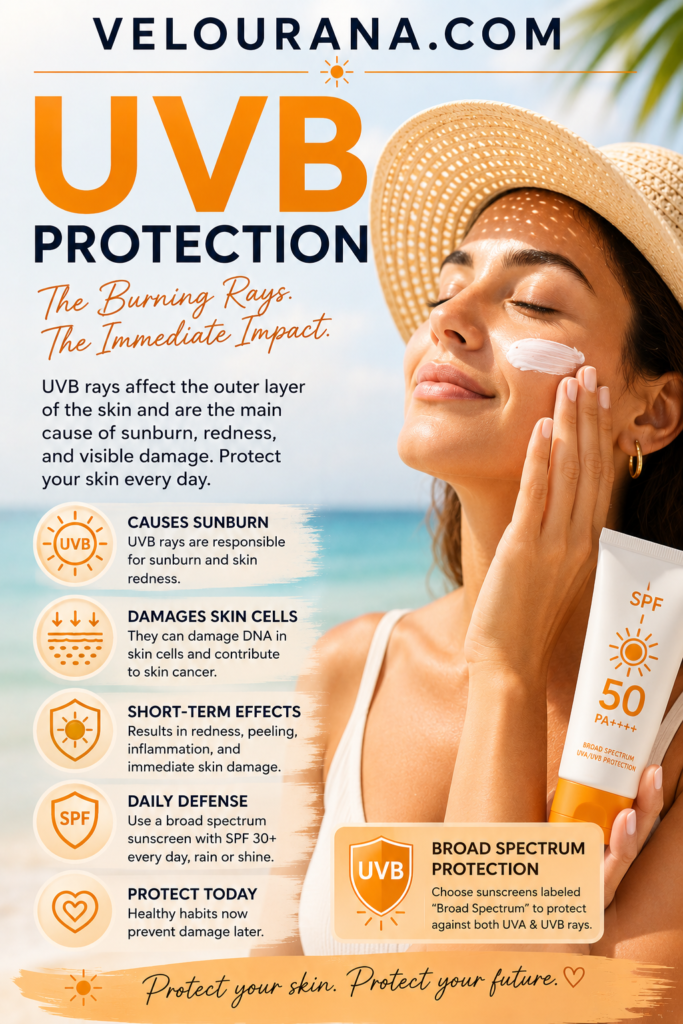
Sunburn is one of the clearest signs that the skin has received too much ultraviolet radiation. The redness, heat, tenderness and sometimes peeling that follow excessive sun exposure are difficult to ignore, which is why many people first become interested in sunscreen after experiencing a painful burn. Behind much of this immediate reaction is ultraviolet B radiation, better known as UVB.
UVB is only one part of the ultraviolet spectrum that reaches our skin, but it is an extremely important one. It plays a major role in sunburn and contributes to the development of skin cancer. Its intensity changes according to the time of day, season, latitude, altitude and atmospheric conditions, which means that UVB exposure can vary dramatically from one situation to another.
Understanding UVB protection therefore involves more than knowing that sunscreen should be worn at the beach. It means understanding what SPF actually measures, why a high SPF does not give unlimited time in the sun, how application quantity affects protection, and why clothing, shade and sensible exposure habits remain important even when an excellent sunscreen is being used.
For anyone interested in skincare, UVB protection also provides a useful foundation for understanding sunscreen labels. SPF is one of the most familiar numbers in beauty, yet it is also one of the most frequently misunderstood. Once its purpose is clear, choosing and using sunscreen becomes much more logical.
What UVB Radiation Does to the Skin
Ultraviolet radiation is invisible. We cannot see UVB reaching the skin, and we cannot reliably judge its intensity from the temperature. What we often notice instead is the biological response that appears after excessive exposure.
Sunburn is an inflammatory reaction to ultraviolet damage. Depending on the amount of exposure and the individual's skin, redness may appear several hours after being outside rather than immediately. More severe burns can involve significant pain, swelling or blistering.
The delayed nature of sunburn is important because it explains why using the skin as an exposure meter does not work particularly well. Someone can remain outdoors feeling completely comfortable while damage is already occurring. By the time visible redness provides a warning, the excessive exposure has already happened.
UVB affects cells in the epidermis, the outer portion of the skin, and can damage DNA. The body has mechanisms for responding to and repairing cellular damage, but those systems are not perfect. Repeated ultraviolet damage contributes to mutations that can eventually play a role in the development of skin cancers.
This is why sun protection should not be reduced to a cosmetic discussion about avoiding redness or maintaining youthful-looking skin. Preventing sunburn is valuable, but reducing excessive ultraviolet exposure is also an important health measure.
The amount of UVB reaching the skin is not constant. It generally becomes stronger when the sun is higher in the sky, and it varies with season and geographic location. Altitude can increase exposure, while environmental surfaces can influence the amount of radiation reaching the skin through reflection.
These differences explain why a person can spend a winter morning outdoors without burning and then experience significant sunburn after a much shorter period during an intense summer afternoon.
The skin has not suddenly become incapable of protecting itself. The environmental exposure has changed.
Why SPF Is Closely Connected to UVB Protection
SPF stands for Sun Protection Factor, and its testing is primarily related to protection against UVB-induced redness under standardized conditions. This makes SPF extremely useful, but understanding what the number represents prevents several common mistakes.
SPF is not a timer.
SPF 30 does not mean sunscreen protects for thirty minutes, and SPF 50 does not mean fifty minutes. Nor does SPF 50 mean someone can remain outside indefinitely without concern.
The SPF number describes the relative protection provided under specified testing conditions when the sunscreen is applied at the tested quantity. Real life introduces variables that laboratory testing cannot control: people apply too little, miss areas, perspire, swim, dry themselves with towels, rub their faces, wear clothing that moves across the skin and sometimes leave sunscreen in unsuitable conditions.
This is why buying a high-SPF sunscreen is only the beginning of protection.
The product still has to be used correctly.
Higher SPF values provide greater UVB protection when properly applied, but the relationship between the SPF number and the percentage of UVB filtered is not linear. SPF 50 is not simply twice the protection of SPF 25. This is one reason endlessly chasing the largest number on a bottle can distract from more important practical questions.
Does the sunscreen provide broad-spectrum protection?
Can you comfortably apply enough?
Will you actually use it consistently?
Is it suitable for swimming or heavy perspiration when those activities are planned?
Can you reapply it when necessary?
A sunscreen with excellent specifications that is applied in a tiny quantity because the texture is unpleasant may perform less effectively in everyday use than a sunscreen someone can apply generously and consistently.
Application Is Where Good UVB Protection Often Succeeds or Fails
Sunscreen coverage needs to be reasonably uniform. If part of the face receives a generous layer while another area receives almost nothing, the protection will not be uniform simply because the bottle says SPF 50.
This sounds obvious, yet missed areas are extremely common.
The hairline is easy to overlook because people do not want sunscreen in their hair. The ears are frequently forgotten. Sunscreen often stops at the jaw even though the neck remains exposed. The upper chest may receive significant sunlight through an open neckline. On the body, shoulders, backs of the arms, knees, ankles and tops of the feet are easily missed.
A systematic application routine can prevent many of these gaps.
Rather than quickly rubbing sunscreen into the center of the face, spread it deliberately across the forehead, temples, cheeks, nose, chin and jaw, then make sure the ears and neck have been covered. When the body is exposed, work through the areas methodically.
Quantity matters just as much as coverage.
Sunscreens are tested using standardized application amounts. Applying considerably less than the tested amount can result in substantially less protection than expected. This is particularly important with high-SPF products because people sometimes assume that the large number compensates for very thin application.
It does not provide a reliable shortcut.
If the recommended amount feels impossible to wear comfortably, the solution is usually to find a sunscreen with a texture that suits your skin rather than deliberately using too little.
Modern sunscreen formulations provide many choices. Lightweight fluids can suit people who dislike heavy creams. Gel textures may feel comfortable on oily skin. Richer formulas can work well for dry skin. Tinted products may reduce visible white cast, while some moisturizing sunscreens can replace a separate daytime moisturizer for people whose skin does not require both.
Cosmetic elegance matters because sunscreen needs to survive real life, not merely perform well in a laboratory.
UVB Exposure Changes With Time, Place and Environment
One of the reasons sun protection advice can sound inconsistent is that ultraviolet exposure itself is variable.
The same person can experience dramatically different UVB conditions depending on where and when they are outside.
Season is an obvious influence. In many locations, UVB is considerably stronger during summer than winter because of changes in the sun's position. Latitude also matters. Regions closer to the equator generally experience stronger UV radiation throughout more of the year.
Altitude introduces another factor. As elevation increases, there is less atmosphere above to absorb ultraviolet radiation. This is why mountain environments can create substantial exposure even when temperatures are cold.
Snow makes the situation particularly deceptive. Someone skiing may feel freezing while receiving ultraviolet radiation both directly and through reflection from the snow. The face, lips and areas around the eyes can be exposed for hours.
Water and sand can also contribute to the overall exposure environment through reflection. At the beach, this combines with minimal clothing, prolonged outdoor time and the removal of sunscreen through swimming and towel drying.
Clouds complicate the picture further. They can reduce UV radiation, sometimes substantially, but a cloudy sky does not automatically mean UVB has disappeared. Depending on cloud conditions, meaningful ultraviolet radiation may still reach the ground.
The practical answer is not to memorize every atmospheric variable.
The UV Index already brings many of these factors together into a much more useful indicator of potential exposure.
Checking it before a long outdoor day can provide better guidance than looking at the temperature or deciding whether the sunlight feels strong.
Why Sunburn Prevention Requires More Than Sunscreen
Sunscreen is important, but relying entirely on sunscreen creates unnecessary difficulty during prolonged outdoor exposure.
Imagine spending an entire summer afternoon on a beach. Large areas of the body are exposed. You swim several times, dry yourself with a towel, sit on sand, perspire, change position and repeatedly touch the skin.
Maintaining a perfect sunscreen layer under those conditions is challenging.
Now add a beach umbrella, a hat, sunglasses and protective clothing when you are not swimming. The amount of ultraviolet radiation reaching the skin can be reduced without depending exclusively on a cosmetic film.
This layered approach is much more practical.
Clothing is particularly useful because properly covered skin does not require repeated sunscreen application. Lightweight long sleeves can protect the arms during sightseeing, gardening or hiking. A rash guard can cover much of the upper body during water activities. A broad-brimmed hat can shade the scalp, face, ears and neck.
Shade provides another valuable layer, although it should not be considered a perfect ultraviolet barrier. Reflected and scattered radiation can still reach the skin depending on the environment. Nevertheless, choosing shade rather than remaining unnecessarily in direct sunlight can substantially reduce exposure.
Sunglasses are important for protecting the eyes and delicate surrounding area. They should provide appropriate UV protection rather than being selected solely according to how dark the lenses appear.
Together, these measures make sunscreen more effective because they reduce the amount of work sunscreen has to do alone.
Reapplication Matters When Exposure Continues
A sunscreen application made in the morning does not become permanently bonded to the skin.
During an ordinary indoor day, the sunscreen may experience relatively little physical disruption. During a beach day, outdoor workout or long hike, the situation can be completely different.
Swimming exposes sunscreen to water. Towels create friction. Perspiration can disturb the protective film. Hands repeatedly touch the face. Clothing and equipment rub against the skin.
For prolonged outdoor exposure, sunscreen should therefore be reapplied according to established guidance and the directions of the particular product.
Water-resistant sunscreen is especially useful when swimming or sweating, but the term should be interpreted correctly. Water resistance means that the product has demonstrated protection for a specified period under standardized water-exposure conditions. It does not mean the sunscreen is permanently waterproof.
After swimming and towel drying, protection should be restored according to the product instructions.
The same principle applies to sport.
Someone running outdoors for several hours may perspire heavily and repeatedly wipe the forehead. Even if the sunscreen began the activity with excellent UVB protection, the layer may no longer be evenly distributed later.
A suitable water-resistant formulation and sensible reapplication can help maintain coverage.
Everyday office life requires a different level of intervention. Someone who applies sunscreen before work and then spends most of the day indoors away from significant sunlight does not have the same exposure as someone outside continuously.
In that situation, it can be practical to think about reapplication before the next meaningful period outdoors. If you leave work while the UV Index remains significant and plan a long walk, outdoor exercise or extended commute, refreshing sunscreen beforehand can make sense.
The purpose of reapplication is to maintain protection, not simply to consume more product because a clock has moved.
Children and UVB Protection
Children deserve particular attention because outdoor play can involve long periods of exposure, and sunburn during childhood contributes to future skin cancer risk.
Sun protection for children should rely on more than repeated attempts to apply sunscreen while they are running toward the water.
Shade, suitable clothing, hats and age-appropriate protective swimwear can reduce exposed skin considerably. Sunscreen can then be used on the areas that remain exposed, following appropriate guidance for the child's age and the product instructions.
The same practical principles apply to adults: use enough, cover all exposed areas and restore protection when swimming, perspiration or friction has disturbed it.
Children can also learn sun-protection habits early. Wearing a hat, moving into shade during breaks and applying sunscreen before prolonged outdoor activity can become ordinary behaviors rather than rules associated only with holidays.
Protection should not create fear of outdoor play. The objective is exactly the opposite: allowing children to enjoy being outside while reducing unnecessary ultraviolet damage.
What to Do When Sunburn Happens
Even people who normally use sunscreen can occasionally experience sunburn. A missed area, unexpectedly long exposure, inadequate application or failure to reapply can be enough.
Once sunburn has occurred, additional ultraviolet exposure should be avoided while the skin recovers. Cooling measures, gentle moisturization and adequate hydration can improve comfort. Avoid aggressive exfoliation, scrubbing or strong skincare ingredients on irritated skin.
Blistering, extensive burns, severe pain, fever, chills, dizziness, dehydration or burns involving vulnerable individuals may require medical attention.
It is also important not to treat peeling as something that should be accelerated. Pulling away peeling skin or using harsh exfoliation adds unnecessary irritation to tissue that is already recovering from injury.
After the immediate burn has settled, the experience can be useful for identifying what went wrong.
Perhaps too little sunscreen was used.
Perhaps the shoulders were forgotten.
Perhaps a water-resistant product was not chosen for swimming.
Perhaps the sunscreen was never reapplied after towel drying.
Perhaps several hours passed outdoors because cloud cover made the conditions feel harmless.
Understanding the cause is more useful than simply purchasing a higher SPF and assuming the problem cannot happen again.
UVB Protection and the Desire to Tan
Tanning creates a difficult contradiction in sun protection.
Many people enjoy the appearance of tanned skin and associate it with holidays, health or attractiveness. Yet a UV-induced tan is a biological response to ultraviolet exposure and skin damage.
Sunscreen should therefore not be viewed as a tool that makes prolonged intentional tanning safe.
A high SPF reduces UV exposure when used correctly, but it does not eliminate all radiation, and real-world application is rarely perfect. Remaining in intense sunlight for much longer because sunscreen has been applied can undermine the purpose of protection.
For people who want a bronzed appearance, self-tanning products provide an alternative that does not require intentional UV exposure. These products generally work by creating a temporary color change in the outermost skin layers.
The important point is that self-tanner does not usually provide meaningful sun protection unless the product specifically contains tested sunscreen protection. Tanned-looking skin created by a cosmetic product still needs sunscreen when exposed to ultraviolet radiation.
UVB Protection for Different Skin Tones
The way skin responds visibly to UVB varies considerably.
Lighter skin may burn relatively quickly, while higher levels of melanin provide some natural protection and can make visible sunburn less likely or less obvious in deeper skin tones.
This does not mean darker skin is immune to ultraviolet damage.
People of all skin tones can experience UV-related skin damage and can develop skin cancer. The relative risks and common patterns differ, but protection remains relevant.
Sunscreen selection can present additional challenges for deeper complexions because some formulations leave a white or grey cast when applied adequately. This is not merely a cosmetic inconvenience if it causes people to use less product than necessary.
Transparent and well-formulated tinted sunscreens can provide more wearable options.
Again, the practical quality of the sunscreen matters. Protection that looks acceptable on the skin is more likely to be applied in the quantity required.
Making UVB Protection Part of Normal Life
Sun protection becomes easier when it stops being treated as an emergency response to exceptionally sunny weather.
For many people, the simplest approach is to make broad-spectrum sunscreen part of the normal morning routine when meaningful daylight exposure is expected.
The product can sit beside moisturizer or other morning skincare rather than remaining hidden in a beach bag for most of the year.
When the day will involve prolonged outdoor activity, protection can be increased appropriately. Bring sunscreen for reapplication. Wear suitable clothing. Take a hat. Use sunglasses. Plan access to shade.
When exposure will be limited, the routine can remain simple.
This flexibility matters because sustainable skincare habits must fit real life.
Someone working outdoors requires a different strategy from someone working from home away from windows. A summer holiday requires different preparation from a winter office day. A skier at high altitude requires different protection from someone taking a short walk on a low-UV winter afternoon.
The underlying principle remains consistent: understand the exposure and reduce unnecessary ultraviolet damage.
Looking Beyond the SPF Number
Perhaps the most important lesson about UVB protection is that no single number can replace good sunscreen behavior.
SPF matters enormously. It provides standardized information that allows consumers to understand the level of UVB protection a sunscreen can offer when properly used.
But SPF cannot tell whether you applied enough.
It cannot cover the ear you forgot.
It cannot reapply itself after swimming.
It cannot stop a towel from rubbing sunscreen from your shoulders.
It cannot move you into shade during an intense afternoon.
It cannot put a hat on your head.
And it cannot prevent someone from remaining in strong sunlight for hours longer simply because they believe a high SPF makes them invulnerable.
Effective UVB protection therefore combines the science represented by the SPF number with sensible everyday behavior.
Choose a broad-spectrum sunscreen with appropriate SPF protection. Apply it generously and evenly. Pay attention to areas that are commonly missed. Reapply when prolonged exposure and activity require it. Use water-resistant sunscreen when swimming or sweating. Protect the skin with clothing, hats and shade. Wear UV-protective sunglasses. Check the UV Index when planning long periods outdoors.
Most importantly, do not wait for sunburn to tell you that protection was inadequate.
Sunburn is evidence that excessive ultraviolet exposure has already occurred.
Good UVB protection happens before that warning appears.
Once this principle becomes part of everyday skincare, sunscreen stops being merely a product used to prevent a painful holiday mistake. It becomes part of a broader and more intelligent approach to protecting the skin from ultraviolet damage while continuing to enjoy outdoor life.
The End
Velourana.
 Discover More From Our Family of Websites
 ZodiacBearing (Astrology, Tarot, Numerology, Angel Numbers & Spiritual Guidance)
 Velourana (Beauty, Makeup, Hair Care, Skincare & Beauty Tips)
 HavenBearing (Home, Living, Organization, Décor & Everyday Inspiration)
 PawBearing (Pet Care, Dog Breeds, Animal Health, Training & Pet Products)
 PsyCatherine (Notes From the Journal of a Psychologist on Real Life)

