
CATEGORY: UVA Protection
Uneven pigmentation is one of the most persistent skincare concerns because it rarely has a single, simple cause. A dark mark left after a blemish may behave differently from melasma. Freckles respond differently from post-inflammatory hyperpigmentation. Sun spots that have developed gradually over many years are not necessarily approached in the same way as temporary discoloration following irritation.
Yet one factor repeatedly becomes important across many pigmentation concerns: exposure to light.
This is why a skincare routine designed to improve uneven tone cannot be built entirely around products that attempt to fade existing discoloration. Brightening serums, exfoliating ingredients, retinoids, professional treatments, and carefully selected moisturizers may all have a place, but they address only part of the picture if the skin continues to receive significant unprotected ultraviolet exposure.
UVA protection is especially relevant because pigmentation is not simply a summer problem and ultraviolet exposure does not always announce itself with sunburn. Daily life can include many smaller periods of exposure that seem insignificant individually: walking to work, sitting outside for lunch, driving, gardening, shopping, travelling, or spending time beside certain windows. Over months and years, these moments become part of the skin's exposure history.
For someone trying to achieve a more even-looking complexion, protecting the skin from continuing exposure is therefore not an optional extra added after the “real” pigmentation treatment. It is part of the treatment strategy itself.
Why Pigmentation Can Be So Persistent
Skin color is influenced by melanin, a pigment produced by specialized cells called melanocytes. Melanin plays an important biological role in helping protect the skin from ultraviolet radiation, but pigment production and distribution can also change in response to many internal and external influences.
Inflammation is one of them. After acne, irritation, injury, or certain skin conditions, some people develop areas of post-inflammatory hyperpigmentation. The original blemish may disappear while the mark remains for weeks or months.
Hormonal influences can contribute to conditions such as melasma, which often produces symmetrical areas of brown or grey-brown pigmentation, commonly on the face. Ultraviolet radiation and visible light can influence melasma, which is one reason photoprotection is such an important part of its management.
Years of cumulative sun exposure can also contribute to solar lentigines, commonly called sun spots or age spots. These tend to appear on areas that have repeatedly received sunlight, such as the face, hands, shoulders, and arms.
Even ordinary freckles demonstrate the relationship between pigmentation and sunlight because they often become more noticeable after sun exposure.
The complexity of pigmentation explains why one brightening ingredient cannot reasonably be expected to solve every case. It also explains why persistent, unusual, rapidly changing, or unexplained pigmentation should be assessed professionally rather than automatically treated as a cosmetic problem.
Once a pigmentation concern has been appropriately identified, however, protection from ongoing exposure frequently becomes an important part of preventing the skincare routine from working against itself.
The Relationship Between UVA and Uneven Tone
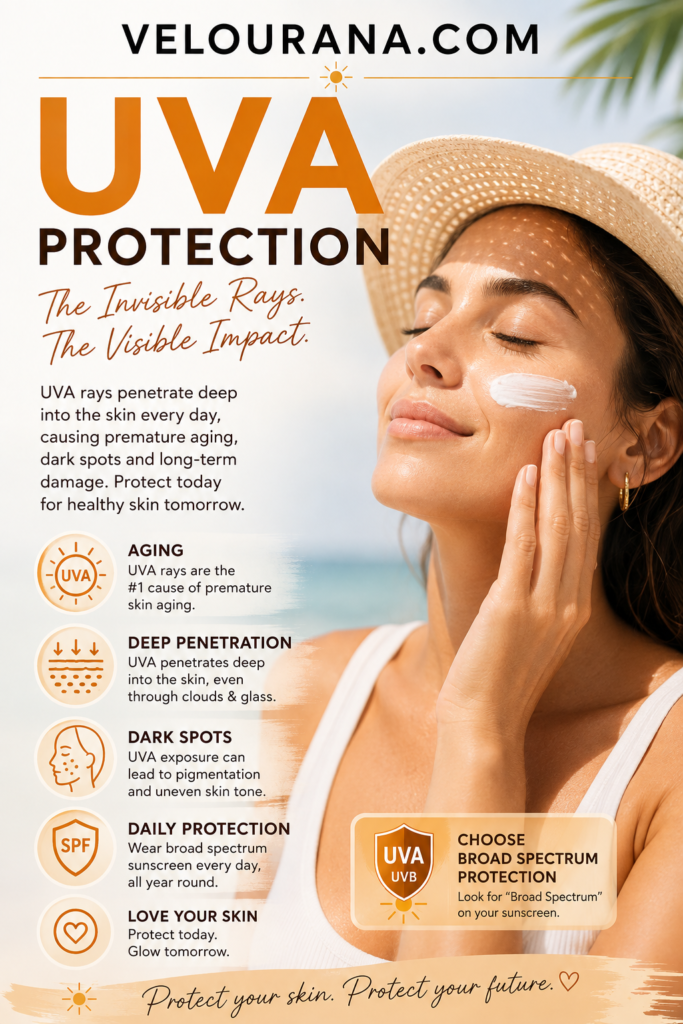
UVB is strongly associated with sunburn, but UVA penetrates more deeply into the skin and contributes to photoaging and pigmentation changes. UVA exposure can occur without the obvious redness that many people use as their personal signal that they have had “too much sun.”
This matters because pigmentation can become darker or more persistent even when the skin has not visibly burned.
Someone may therefore spend months using a carefully formulated serum every evening while receiving repeated unprotected exposure during the day. The serum may be targeting excess pigmentation while environmental exposure continues to stimulate processes associated with pigment production.
The result can be frustrating. The person concludes that the brightening product does not work, purchases another treatment, adds another active ingredient, and eventually creates an increasingly complicated routine.
Sometimes the missing element is not another treatment.
It is better protection.
This does not mean sunscreen will magically remove established pigmentation. Sunscreen is primarily preventive. Its role is to reduce ongoing ultraviolet exposure so that treatment is not constantly competing with another source of stimulation.
That distinction is essential.
A sunscreen is not a bleaching product. It is not designed to erase a dark mark overnight. What it can do is help create an environment in which the skin is receiving less of the exposure that can contribute to pigmentation and photoaging.
Broad-Spectrum Protection Matters More Than SPF Alone
People concerned about pigmentation often choose sunscreen by looking for the highest SPF number available.
High SPF can be valuable, but SPF primarily reflects protection against UVB-related sunburn under standardized testing conditions. For a pigmentation-focused routine, UVA protection deserves deliberate attention as well.
Look for broad-spectrum protection and the relevant UVA labeling used in your market. Different regions communicate UVA performance differently, so packaging may include broad-spectrum terminology, UVA symbols, protection grades, or other standardized information.
The precise labeling system is less important than understanding the principle: a pigmentation routine should not focus exclusively on preventing UVB-related redness while ignoring UVA.
Application quantity also matters. The impressive protection printed on a sunscreen bottle assumes appropriate use. Spreading a tiny amount across the entire face because a product feels heavy does not reproduce the conditions under which it was tested.
This is one reason finding the right sunscreen can take experimentation.
A person with oily skin may prefer a fluid or gel that settles quickly. Dry skin may feel more comfortable with a creamier formulation. Someone who wears foundation may need a sunscreen that layers smoothly without pilling. Deeper skin tones may require transparent or tinted formulations that do not leave an obvious white or grey cast.
These preferences are not trivial cosmetic details. They influence whether the sunscreen will actually be used correctly every day.
If a formula looks beautiful at the appropriate quantity, consistent protection becomes much easier.
Visible Light and the Role of Tinted Sunscreen
For certain pigmentation concerns, particularly melasma, the discussion extends beyond ultraviolet radiation.
Visible light can contribute to pigmentation in some individuals, especially those with darker skin tones. This has increased interest in tinted sunscreens containing pigments such as iron oxides, which can provide additional protection against portions of visible light.
This does not mean every person with a dark mark needs a tinted sunscreen, nor does it mean tinted sunscreen replaces medical treatment for melasma. Pigmentation disorders vary, and persistent concerns are best discussed with a dermatologist.
Nevertheless, tinted sunscreen can offer an interesting combination of protection and cosmetic benefit.
A well-matched tint can reduce the visible white cast associated with some sunscreen filters while also helping even the appearance of the complexion. Some people find that a good tinted sunscreen reduces their need for foundation, simplifying the morning routine.
The challenge is shade matching.
A tint that is too light can appear ashy. One that is too dark or orange can look unnatural. A limited shade range may not work across diverse complexions, and repeated application during the day can make heavily pigmented formulations increasingly visible.
One practical approach is to use a suitable tinted sunscreen for the main morning application and, where appropriate, use another compatible sunscreen format for later reapplication.
The objective is always to maintain protection without making the routine so cosmetically difficult that adequate application becomes unrealistic.
Building a Pigmentation Routine Around Protection
A good pigmentation routine does not necessarily require many products.
In fact, excessive treatment can create its own problems. Combining multiple acids, retinoids, brightening ingredients, scrubs, and strong cleansers can irritate the skin barrier. Irritation itself can worsen the appearance of pigmentation in people prone to post-inflammatory hyperpigmentation.
A more thoughtful routine begins with identifying what each product is supposed to accomplish.
A gentle cleanser removes sunscreen, makeup, oil, and environmental residue without unnecessarily stripping the skin. Moisturizer supports barrier comfort where needed. A targeted treatment addresses the pigmentation concern. Broad-spectrum sunscreen reduces ongoing ultraviolet exposure.
Additional products should have a reason to be there.
Ingredients commonly used in pigmentation routines include vitamin C, niacinamide, azelaic acid, retinoids, alpha hydroxy acids, tranexamic acid, and other targeted compounds. Their suitability depends on the pigmentation type, formulation, skin tolerance, and individual circumstances.
Prescription treatments and stronger procedures should be guided by qualified professionals.
The temptation to use everything simultaneously is understandable, particularly when pigmentation has been present for a long time. Yet an irritated complexion covered with multiple aggressive treatments is not necessarily progressing faster.
A calm, consistent routine often provides a better foundation.
Post-Inflammatory Hyperpigmentation and Sun Protection
Post-inflammatory hyperpigmentation commonly appears after inflammation or injury to the skin. Acne is a frequent cause, but irritation, insect bites, scratching, burns, eczema, and other inflammatory events can also leave discoloration.
The first priority is controlling the source of inflammation where possible. Continually developing new acne lesions while treating old marks creates an endless cycle.
The second consideration is avoiding unnecessary additional irritation.
Picking blemishes, aggressive scrubbing, excessive exfoliation, and repeatedly changing strong active ingredients can prolong inflammation and create additional marks.
Sun protection then becomes part of preventing those marks from becoming more pronounced through exposure.
This is particularly important for deeper skin tones, where post-inflammatory hyperpigmentation may be more persistent and cosmetically significant.
A broad-spectrum sunscreen that blends naturally into the complexion can make daily use considerably easier. Tinted options may provide additional cosmetic coverage while the marks gradually improve.
Patience is important because pigmentation often fades much more slowly than the original inflammation.
A blemish may heal within days while the mark remains for months. This can create the illusion that nothing is changing, even when gradual improvement is occurring.
Consistent photography under similar lighting can sometimes provide a more realistic way to observe progress than examining the skin closely in the mirror every morning.
Melasma Requires a Particularly Thoughtful Approach
Melasma is more complex than an ordinary sun spot. It commonly appears as symmetrical patches of pigmentation on areas such as the cheeks, forehead, upper lip, and other parts of the face.
Hormonal influences, genetics, ultraviolet radiation, visible light, and other factors can contribute to its development and persistence.
Because melasma can be difficult to manage and may recur, professional dermatological guidance is valuable.
Photoprotection is usually an important part of the strategy, but it needs to be consistent. Using sunscreen only on the days when treatment products are applied misses the point. The environmental trigger does not coordinate itself with the skincare calendar.
Broad-spectrum sunscreen, appropriate UVA protection, and potentially tinted formulations offering visible-light protection can be considered depending on individual circumstances.
Hats and shade become particularly useful because they reduce exposure without requiring additional layers of cosmetic product.
This layered approach is often more practical than expecting sunscreen alone to carry the entire burden.
A broad-brimmed hat during prolonged outdoor activity can substantially reduce direct exposure to the face. Choosing shade at cafés, beaches, sporting events, and outdoor gatherings provides another simple form of protection.
The objective is not to hide permanently from daylight. It is to reduce unnecessary exposure that can make a difficult pigmentation condition harder to control.
The Hands, Neck and Chest Are Part of the Pigmentation Story
Facial pigmentation receives the most attention because the face is what we see in the mirror, but cumulative exposure also becomes visible elsewhere.
The backs of the hands can develop uneven pigmentation after years of exposure. The upper chest may develop mottled discoloration, particularly in people who frequently wear open necklines. The neck can show changes in tone and texture associated with cumulative environmental exposure.
A facial skincare routine that stops abruptly at the jawline therefore leaves several frequently exposed areas untreated.
This does not mean expensive facial serums need to be spread across the entire upper body.
Protection can be much simpler.
Apply sunscreen to exposed areas. Use clothing where practical. Protect the hands when they will receive prolonged exposure, remembering that washing removes sunscreen. Consider necklines and sleeves when spending long periods outdoors.
For the chest and arms, an affordable body sunscreen may be more practical than using a small facial product.
Long-term skincare works best when economics are considered too. A product that is too expensive to apply adequately to large areas is unlikely to provide a sustainable solution.
Reapplication When Pigmentation Is a Priority
Reapplication can become complicated because daily routines differ so much.
Someone spending an entire day at the beach needs a very different approach from someone working in an interior office.
During prolonged outdoor exposure, sunscreen should be reapplied according to product directions and established sun-protection guidance. Swimming, heavy perspiration, towel drying, washing, and repeated rubbing can disturb the sunscreen film and create additional reasons to restore protection.
On a typical working day, it can be more useful to think about upcoming exposure.
If sunscreen was applied properly in the morning and the next six hours were spent inside away from significant sunlight, the situation is different from six hours of sightseeing.
If you are about to leave work and spend substantial time outdoors while UV levels remain meaningful, refreshing protection before leaving can make sense.
For someone with pigmentation concerns, this can become an easy habit: keep a suitable sunscreen at work or in a handbag and use it before meaningful afternoon exposure.
Makeup does not have to make this impossible.
Lightweight fluids can sometimes be pressed carefully over makeup. Sunscreen sticks, cushions, suitable facial sprays, and SPF powders provide other options, although the quantity delivered by convenient cosmetic formats should always be considered.
When exposure is substantial, adequate protection is more important than maintaining flawless foundation.
Makeup can be repaired.
Why More Treatment Is Not Always Better
Pigmentation can encourage impatient skincare.
A dark mark remains visible, so another serum is added. When improvement is not immediate, an exfoliating toner joins the routine. Then a retinoid. Then a stronger acid. Eventually the skin is receiving so many active ingredients that irritation becomes almost inevitable.
This is particularly counterproductive for people susceptible to post-inflammatory pigmentation.
A damaged or irritated skin barrier can become inflamed, and inflammation can produce more discoloration.
Instead of asking how many brightening ingredients can fit into one routine, it can be more useful to ask whether the basic system is functioning properly.
Is the skin comfortable?
Is the pigmentation treatment appropriate for the actual condition?
Is sunscreen being applied consistently?
Is the product broad spectrum?
Is enough being used?
Is significant outdoor exposure being managed?
Are new inflammatory lesions being prevented?
Is the routine sustainable?
These questions may be less exciting than discovering another trending ingredient, but they often matter more.
Patience Is Part of Pigmentation Care
Pigmentation rarely follows the timetable people want.
Skincare marketing encourages rapid transformation, yet biological processes take time. Some superficial discoloration may improve relatively quickly, while deeper or more complex pigmentation can persist.
This makes consistency psychologically difficult.
When a product does not produce dramatic change within two weeks, it is tempting to replace it. Constantly changing routines, however, makes it difficult to know what is helping and can increase the risk of irritation.
Sun protection is particularly vulnerable to this impatience because its preventive benefit is difficult to see.
You can photograph a dark mark becoming lighter.
You cannot photograph the additional pigmentation that never developed because the skin was protected.
That invisible benefit is still valuable.
A successful pigmentation strategy therefore requires both treatment and prevention to be given enough time to work.
UVA Protection Should Support Life, Not Restrict It
Pigmentation concerns can sometimes lead people to become frightened of sunlight.
That is not the objective of photoprotection.
Outdoor activity, exercise, travel, social events, and time in nature are valuable parts of life. Sun protection exists to help reduce unnecessary ultraviolet exposure while allowing those activities to continue.
The solution is preparation rather than avoidance.
Apply sunscreen before leaving.
Wear a hat during prolonged exposure.
Choose shade when it is conveniently available.
Carry sunscreen during long outdoor days.
Use sunglasses.
Wear protective clothing where appropriate.
Check the UV Index when planning activities that will keep you outside for hours.
These measures become routine surprisingly quickly.
A person can enjoy a day sightseeing without repeatedly worrying about every ray of sunlight. The sunscreen is applied, the hat is available, reapplication happens when necessary, and the day continues.
A More Intelligent Way to Think About Even Skin Tone
An even-looking complexion is often marketed as something achieved by adding products.
There is another side to the equation.
Sometimes caring for pigmentation means reducing what the skin is exposed to.
That shift in perspective changes the entire routine.
Instead of relying solely on ingredients to correct discoloration after it develops, protection becomes part of preventing additional environmental stimulation.
Instead of using increasingly aggressive exfoliation, the routine can focus on controlled treatment and a healthy skin barrier.
Instead of viewing sunscreen as a summer accessory, it becomes part of maintaining the results achieved by the rest of the skincare routine.
This is particularly important because pigmentation tends to return when its underlying triggers remain present.
No serum can control every trigger. Hormones cannot be managed with sunscreen. Genetics cannot be changed with a cream. Inflammation may require separate treatment.
But ultraviolet exposure is one factor over which we have meaningful control.
That makes UVA protection valuable even though it cannot solve the entire pigmentation problem.
Protecting Progress Over the Long Term
The most satisfying stage of a pigmentation routine is often the point at which improvement finally becomes visible.
Marks look softer.
The complexion appears more uniform.
Makeup requires less coverage.
The temptation at this stage is to relax the routine that helped create the improvement.
Protection should not be the first part to disappear.
If ultraviolet exposure contributed to the pigmentation in the first place, maintaining sensible protection helps preserve the progress achieved through treatment.
This does not require perfect behavior.
There will be mornings when sunscreen is forgotten. Unexpected outdoor plans happen. Holidays disrupt routines. Products run out.
Long-term skincare is not destroyed by an occasional imperfect day.
What matters is the pattern.
A pattern of broad-spectrum protection, sensible exposure habits, appropriate treatment, and avoidance of unnecessary irritation provides a much stronger foundation than constantly searching for a miracle brightening product.
Pigmentation can be stubborn because skin is biologically complex. That complexity deserves a thoughtful response rather than an aggressive one.
Treat what already exists with appropriate ingredients or professional guidance.
Protect the skin from continuing ultraviolet exposure.
Support the skin barrier.
Avoid creating additional inflammation.
Give the routine time.
And remember that UVA protection is not simply about preventing tomorrow's sunburn. For anyone concerned with uneven tone, it is part of protecting the progress that may take months or even years to achieve.
The End
Velourana.
 Discover More From Our Family of Websites
 ZodiacBearing (Astrology, Tarot, Numerology, Angel Numbers & Spiritual Guidance)
 Velourana (Beauty, Makeup, Hair Care, Skincare & Beauty Tips)
 HavenBearing (Home, Living, Organization, Décor & Everyday Inspiration)
 PawBearing (Pet Care, Dog Breeds, Animal Health, Training & Pet Products)
 PsyCatherine (Notes From the Journal of a Psychologist on Real Life)

