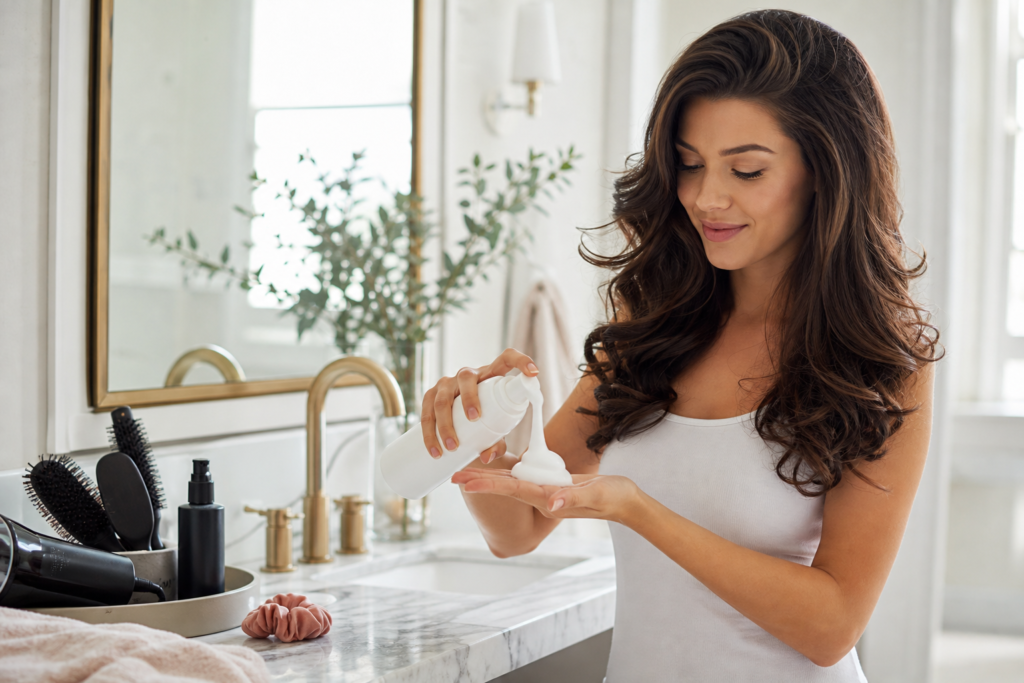
Hair mousse is one of those styling products many people recognize but are not always sure how to use well. Used correctly, it can add volume, improve curl definition, support blow-drying, and help styles last longer without making the hair feel overly stiff. Used incorrectly, it can leave hair crunchy, sticky, flat, or uneven.
If you have ever wondered when to apply mousse, how much to use, or whether it works for your hair type, this guide will walk you through the basics in a simple, practical way.
What hair mousse actually does
Mousse is a lightweight foam styling product. Its main job is to give the hair structure while still allowing movement. Different formulas can support different goals, but most mousses help with one or more of the following:
- Adding lift at the roots
- Giving fine hair a fuller appearance
- Helping curls and waves clump more neatly
- Improving the shape of a blowout
- Adding light to medium hold
- Reducing the tendency for a style to fall flat quickly
Because mousse is airy compared with heavier creams or gels, it is often a good option for people who want hold without too much weight.
Who can benefit from mousse
Mousse can work for many hair types, but the way you use it should match your texture and styling goal.
Fine or flat hair
This is one of the most common reasons people reach for mousse. A small amount through the roots and lengths can help create body and make blow-dried styles look fuller.
Wavy hair
Mousse can help shape waves, reduce limp sections, and add light hold without making the hair feel coated.
Curly hair
Many people with curls use mousse to encourage definition and add bounce. It can also be layered with other products, depending on how much hold or moisture you want.
Straight hair
Even straight hair can benefit from mousse if you want root lift, more grip for styling, or extra support for curls made with hot tools.
Thicker hair
Thicker hair may need more product or a stronger formula, especially if the goal is hold rather than just volume. Even so, mousse can still be useful as a prep product before blow-drying.
When to apply mousse
Mousse is usually applied to damp hair, not soaking wet hair and not fully dry hair. Damp hair allows the product to spread more evenly and helps prevent concentrated patches that can dry crunchy.
A good time to apply mousse is after washing, once you have gently removed excess water with a towel or soft T-shirt. Hair should feel moist but not dripping.
Some mousses can also be used lightly on dry hair for touch-ups, but in most routines, damp application gives the best and most even result.
How much mousse to use
The correct amount depends on your hair length, density, and the product formula. A common beginner mistake is using far too much.
- Short hair: start with an amount about the size of a small egg
- Medium-length hair: start with an egg-sized amount
- Long or very thick hair: start with 1 to 2 egg-sized amounts, adding only if needed
It is usually better to begin with less and add more than to overload the hair at the start. Too much mousse can lead to stiffness, dullness, or a sticky feel.
Step-by-step: how to apply mousse properly
-
Wash and condition your hair as usual. Choose a conditioner that suits your hair type, but avoid applying too much near the roots if your hair gets flat easily.
-
Gently remove extra water. Blot the hair instead of rubbing it aggressively, which can create frizz and tangling.
-
Shake the mousse can well. This helps mix the formula properly before dispensing.
-
Dispense mousse into your palm. Start small. The foam often expands, so you usually need less than you expect.
-
Spread it between your hands. This helps distribute the product more evenly instead of dropping one concentrated blob onto the hair.
-
Apply from roots to mid-lengths if your goal is volume. Focus especially on the crown and root area, then lightly work through the rest.
-
Apply from mid-lengths to ends if your goal is wave or curl definition with less root lift. Scrunch gently if you want to encourage natural texture.
-
Comb through with fingers or a wide-tooth comb if needed. This can help create more even distribution, especially on thicker hair.
-
Style as desired. Blow-dry for maximum volume, diffuse for curls and waves, or air-dry for a softer result.
How to use mousse for different styling goals
For root volume
Apply mousse mainly at the roots on damp hair. Then blow-dry with your head flipped slightly forward or use a round brush to lift sections upward at the root. Directing airflow at the roots while lifting the hair can make a big difference.
For a fuller blowout
Work mousse through roots and lengths, then rough-dry until the hair is partly dry. After that, use a round brush section by section to shape the style. Mousse can help the hair keep that fuller, bouncy look for longer.
For waves and curls
Apply mousse to damp hair and scrunch upward. If you use a diffuser, dry gently in sections without disturbing the curl pattern too much. If you air-dry, avoid touching the hair constantly while it sets.
For extra hold with hot tools
Use mousse as a prep product on damp hair before blow-drying. Once the hair is dry, then use your curling iron or other hot tool. This can help the style hold better than styling freshly washed, product-free hair.
Common mistakes that make mousse disappointing
Using too much
This is the biggest issue for beginners. Too much product can make the hair feel heavy or crunchy and may reduce movement.
Applying to soaking wet hair
If the hair is very wet, mousse can slide around and distribute unevenly. Damp hair is usually the better starting point.
Putting all of it in one area
Always spread the product between your hands first and apply gradually. Concentrated patches often dry stiff.
Ignoring your styling method
Mousse often performs best when paired with the right technique. Root lift usually needs blow-drying. Curl definition often improves with scrunching or diffusing.
Touching the hair too much while drying
This can create frizz and break up wave or curl definition. Once your mousse is applied and the shape is set, try to let the hair dry with minimal disturbance.
Can you combine mousse with other products?
Yes, but keep layering simple at first. Too many stylers can weigh the hair down or create buildup.
- With heat protectant: often a practical combination before blow-drying
- With curl cream: useful if your hair needs both softness and hold
- With gel: can provide stronger hold for waves or curls, but use light amounts to avoid heaviness
- With serum or oil: usually best used sparingly on dry ends after styling, not heavily before mousse
If you are new to product layering, test one combination at a time so you can see what actually improves your result.
How to know if your mousse is not the right fit
A mousse may not suit your routine if it repeatedly leaves your hair sticky, unusually dull, too stiff, or flatter than expected even when you adjust the amount. Sometimes the issue is not mousse itself, but the formula, your application method, or how it interacts with other products.
If you are not getting the result you want, try changing only one thing at a time: use less product, apply to slightly drier hair, focus it more on roots or lengths, or switch your drying technique.
Simple tips for better results every time
- Start with less product than you think you need
- Apply to damp, not dripping, hair
- Match placement to your goal: roots for lift, lengths for definition
- Use a blow-dryer for the most noticeable volume
- Scrunch or diffuse gently for waves and curls
- Avoid piling on too many heavy styling products
- Practice a few times before deciding whether a mousse works for you
Final thoughts
Hair mousse is often most effective when treated as a styling support product rather than a one-step miracle. The right amount, applied in the right place on damp hair, can give noticeable lift, shape, and hold while still keeping the hair touchable.
For beginners, the easiest path is simple: use a small amount, distribute it evenly, and pair it with a styling method that matches your goal. Once you learn how your own hair responds, mousse can become one of the most versatile tools in your styling routine.
https://velourana.com/
 Discover More From Our Family of Websites
 ZodiacBearing (Astrology, Tarot, Numerology, Angel Numbers & Spiritual Guidance)
 Velourana (Beauty, Makeup, Hair Care, Skincare & Beauty Tips)
 HavenBearing (Home, Living, Organization, Décor & Everyday Inspiration)
 PawBearing (Pet Care, Dog Breeds, Animal Health, Training & Pet Products)
 PsyCatherine (Notes From the Journal of a Psychologist on Real Life)