
CATEGORY: Makeup Techniques
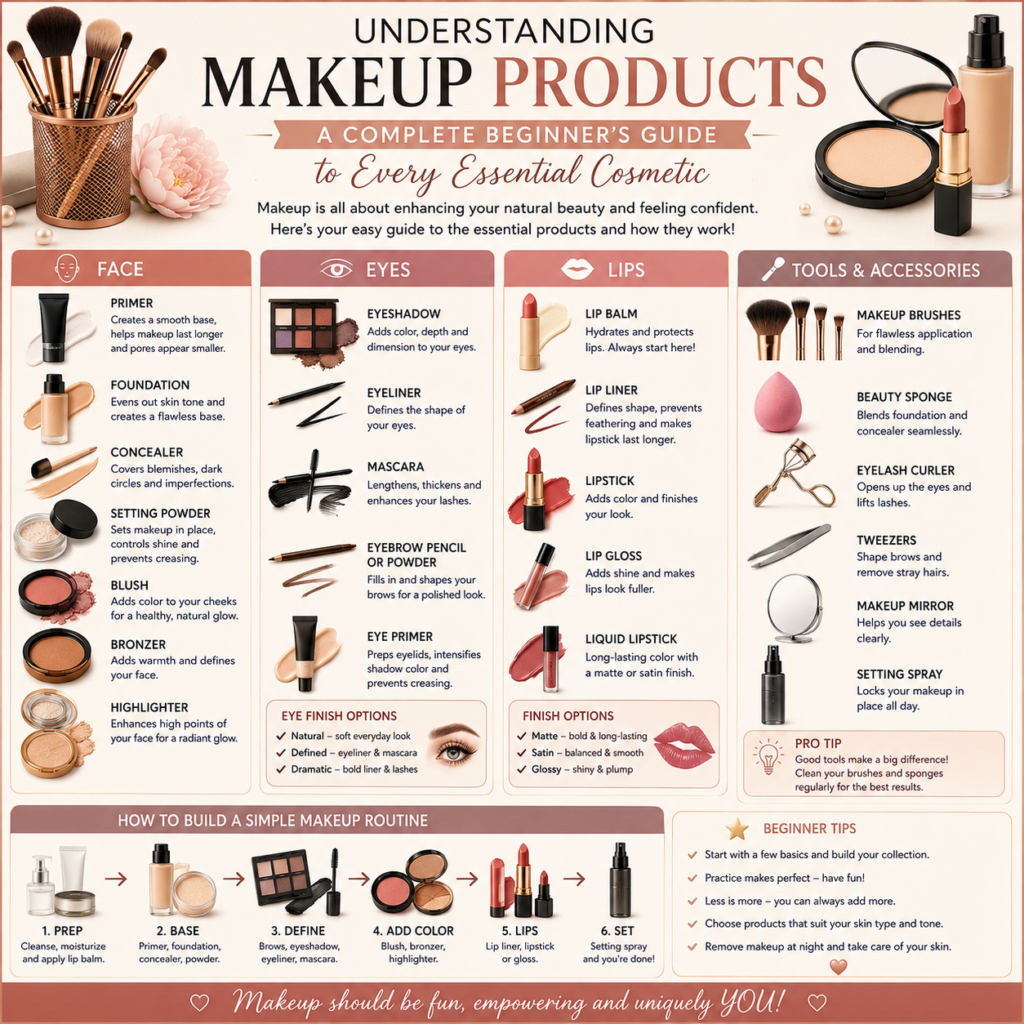
Makeup has evolved far beyond simply enhancing appearance. Today, it is a form of self-expression, creativity, confidence, and artistry. Whether someone enjoys a natural everyday look or dramatic evening glamour, understanding the purpose of each makeup product is the foundation of creating beautiful, long-lasting results.
With thousands of cosmetic products available, beginners often feel overwhelmed. Foundation, concealer, primer, bronzer, contour, setting spray, finishing powder—the choices seem endless. However, every product has a specific role, and once these roles are understood, building an effective makeup routine becomes much easier.
This guide explains the essential makeup products, how they work, when to use them, and how they fit together to create a flawless finish.
—
Why Understanding Makeup Products Matters
Many people purchase cosmetics simply because they are trending or recommended by influencers. Unfortunately, buying products without understanding their purpose often leads to disappointment.
Knowing what each product actually does helps you:
- Save money by buying only what you need.
- Create more professional-looking makeup.
- Improve the longevity of your makeup.
- Choose products suitable for your skin type.
- Build routines for different occasions.
- Avoid unnecessary layering.
Professional makeup artists focus on technique first and products second. When both come together, the results become significantly better.
—
Makeup Primer
Primer is the first cosmetic product applied after skincare.
Its purpose is not to add color but to prepare the skin for foundation.
A quality primer can:
- Smooth uneven texture.
- Reduce the appearance of pores.
- Control excess oil.
- Add hydration.
- Improve makeup longevity.
- Help foundation apply more evenly.
Different primers serve different skin types.
Hydrating Primers
Designed for dry or dehydrated skin.
They provide moisture and help prevent foundation from looking flaky.
Mattifying Primers
Ideal for oily skin.
They reduce shine and help control oil production throughout the day.
Blurring Primers
Created to minimize visible pores and fine lines.
They leave the skin looking smoother before foundation.
—
Foundation
Foundation creates an even skin tone and forms the base for nearly every makeup look.
It is available in several formulas.
Liquid Foundation
The most versatile option.
Suitable for almost every skin type depending on the formula.
Coverage ranges from sheer to full.
Cream Foundation
Provides higher coverage and is often preferred for dry or mature skin.
Powder Foundation
Ideal for oily skin and quick touch-ups.
Usually provides light to medium coverage.
Stick Foundation
Portable and convenient.
Often used for travel or quick application.
—
Understanding Foundation Coverage
Coverage determines how much of the natural skin remains visible.
Sheer Coverage
Allows freckles and natural skin texture to show through.
Perfect for natural makeup.
Medium Coverage
Balances natural skin with improved complexion.
Suitable for everyday wear.
Full Coverage
Conceals acne, redness, pigmentation, scars, and discoloration.
Often used for photography, weddings, and special occasions.
—
Concealer
Concealer provides additional coverage where foundation alone is not enough.
Common uses include:
- Dark circles
- Acne
- Redness
- Hyperpigmentation
- Age spots
- Small scars
Concealer is usually thicker than foundation.
Different shades also perform different tasks.
Skin-Tone Concealer
Used to hide imperfections.
Brightening Concealer
One or two shades lighter than foundation.
Applied under the eyes to create a refreshed appearance.
—
Color Correctors
Before concealer became widely popular, professional artists relied heavily on color correction.
Each color neutralizes another.
Green
Neutralizes redness.
Useful for acne or rosacea.
Peach
Corrects blue under-eye circles on fair skin.
Orange
Suitable for deeper skin tones with dark pigmentation.
Yellow
Brightens dull skin and reduces purple tones.
Lavender
Neutralizes yellow or sallow complexions.
—
Setting Powder
Setting powder locks cream products into place.
It helps reduce shine while preventing foundation from moving throughout the day.
Loose powders generally provide lighter finishes, while pressed powders offer portability and convenient touch-ups.
—
Finishing Powder
Although often confused with setting powder, finishing powder serves a different purpose.
It is applied after the entire makeup application.
Its purpose is to:
- Soften texture.
- Blur imperfections.
- Reduce visible pores.
- Create a more polished appearance.
—
Bronzer
Bronzer adds warmth to the complexion.
Unlike contour, bronzer imitates the natural warmth produced by sunlight.
Typical application areas include:
- Forehead
- Cheekbones
- Nose
- Jawline
Choosing a bronzer that complements your skin tone creates a healthy-looking glow.
—
Contour Products
Contour creates the illusion of depth and structure.
Rather than warming the skin, contour mimics natural shadows.
Common contour areas include:
- Under cheekbones
- Sides of the nose
- Jawline
- Temples
Cool-toned shades generally produce the most realistic results.
—
Blush
Blush restores natural color after foundation evens out the complexion.
Available formulas include:
- Powder
- Cream
- Liquid
- Gel
Placement dramatically changes facial appearance.
Higher placement often creates a lifted effect, while placement on the apples of the cheeks produces a youthful look.
—
Highlighter
Highlighter reflects light.
It emphasizes areas naturally touched by light.
Common placement includes:
- Top of cheekbones
- Bridge of nose
- Cupid’s bow
- Brow bone
- Inner corner of the eyes
Highlighters come in powder, cream, stick, and liquid forms.
—
Eyeshadow
Eyeshadow enhances eye shape using color and depth.
Modern palettes often contain:
- Matte shades
- Satin shades
- Metallic shades
- Shimmer shades
- Glitter finishes
Learning how light and dark colors interact helps create professional-looking eye makeup.
—
Eyeliner
Eyeliner defines the eyes.
Popular types include:
Pencil
Easy for beginners.
Creates softer lines.
Gel
Offers rich pigmentation with excellent longevity.
Liquid
Ideal for precise wings and dramatic looks.
Felt Tip Pens
Combine the precision of liquid eyeliner with easier application.
—
Mascara
Mascara darkens, lengthens, thickens, and defines eyelashes.
Popular varieties include:
- Lengthening
- Volumizing
- Curling
- Waterproof
- Tubing formulas
Replacing mascara regularly helps maintain hygiene and eye health.
—
Eyebrow Products
Well-groomed eyebrows frame the face.
Different products create different finishes.
Brow Pencil
Ideal for filling sparse areas.
Brow Powder
Produces softer, natural-looking brows.
Brow Pomade
Creates bold, defined brows.
Brow Gel
Keeps hairs in place while adding subtle color.
—
Lip Products
Lip cosmetics vary greatly depending on the desired finish.
Lip Balm
Hydrates and protects.
Lip Liner
Defines lip shape while reducing lipstick feathering.
Lipstick
Available in multiple finishes:
- Matte
- Satin
- Cream
- Sheer
- Metallic
Lip Gloss
Adds shine while making lips appear fuller.
Liquid Lipstick
Offers long-lasting color with intense pigmentation.
—
Setting Spray
Setting spray is one of the final steps.
Unlike powder, it melts makeup layers together for a more natural finish.
Benefits include:
- Longer wear.
- Reduced cakiness.
- Improved hydration.
- Sweat resistance.
- Better appearance in photographs.
—
Makeup Sponges
Beauty sponges help blend products seamlessly.
Damp sponges generally create more natural finishes because they prevent excessive product absorption while diffusing foundation evenly.
—
Makeup Brushes
Different brushes serve different purposes.
Examples include:
- Foundation brush
- Powder brush
- Blush brush
- Bronzer brush
- Contour brush
- Highlighter brush
- Eyeshadow blending brush
- Packing brush
- Angled liner brush
- Lip brush
Using the correct brush often produces cleaner, more professional results.
—
Choosing Products According to Skin Type
No single product works equally well for everyone.
Dry Skin
Look for:
- Hydrating primers
- Dewy foundations
- Cream blushes
- Cream highlighters
Avoid excessive powder.
Oily Skin
Choose:
- Oil-control primers
- Matte foundations
- Setting powders
- Long-wear formulas
Combination Skin
Balance hydration with oil control by using different products in different facial areas.
Sensitive Skin
Select fragrance-free, dermatologist-tested products whenever possible and introduce new products gradually.
—
Building a Simple Beginner Makeup Kit
Beginners do not need hundreds of products.
A practical starter collection might include:
- Primer
- Foundation
- Concealer
- Setting powder
- Blush
- Bronzer
- Neutral eyeshadow palette
- Mascara
- Brow pencil
- Lipstick
- Lip balm
- Setting spray
- Beauty sponge
- Basic makeup brushes
This combination allows countless everyday looks without unnecessary complexity.
—
Final Thoughts
Understanding makeup products is the first step toward mastering makeup application. Every cosmetic serves a purpose, from preparing the skin with primer to locking everything in place with setting spray. Rather than collecting countless trendy items, focus on learning what each product does, how it complements your skin type, and when it should be used.
As your experience grows, you’ll naturally discover the formulas, textures, and finishes that suit your personal style. A carefully chosen collection of quality makeup products, combined with proper technique, can create everything from effortless natural beauty to glamorous evening looks while allowing your creativity and confidence to shine.
The End,
Velourana
 Discover More From Our Family of Websites
 ZodiacBearing (Astrology, Tarot, Numerology, Angel Numbers & Spiritual Guidance)
 Velourana (Beauty, Makeup, Hair Care, Skincare & Beauty Tips)
 HavenBearing (Home, Living, Organization, Décor & Everyday Inspiration)
 PawBearing (Pet Care, Dog Breeds, Animal Health, Training & Pet Products)
 PsyCatherine (Notes From the Journal of a Psychologist on Real Life)

