CATEGORY: Puffiness
Few beauty concerns are as changeable as under-eye puffiness. The face reflected in the mirror immediately after waking can look noticeably different from the one seen later in the afternoon. Lower lids that seemed rounded and heavy at breakfast may appear considerably flatter by midday, while on another day the same fullness remains visible from morning until night.
These variations explain why puffiness has generated so many beauty rituals. Cooling masks, metal applicators, chilled spoons, eye creams, facial massage and countless home remedies have all been promoted as answers. Some can temporarily improve the appearance or provide welcome comfort, but understanding why the eyes look puffy in the first place is essential for separating sensible cosmetic care from exaggerated promises.
The challenge is that under-eye fullness does not have one universal origin. It may reflect temporary fluid accumulation, irritation or allergy-related swelling. It may be enhanced by sleep disruption or crying. In other people, what is described as puffiness is actually a stable anatomical feature created by the tissues beneath the lower eyelid. Ageing can further change that structure, making previously subtle contours increasingly visible.
The best approach therefore begins not with a miracle ingredient but with the pattern of the puffiness itself.
Reading the Pattern in the Mirror
Timing can reveal a great deal about the nature of eye puffiness. Fullness that appears predominantly after waking and gradually diminishes during the morning is more suggestive of temporary fluid movement than a contour that remains almost identical throughout the day.
The horizontal position maintained during sleep can influence fluid distribution. When the body becomes upright again and normal movement resumes, some morning facial swelling naturally settles. The effect varies substantially between individuals, which is why one person may wake with sharply defined eyes while another regularly experiences noticeable eyelid fullness.
Other temporary circumstances can intensify the effect. Crying is an obvious example. The combination of tears, irritation and rubbing can leave the tissues surrounding the eyes swollen. Seasonal allergies may create a similar visual result through inflammation and itching. A disrupted night can make the entire face appear less refreshed and can exaggerate existing shadows and contours.
Structural fullness has a different rhythm. If under-eye bags remain present regardless of sleep quality, time of day or cooling treatments, anatomy may be playing a larger role. This can be genetically influenced and may become more pronounced with age.
Looking at photographs taken under similar lighting at different times can sometimes make these patterns easier to recognise. Bathroom lighting can be unforgiving, and shadows can exaggerate the impression of swelling. A contour that looks dramatic under an overhead light may appear much softer in diffuse daylight.
Understanding this visual variability helps prevent overreaction to a single morning's reflection.
How Ageing Changes the Lower-Eye Landscape
The eye contour is one of the areas where age-related structural changes can become visible relatively early because the skin is thin and the underlying tissues strongly influence its appearance.
Youthful facial structure is not static. Over time, collagen and elastin within the skin change, supporting tissues become less firm and the relationship between skin, fat and bone evolves. Around the eyes, these gradual changes can make lower-lid fullness more apparent.
Fat around the orbit performs an important protective role. With changes in the tissues that hold it in position, this fat can become more prominent, contributing to the appearance commonly called eye bags. Simultaneously, thinner or less elastic skin may reveal underlying contours more clearly.
This is fundamentally different from waking with temporary fluid-related swelling. A chilled eye mask may make age-related bags look slightly fresher for a short period, particularly if temporary swelling is layered on top of the structural contour, but it cannot permanently reposition deeper tissues.
The distinction is important because otherwise people can spend years interpreting normal anatomical ageing as evidence that they have not discovered the correct eye cream.
Skincare still has considerable value for ageing eye skin. Hydration can improve surface smoothness, sun protection can help limit preventable ultraviolet damage, and well-tolerated cosmetic ingredients can support the appearance and condition of the skin. These benefits should simply not be confused with surgical or structural changes.
When Dehydration Makes Puffiness Look More Pronounced
The relationship between hydration and puffiness is visually interesting. Swollen tissue can coexist with dehydrated surface skin, producing an eye contour that appears simultaneously full and finely lined.
When the outer layers of the skin lack sufficient water, texture becomes more visible. Fine lines can look deeper, makeup may settle unevenly and the surface may lose some of its softness. Against a puffy lower lid, this texture can make the entire area appear more fatigued.
Hydration does not necessarily remove the underlying swelling, but it can improve how the skin covering that swelling looks. This is an important distinction. Beauty improvements are often created not by eliminating a contour but by improving the quality of the surface reflecting light.
Humectant-rich formulas can support water retention in the outer skin layers, while emollient ingredients can improve softness and reduce roughness. The ideal eye product is not necessarily the richest one available. A formula should suit the individual's skin and remain comfortable without causing stinging or encouraging excessive rubbing.
Application matters as well. The eye area does not require a thick visible layer of cream to benefit from moisturisation. Applying excessive quantities can create product migration, interfere with makeup and make the routine feel unnecessarily heavy.
A small amount distributed gently is often enough.
Why Aggressive Massage Is Not the Answer
The popularity of facial massage has encouraged the idea that visible puffiness can simply be pushed away. Gentle touch may feel relaxing, and light massage can form part of an enjoyable skincare ritual, but the eye contour is not an area where force should be equated with effectiveness.
Repeated pulling, pressing or dragging offers no cosmetic advantage proportional to the additional mechanical stress placed on delicate skin. The objective should never be to squeeze or aggressively manipulate the tissues surrounding the eyes.
This is particularly relevant when tools are used. Rollers, cooling applicators and sculpting devices can encourage people to apply more pressure because the tool creates distance between the fingers and skin. Yet the anatomy underneath remains delicate.
A light touch is sufficient when applying skincare. Products can be distributed without stretching the eyelids, and any massage should remain comfortable. If the skin becomes red from friction, the technique is no longer particularly gentle.
The same restraint applies when removing eye makeup. Waterproof mascara, long-wear liner and adhesive cosmetics can encourage repeated rubbing. Using an appropriate remover and giving it time to loosen the product can reduce unnecessary friction.
Over months and years, these quiet habits are more relevant to maintaining comfortable eye skin than dramatic occasional treatments.
Cooling as a Cosmetic Tool Rather Than a Cure
There is a reason cool eye treatments remain enduringly popular: they can genuinely make the area feel refreshed, particularly when puffiness is temporary.
Cooling may temporarily influence the visible appearance of swollen tissue and can be soothing after a warm night or a tired morning. Refrigerated eye gels and cool compresses are popular because they combine skincare with an immediate sensory experience.
The temperature should remain comfortable. Extreme cold is unnecessary and can irritate skin. Ice applied directly to the eye contour is not a requirement for effective cooling, despite the dramatic appeal of such routines on social media.
A cool compress offers a simpler approach. It does not require elaborate tools, and its purpose is clear: temporary soothing and cosmetic refreshment.
This framing prevents disappointment. If the puffiness is largely caused by permanent lower-eye anatomy, cooling may create only a subtle change. If the fullness is predominantly temporary morning swelling, the visible difference may be greater.
Neither outcome determines whether the ritual is worthwhile. A treatment can be valuable because it makes the eyes feel more comfortable and temporarily look fresher without pretending to permanently alter facial anatomy.
The Hidden Influence of Shadows
Under-eye puffiness becomes particularly noticeable because the eye contour is three-dimensional. Fullness catches light along its highest point and creates shadow beneath it. The combination can make a relatively small contour appear much more dramatic.
This phenomenon also explains why puffiness and dark circles are so frequently confused.
Imagine a gently raised area beneath the eye. Light from above illuminates the upper portion while the lower edge falls into shadow. That shadow can resemble dark pigmentation. When lighting direction changes, the apparent darkness may diminish even though the skin colour itself has not changed.
Structural hollows can produce similar shadowing. Some people therefore have a mixture of lower-eye fullness and indentation, creating complex transitions between highlight and darkness.
Makeup behaves differently depending on which factor dominates. Concealer can neutralise actual colour differences, but it cannot eliminate a physical shadow created by contour. Heavy application may instead settle into fine lines and emphasise texture.
This is why natural-looking correction often comes from moderation. Hydrated skin, carefully placed concealer and softer lighting can sometimes create a more flattering result than trying to cover the entire under-eye area with an opaque layer.
The objective is visual balance rather than attempting to erase every natural dimension of the face.
Irritation Can Turn a Minor Concern Into a Larger One
A mildly puffy eye can become considerably more swollen when irritation enters the picture. This is particularly common when the eyes feel itchy and are repeatedly rubbed.
The skin around the eyes is easily disturbed by friction. Rubbing may provide momentary relief from itching but can leave the area redder and more swollen. When the original itch is caused by allergies or sensitivity, the cycle can continue throughout the day.
Skincare can occasionally become part of this cycle. Someone concerned about puffiness may introduce several eye treatments simultaneously, including highly active formulas, fragranced products or patches. If the area begins to sting, additional products may then be applied in an attempt to soothe it.
A simpler response is often more sensible. When irritation appears after introducing a cosmetic, discontinuing the suspected product allows the skin to settle and makes the cause easier to identify.
Persistent or significant eyelid irritation is not merely an aesthetic issue. Swelling accompanied by substantial redness, pain, discharge, vision changes or other unusual symptoms should not be treated as ordinary cosmetic puffiness. Medical evaluation is appropriate when the presentation falls outside the familiar pattern of mild temporary swelling.
Beauty routines are most effective when they recognise where cosmetic care ends.
Creating a Morning Routine That Works With the Eye Area
Morning is when puffiness tends to receive the most attention because this is when temporary swelling can be most visible. A good routine can therefore focus on comfort and preparation rather than attempting to perform an instant transformation.
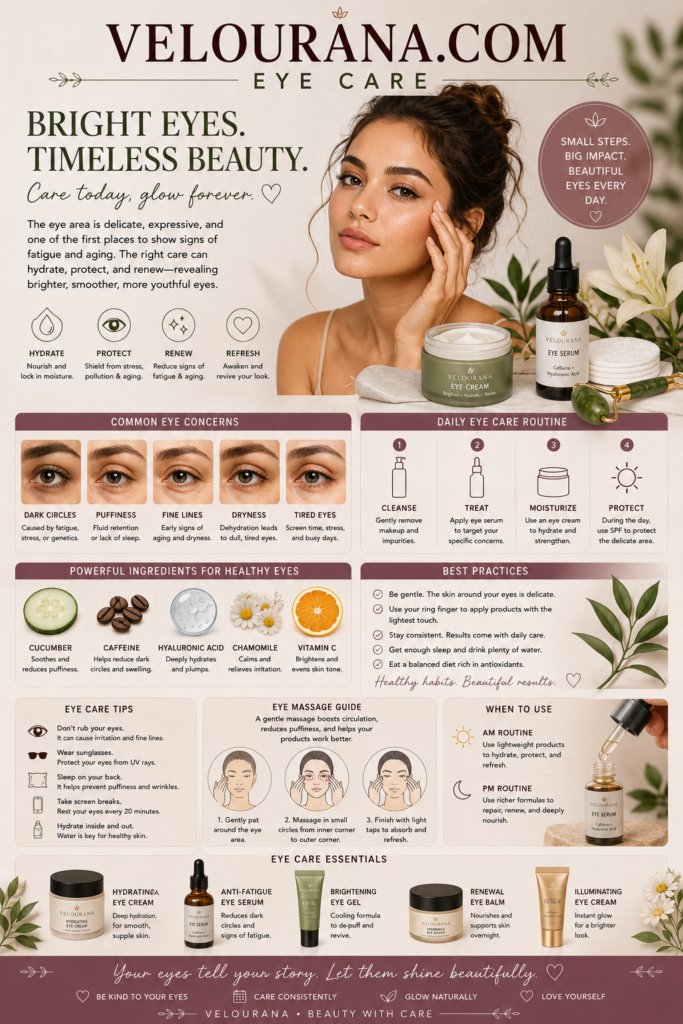
Cleansing should be gentle, particularly if the eye area already feels swollen. Some people need little more than water around the eyes in the morning, while others prefer a mild cleanser as part of their facial routine. The important point is to avoid unnecessary scrubbing.
A cool compress can be used when desired, followed by a comfortable hydrating product. Lightweight textures often work particularly well beneath makeup because they absorb without leaving a heavy film.
Sunscreen should then form part of daytime protection. Finding a sunscreen that remains comfortable near the eyes can require experimentation because some formulas sting when they migrate. Once a suitable product is found, consistent use supports the broader goal of protecting delicate eye skin from ultraviolet exposure.
Makeup, when worn, can be approached strategically. Rather than covering the entire lower lid heavily, subtle correction concentrated where darkness is most visible can preserve dimension and reduce the risk of emphasising texture.
This type of routine is intentionally uncomplicated. Puffiness rarely requires an elaborate collection of overlapping eye products.
Evening Care and the Importance of Restraint
Evening routines often become more complicated because there is no immediate need to apply makeup afterward. This can encourage generous layers of creams, masks and active treatments around the eyes.
More layers do not automatically create better results.
Thorough but gentle makeup removal is the priority when cosmetics have been worn. Residue should be removed without prolonged friction, after which the skin can be moisturised according to its needs.
People using active facial skincare should also remember that products can migrate. A strong formula does not necessarily have to be applied directly beneath the lashes to influence nearby skin, and sensitive individuals may need greater distance from the immediate eye contour.
The most successful evening routine is one that leaves the area comfortable rather than tight, burning or excessively coated. A product that repeatedly causes watering eyes or morning irritation is not earning its place simply because its ingredient list appears sophisticated.
Consistency allows the skin's behaviour to become easier to interpret. When routines change constantly, it becomes difficult to know whether morning puffiness reflects sleep, allergies, product irritation or another factor.
Restraint is therefore not a lack of skincare ambition. Around the eyes, it is often a sign of better judgement.
Looking Beyond the Promise of Instant De-Puffing
Puffiness is perfectly suited to dramatic beauty marketing because people often want it reduced immediately. The phrase "tired-looking eyes" itself creates a problem-and-solution narrative: the eyes look exhausted, therefore a product must make them look awake.
Reality is less theatrical.
Temporary swelling can improve naturally as the morning progresses. Cooling may accelerate the impression of freshness. Hydration can improve surface texture. Makeup can soften shadows. Consistent sun protection can support the long-term appearance of the skin.
Structural under-eye bags, however, belong to a different category. They may be influenced strongly by genetics and ageing and cannot simply be dissolved by topical skincare.
Recognising this difference makes shopping decisions more rational. Instead of judging an eye product by whether it performs an impossible transformation, it can be assessed according to comfort, hydration, compatibility and realistic visible improvement.
This also changes the emotional relationship with the mirror. A puffy morning does not automatically mean something has gone wrong with the skin. Faces naturally vary from day to day. Sleep, fluid movement, environmental conditions and irritation can all alter the appearance temporarily.
The eye contour is simply one of the places where those changes are easiest to see.
A More Realistic Definition of Refreshed Eyes
The most useful goal for puffy eyes is not necessarily complete flatness beneath the lower lids. Human faces have contours, and the tissues surrounding the eyes are naturally dimensional.
A refreshed appearance is more reasonably associated with comfortable skin, smoother surface texture, reduced temporary swelling where possible and makeup or skincare that complements rather than fights the natural structure.
For someone whose puffiness fluctuates, understanding triggers and using gentle cooling may provide meaningful cosmetic improvement. For someone with persistent structural fullness, accepting the anatomical component can prevent endless experimentation with products that were never capable of delivering the promised result.
Both can still benefit from the fundamentals of good eye care: gentle handling, appropriate hydration, protection from ultraviolet exposure and attention to irritation.
There is considerable freedom in that perspective. Skincare no longer has to eliminate every shadow or contour to be considered successful. It can simply help the skin look and feel its best within the structure of the face.
Puffiness then becomes easier to understand. Sometimes it is a temporary morning visitor. Sometimes it reflects irritation that deserves attention. Sometimes it is an inherited feature or part of the gradual evolution of the face.
Knowing which pattern is present is far more valuable than collecting increasingly ambitious eye treatments. Once the cause and limitations are understood, eye care becomes simpler, calmer and considerably more realistic.
THE END VELOURANA
 Discover More From Our Family of Websites
 ZodiacBearing (Astrology, Tarot, Numerology, Angel Numbers & Spiritual Guidance)
 Velourana (Beauty, Makeup, Hair Care, Skincare & Beauty Tips)
 HavenBearing (Home, Living, Organization, Décor & Everyday Inspiration)
 PawBearing (Pet Care, Dog Breeds, Animal Health, Training & Pet Products)
 PsyCatherine (Notes From the Journal of a Psychologist on Real Life)