
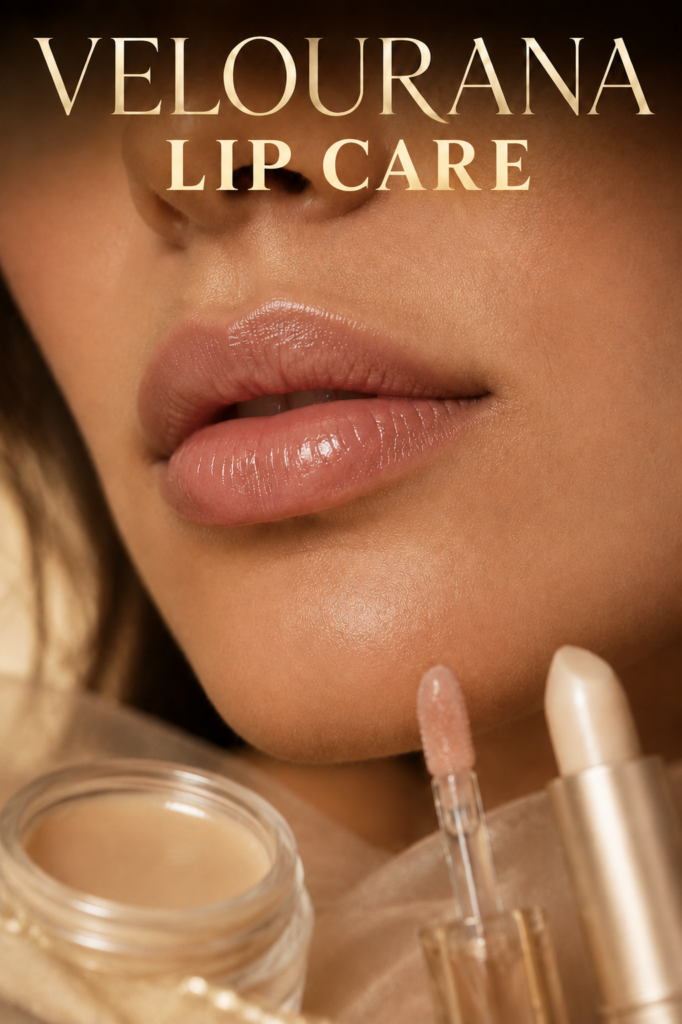
CATEGORY: Overnight Lip Care
Nighttime lip care is sometimes presented as an indulgent finishing touch: a glossy sleeping mask applied after an elaborate skincare routine and forgotten until morning. Yet beneath the appealing packaging is a practical idea. Several uninterrupted hours provide an unusually good opportunity to protect lips from moisture loss, soften rough surface texture, and reduce the effects of daily environmental exposure.
The most effective overnight routine does not depend on creating a complicated sequence. Lips are delicate, and excessive intervention can sometimes cause more irritation than improvement. A thoughtful routine instead considers why the lips are dry, what kind of protection they require, which ingredients are likely to be comfortable, and how daytime habits affect nighttime results.
This broader perspective is particularly useful for people who repeatedly experience chapping. When dryness returns every day despite constant balm application, the solution may involve more than simply applying another product. The formulation, environment, habits, cosmetics, and condition of the lip surface all contribute.
Overnight care becomes most effective when these factors are considered together.
Understanding What Happens to Lips During the Day
From morning onward, lips encounter constant mechanical and environmental stress. They move during speech and eating, come into contact with beverages and food, are wiped with tissues or napkins, and may be covered with several layers of cosmetics. Outdoors, they are exposed to wind, sunlight, heat, and cold. Indoors, heating and air conditioning can reduce humidity.
Unlike many other areas of the skin, the lips have limited natural oil protection. This makes maintaining a comfortable surface more challenging. Once dryness begins, people often unconsciously lick their lips. Saliva temporarily reduces the sensation of dryness, but as it evaporates, the lips may become uncomfortable again. Repetition can contribute to irritation around the mouth.
Cosmetics can add another dimension. Lip liners, stains, liquid lipsticks, and transfer-resistant matte formulas are designed for durability rather than necessarily for emollience. Makeup removal at the end of the day can introduce further friction if persistent products are rubbed aggressively.
By bedtime, the lips may therefore have accumulated the effects of many small stresses.
An overnight routine should be designed around reducing those stresses rather than introducing new ones.
The First Principle: Be Gentle
A common mistake in lip care is assuming that visible dryness must be physically removed before moisturization can work. Rough lips encourage touching, biting, peeling, and scrubbing because flakes create an uneven texture. Unfortunately, these actions can damage delicate tissue beneath the surface.
The presence of peeling skin does not automatically mean exfoliation is required.
When lips are significantly dry, applying an emollient or occlusive product and allowing the surface to soften naturally is often more appropriate than scrubbing. A softened flake that releases on its own is different from skin that is forcibly pulled away before it is ready.
This principle becomes particularly important before bed. An aggressive scrub followed by a thick sleeping mask may create the impression of an intensive treatment, but the initial exfoliation may have caused unnecessary irritation.
Gentle cleansing should therefore come first. Lipstick and sunscreen residue can be removed with an appropriate cleanser or makeup remover, using minimal friction. The lips can then be left slightly comfortable rather than stripped and squeaky-clean.
Nighttime skincare should calm the surface, not challenge it.
Creating Layers of Moisture and Protection
The language of skincare often separates moisturizing ingredients into functional groups, and these concepts are useful when evaluating overnight lip products.
Humectants help attract and retain water. Glycerin is one of the most established examples. Hyaluronic acid is another widely recognized humectant and appears in many modern lip treatments. These ingredients can contribute to a hydrated feel, but they are only one part of the picture.
Emollients help smooth and soften the surface. They improve flexibility and fill microscopic spaces between rough skin cells. Oils, butters, fatty compounds, and various cosmetic esters can serve this role.
Occlusives form a more substantial barrier that reduces water loss. Petrolatum is particularly effective and widely used. Waxes, lanolin, mineral oil, silicones, and other ingredients can also contribute varying degrees of occlusion.
A good overnight formula may incorporate all three functions.
This explains why a lip serum alone may feel pleasant but fail to provide lasting relief for very dry lips. If the formula is primarily humectant and lacks sufficient protection, moisture may still be lost. Adding an occlusive layer can help create a more complete environment.
However, layering several separate products is not mandatory. Many balms and sleeping masks are already formulated to provide multiple functions in one product. For everyday use, this simplicity can be preferable.
How Much Product Is Enough?
Overnight lip masks are often shown applied in extremely thick layers. While generous coverage can be useful, there is a practical limit.
A layer should be substantial enough to coat the entire lip surface and remain present for a reasonable period. If the product immediately slides beyond the lip line, feels unpleasantly heavy, or transfers extensively to bedding, using more does not necessarily improve performance.
The right quantity depends partly on texture. A dense petrolatum-based ointment may require only a small amount to create complete coverage. A lighter balm may need slightly more. Sleeping masks designed with a plush, cushiony consistency may naturally encourage a thicker application.
Comfort matters because overnight care is most effective when it becomes consistent. A formula that feels intolerably sticky is unlikely to remain part of a routine for long.
The ideal application is therefore generous enough to protect but comfortable enough to forget about once the lights are off.
Fragrance, Flavor, and the Sensory Appeal of Lip Care
Lip products are unusually likely to contain sensory ingredients. Vanilla, berry, mint, citrus, chocolate, floral fragrances, and countless other flavor profiles make application enjoyable. Some treatments also include ingredients that produce cooling, warming, tingling, or plumping sensations.
For healthy lips that tolerate these ingredients, sensory characteristics may simply be a matter of preference. For persistently dry or sensitive lips, however, a simpler formulation may be preferable.
Fragrance and flavoring components can cause irritation in susceptible individuals. Menthol, peppermint, camphor, cinnamon-related compounds, and certain essential oils can be particularly noticeable because they create strong sensations.
The sensation itself should not be confused with moisturization.
A lip treatment does not need to tingle to be active, and a bland formula is not less sophisticated simply because it produces no noticeable sensation. In fact, when the lip barrier is compromised, a product that feels almost invisible apart from its protective texture may be exactly what is needed.
This distinction can help people who feel trapped in a cycle of constantly applying flavored or medicated balms while experiencing persistent dryness.
The Role of Petrolatum in Overnight Care
Few cosmetic ingredients are as simple or as misunderstood as petrolatum. It does not offer the glamorous botanical story associated with exotic oils or fruit extracts, yet its ability to reduce moisture loss makes it particularly relevant for dry lips.
Petrolatum works primarily by creating an occlusive barrier. It does not need to penetrate deeply or deliver an elaborate collection of active ingredients to be useful. Its purpose is largely physical: helping prevent water already present in the skin from escaping too quickly.
This can be particularly effective overnight because the layer remains relatively undisturbed.
For some people, petrolatum alone provides sufficient nighttime care. Others prefer formulas combining it with additional emollients or humectants. Both approaches can be reasonable.
Its simplicity also makes petrolatum useful when trying to identify whether a more complex lip product may be causing irritation. Temporarily reducing the routine to a bland, fragrance-free protective ointment eliminates many potential variables.
That does not mean every lip concern should be treated indefinitely with petrolatum. Persistent inflammation or recurring lesions require appropriate evaluation. But for uncomplicated environmental dryness, strong occlusion remains one of the most straightforward approaches available.
Lip Oils, Butters, and Masks at Bedtime
Lip oils have become increasingly popular because they combine shine with a comfortable, conditioning texture. Some are primarily cosmetic glosses with emollient benefits, while others are formulated as treatment products.
At night, oils can contribute softness, but an oil alone may not provide the same degree of occlusion as a richer ointment. Someone with mildly dry lips may find an oil perfectly adequate, while someone experiencing significant chapping may prefer a thicker protective layer.
Plant butters occupy a middle ground in many formulas. Shea butter, cocoa butter, mango butter, and similar ingredients can provide richness and emollience. Their natural solidity helps create the dense texture associated with many lip masks.
Sleeping masks often combine oils and butters with waxes, polymers, petrolatum, or other film-forming ingredients. This allows them to feel creamy during application while maintaining a protective layer.
No category is inherently superior. The ingredient combination and individual tolerance matter more than whether the packaging says oil, balm, butter, ointment, or mask.
Marketing categories can help describe texture and experience, but they should not replace attention to formulation.
Why Scrubbing Every Night Can Backfire
Lip scrubs are visually satisfying because they can immediately make the surface appear smoother. Sugar-based formulas are especially common, and some combine physical exfoliating particles with oils or butters.
Occasional gentle exfoliation on healthy lips may be tolerated well. Nightly exfoliation is another matter.
The lip surface is thin and easily irritated. Repeated abrasion can create microscopic damage, increase sensitivity, and perpetuate the very roughness the routine is intended to eliminate. Once the surface becomes inflamed, additional scrubbing can produce a cycle of temporary smoothness followed by increased dryness.
Chemical exfoliating ingredients also require caution. Acids commonly used on facial skin are not automatically appropriate for routine use on the lips, particularly when the product was not formulated for that area.
Overnight lip care should generally emphasize barrier support rather than constant resurfacing.
If flakes are present, softening them with an emollient treatment may be sufficient. Over several nights, the surface can normalize without aggressive intervention.
The objective is comfortable, healthy-looking lips, not the removal of every visible skin cell before morning.
Connecting the Evening Routine With Morning Protection
What happens after waking influences whether the benefits of overnight care persist.
If the lips feel soft in the morning, there is no need to cleanse them aggressively. Any remaining product can be gently removed if desired. A comfortable daytime balm can then maintain moisture.
When going outdoors, lip sun protection deserves particular attention. Ultraviolet radiation affects the lips, and cumulative exposure matters. An SPF lip product can therefore complement nighttime conditioning by addressing a stressor that an overnight mask cannot.
Reapplication is important because lip products are easily removed by eating, drinking, talking, and wiping.
The relationship between day and night is therefore complementary rather than competitive. Daytime products prioritize practical wear, environmental protection, and convenient reapplication. Nighttime products can prioritize richer textures and sustained occlusion.
A person who uses an excellent sleeping mask but leaves the lips unprotected during prolonged sun or cold exposure may still experience recurrent dryness.
Likewise, someone who maintains daytime protection but neglects severely dry lips overnight may miss an easy opportunity for sustained conditioning.
The Bedroom Environment Matters
Sometimes the problem is not the lip product at all.
Dry indoor air can contribute substantially to overnight moisture loss. Heating systems in winter and air conditioning in summer may lower humidity, leaving both skin and lips feeling dry by morning.
Mouth breathing can intensify the problem because continuous airflow across the lips encourages evaporation. Nasal congestion, sleep habits, or other respiratory factors may contribute.
People who wake with lips dramatically drier than they were at bedtime should consider these environmental and behavioral possibilities. A thicker occlusive product may help, but persistent mouth breathing or severe dryness may require addressing the underlying reason rather than endlessly increasing the amount of balm.
A humidifier can sometimes improve comfort in very dry environments, although it should be used and cleaned according to manufacturer instructions to avoid hygiene problems.
The broader lesson is that skincare exists within an environment. Products can support the barrier, but they cannot always overcome a persistent external cause.
Overnight Care After Lip Makeup
Long-wear lip cosmetics have transformed makeup by allowing color to survive meals, drinks, and hours of wear. Their durability, however, means removal deserves care.
Repeated rubbing with a dry tissue can irritate the lips. Instead, resistant pigments are generally better dissolved with a suitable makeup remover. Oil-based removers can be particularly useful for formulas designed to resist water.
Once the pigment has loosened, it can be wiped away gently rather than scrubbed.
An overnight balm or mask can then restore emollience. People who wear matte or transfer-resistant formulas frequently may find this especially valuable because some long-wear products can leave lips feeling less flexible.
It is not necessary to compensate with aggressive exfoliation. Removing the cosmetic gently and protecting the lips afterward is usually the more barrier-conscious approach.
If a particular lipstick repeatedly causes pronounced burning, peeling, or swelling, the issue may extend beyond ordinary dryness. Discontinuing the product and considering possible irritation or allergy is more appropriate than trying to mask the reaction with increasingly heavy overnight treatments.
When Lip Dryness Is Not Just Dryness
Most occasional chapping is uncomplicated and responds to protection and avoidance of irritating habits. Persistent or unusual symptoms deserve a different approach.
Cracks that repeatedly develop at the corners of the mouth, significant swelling, intense burning, recurrent blisters, sores, bleeding, or lesions that fail to heal should not simply be covered with cosmetic products indefinitely.
Several medical and dermatological conditions can affect the lips and surrounding area. Contact reactions to cosmetics or oral-care products are also possible.
This is why the response to a product matters as much as its ingredient claims. A sleeping mask that causes increasing redness or itching should not be considered successful because it contains fashionable moisturizing ingredients.
Healthy lip care should improve comfort.
When symptoms persist despite a simple protective routine and avoidance of obvious irritants, professional evaluation can help distinguish ordinary dryness from a condition requiring different management.
Adapting Overnight Care to Different Levels of Dryness
Not every night requires the same intensity.
When lips are already smooth and comfortable, a lightweight balm may provide enough maintenance. The purpose is simply to prevent excessive moisture loss.
During periods of moderate dryness, a richer balm or sleeping mask can provide more substantial emollience. Applying it consistently for several nights may help restore a smoother feel.
When lips are severely chapped, simplicity becomes especially important. A bland, fragrance-free occlusive ointment may be preferable to a complex treatment containing numerous botanical extracts, flavorings, or exfoliating ingredients.
This adaptable approach prevents the routine from becoming unnecessarily elaborate.
The same person may prefer a glossy mask during normal conditions, switch to a dense ointment during winter, and use a lighter balm in humid summer weather. Lip care can respond to circumstances rather than following an inflexible product schedule.
Building a Routine That Actually Lasts
The most effective beauty routine is one that can be maintained without effort becoming disproportionate to the benefit.
Overnight lip care fits naturally into this philosophy. It can be incorporated into the final moments of an evening routine, after cleansing the face and brushing the teeth. A product kept beside the bed can make consistency almost automatic.
Product hygiene also matters. Lip masks packaged in jars are often applied with fingers or small spatulas. Clean hands and clean applicators reduce unnecessary contamination. Tubes and sticks may offer greater convenience for people who prefer minimal contact.
The product should also be stored appropriately. Excessive heat can alter texture, while repeatedly leaving containers open can compromise cleanliness.
These practical details may appear minor, but they determine whether a product remains pleasant and convenient over months of use.
A successful routine should feel almost uneventful. There is no need for dramatic sensations, elaborate preparation, or constant product rotation.
The Difference Between Temporary Smoothness and Long-Term Comfort
A glossy layer can make lips look smooth immediately, but appearance alone does not reveal whether the underlying routine is working.
Long-term improvement is better judged by how the lips feel when no product is freshly applied. If they become progressively less tight, crack less frequently, and remain comfortable for longer periods, the routine is probably supporting them effectively.
If they feel dependent on constant application and become irritated immediately when the product wears away, it is worth examining both the formulation and surrounding habits.
Sometimes the problem is repeated lip licking. Sometimes it is a strongly flavored balm. Sometimes it is environmental dryness or frequent matte lipstick use. Occasionally, persistent symptoms indicate something that requires professional attention.
Overnight care provides an excellent foundation, but it works best when the source of recurring irritation is also reduced.
A Simpler Definition of Overnight Lip Care
The beauty industry can make overnight lip care sound like a specialized ritual, yet its essential purpose can be stated simply: create a comfortable protective environment and leave it undisturbed for several hours.
That can be achieved with an elaborate sleeping mask, but it can also be achieved with a straightforward balm or ointment.
The quality of the routine depends on suitability rather than novelty.
For most people, the fundamentals remain consistent. Remove cosmetics gently. Avoid unnecessary abrasion. Apply a well-tolerated product that provides sufficient emollience and protection. Allow it to remain on the lips overnight. Protect the lips appropriately during the following day.
Repeated consistently, this uncomplicated pattern can make dry lips easier to manage and reduce the cycle of emergency treatment followed by renewed irritation.
Overnight lip care is therefore less about transforming the lips while sleeping and more about giving delicate skin something it rarely receives during waking hours: time, protection, and freedom from constant disturbance.
When those conditions are created regularly, softer and more comfortable lips become a realistic outcome of everyday maintenance rather than something reserved for occasional intensive treatments.
THE END VELOURANA
 Discover More From Our Family of Websites
 ZodiacBearing (Astrology, Tarot, Numerology, Angel Numbers & Spiritual Guidance)
 Velourana (Beauty, Makeup, Hair Care, Skincare & Beauty Tips)
 HavenBearing (Home, Living, Organization, Décor & Everyday Inspiration)
 PawBearing (Pet Care, Dog Breeds, Animal Health, Training & Pet Products)
 PsyCatherine (Notes From the Journal of a Psychologist on Real Life)

