
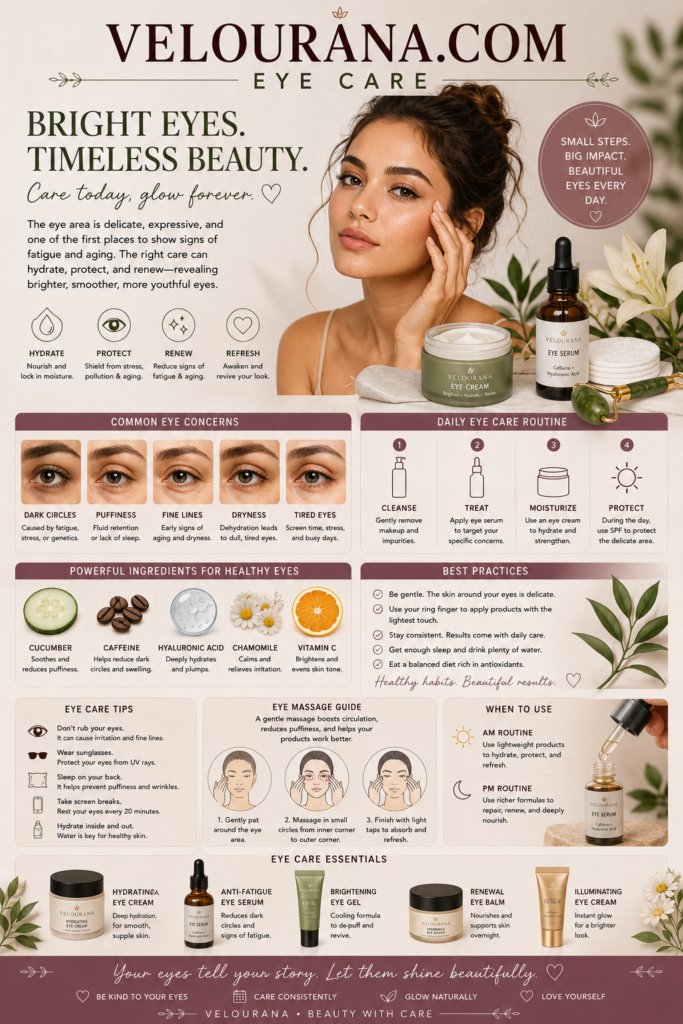
CATEGORY: Eye Patches
Eye patches have evolved from an occasional spa accessory into one of the most recognizable targeted treatments in modern skincare. Hydrogel crescents appear in morning routines, backstage makeup preparation and evening rituals, while reusable silicone versions have introduced a different approach to the same concept. Behind the playful appearance is a serious formulation challenge: the product must work comfortably on one of the thinnest and most expressive areas of facial skin while delivering enough hydration to produce a visible difference without overwhelming sensitive eyes.
Choosing an eye patch is therefore more complicated than selecting the most attractive jar. Two patches that look almost identical may contain very different formulas. One may concentrate primarily on humectants for dehydration, another may combine caffeine with cooling ingredients for temporary puffiness, while another may use niacinamide, antioxidants or peptides as part of a longer-term approach to the appearance of the eye contour.
The key is matching the formula to the actual concern. Dryness, puffiness, fine lines and dark circles are not interchangeable conditions, even though they frequently occur together. Understanding what creates each appearance allows eye patches to be used with greater precision and prevents a temporary treatment from being expected to solve problems beyond the reach of topical skincare.
The Eye Contour Is a Landscape of Several Different Concerns
Beauty language often treats the under-eye area as though it has one universal problem: looking tired. In reality, the appearance described as tiredness can emerge from several entirely different characteristics.
Dryness creates roughness and can emphasize fine surface lines. Dehydration makes the skin look less plump and may cause concealer to crease more visibly. Puffiness changes the contour of the lower eyelid and can create additional shadows. Pigmentation may produce brown or gray-brown discoloration. Thin skin can allow underlying vascular tones to become more apparent, creating blue, purple or reddish darkness. Tear-trough anatomy can cast shadows even when the skin itself has little discoloration.
Age introduces further complexity. Collagen and elastin change over time, facial fat compartments shift, bone structure gradually remodels and the skin becomes thinner. The eye area may therefore show several layers of change simultaneously. A person may have dehydrated surface lines overlying a structural hollow with mild pigmentation around it.
No single eye patch can meaningfully reverse all of these processes.
This is not a weakness unique to patches. It reflects the limitations of topical cosmetics generally. Skincare operates primarily on and within the skin. It can improve hydration, support barrier function, influence certain pigmentation pathways and, with appropriate ingredients and long-term use, contribute to smoother-looking skin. It cannot replace lost facial volume or fundamentally alter skeletal anatomy.
Eye patches are particularly good at creating short-term surface improvements because of their occlusive format. When the stratum corneum becomes more hydrated, the surface looks smoother and catches light differently. That alone can make several concerns appear less severe. A dry, shadowed under-eye can look brighter once hydrated even though its underlying structure has not changed.
Recognizing this distinction allows the immediate result to be appreciated without misinterpreting it.
Dry Under-Eyes Need More Than a Fashionable Ingredient
For dryness, the most useful eye patches are often the least complicated. Their strength comes from a well-balanced combination of humectants, emollients and soothing ingredients rather than from a crowded list of aggressive actives.
Humectants form the hydration core. Glycerin remains one of the most dependable ingredients in cosmetic moisturization. Hyaluronic acid and its salts are widely used because of their water-binding properties. Panthenol can contribute both hydration and soothing benefits, while ingredients such as betaine and sodium PCA may support the skin's natural moisturizing environment.
Hydration alone, however, does not always solve persistent dryness. Water must also be retained. The outer skin barrier depends on an organized lipid structure that limits excessive transepidermal water loss. Formulas containing ceramides, cholesterol-related lipids, squalane or other emollients may therefore be especially attractive for skin that feels persistently tight.
The patch format itself helps because it temporarily reduces evaporation from the covered area. This creates a humid microenvironment beneath the material. The serum remains against the skin instead of drying immediately in the surrounding air, which can amplify the sensation of hydration.
For severely dry skin, however, the effect may fade unless followed by an appropriate moisturizer. A patch can flood the upper layers with hydration, but a leave-on product can help preserve that comfort after the treatment ends.
Fragrance deserves consideration. The under-eye area is close to the eyes and may be more reactive than other parts of the face. A strongly perfumed patch may create a luxurious sensory impression but offer no functional advantage for hydration. For sensitive users, simpler fragrance-free formulas are often easier to tolerate.
The same principle applies to essential oils and highly aromatic botanical ingredients. Natural origin does not guarantee gentleness. The eye contour benefits from carefully formulated products rather than ingredient romanticism.
Fine Lines Can Look Softer Without Actually Disappearing
Eye patches frequently make dramatic claims about wrinkles because hydration can produce a visually impressive short-term effect on fine surface lines.
The mechanism is relatively straightforward. When dry outer skin absorbs water, it becomes more flexible and slightly plumper. Very fine lines caused or accentuated by dehydration can therefore appear shallower. Under certain lighting, the difference can be striking.
This immediate smoothing should not be confused with permanent wrinkle removal.
Expression lines around the eyes develop partly because the skin repeatedly folds during smiling and squinting. Over time, intrinsic aging and ultraviolet exposure alter collagen, elastin and other components of the dermal matrix. Deeper lines are therefore structural features rather than simply dry creases sitting on the surface.
Long-term skincare can influence aspects of skin aging. Retinoids, sun protection, antioxidants and certain other ingredients have meaningful roles, but their effects require consistency and time. A twenty-minute eye patch cannot recreate months of biological remodeling.
Peptide-containing patches attempt to bridge the gap between immediate hydration and longer-term skin support. Peptides represent a broad family rather than a single active ingredient. Some are used in cosmetic formulations intended to improve the appearance of firmness and fine lines. Their effectiveness depends on the specific peptide, its stability, concentration and delivery system.
Antioxidants may complement these formulas by helping address oxidative stress. Vitamin E, green tea components and vitamin C derivatives are among the ingredients commonly encountered. Again, their presence on an ingredient list is not enough to determine quality. A sophisticated formula must preserve ingredient stability and maintain compatibility with the delicate eye contour.
The greatest long-term protection against premature eye-area aging remains much less glamorous than a patch: reducing excessive ultraviolet exposure. Sunscreen appropriate for the surrounding face, protective sunglasses and sensible sun habits help address one of the major environmental contributors to skin aging.
Eye patches work best when understood as an enhancement to this foundation rather than its replacement.
Puffiness Requires an Understanding of What Is Creating the Swelling
Morning puffiness is one of the concerns most suited to the temporary nature of eye patches. Fluid can accumulate around the lower eyelids overnight, particularly depending on sleep position, diet, allergies and individual anatomy. As normal activity resumes during the day, some of this swelling may naturally diminish.
A cooling patch can make this transition feel faster and more comfortable. Cool temperatures temporarily constrict superficial vessels and can reduce the appearance of mild swelling. Hydrogel is particularly popular for this purpose because it naturally feels cool against the skin.
Refrigerated patches intensify the sensation. They should be cool rather than frozen. Extreme cold is unnecessary and can be irritating, particularly on thin skin. Storage instructions supplied with the product remain important because not every formulation is designed for refrigeration.
Caffeine is one of the signature ingredients of de-puffing eye products. It is incorporated into formulas because of its effects relevant to circulation and its antioxidant characteristics. When combined with cooling and hydration, it can contribute to the refreshed appearance consumers expect from a morning patch.
The result is often temporary because the underlying fluid dynamics continue to change. That is entirely appropriate for this category. A morning treatment does not need to permanently alter the eye area to be useful; reducing the appearance of transient puffiness for several hours may be precisely what the user wants.
Structural bags are different. With age or genetic predisposition, fat associated with the orbit may become more prominent, while surrounding tissues and facial volume change. This creates a contour that resembles puffiness but is not simply retained fluid.
No amount of caffeine serum can dissolve an anatomical fat pad. A patch can hydrate the overlying skin and perhaps soften the transition between light and shadow, but it cannot remove the structure underneath.
Understanding that distinction prevents repeated disappointment with topical products. When the problem is temporary fluid accumulation, eye patches may be highly satisfying. When the concern is structural, their role is cosmetic surface enhancement.
Dark Circles Demand More Precise Expectations
Dark circles are perhaps the most difficult eye concern to discuss because the same visible description can have several causes.
Pigmented dark circles contain increased melanin in the skin. They may be influenced by genetics, sun exposure, inflammation and rubbing associated with allergies or irritation. In this situation, ingredients commonly used for uneven skin tone may have relevance.
Niacinamide is frequently chosen because it combines several useful properties. It supports skin barrier function while also being used in formulations intended to improve uneven pigmentation. This makes it particularly suitable for the eye area, where aggressive brightening strategies may be poorly tolerated.
Vitamin C derivatives may provide antioxidant and brightening support, while licorice-derived compounds and other gentle tone-focused ingredients can appear in specialized patches. Consistency matters because pigmentation changes gradually. An occasional patch cannot reasonably be expected to alter established discoloration after one application.
Vascular darkness behaves differently. Because under-eye skin is thin, underlying vessels and tissues can influence visible color. Blue, purple or reddish tones may therefore show through the surface. Hydration can make the skin look healthier, but pigment-reducing ingredients cannot remove a color that is not primarily caused by melanin.
Structural shadowing creates another category. A pronounced tear trough can cast a dark line depending on the direction of light. This darkness may appear stronger in overhead lighting and weaker when illumination comes directly from the front. No brightening serum can remove a geometric shadow.
Many people have mixed dark circles involving pigmentation, vascular visibility and anatomy simultaneously. This explains why a product may improve the appearance without eliminating the concern completely.
Eye patches are especially effective at creating immediate optical freshness. Hydrated skin reflects light more evenly. Mild swelling may decrease. The smoothness of the surface improves. Together, these changes can make darkness appear less prominent even before any longer-term brightening ingredient could possibly have produced a biological effect.
That immediate improvement is valuable, provided it is described accurately.
Hydrogel, Bio-Cellulose and Other Patch Materials
The material carrying the serum affects both the experience and performance of an eye patch.
Hydrogel is among the most familiar. These patches have a soft, flexible, jelly-like texture and conform closely to the curves beneath the eyes. Their naturally cooling feel makes them particularly attractive for de-puffing and morning treatments.
Some hydrogel patches are supplied in jars containing multiple pairs immersed in essence. This can reduce individual wrappers but introduces practical considerations. The container must remain properly closed to prevent drying, and patches should be removed hygienically. Many jars include a small spatula or tweezer for this purpose.
Fabric patches resemble miniature sheet masks. They can hold a substantial quantity of serum, although their feel differs from hydrogel. Depending on the material and cut, they may adhere extremely well or shift more easily during wear.
Bio-cellulose materials can offer close contact with the skin and are often associated with premium mask formats. Their fine structure allows them to hold liquid effectively and conform to facial contours. Yet material sophistication should never be used as a substitute for evaluating the serum itself.
A premium carrier soaked in a poorly formulated essence remains a poor treatment.
Silicone introduces a fundamentally different model. Reusable silicone eye patches generally contain no built-in skincare serum. The user applies an existing product and places the silicone over it, creating an occlusive environment. This allows the same physical patches to be washed and used repeatedly.
The advantage is customization. Someone who already knows that a particular fragrance-free hydrating serum suits their eyes can use that product rather than purchasing pre-soaked patches containing unfamiliar ingredients.
Reusable patches also reduce the number of disposable patch materials consumed, although their actual environmental advantage depends on longevity, cleaning and repeated use. Sustainability is ultimately a lifecycle issue rather than a marketing label.
Whichever material is chosen, comfort matters. A patch that constantly slides down the cheeks becomes irritating to use. One that adheres too aggressively may tug at delicate skin during removal. Good design should allow close contact without creating unnecessary friction.
The Shape of an Eye Patch Is More Functional Than It Appears
The characteristic crescent shape of under-eye patches is not purely decorative. It allows the product to follow the orbital contour while avoiding direct contact with the eye.
Many crescent patches have one narrow end and one broader end, leading to debate over which direction they should face. There is no universal orientation that is correct for every design. Position depends on the area the user wants to cover and on manufacturer instructions.
Placing the wider section toward the outer eye can provide more coverage around the crow's-feet area. Reversing it can concentrate more material closer to the inner under-eye, where darkness may be particularly visible. The important issue is not following a social-media rule about orientation but ensuring that the patch rests comfortably on the intended skin without approaching the eye too closely.
Facial anatomy varies considerably. A shape that fits one person's orbital area perfectly may crease or overlap awkwardly on another. This is one reason some brands develop larger patches or masks that extend toward the temples.
Placement also affects makeup preparation. When patches are used before concealer, extending them slightly toward the outer eye can hydrate areas where complexion products frequently become dry or textured.
Some people use eye patches while applying eye makeup because the patch can catch falling powder. Although convenient, this changes its function from purely skincare to a combination of treatment and makeup aid. Care should be taken not to contaminate the serum with pigments or glitter, especially if patches come from a multi-use jar.
The skin should not be stretched when applying or removing the material. Gentle placement is sufficient. The eye contour does not benefit from aggressive pulling, and the close adherence of modern hydrogel materials makes force unnecessary.
Timing and Application Influence the Final Result
A common misconception in skincare is that longer exposure automatically produces stronger results. Eye patches demonstrate why that assumption is unreliable.
Manufacturers formulate patches with a particular treatment period in mind. During that period, the material keeps the serum against the skin and reduces evaporation. Eventually, however, a patch may begin to dry. At that stage the comfortable, hydrated environment changes.
Leaving a nearly dry patch attached for an additional hour is unlikely to provide a proportional benefit. It may simply become tight and uncomfortable.
Clean skin is usually the most logical starting point. Heavy layers of cream beneath a disposable serum patch may prevent the product from sitting as intended. After cleansing, the patches can be positioned gently and left undisturbed for the recommended period.
Movement influences adhesion. Some patches remain securely in place while the wearer works or prepares breakfast; others slide when saturated with serum. Allowing a freshly applied hydrogel patch to settle for a moment can improve contact.
After removal, excess essence can generally be pressed lightly into the skin when the product directions indicate that it is a leave-on formula. There is rarely a reason to massage aggressively. The remaining routine can then continue.
For morning use, a light moisturizer and sunscreen may follow. For evening use, a suitable eye cream or facial moisturizer can help preserve hydration.
When patches are used immediately before makeup, excessive residual serum can interfere with concealer. Allowing the skin to absorb the remaining product creates a better balance: hydrated enough to look smooth, but not so slippery that makeup moves.
This preparation effect is one reason professional makeup environments have embraced eye masks. The immediate goal is often not long-term skincare transformation but the creation of a smooth, comfortable canvas.
Sensitive Eyes Need a More Conservative Approach
The words "eye product" can create a false sense that anything sold in the category must automatically be gentle. Cosmetic formulas still vary significantly, and the eye contour can react to ingredients tolerated perfectly well elsewhere on the face.
Fragrance is a frequent consideration. Some users enjoy scented skincare without difficulty, while others experience irritation or watering when fragranced products are applied close to the eyes. For reactive skin, fragrance-free options remove one unnecessary variable.
High concentrations of exfoliating acids are generally not what most people need from an eye patch. The under-eye region is not an area where aggressive resurfacing should be pursued casually. Products specifically formulated for this region are preferable to adapting strong facial exfoliants.
Retinoid-containing eye treatments also deserve respect. Retinoids can contribute significantly to anti-aging routines, but irritation, dryness and flaking are possible. When incorporated into eye-area products, careful formulation and gradual use matter more than maximum strength.
Botanical extracts can be soothing, antioxidant or simply sensory depending on the ingredient and formulation. A long botanical list should not automatically be interpreted as evidence that a product is gentler. Plant-derived substances can also cause sensitivity.
Anyone experiencing persistent burning, significant redness, swelling or eye irritation should remove the patches rather than waiting for the recommended treatment time to finish. Skincare should not require enduring substantial discomfort in order to "work."
The idea that tingling proves effectiveness is particularly inappropriate around the eyes.
A simpler hydrating formula can often provide the most elegant solution for sensitive skin. Glycerin, hyaluronic acid, panthenol and barrier-supportive ingredients may not produce the most dramatic packaging claims, but comfort and consistency are more important than novelty.
Eye Patches as Part of Long-Term Eye Care
The greatest mistake in evaluating eye patches is judging them either as miracle treatments or as useless luxuries. They are neither.
Their role is specific.
Eye patches create a temporary environment in which hydration and selected ingredients remain closely associated with the under-eye skin. This makes them excellent for rapid moisturization, surface smoothing and sensory cooling. They can make the eye area look fresher before an event, improve the way makeup sits on dry skin and provide relief from the appearance of mild morning puffiness.
Their longer-term contribution depends heavily on formulation and frequency. A patch containing niacinamide, peptides or antioxidants may complement a broader skincare strategy, but an occasional application cannot replace consistent daily care.
Regular moisturizing supports the skin barrier. Appropriate active ingredients can address selected concerns over time. Sunscreen and sunglasses help protect against ultraviolet exposure. Adequate sleep and management of allergies may influence some forms of puffiness and darkness. None of these measures needs to compete with eye patches; they address different parts of the problem.
The strongest routines are usually those in which every product has a defined purpose. When an eye patch is used because the skin is dehydrated, the goal is clear. When it is chilled because temporary morning puffiness is the concern, the mechanism makes sense. When a brightening patch is selected for pigmentation, expectations can be set over a longer timeframe.
Problems arise when one patch is expected to simultaneously erase hollows, remove genetic pigmentation, permanently eliminate wrinkles and compensate for exhaustion.
Beauty products become easier to evaluate when their limitations are treated as part of their identity rather than as failures.
Eye patches offer a concentrated moment of skincare precisely where the face often reveals fatigue first. Their best formulations combine intelligent hydration with carefully chosen supporting ingredients and a comfortable delivery material. Their best use comes from matching those characteristics to what the under-eye area actually needs.
A good patch does not need to promise a different face. Sometimes the meaningful result is simpler: skin that feels softer, looks smoother, appears less puffy and provides a better canvas for the rest of the day. Within the delicate and demanding landscape of eye skincare, that is a substantial achievement for such a small product.
THE END VELOURANA
 Discover More From Our Family of Websites
 ZodiacBearing (Astrology, Tarot, Numerology, Angel Numbers & Spiritual Guidance)
 Velourana (Beauty, Makeup, Hair Care, Skincare & Beauty Tips)
 HavenBearing (Home, Living, Organization, Décor & Everyday Inspiration)
 PawBearing (Pet Care, Dog Breeds, Animal Health, Training & Pet Products)
 PsyCatherine (Notes From the Journal of a Psychologist on Real Life)

