
CATEGORY: Eye Product Application
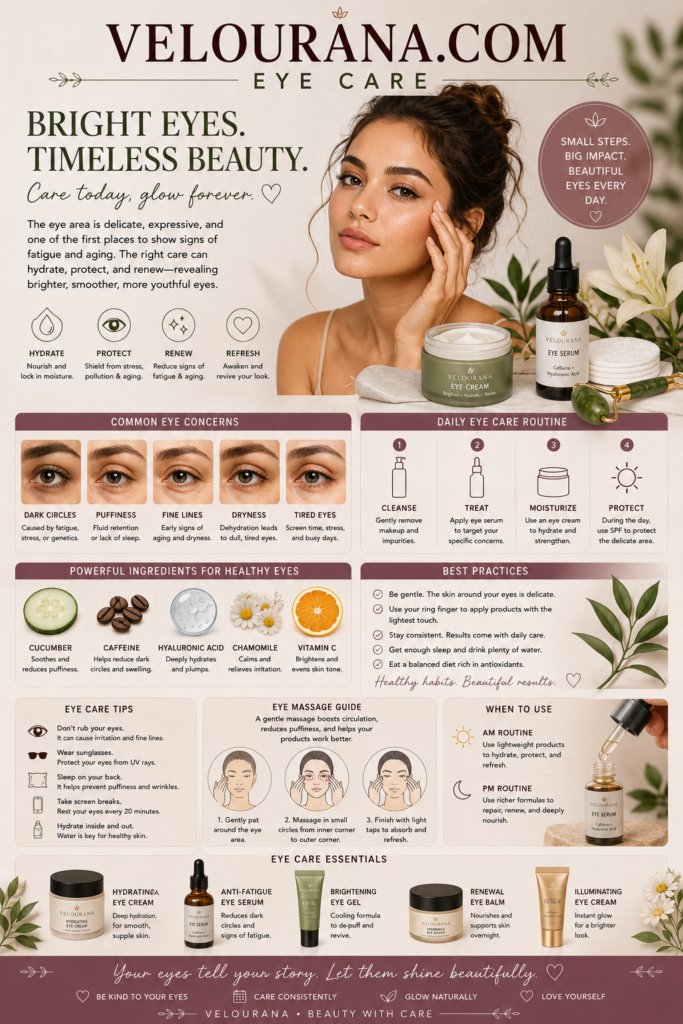
The eye area occupies very little space on the face, yet it demands an unusually thoughtful approach to skincare. The skin surrounding the eyes is thinner and more delicate than much of the facial skin, constantly moving with every blink, smile, squint, and expression. Products applied here therefore encounter conditions that are quite different from those affecting a moisturizer spread across the cheeks or a serum applied to the forehead. Technique matters, not because eye care needs to become complicated, but because careful application can make a simple routine more comfortable, consistent, and effective.
Eye product application is often discussed as though there were one universally correct tapping motion or one precise point where every cream must be placed. In reality, good technique begins with understanding the product being used, the condition of the skin, the purpose of the formula, and the way that formula behaves after application. A lightweight hydrating serum may require a different approach from a rich balm. A cooling gel used in the morning has different practical demands from an emollient cream applied before bed. Even the amount used can change how successfully a product settles around the eyes.
The most refined approach is therefore not about performing an elaborate ritual. It is about control. Small quantities, clean hands, gentle contact, sensible placement, and enough time for formulas to settle can transform eye care from an automatic final step into a deliberate part of a skincare routine.
Why the Eye Area Requires a Different Touch
The skin around the eyes is naturally vulnerable to dehydration, visible fatigue, temporary puffiness, fine surface lines, and irritation. It also sits close to the eye itself, which means that products applied too generously or too close to the lash line may migrate and cause discomfort. The challenge is to deliver skincare where it is useful without overwhelming an area that rarely benefits from aggressive handling.
This is one reason more pressure is not synonymous with better absorption. Skincare does not need to be physically forced into the skin. Most modern eye products are designed to spread easily and form a thin, even layer. Repeated rubbing can create unnecessary friction, particularly when the skin is dry or when the formula begins to become tacky.
Gentle application also matters because the eye area is in almost constant motion. A product that initially appears perfectly positioned can move as facial expressions change or as natural warmth softens the formula. Applying a thick layer immediately beneath the lashes may therefore result in product gradually travelling closer to the eyes than intended.
A controlled application leaves a comfortable margin around the immediate eye while still treating the surrounding skin. Individual product directions should always take priority, particularly for formulas containing active ingredients or products specifically designed for particular parts of the eye contour.
Preparing the Skin Before Eye Care
Application begins before the eye product touches the face. Residual makeup, sunscreen, cleanser, or cleansing oil can affect the way a formula spreads and settles. The eye contour does not necessarily need to feel stripped or completely dry, but it should be clean enough that the product is being applied to skin rather than to a mixture of previous residue.
After cleansing, the condition of the skin can influence the experience of application. Some hydrating formulas spread beautifully over skin that retains a slight degree of moisture, while other products are specifically directed for use on dry skin. This distinction becomes particularly important when stronger active ingredients are involved. Manufacturer instructions should therefore guide the routine rather than a universal assumption that every eye product belongs on damp skin.
Clean fingertips are equally important. Eye products are frequently packaged in jars, tubes, pumps, rollers, or applicators, and each format creates different opportunities for contamination. Hands should be clean before touching the eye area or dipping into a jar. Where a spatula is supplied, keeping it clean and using it consistently can help preserve the hygiene of the product.
Preparation also includes observing the skin. If the eye contour is unusually irritated, swollen, broken, or uncomfortable, adding multiple cosmetic treatments may not be appropriate. The eye area rewards restraint.
The Importance of Using the Right Amount
One of the most common difficulties with eye products comes from quantity rather than formula. Because creams and serums are associated with hydration and treatment, it can seem logical that applying more would produce more dramatic results. Around the eyes, excess product often creates the opposite experience.
A heavy application may remain on the surface, interfere with makeup, contribute to pilling, or migrate toward the eyes. Rich creams can feel particularly uncomfortable when applied in excessive amounts because body heat gradually softens their emollient components. The formula may begin exactly where intended and later move toward the lash line.
The appropriate amount varies according to the product's texture, concentration, packaging, and directions. A concentrated serum may require very little, while a lighter gel may spread differently. Instead of relying on an arbitrary universal measurement, it is more useful to begin conservatively and observe how easily the product covers the intended area.
The goal is a thin, comfortable layer rather than a visible coating. After application, the skin should not need prolonged rubbing to eliminate obvious excess. If significant residue remains long after the product has been distributed, reducing the quantity at the next application may improve both comfort and performance.
This economy has another advantage: it encourages precision. When only a controlled quantity is available on the fingertip, there is less temptation to spread the formula beyond the area where it is needed.
Placement Around the Eye Contour
Where a product belongs depends partly on what the manufacturer has designed it to do. Some formulas are intended primarily for the under-eye and orbital area. Others may be suitable for the upper eye contour, while certain products are specifically formulated and tested for use on the eyelids. These categories should not automatically be treated as interchangeable.
For a conventional eye cream, application commonly focuses on the skin surrounding the orbital area rather than directly against the lashes. This allows the formula to be distributed around the eye while reducing the likelihood of migration into the eye itself. The precise boundary should follow the individual product instructions.
The under-eye region deserves especially controlled placement. Starting slightly away from the inner eye and spreading outward allows the product to be distributed without depositing a concentrated amount beside the tear duct. The outer eye area can also receive attention, particularly where dryness or expression lines are noticeable, but stretching the skin outward during application is unnecessary.
Upper-eye application requires greater product awareness. A cream described simply as an eye cream should not automatically be spread across the mobile eyelid. Unless the instructions indicate that eyelid use is appropriate, staying within the recommended application area is the safer cosmetic approach.
Precision is not restrictive. It simply recognizes that the eye contour contains several distinct zones and that a product formulated for one area may not have been intended for all of them.
Tapping, Pressing, and Gliding Without Unnecessary Friction
The familiar advice to tap eye cream into the skin has a useful principle behind it: reduce unnecessary dragging. However, tapping does not need to become rapid percussion. The objective is gentle distribution.
A fingertip can place small amounts of product around the intended area before those deposits are softly connected. Light pressing works particularly well with richer creams because warmth from the fingertip can help the product spread without repeated rubbing. Lightweight gels and fluid serums may tolerate a delicate gliding movement, provided the skin is not being pulled.
The ring finger is often recommended because many people naturally apply less pressure with it than with the index finger. It is not inherently magical. A different finger can be used successfully if the touch remains controlled. Pressure matters more than finger identity.
Texture should determine technique. A balm with significant slip can be pressed and lightly smoothed. A fast-drying gel should be distributed before it becomes tacky. A watery serum may need only a few moments of light contact. Continuing to manipulate a product after it has begun setting can encourage pilling and may create friction that serves no useful purpose.
This adaptability is what separates deliberate application from a rigid ritual. The best technique is the gentlest method that produces an even layer without pulling the skin or leaving obvious patches of excess formula.
Layering Eye Products Within a Skincare Routine
Eye care rarely exists independently from the rest of the face. Toners, essences, facial serums, moisturizers, sunscreens, primers, concealers, and makeup may all occupy neighboring areas. The challenge is not merely deciding which product comes first but preventing several layers from accumulating into an unstable film.
General skincare layering often moves from lighter textures toward richer ones, but product instructions and formulation can override that convention. An eye serum may naturally precede an eye cream, while a treatment with specific usage directions may need a particular position within the routine.
What matters most is avoiding excessive overlap. If a rich facial moisturizer is spread heavily beneath the eyes and then covered with a rich eye cream, the combined layer may become more occlusive than intended. Conversely, people with dry eye contours may find that carefully coordinated layers provide greater comfort than one product alone.
Time between layers can also influence performance. Products do not necessarily require long waiting periods, but allowing one layer to settle before immediately adding another can reduce mixing and pilling. This becomes especially valuable in the morning, when sunscreen and makeup must subsequently sit over the skincare.
Sunscreen deserves particular attention. Eye products do not replace appropriate daytime sun protection. Once skincare has settled, a suitable sunscreen should be applied according to its own directions, including around the eye area where appropriate and tolerated. The result should be a coherent routine rather than a collection of products competing for the same small section of skin.
Morning Application and the Demands of Makeup
Morning eye care has a practical responsibility beyond skincare: it often needs to coexist with concealer, foundation, powder, and other cosmetics. A product can be pleasant at night yet unsuitable beneath makeup if it leaves a greasy or highly mobile surface.
For daytime use, controlled quantity becomes particularly important. A hydrating layer may help dry under-eye skin appear smoother, but excessive cream can cause concealer to move, separate, or collect in expression lines. The objective is not to eliminate every natural line through moisturization; it is to create a comfortable, balanced surface.
After applying eye care, allowing the formula to settle can make a noticeable difference. Makeup applied immediately onto a freshly coated surface may mix with the skincare rather than forming its own layer. When the eye product has had a little time to absorb and stabilize, concealer can usually be placed more precisely.
If persistent pilling occurs, the problem may lie in the interaction between formulas rather than in poor application technique. Certain film-forming ingredients, silicones, polymers, sunscreens, and makeup bases can behave unpredictably when layered heavily. Reducing the amount of each layer is often a more useful first experiment than rubbing harder.
The successful morning routine is one in which skincare and cosmetics behave as compatible layers. Eye care should support the appearance and comfort of the skin without becoming a visible obstacle beneath makeup.
Nighttime Application and Richer Textures
Evening routines allow greater flexibility because there is no immediate need to apply makeup. This is often when richer eye creams, balms, or more intensive moisturizing formulas feel most appropriate. Yet the absence of makeup does not mean unlimited product should be applied.
A thick nighttime layer can still migrate into the eyes, transfer onto bedding, or create discomfort. Rich formulas work best when they are deliberately placed and given time to settle rather than deposited as a heavy mask unless the product is specifically designed for that purpose.
Nighttime also tends to be when active skincare routines become more complex. Retinoids, exfoliating acids, prescription treatments, and other potent ingredients used elsewhere on the face can affect the eye contour even when they are not deliberately applied there. Careless spreading may bring products closer to the eyes than intended.
An eye cream can sometimes function as a comforting moisturizing component within such a routine, but it should not be assumed to neutralize irritation caused by inappropriate active use. Compatibility, frequency, and placement should be considered individually.
The evening ritual is most successful when it remains calm and controlled. More layers do not necessarily create better skin by morning. Consistency, appropriate formulation, and comfortable application usually matter far more than quantity.
Applicators, Rollers, Wands, and Cooling Tools
Eye products increasingly arrive with specialized applicators designed to enhance convenience or sensory appeal. Metal tips can feel cool against the skin, rollers distribute fluid formulas, ceramic applicators provide a smooth surface, and shaped wands may help control placement.
These tools can make application pleasant, but the tool itself does not replace good technique. Pressure should remain light, particularly when a rigid applicator is used. Pressing firmly because a metal tip feels cooling can turn a gentle skincare step into unnecessary mechanical stress.
Hygiene is also important. An applicator repeatedly contacting the skin should be kept according to the manufacturer's care instructions. If a tool is detachable and washable, it should be cleaned appropriately and thoroughly dried. Built-in applicators should not be shared between people.
Cooling sensations can be especially appealing in morning routines. A cool applicator may temporarily make the eye area feel refreshed, but extreme cold is unnecessary. Skincare tools should never be used at temperatures that cause pain, numbness, or skin discomfort.
Ultimately, applicators are delivery devices. Their value lies in helping a formula reach the skin evenly and comfortably. A simple fingertip can be equally effective when used with precision.
Recognizing When Application Technique Needs Adjustment
The skin often provides immediate feedback about technique. Stinging, watering eyes, persistent product migration, excessive tackiness, pilling, or makeup instability can indicate that something about the amount, placement, layering, or formula needs reconsideration.
If the eyes water shortly after application, the product may have been placed too close to the lash line or used too generously. If concealer repeatedly slides away, the morning eye cream may be too rich for the cosmetics layered over it. If the product forms small rolls or flakes, too many layers may be interacting on the surface.
Persistent irritation is different from a minor cosmetic inconvenience. Burning, significant redness, swelling, or ongoing discomfort warrants discontinuing the suspected cosmetic product and assessing the situation appropriately. Eye-area reactions should not be treated as evidence that a product is "working."
It is also useful to distinguish skin concerns from eye concerns. Cosmetic eye creams are designed for the surrounding skin, not for treating conditions affecting the eye itself. Symptoms involving the eye, vision, significant swelling, pain, or persistent irritation belong outside the scope of ordinary beauty experimentation.
Good application is therefore responsive. Rather than repeating the same routine regardless of results, it adjusts according to what the skin and the product are communicating.
Precision as the Foundation of Eye Care
Eye product application is ultimately an exercise in restraint. The eye contour does not need vigorous rubbing, complicated choreography, or excessive quantities of skincare. It benefits from clean application, thoughtful placement, gentle pressure, and formulas used according to their intended purpose.
A refined routine can be remarkably simple. The product reaches clean skin in a controlled amount. It is distributed without stretching the area. It remains sufficiently distant from the eye itself unless specifically designed for closer use. It is allowed to settle before additional skincare or makeup is layered over it. Most importantly, the technique changes when the skin indicates that something is not working.
That attention to detail is what gives eye care its sophistication. The difference between hurried application and deliberate application may involve only a few seconds, yet those seconds can improve comfort, reduce waste, and create a more reliable relationship between the formula and the skin.
The eye area is delicate, expressive, and constantly active. Treating it gently is not merely a beauty convention. It is the logical foundation of thoughtful eye product application.
THE END VELOURANA
 Discover More From Our Family of Websites
 ZodiacBearing (Astrology, Tarot, Numerology, Angel Numbers & Spiritual Guidance)
 Velourana (Beauty, Makeup, Hair Care, Skincare & Beauty Tips)
 HavenBearing (Home, Living, Organization, Décor & Everyday Inspiration)
 PawBearing (Pet Care, Dog Breeds, Animal Health, Training & Pet Products)
 PsyCatherine (Notes From the Journal of a Psychologist on Real Life)

