
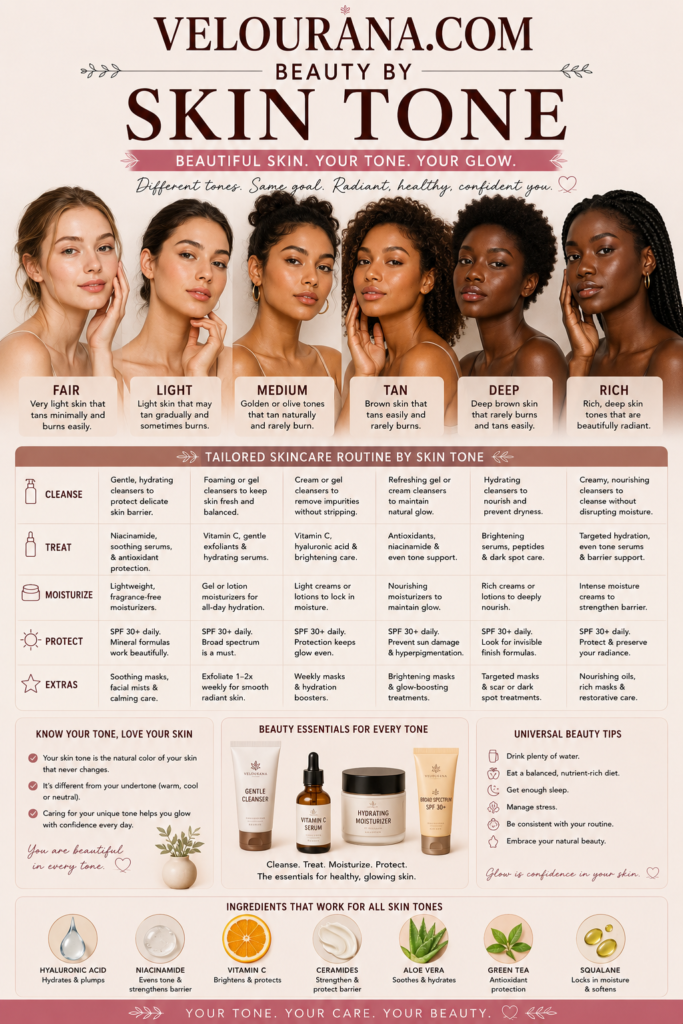
CATEGORY: Tan Skin Makeup
Tan skin can carry makeup with remarkable balance because its natural depth provides enough structure for both subtle and dramatic color. Soft blush can remain visible without appearing weak. Bronze and contour can add definition without immediately looking severe. Deep eye makeup can create intensity while still feeling connected to the complexion, and strong lip colors such as red, berry, plum, and brown can become focal points without making the face look visually divided.
The versatility of tan skin comes from more than depth alone. Tan complexions can be golden, bronze, olive, neutral, peach, rosy, muted, or cool. Some have a strong warm undertone, while others are more balanced or contain green and gray-green characteristics. These differences determine whether certain cosmetics blend naturally, create contrast, or become more saturated than expected once they meet the skin.
The most successful makeup therefore begins with understanding the complexion itself.
A golden tan face may respond naturally to bronze, warm rose, terracotta, caramel, and copper. Olive-tan skin may interact beautifully with muted rose, plum, burgundy, sage, deep teal, and antique gold. Neutral tan skin can move comfortably between warm and cool palettes, while a cooler tan complexion can create elegant harmony with berry, mauve, charcoal, navy, plum, and blue-based red.
These relationships are useful because they explain how makeup behaves. They should not become restrictions.
Tan skin can wear warm makeup, cool makeup, tonal makeup, jewel-toned makeup, high contrast, minimal makeup, and full glamour. The real objective is to create a composition in which depth, undertone, saturation, and finish work together rather than compete.
The Base Should Preserve the Natural Depth of Tan Skin
Foundation should refine tan skin rather than make it look more tanned.
One of the most common mistakes in complexion makeup is choosing a foundation that is intentionally deeper or warmer because the wearer wants a bronzed appearance. This creates uniform depth instead of dimension and can make the face look disconnected from the neck and chest.
A better approach is to begin with a foundation that matches the actual complexion.
Warmth can then be added selectively through bronzer.
Depth can be added through contour.
Color can return through blush.
This separation makes the finished makeup more believable.
Tan skin often contains natural variation. The forehead may be slightly deeper, the center of the face may contain more redness, the jaw may be more neutral, and the neck may be lighter. Pigmentation, freckles, or areas around the mouth can create additional differences.
Foundation does not need to erase every one of these variations.
Sheer or medium coverage can preserve some of the natural character of the complexion while creating enough uniformity for the rest of the makeup to sit cleanly above it.
Full coverage can also work beautifully when a more perfected surface is desired, but the shade needs to remain accurate. A base that is too orange or too red will affect every color placed over it.
Once the foundation is right, the rest of the makeup becomes easier to control.
Bronzer Should Add Warmth Without Flattening the Face
Tan skin can still benefit from bronzer.
The purpose of bronzer is not to make the complexion several shades darker. It is to introduce selective warmth and dimension.
Warm tan skin may suit caramel, bronze, golden brown, or warm cocoa tones. Olive-tan skin often benefits from bronzers that are less orange and more muted. Neutral tan skin can often wear both golden and balanced bronzers. Cooler tan complexions may prefer a slightly more neutral or rosy-brown warmth.
The product should look like warmth once it is blended rather than obvious color sitting above the face.
Placement matters because bronzer only creates dimension when some areas remain lighter.
Applied around the temples, cheek area, forehead, or other places where warmth naturally develops, bronzer can make the complexion look richer without covering the entire face in one tone.
When bronzer is spread everywhere, the skin becomes uniformly deeper and loses the contrast that creates structure.
Tan skin already has depth. The goal is to use that depth, not bury it beneath more of the same.
Contour Should Create Shadow Rather Than Warmth
Contour is most effective when it is treated separately from bronzer.
Bronzer adds warmth.
Contour creates the impression of recession.
Natural shadow is usually more muted than sun-warmed skin, so contour shades often work better when they contain less orange or red.
Neutral brown, taupe-brown, muted cocoa, and soft cool brown can create believable structure depending on the complexion.
Tan skin can support deeper contour than lighter skin, but depth should still be built gradually.
A contour that is too dark or too saturated can create visible stripes rather than natural shadow.
The goal is to shape the face without making the product itself the focal point.
This is especially important around the cheekbones and jaw, where harsh transitions can make the makeup appear heavy.
Cream contour can create seamless diffusion when blended into the base.
Powder can provide more controlled layering.
The formula is less important than the final effect.
Blush Can Bring Tan Skin to Life
Blush can completely change the emotional character of tan skin.
Soft rose can create polish.
Peach can introduce warmth.
Coral can make the complexion feel energetic.
Terracotta can create earthy sophistication.
Berry can add depth.
Mauve can bring cooler balance.
Deep rose or muted red can create a strong flush without looking disconnected.
Tan skin often supports richer blush shades than people expect because the complexion has enough depth to keep the pigment from appearing excessively stark.
The undertone determines whether the blush harmonizes or contrasts.
Warm tan skin often works beautifully with peach, coral, terracotta, warm rose, and muted red.
Cooler tan skin can respond naturally to berry, plum, mauve, and cool rose.
Olive-tan skin may look especially sophisticated with muted rose, burgundy, mauve, earthy berry, and softened terracotta.
Neutral tan skin can usually move across both families.
Contrast can be beautiful too.
Cool berry against golden skin can create clarity.
Warm coral against cool tan skin can add visible heat.
The difference is not about right or wrong.
It is about intention.
Blush Placement Can Change the Shape of the Makeup
The location of blush affects the face almost as much as the color.
Color concentrated on the apples creates a softer and more central flush.
Blush carried outward toward the temples can create a more lifted appearance.
Higher placement can become part of the sculptural structure of the makeup.
A broader diffused application can create a modern, editorial effect.
Tan skin allows stronger blush placement to remain balanced because the complexion can visually support more depth and saturation.
The key is transition.
A well-diffused edge makes even a rich berry or terracotta shade feel integrated.
A harsh boundary makes a softer color look more artificial.
The skin should appear to carry the color rather than wear a separate patch of it.
Eye Makeup Can Range From Soft Neutral to Deep Drama
Tan skin supports a wide range of eye makeup because both medium and deep shades remain visible without immediately overwhelming the face.
Soft makeup can use taupe, cocoa, bronze, olive-brown, muted plum, warm gray, champagne, or rose-brown.
These colors create definition while remaining relatively restrained.
More dramatic makeup can use espresso, charcoal, navy, black, burgundy, forest green, plum, deep bronze, cobalt, sapphire, or emerald.
The depth of the complexion helps these colors remain connected to the face.
The placement of the darkest pigment matters more than simply choosing a dark color.
A smoky eye often looks more sophisticated when the deepest shade is concentrated near the lashes and gradually diffused outward.
This creates dimension.
Covering the entire eye in equal darkness can make the makeup look flatter because there is no transition between shadow and light.
Tan skin allows the eye area to carry substantial depth while still preserving structure.
Metallic Eye Makeup Can Be Particularly Effective
Metallic shades can create exceptional richness on tan skin because the complexion has enough depth to support visible reflection.
Gold can emphasize warmth.
Bronze can create tonal richness.
Copper adds red-orange depth.
Champagne provides lighter luminosity.
Rose gold combines warmth and pink.
Pewter introduces cooler reflection.
Silver creates clear contrast.
Metallic olive, teal, plum, and burgundy can produce deeper evening effects.
The color should be chosen according to the overall palette rather than simply because metallic makeup is considered flattering on tan skin.
Warm metallics can blend naturally into golden skin.
Cool metallics can create stronger contrast.
Both can be successful.
The difference lies in whether the eye should harmonize with the complexion or stand apart from it.
Eyeliner Provides Structure Without Requiring Heavy Shadow
Tan skin can look completely finished with relatively simple eye makeup when eyeliner and lashes provide enough structure.
Black liner creates maximum contrast and can feel especially natural when the hair and brows are dark.
Deep brown softens the effect.
Espresso remains rich without becoming as graphic as black.
Charcoal introduces cooler structure.
Navy adds subtle blue.
Plum or burgundy can create dark definition while also introducing visible color.
Forest green and deep teal offer another alternative.
The shape of the liner determines the visual character.
A thin line at the lashes creates subtle definition.
A wing becomes more deliberate.
Smudged liner creates softness.
Graphic liner turns the eye into a stronger design element.
Tan skin can support all of these because the complexion provides enough depth for liner to remain integrated even when the color is strong.
Brows Should Frame the Face Without Becoming Too Heavy
Tan skin often comes with naturally strong hair and brow contrast, but not always.
The brow should support the makeup rather than dominate it.
Dark hair can carry deep brows naturally, while caramel, golden brown, auburn, or lighter hair may require more nuanced brow shades.
The product should relate to the natural hair rather than simply matching the skin depth.
Warm brow products can look orange if the hair is neutral or cool.
Very ashy brows can look disconnected from golden hair.
The most natural result often comes from building texture rather than creating one solid block of pigment.
Visible hair strokes, soft shading, and controlled density create structure without making the brow appear painted.
More sculpted brows can work beautifully in glamorous makeup when stronger definition is intentional.
Mascara Controls the Strength of the Eye Frame
Black mascara creates a clear lash frame and works particularly well with dark hair and strong brows.
Brown-black softens slightly.
Deep brown can create a more natural effect on lighter or warmer coloring.
Colored mascara can introduce subtle variety without changing the entire makeup.
Burgundy can add warmth and red-violet depth.
Navy creates cool definition.
Deep green can echo earthy or jewel-toned palettes.
Mascara does not need to match the eyeliner.
A black lash can ground colorful liner.
A softer lash can make a smoky eye feel less dense.
The relationship among lashes, liner, shadow, and brows determines whether the eye area feels balanced.
Nude Lipstick Needs Enough Depth to Remain Visible
Nude lipstick on tan skin should not automatically mean pale beige.
The natural lips may contain brown, rose, mauve, peach, berry, or red pigmentation.
Removing all of this color can make the mouth appear flat or disconnected.
A successful nude often preserves some of that natural depth.
Rose-brown, caramel, peach-brown, cinnamon, mauve-brown, soft terracotta, muted berry-brown, and brown-pink can all function beautifully as nude families.
Warm tan skin may suit caramel, warm rose, cinnamon, and peach-brown.
Cool tan skin may respond to mauve, rose-brown, berry-nude, or cooler brown-pink.
Olive-tan skin often works well with muted rose-brown, terracotta nude, mauve-brown, and complex neutral shades.
The exact lip color should remain distinct enough from the foundation to preserve definition.
A nude should look like a refined lip.
It should not look like erased lips.
Red Lipstick Can Be Exceptionally Powerful
Red and tan skin create a strong relationship because the complexion has enough depth to support vivid pigment without making the lips feel detached from the face.
Blue-red creates crisp contrast.
Tomato red introduces warmth.
Brick red adds earthiness.
Orange-red creates energy.
Crimson provides deeper drama.
Wine and burgundy create richer, more sophisticated versions.
Warm tan skin may harmonize naturally with brick, tomato, coral-red, and warm crimson.
Cooler tan skin can respond beautifully to blue-red, cranberry, burgundy, and berry-red.
Olive-tan skin may create particularly strong contrast with clear red because the red pigment opposes the green component of the complexion.
The rest of the makeup can then decide how dominant the lip becomes.
Minimal eyes allow red to lead.
Stronger eyes create a more glamorous composition.
Both can work.
Berry, Plum, and Burgundy Can Add Sophisticated Depth
Deep lip color can be especially effective on tan skin because the complexion provides enough depth to balance it.
Berry adds richness without necessarily becoming extremely dark.
Plum introduces violet.
Burgundy creates wine-like depth.
Chocolate-red adds brown warmth.
Deep rose can provide sophistication while remaining softer than burgundy.
The finish changes the visual weight.
Gloss can make deep pigment appear more translucent.
Satin maintains richness.
Matte creates stronger definition and can make the lip feel more graphic.
A blurred edge softens the effect.
Precise liner increases structure.
Tan skin can support both dramatic and diffused deep lips.
Highlighter Should Create Reflection Without Looking Ashy
Highlighter for tan skin needs enough depth to remain integrated with the complexion.
A shade that is too pale can create an ashy or white stripe when it is not reflecting light.
Champagne can provide balanced luminosity.
Gold can reinforce warmth.
Bronze-gold can create deeper richness.
Rose gold introduces pink warmth.
Copper-gold can add stronger red-orange depth.
Pewter or neutral metallics can provide cooler contrast.
The highlighter should still look believable when viewed straight on.
Its reflective quality can be strong, but the base pigment should not create an unrelated patch unless that effect is intentional.
Fine luminosity creates a skin-like finish.
Metallic formulas create obvious glamour.
Tan skin can carry both.
Powder Should Control Finish Without Recoloring the Face
Setting powder can change the complexion more than expected.
Yellow powder may increase warmth.
Peach powder can make the base more orange.
Pink powder can alter golden or olive undertones.
Tinted beige powder can deepen the entire face.
A genuinely translucent powder can preserve foundation color more accurately when additional tint is unnecessary.
The amount of powder matters as well.
Heavy setting can flatten the complexion and reduce natural dimension.
Strategic powdering can control shine or movement while allowing the rest of the skin to retain a more natural finish.
Tan skin does not need to be entirely matte or entirely dewy.
A combination of finishes often creates greater sophistication.
Monochromatic Makeup Can Look Particularly Refined
Tan skin can carry monochromatic makeup beautifully because related tones remain visible without disappearing into the complexion.
A bronze look can combine metallic bronze eyes, warm caramel cheeks, and a brown-rose lip.
A terracotta composition can use warm brown eyes, earthy blush, and a deeper cinnamon lip.
A berry composition can pair soft plum around the eyes with muted berry cheeks and a wine-toned mouth.
The colors do not need to match exactly.
They simply need to belong to the same broad family.
Variation in depth and texture prevents the face from becoming flat.
The eyes may carry the deepest shade.
The cheeks can remain more translucent.
The lip can provide a different finish.
This creates cohesion without repetition.
High-Contrast Makeup Can Be Equally Successful
Tan skin can also support strong contrast.
Cobalt against golden skin can create remarkable clarity.
Silver eyes can cool a warm complexion.
Fuchsia lips can create intense saturation.
Emerald shadow can become jewel-like.
Black liner can sharpen the eye area.
A blue-red lip can create crisp separation from bronze skin.
The contrast works because the complexion provides a stable background.
The rest of the makeup should then avoid competing unnecessarily.
One strong element can lead.
A vivid eye can be paired with restrained lips.
A saturated lip can sit beside softer eyes.
A strong blush can become the center of an otherwise neutral look.
This hierarchy makes high-contrast makeup feel deliberate rather than crowded.
Natural Makeup Should Not Mean Pale Makeup
Natural-looking makeup on tan skin should relate to the complexion rather than imitate the color of very light cosmetic products.
Soft brown, rose, terracotta, warm beige, muted berry, bronze, taupe, peach-brown, and caramel can all create a natural effect when they resemble colors already present in the face.
A sheer accurate base can preserve skin texture.
Concealer can remain localized.
Blush restores controlled color.
Brows and mascara create structure.
A nude or tinted lip can preserve natural pigmentation.
The overall effect looks natural because the color relationships remain believable.
It does not need to be pale.
Dramatic Makeup Should Increase Contrast Rather Than Change the Skin Tone
Evening or glamorous makeup does not require foundation that is several shades darker.
Tan skin already has enough depth to support strong eye makeup, sculpted cheeks, saturated lips, and metallic finishes.
Drama comes from increasing contrast strategically.
The eye can become smoky.
The blush can become richer.
The lip can become deeper.
The highlighter can become more reflective.
The contour can become more defined.
The complexion itself can remain accurate.
This allows dramatic makeup to look intentional rather than heavy.
Seasonal Changes Can Affect Product Intensity
Tan skin may become deeper or warmer during periods of greater sun exposure.
This changes the apparent strength of makeup.
A blush that looked saturated in winter may appear softer in summer.
A nude lip may need additional depth.
Bronzer may need to become slightly richer.
Highlighter may support more gold or bronze.
Foundation may require a deeper shade while keeping the same undertone family.
The complexion changes gradually.
The makeup can change with it.
The most useful routine remains flexible rather than assuming one product intensity will behave identically throughout the year.
Tan Skin Makeup Is Most Successful When Every Product Has a Clear Role
The strongest makeup does not require every product to be equally visible.
Foundation creates continuity.
Concealer provides targeted correction.
Bronzer adds warmth.
Contour creates shadow.
Blush introduces living color.
Eyes establish structure and depth.
Brows and lashes frame the face.
Lipstick controls focus.
Highlighter manipulates reflection.
Powder manages finish.
When each product has a clear purpose, the complexion remains coherent even when the makeup is dramatic.
Tan skin can support an enormous range because its natural depth creates stability.
It can look elegant in muted rose and caramel.
Rich in bronze and terracotta.
Dramatic in black and burgundy.
Fresh in coral and gold.
Modern in cobalt and silver.
Sophisticated in plum and charcoal.
None of these directions requires the complexion to lose its own identity.
The best tan-skin makeup does not cover the natural warmth, depth, olive quality, or neutral balance of the skin.
It uses those characteristics as the starting point.
Once the complexion remains recognizable, color can become as subtle or expressive as the wearer wants.
THE END VELOURANA
 Discover More From Our Family of Websites
 ZodiacBearing (Astrology, Tarot, Numerology, Angel Numbers & Spiritual Guidance)
 Velourana (Beauty, Makeup, Hair Care, Skincare & Beauty Tips)
 HavenBearing (Home, Living, Organization, Décor & Everyday Inspiration)
 PawBearing (Pet Care, Dog Breeds, Animal Health, Training & Pet Products)
 PsyCatherine (Notes From the Journal of a Psychologist on Real Life)

