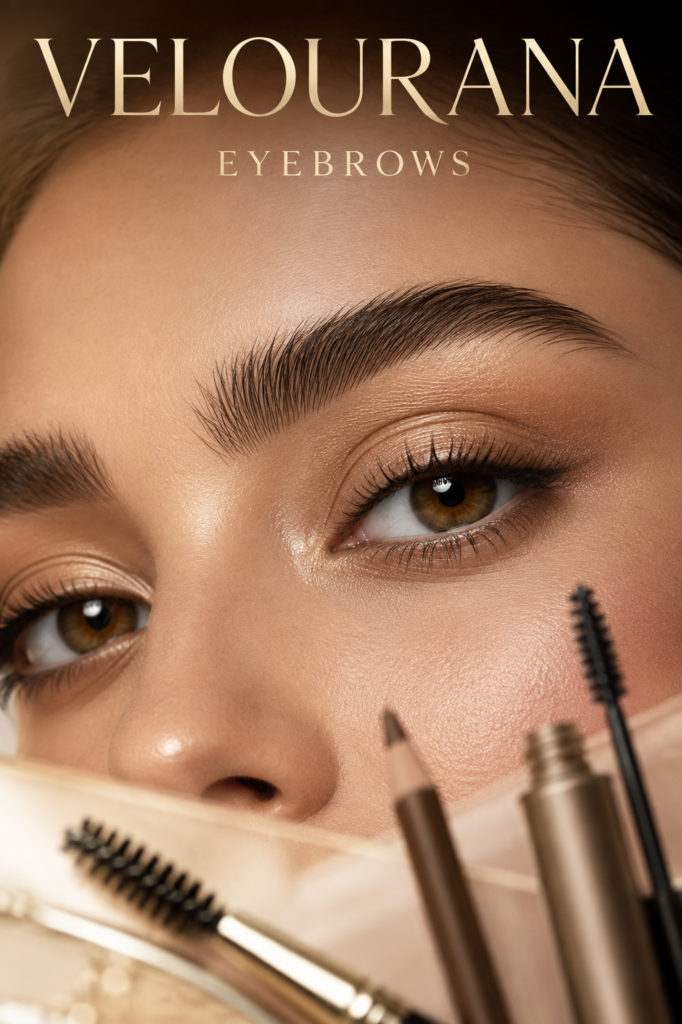
CATEGORY: Soft-Angled Brows
Eyebrow shapes are often described with simple labels, yet the visual differences between them are produced by surprisingly complex relationships. Soft-angled brows are a clear example. At first glance, their identity seems straightforward: they contain an arch, but that arch is not sharp. In practice, however, the success of the shape depends on where the brow rises, how quickly it rises, how the peak transitions into the tail, how much density surrounds the arch, and how the individual hairs are arranged.
The result is a brow that communicates structure without appearing rigid. Its upward movement can provide visible lift, while the curved transition through the arch prevents the shape from becoming excessively dramatic. This middle ground allows soft-angled brows to work with many different densities, textures, facial proportions, and makeup styles.
Importantly, softness does not mean absence of definition. A soft-angled brow may have a very clean lower boundary and a beautifully tapered tail. What makes it soft is the relationship between these elements. There is no sudden triangular peak, no abrupt collapse after the arch, and no requirement for every edge to be heavily outlined.
The shape can therefore be approached as an exercise in controlled visual movement. From the beginning of the brow to its endpoint, each section contributes to a continuous progression. Understanding that progression makes it easier to create, maintain, and adapt the style without losing the natural character that distinguishes it.
The Architecture Behind a Gentle Brow Angle
Every eyebrow contains several visually distinct areas even though they merge continuously. The inner portion establishes the brow's starting weight. The central section carries much of its density and determines the initial direction. The arch introduces the major change in trajectory, while the tail resolves the shape.
In a soft-angled brow, these areas should feel connected rather than isolated. The beginning does not suddenly become a diagonal line. Instead, the brow gradually gains elevation as it travels outward. Similarly, the arch does not behave like a mountain peak. It represents the point at which upward movement transitions into downward or outward movement.
The exact degree of elevation varies considerably. Some soft-angled brows have low arches that are only slightly more defined than straight brows. Others rise noticeably and could appear dramatic if their peaks were sharpened. Both can belong to the same broad family because the decisive factor is the smoothness of the directional change.
Thickness influences how this geometry is perceived. A thick brow distributes the angle across a larger area, often making the arch look softer even when its upper boundary rises substantially. A thin brow concentrates the directional change into a narrower line, which can make a relatively modest arch appear sharper.
This is one reason why removing hair from beneath the arch must be approached cautiously. As the brow becomes narrower, the same underlying curve may suddenly appear more angular. Increasing the distance between the lower edge and the eye can also make the arch seem higher than it actually is.
The tail provides another important architectural cue. If it descends steeply immediately after the highest point, the arch becomes more obvious and potentially more severe. If the descent is gradual and slightly outward, the entire shape appears calmer. A well-balanced soft angle generally maintains visual momentum toward the temple rather than directing attention sharply downward.
The beginning of the brow affects the interpretation of the arch as well. A very low, dense, squared beginning contrasted with a high outer arch can create dramatic geometry. A softer front with gradually increasing definition produces a smoother journey through the brow.
These relationships demonstrate why copying only the outer outline of someone else's brows is rarely enough. Brow architecture depends on scale. The distance between the eye and brow, the length of the brow bone, the amount of natural hair, and the proportions of the face all influence how the same theoretical angle will appear.
The Importance of Arch Position Rather Than Arch Height Alone
Discussions of eyebrow shape often focus heavily on how high the arch should be, but placement can be equally significant. Two brows with identical maximum height can create very different expressions if one reaches that height near the center and the other reaches it farther outward.
An early arch tends to create a more visibly peaked appearance because the brow rises quickly and then has a long descending section. This can sometimes give the expression an alert or surprised quality. A very late arch, by contrast, can cause much of the brow to appear relatively straight before turning near the tail.
Soft-angled brows generally achieve their characteristic flow when the high point appears naturally connected to the outer portion of the eye and brow bone. There is enough distance before the arch for a gradual ascent and enough brow afterward for a controlled taper.
This does not require strict mathematical mapping. Traditional brow mapping can provide reference points, but natural anatomy should influence the final decision. Eye spacing, nose width, brow bone prominence, forehead dimensions, and existing growth can shift the most harmonious location.
Natural density sometimes reveals the appropriate arch more clearly than external measurements. Many brows become slightly narrower or change hair direction near their natural high point. Observing these transitions can identify where the brow already wants to turn.
Makeup can then reinforce that location without requiring extensive hair removal. A small amount of definition beneath the outer portion, a few fine strokes above a sparse area, or careful grooming of the tail may be sufficient to reveal an angle that initially seemed absent.
Moving the apparent arch cosmetically can also change the overall impression. Extending definition slightly outward can elongate the brow, while emphasizing a point closer to the center can increase curvature. Because soft-angled brows rely on subtle transitions, these small changes can have considerable impact.
The key is continuity. Wherever the high point is placed, it should appear to emerge naturally from the ascending section and lead naturally into the tail. If either transition seems abrupt, the brow begins to move away from softness.
Density, Hair Texture, and Their Influence on the Shape
The same outline can look dramatically different depending on what happens inside it. Brow hairs create texture, shadows, directional lines, and variations in density that affect the apparent geometry.
Dense brows often possess an inherent softness because their boundaries are formed by many overlapping hairs rather than a single visible cosmetic line. Even when the arch is clearly defined, slight irregularities along the perimeter prevent the shape from appearing mechanically drawn.
Sparse brows present different possibilities. Their natural outline may be less obvious, which gives makeup greater influence over the final architecture. This flexibility can be useful, but it also means that heavy outlining can quickly overwhelm the remaining natural texture. Fine strokes and gradual shading often preserve greater dimensionality.
Coarse hairs can create strong directional signals. A few hairs angled sharply upward near the arch may make the brow look more lifted, while downward-growing tail hairs can visually lower the outer section. Grooming products can modify these directions, but completely contradicting the natural growth may require substantial fixation.
Fine brow hairs create subtler lines. The brow may appear softer naturally but can lack visible structure, especially when hair color is light relative to the skin. Strategic tint or cosmetic pigment can strengthen the shape without necessarily making it heavier.
Curly, wavy, or irregular brow hairs introduce further complexity. Their bends can extend beyond the intended outline even when the roots sit comfortably within it. Trimming may help, but removing too much length can create gaps because the curved hair may contribute more coverage than expected.
Gray and white brow hairs can alter perceived density because reduced pigment makes them less visible against some complexions. The physical amount of hair may remain substantial even though the brow appears thinner. Tinting or tinted cosmetics can reveal the existing structure without requiring a major change in shape.
These variations emphasize that brow design should respond to the material available. Soft-angled brows are not merely drawn onto the face; they are built from existing hair, and that hair has its own physical properties.
Refining the Brow While Preserving Fullness
Fullness is not mandatory for soft-angled brows, but maintaining adequate density around the arch helps preserve their characteristic gentle transition. Over-removal is therefore one of the most common ways to unintentionally transform the shape.
The lower edge naturally attracts attention during grooming because stray hairs beneath the brow are easy to identify. Yet not every hair below the apparent boundary is unnecessary. Some provide the depth required for the arch to remain rounded. Removing them can expose a higher, narrower line that changes the brow substantially.
The upper boundary deserves similar care. Occasional hairs far outside the primary shape may be removed, but aggressive reshaping from above can reduce the natural rise or create an artificially smooth perimeter. In many brows, the upper edge contains subtle variations that contribute to a believable finish.
The inner brow is particularly vulnerable to over-grooming. Excessive separation between the brows can alter facial proportions, while repeatedly trimming upward-growing front hairs to the same short length can create a blunt horizontal edge. Preserving some variation usually helps the beginning blend into the rest of the brow.
The tail is another area where density can disappear quickly. Because fewer hairs may naturally grow there, each one can make a substantial contribution. Removing a small number of hairs from the upper or lower tail can change its direction, length, and thickness.
Professional shaping techniques can all support soft-angled brows when used with the intended geometry in mind. The method itself does not determine whether the result will be soft or sharp. Rather, the placement and quantity of hair removal create the final character.
A conservative first shaping often provides greater flexibility than an ambitious transformation. Once the broad structure is visible, later refinements can be made gradually. This is especially useful when changing from another brow style, since hair growth patterns may need time to re-establish fullness in previously removed areas.
Building the Angle Through Brow Makeup
Makeup provides a temporary way to explore soft-angled proportions before making permanent grooming decisions. It can also correct asymmetry, replace missing density, and adjust the apparent direction of the brow.
The process begins conceptually with the existing brow rather than with the product. Identifying where density is naturally strongest and weakest determines where cosmetic intervention will be most useful. Applying equal pigment everywhere can flatten these variations and create a solid shape that lacks depth.
At the beginning of the brow, maintaining visible skin between some hairs often produces a softer effect. Fine upward or diagonal strokes can reinforce growth without constructing a rectangular front. Powder can also be diffused lightly through this area when additional density is needed.
The central brow usually carries more visual weight. Here, filling can become slightly stronger while still following the direction of natural hairs. The objective is to establish a continuous path toward the arch.
Approaching the high point, the placement of pigment can subtly reshape the brow. Sparse areas above the natural line can be filled to increase lift, while gaps below can be corrected to maintain thickness. These adjustments should remain small enough that the brow does not develop an obvious artificial projection.
After the arch, the direction of application should increasingly follow the tail. Fine strokes can create taper and replace missing hairs, while powder or pomade can strengthen the underlying line. The endpoint should feel like the natural conclusion of the brow rather than an extension added afterward.
Blending helps integrate these areas. A spoolie can distribute excess product through the hairs and soften concentrated pigment. This is particularly useful with pencils, powders, and pomades, which may initially leave stronger marks than intended.
Brow gels add another layer by controlling hair direction. Brushing the inner hairs upward can create openness and texture, while gradually turning the central and outer hairs toward the temple reinforces the soft angle. The transition in brushing direction can mirror the transition in the shape itself.
Tinted gels can provide sufficient definition for naturally full brows without additional filling. Clear gels preserve existing color while emphasizing texture. Strong-hold products can create a more laminated appearance, although the hairs should still be arranged in a way that supports the intended arch.
Cosmetic cleanup around the brow can sharpen the result, but heavy concealer outlining may work against the desired softness. Strategic correction of uneven edges can be effective without tracing the entire perimeter with a contrasting product.
Color and Contrast in Soft-Angled Brow Styling
Shape and color cannot be completely separated because darker values appear visually heavier and more defined. A soft angle filled with extremely dark pigment may look more dramatic than a sharper angle rendered with delicate, low-contrast strokes.
Choosing brow color therefore involves considering both hair color and the desired visual strength. Natural eyebrow hairs may be darker, lighter, cooler, or warmer than scalp hair, so an exact match is not always necessary.
For many people, slightly muted brow tones create greater realism than highly saturated shades. Neutral and cool browns can imitate the shadow created by natural hair, while warmer shades may harmonize with certain red, copper, golden, or warm brunette hair colors.
Depth can vary within the brow. Keeping the front somewhat lighter and gradually strengthening the middle and tail creates dimension and prevents the shape from appearing stamped onto the face. This gradient also emphasizes the outward movement of the soft angle.
Multiple products can create tonal complexity, but a single product can achieve a similar effect through pressure and concentration. A pencil applied lightly at the front and more firmly through sparse outer areas will naturally produce variation.
Skin tone influences contrast as well. The same brow shade can appear subtle against one complexion and intense against another. The objective is not necessarily low contrast; some people naturally have strong brows and may prefer to emphasize them. The important consideration is whether the chosen intensity supports the desired interpretation of softness.
Hair color changes can provide an opportunity to reassess brow contrast. Dramatically lightened hair may make previously balanced brows appear stronger, while darker hair may reduce the apparent prominence of naturally light brows. Cosmetic adjustments can restore the preferred relationship without changing the actual shape.
Soft-Angled Brows and Facial Expression
Brows contribute strongly to nonverbal expression because their position and movement interact with the muscles around the eyes and forehead. Cosmetic shaping cannot completely determine expression, but it can influence the resting impression of the face.
A steep central rise may create an alert quality. A low horizontal brow can produce a calmer or more direct visual line. A strongly descending outer tail may introduce a downward directional cue. Soft-angled brows tend to occupy a moderate position between these effects.
Their gradual ascent creates some visual lift, while the rounded transition prevents that lift from appearing sudden. The tail can then continue outward with enough descent to complete the shape without pulling the entire eye area downward.
This balance can be especially useful for people who want visible brow architecture without a highly sculpted appearance. The shape frames eye makeup effectively because it establishes an upper boundary while leaving the eyes themselves as the primary focal point.
When combined with minimal makeup, the soft angle can quietly organize the face. With dramatic eyeshadow or eyeliner, it can provide enough structure to support stronger cosmetic elements. With bold lipstick, it can balance the upper face without competing excessively for attention.
These interactions demonstrate why eyebrow design is rarely isolated. The perceived strength of the brows depends on everything around them, including hairstyle, eye makeup, complexion products, eyewear, and even lighting.
Adapting the Soft Angle to Different Natural Brow Shapes
Not everyone begins with a naturally soft-angled brow. Some brows grow predominantly straight, some are rounded, and others possess pronounced arches. Each starting point requires a different kind of adaptation.
Naturally straight brows may need very little hair removal. Instead, subtle cosmetic elevation toward the outer third can suggest an angle. Adding a small amount of pigment above the natural line near the desired arch and refining the lower outer boundary can create directional change while preserving density.
Rounded brows already possess vertical movement but may lack a distinct transition. Refining the lower edge near the outer portion can introduce a clearer high point. Makeup can reinforce this by concentrating definition where the curve should begin to change direction.
Naturally sharply arched brows present the opposite challenge. Rather than increasing the angle, the goal may be to visually soften it. Allowing additional growth beneath or around the peak can reduce its severity. Filling slightly around a narrow arch can also distribute the transition across a broader area.
Brows with sparse tails may require reconstruction of the descending line. The new tail should connect smoothly with the natural arch, matching its thickness and direction before tapering. Drawing an extremely thin tail from a fuller brow can make the two sections appear unrelated.
Asymmetrical brows may require different adjustments on each side. Applying exactly the same grooming actions to both brows can actually increase imbalance if their natural structures differ. One side might need filling above the arch while the other needs definition underneath. The objective is visual correspondence rather than identical treatment.
Previous over-tweezing can complicate reshaping because missing growth may limit the available structure. Cosmetics can provide temporary architecture while the brow is allowed to grow where possible. The process may require patience, particularly if the desired soft angle depends on density in areas that have been repeatedly removed.
The Relationship Between Brow Shape and Changing Trends
Eyebrows are unusually sensitive to beauty trends because relatively small changes in thickness, arch, texture, and color can transform the face. Different periods have favored extremely thin arches, dense structured brows, straight brows, brushed-up brows, and intentionally natural growth.
Soft-angled brows can participate in many of these aesthetics without becoming entirely defined by them. Their geometry is flexible enough to support changing surface treatments.
A fuller interpretation emphasizes natural density and visible hairs. The angle remains present, but it is formed through the overall silhouette rather than through a sharply cleaned boundary. A polished interpretation can create more precise edges while retaining a rounded arch.
A brushed-up interpretation changes the apparent thickness and height by redirecting individual hairs. The soft angle can remain visible if the brushing direction gradually shifts outward approaching the arch. A highly feathered finish can preserve the same underlying architecture while making its boundaries less obvious.
A more classic cosmetic brow may rely on controlled filling and a defined tail. Even then, keeping the transition through the high point smooth distinguishes the shape from a sharper sculpted arch.
This ability to change texture without changing fundamental geometry makes the soft angle relatively resilient. When trends shift, the brow can often be updated through styling rather than extensive reshaping.
Preserving natural density supports that adaptability. A fuller brow can be cosmetically refined, flattened, lifted, or darkened temporarily. A heavily reduced brow offers fewer immediate possibilities because missing hair must be replaced visually rather than rearranged.
Developing a Personal Version of the Soft Angle
The most useful way to think about soft-angled brows is not as a standardized shape but as a family of related proportions. Within that family, the arch can be low or moderately high, the brow can be fine or full, and the finish can range from barely groomed to highly polished.
Personalizing the shape begins with deciding which natural characteristics should remain visible. Someone with strong density may want to preserve substantial thickness while clarifying only the outer arch. Someone with sparse brows may prioritize believable texture. Another person may prefer a highly refined finish but still want the arch itself to remain gentle.
Lifestyle influences the ideal interpretation as well. A brow that requires extensive daily reconstruction may be appropriate for someone who enjoys detailed makeup but inconvenient for someone who prefers minimal maintenance. Developing a shape that remains recognizable without cosmetics can simplify everyday grooming while still allowing stronger styling when desired.
Eyewear can affect perception because frames introduce additional lines around the brow. Depending on their shape and position, glasses may partially cover the lower brow, emphasize the arch, or visually compete with a strongly defined outline. Adjusting brow intensity rather than radically changing the shape can often create better balance.
Hairstyles also change the surrounding visual context. Bangs or fringes may bring greater attention to the brows, while hairstyles that expose the entire forehead can make brow placement more prominent. Changes in hair color can similarly alter contrast.
Personal expression remains the final consideration. Brow design does not need to follow corrective theories or conventional ideas about what supposedly suits a particular face. Some people prefer deliberately dramatic brows; others value subtlety. The soft angle is useful because it can be interpreted in either direction while retaining its fundamental smoothness.
The Lasting Appeal of Controlled Softness
Soft-angled brows illustrate how small geometric decisions can have a substantial visual effect. Their defining feature is not simply an arch but the manner in which that arch develops. The brow rises progressively, changes direction without forming a severe point, and continues into a tail that resolves the shape smoothly.
Maintaining that character requires attention to more than hair removal. Natural density, texture, growth direction, cosmetic color, product placement, arch position, and tail length all influence whether the final brow appears genuinely soft.
The shape is particularly adaptable because none of its defining qualities require an extreme. It can remain thick or become more refined. It can support visible natural texture or a polished makeup finish. It can accompany subtle everyday makeup or stronger editorial styling. What remains constant is the controlled transition between its different sections.
This makes preservation important. Removing too much hair around the arch can convert a gentle transition into a sharp peak, while excessive thinning can magnify angles that previously appeared subtle. Gradual grooming and temporary cosmetic experimentation allow greater control.
A successful soft-angled brow ultimately appears coherent. The beginning, body, arch, and tail belong to the same visual movement. No single area seems artificially imposed upon another. The hairs and the outline cooperate rather than compete.
That coherence is what gives the shape its characteristic balance. It offers enough definition to frame the eyes and organize the upper face, but it retains enough curvature, texture, and flexibility to avoid rigidity. Whether naturally present or carefully created, the soft-angled brow demonstrates the visual power of moderation: structure softened by continuity, definition tempered by texture, and an arch designed to guide the eye rather than dominate it.
THE END VELOURANA
 Discover More From Our Family of Websites
 ZodiacBearing (Astrology, Tarot, Numerology, Angel Numbers & Spiritual Guidance)
 Velourana (Beauty, Makeup, Hair Care, Skincare & Beauty Tips)
 HavenBearing (Home, Living, Organization, Décor & Everyday Inspiration)
 PawBearing (Pet Care, Dog Breeds, Animal Health, Training & Pet Products)
 PsyCatherine (Notes From the Journal of a Psychologist on Real Life)