
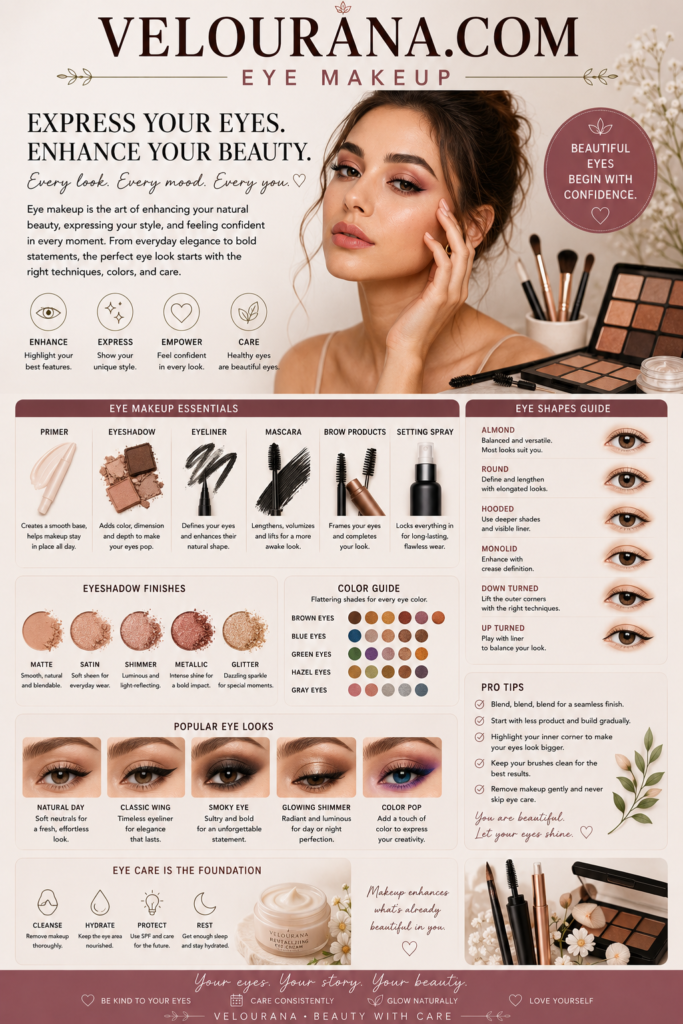
CATEGORY: Pencil Eyeliner
Few makeup products have remained as consistently relevant as pencil eyeliner. Trends in eye makeup may move from immaculate wings to diffused smoky eyes, from barely visible definition to dramatic graphic shapes, yet the pencil continues to occupy an unusually secure place in the beauty routine. Its longevity is not simply a matter of familiarity. Pencil eyeliner offers something that more rigid formats cannot always provide: control without excessive precision, definition without inevitable severity, and the freedom to decide whether a line should remain crisp or dissolve almost completely into shadow.
The appeal begins with the physical nature of the product. A pencil feels intuitive in the hand. There is no reservoir of liquid to manage, no brush whose angle must be mastered and no immediate commitment to a perfectly shaped line. The pigment can be deposited gradually, inspected, softened, extended or intensified. That quality makes pencil eyeliner approachable for someone learning eye makeup, but it also explains why professional artists continue to use it. A simple pencil can establish the architecture of an elaborate eye look, deepen a lash line, create a smoky foundation beneath powder shadow or introduce subtle dimension where a more conspicuous liner would overwhelm the makeup.
Modern pencil eyeliner has also evolved far beyond the dry, resistant formulas once associated with the category. Contemporary versions can range from creamy and highly blendable to exceptionally long-wearing, from dense matte black to luminous bronze, muted plum, sophisticated gray and unconventional shades designed to function almost like concentrated eye shadow. Understanding pencil eyeliner therefore means looking beyond the familiar object itself. Texture, placement, color, finish and the anatomy of the eye all influence how this deceptively simple product performs.
Why Pencil Eyeliner Creates a Different Kind of Definition
Eyeliner changes the perceived structure of the eye because it manipulates contrast. Dark pigment placed near the lashes makes the lash line appear denser and establishes a clearer boundary around the eye. The effect can be extremely subtle, particularly when the pencil is worked between the lashes rather than visibly above them, or deliberately dramatic when the line is widened and extended beyond the outer corner.
Pencil distinguishes itself because its edges can be controlled after application. A liquid formula generally announces itself as a line. Pencil can behave as a line, but it can also become a haze, a shadow or an almost imperceptible deepening of the lashes. This flexibility changes the relationship between eyeliner and the rest of the makeup. Rather than sitting visibly on top of an eye look, pencil can merge into it.
The amount of pressure applied matters. A creamy pencil drawn firmly across the lid may produce immediate saturated color, while lighter pressure can leave a translucent suggestion of pigment. Small strokes placed close together often provide greater control than attempting to draw one uninterrupted line. Once deposited, the color can remain intact or be softened before it sets, depending on the formula.
This ability to manipulate the edge is especially valuable because perfectly sharp definition is not universally flattering or universally appropriate. A softer boundary can create depth while preserving openness around the eye. It can make liner appear less separate from the lashes and shadows surrounding it. On mature or textured eyelids, a gently diffused pencil may also accommodate natural skin texture more gracefully than a highly reflective or extremely rigid line.
None of this means that pencil eyeliner is inherently subtle. Dense waterproof pencils can produce remarkably intense definition. The distinction lies in possibility. Pencil gives the wearer a choice between visible structure and diffused depth, and many successful eye looks use both qualities simultaneously: concentrated color immediately at the lash roots gradually fading as it moves outward.
Texture Determines How a Pencil Behaves
Two eyeliners that look almost identical in their packaging may perform very differently. The balance of waxes, pigments, emollients and film-forming ingredients influences glide, opacity, setting time and resistance to movement. Texture is therefore not merely a sensory preference. It determines what the pencil is capable of doing.
A very creamy pencil tends to transfer pigment easily. This can be useful when working close to delicate eye areas because excessive pressure is unnecessary. Creamier textures are particularly suited to smoky makeup because they can usually be manipulated for a short period after application. The pigment can be pushed into the lash line, stretched toward the outer corner or blended upward before the formula settles.
The same softness that makes a pencil pleasurable to blend can become a disadvantage if the formula never stabilizes. On oily eyelids, extremely emollient products may migrate into the crease or transfer onto surrounding skin. Longevity therefore depends not only on softness during application but on what happens afterward. Many modern pencils combine initial glide with ingredients designed to create a more resistant film as the product sets.
Firmer pencils behave differently. They can provide greater precision and may be useful for restrained definition, particularly when the desired line is narrow. A firm pencil should not, however, require uncomfortable dragging. The skin around the eyes is thin, and repeatedly pulling it simply to make a product release pigment is neither necessary nor desirable. A good formula should balance stability with adequate glide.
Gel-like pencils occupy another part of the spectrum. These formulas often deliver intense color with relatively little pressure and then set to a more durable finish. They can resemble gel eyeliner packaged in pencil form, combining convenience with strong pigmentation. Their setting speed becomes important: a fast-setting formula rewards confident application but leaves less time for correction or deliberate smudging.
The ideal texture therefore depends on intention. A pencil intended primarily for smoky blending does not need to behave exactly like one chosen for long hours of sharply defined wear. The most useful question is not whether a pencil is universally good, but whether its physical behavior supports the way it will actually be worn.
The Lash Line as the Foundation of Pencil Eyeliner
The most transformative use of pencil eyeliner is often one of the least conspicuous. Working pigment close to the roots of the lashes can make them appear thicker without creating an obvious band of eyeliner. This approach treats liner as part of the lash structure rather than as a separate decorative element.
Small gaps between lashes can allow visible skin to interrupt mascara and eye shadow. Carefully placing pencil into those spaces creates continuity. The effect is especially noticeable with dark lashes because the added pigment visually connects individual hairs. Mascara then appears to emerge from a denser base.
A visible line above the lashes can be developed from this foundation. Keeping the inner portion narrow and allowing slightly more weight toward the outer eye often creates natural-looking emphasis. The exact proportion should respond to the individual eyelid rather than follow a universal template. Eyes with limited visible lid space may benefit from extremely economical placement, while larger areas of visible lid can accommodate greater width without sacrificing the surrounding eye shadow.
The outer corner is where pencil becomes particularly expressive. Extending pigment slightly outward can visually lengthen the eye, but the direction of that extension matters more than its absolute length. Following the natural trajectory of the lower lash line often produces a harmonious result because the extension relates to existing anatomy. A more horizontal direction can emphasize width, while a strongly lifted angle creates a different visual impression.
Pencil is forgiving in this area because an imperfect extension can be refined through diffusion. A small brush can soften the edge, converting an uncertain line into an intentional smoky taper. This is one reason pencil works so well for people who appreciate elongated eyeliner but do not want the uncompromising geometry of a liquid wing.
The lower lash line requires similar attention to proportion. Heavy, uninterrupted dark pigment underneath the entire eye can create substantial drama, but it can also visually reduce the open area of the eye. Concentrating depth toward the outer portion and gradually softening it inward often produces a more dimensional result. Again, the pencil's strength lies in its capacity to move between definition and shadow.
Smudging Changes the Language of the Line
Smudged eyeliner is sometimes described as though it were simply imperfect eyeliner. In reality, controlled diffusion is a distinct technique. A deliberately softened pencil line can alter the apparent depth, shape and mood of the eye while retaining enough concentration at the lash roots to provide structure.
Timing matters. Many long-wearing pencils remain movable only briefly. Blending immediately after applying a small section gives more control than drawing around the entire eye and attempting to soften everything afterward. The goal is usually not to erase the line but to redistribute its upper or outer edge while maintaining density closest to the lashes.
The tool used for blending changes the result. A compact pencil brush can preserve considerable intensity while softening the boundary. A slightly larger, softer brush spreads pigment farther and creates a hazier effect. A cotton swab can remove or soften small areas, although it generally offers less sophisticated control than a brush designed for detail work.
Powder eye shadow can be introduced over the pencil to expand the effect. A similar shade reinforces depth and can help create a seamless gradient, while a contrasting shade changes the apparent color of the liner. Deep brown pencil beneath bronze shadow creates warmth and richness; black beneath jewel-toned shadow intensifies saturation; plum beneath taupe or mauve can produce subtle complexity without appearing obviously colorful.
This layering technique demonstrates why pencil eyeliner frequently functions as more than liner. It can become an anchor for the entire eye look. Creamy pigment establishes depth, while powder modifies texture and transition. The result can appear more dimensional than either product used alone.
A successful smoky line still benefits from intentional placement. Diffusion should not necessarily mean equal softness everywhere. Maintaining the deepest concentration at the lash roots gives the makeup a visual center. Allowing the color to fade gradually outward creates atmosphere without losing definition.
Black, Brown and the Expanding Vocabulary of Eyeliner Color
Black pencil eyeliner remains a classic because it creates strong contrast. Against most skin tones and eye colors, black immediately intensifies the lash line and can produce anything from discreet definition to substantial drama. Yet treating black as the automatic choice overlooks the expressive potential of other shades.
Brown creates a different relationship with the surrounding features. Deep espresso can still provide substantial definition but often appears softer than black, particularly in daylight. Medium and warm browns can merge beautifully with neutral eye shadows and create an understated finish that emphasizes the eyes without making the eyeliner itself the dominant feature.
Charcoal and graphite occupy a sophisticated middle ground. They preserve cool depth while reducing the absolute intensity of black. Gray can be especially effective when a smoky result is desired because it naturally suggests shadow rather than a hard boundary.
Navy is another shade whose effect is often more subtle than expected. A very dark navy may initially read almost as black, revealing its color primarily when light catches it. This makes it useful for introducing variation without abandoning familiar depth. Plum, aubergine and burgundy-toned pencils can perform similarly, providing richness that becomes apparent at closer range.
Bronze, copper and deep metallic browns interact strongly with light. Their reflective particles can introduce dimension around the lash line, particularly in evening makeup or warm neutral looks. Metallic eyeliner need not be overtly glittering; restrained shimmer can simply prevent a dark line from appearing flat.
Brighter colors change the role of pencil more dramatically. Emerald, cobalt, violet or teal can become a focal point, especially when the remainder of the makeup is restrained. Pencil is particularly suited to this experimentation because color can be applied in a narrow line or diffused into a more wearable haze.
Color theory can help guide choices, but it should not become restrictive. Contrasting shades may emphasize an iris color, while analogous shades create harmony, yet personal style, clothing, lighting and the desired overall mood remain equally important. Eyeliner color is ultimately part of the composition of the face, not a formula dictated by eye color alone.
Pencil Eyeliner Across Different Eye Shapes and Lid Structures
The idea that every eye shape requires one prescribed eyeliner technique is unnecessarily limiting. Eye anatomy provides useful information, but makeup remains an optical art rather than a correction exercise. The purpose of understanding shape is to predict how pigment will appear when the eye is open, blinking and moving naturally.
On hooded eyes, for example, portions of the mobile lid may become hidden when the eyes are open. A thick line that looks balanced while the eyelid is closed can occupy much of the visible lid once the eye returns to its natural position. Pencil allows definition to remain close to the lashes, preserving more visible space. The outer portion can then be developed according to what is actually visible with the eye open.
Deep-set eyes naturally contain strong structural shadow. Excessive dark pigment across every boundary may intensify that depth, while selective liner can emphasize the lashes without overwhelming the surrounding architecture. Softer browns, charcoals and blended textures can be especially elegant when the goal is definition rather than maximum contrast.
Round eyes can be visually elongated by concentrating pencil toward the outer corners and extending the horizontal emphasis. Almond-shaped eyes can support numerous approaches, from uniform definition to tapered extensions. Downturned or upturned eyes can likewise be emphasized, balanced or deliberately exaggerated depending on aesthetic preference.
Monolids provide another illustration of why fixed eyeliner rules are inadequate. The amount of visible liner changes considerably according to individual lid structure. A pencil can be worked into the lashes for subtle density or expanded into a more visible shape, with the final design assessed while the eye is naturally open.
Age and skin texture also influence application. Eyelids develop folds, fine lines and changes in elasticity over time. Trying to force a perfectly straight line across moving, textured skin can be frustrating and unnecessary. Short strokes followed by gentle blending often create a polished result that works with the surface rather than against it.
The central principle is observation. Eyeliner should be evaluated in the position in which it will actually be seen. Pencil makes this process unusually adaptable because pigment can be added incrementally instead of requiring the entire design to be committed at once.
Longevity, Transfer and the Reality of Daily Wear
Beautiful application is only part of eyeliner performance. The eye area is dynamic: lids move constantly, natural oils accumulate, eyes may water and environmental heat or humidity can affect cosmetic films. Pencil formulas must therefore negotiate a difficult balance between comfortable application and resistance to movement.
Waterproof and long-wearing claims usually indicate that the formula has been designed to resist moisture or transfer after setting. These characteristics can be valuable for long days, humid climates or naturally watery eyes. They do not guarantee identical performance for everyone. Skin chemistry, eyelid oiliness and the products layered underneath can all influence wear.
Preparation can make a significant difference. Rich skincare applied immediately around the lash line may interfere with adhesion if it leaves a substantial emollient film. Allowing eye products to absorb before makeup helps create a more stable surface. On oily lids, a light eye primer or carefully chosen powder product can reduce excess slip.
Layering can also improve stability. Pencil applied first and lightly reinforced with a compatible powder shadow often lasts differently from pencil alone. The powder absorbs some surface emollience while intensifying color. This technique is particularly useful for deliberately smudged looks, where the objective is to preserve softness without allowing uncontrolled migration.
Transfer should also be considered in relation to eye anatomy. If the upper lash line touches the skin above it when the eye is open, an unset formula may stamp pigment onto that area. Choosing a pencil that sets effectively and allowing it a moment to stabilize can reduce this problem.
Removal is the other side of long wear. Resistant eyeliner should be dissolved rather than aggressively rubbed away. An appropriate eye makeup remover or cleansing product can loosen waxes and film formers so that pigment lifts with less friction. This is particularly important around the delicate lash line, where repeated mechanical rubbing can be uncomfortable.
Precision, Maintenance and the Importance of the Pencil Point
The physical point of a traditional eyeliner pencil affects application more than it may seem. A freshly sharpened tip can place pigment precisely between lashes and create a narrow outer extension. As the point becomes rounded, it naturally produces broader, softer marks. Neither state is inherently superior; each supports a different effect.
Sharpenable pencils offer the advantage of regularly exposing a fresh surface. The sharpener itself should fit the pencil correctly. An ill-fitting blade can fracture the cosmetic core, waste product or produce an uneven tip. Keeping the sharpener clean also prevents old pigment and cosmetic residue from accumulating around newly sharpened products.
Mechanical pencils remove the need for sharpening and can be convenient for travel or quick application. Their tips, however, may remain relatively rounded unless the design includes a shaping mechanism. This can be ideal for lash-line definition and smoky work but less suited to extremely fine detail.
Product temperature can influence sharpening. Very soft pencils may become more fragile in warm environments. A slightly firmer core generally sharpens more cleanly, although excessive cooling can also alter texture temporarily. The objective is simply to maintain the product in conditions that preserve its intended consistency.
Eye cosmetics deserve particular attention to hygiene because they are used close to sensitive tissue. Pencils should not be shared casually, and changes in smell, texture or performance can indicate that a product is no longer in optimal condition. Caps should be replaced after use to protect the formula from contamination and unnecessary drying.
These practical details may appear minor compared with color and technique, yet they influence the experience of using pencil eyeliner every day. A well-maintained pencil performs more predictably, and predictable tools make sophisticated makeup easier to achieve.
The Modern Role of a Beauty Classic
Pencil eyeliner has survived repeated shifts in beauty culture because it is not tied to one aesthetic. It can belong to minimal makeup, classic glamour, grunge-inspired diffusion, polished professional beauty or experimental color. The same basic object can create dramatically different visual languages.
Its greatest strength may be that it allows the wearer to decide how visible the technique should be. Pencil can disappear into the lashes so completely that observers notice only stronger-looking eyes. It can become a smoky veil whose origin is difficult to distinguish from eye shadow. It can form a deliberate dark frame or introduce a flash of unexpected color.
That flexibility also makes pencil eyeliner an excellent product for developing personal technique. Rather than reproducing a predetermined shape, the wearer can study how small changes in width, angle, intensity and diffusion alter the appearance of the eye. Because the formula can often be adjusted before it sets, experimentation carries less pressure.
The sophistication of pencil eyeliner lies precisely in this adaptability. Mastery does not require making every line razor sharp. It involves understanding where depth belongs, how much contrast the makeup needs and when an edge should remain visible or disappear into shadow.
A pencil may be one of the oldest forms of modern eye makeup, but there is nothing outdated about its possibilities. In an era of increasingly specialized cosmetic formats, it remains valuable because it refuses to perform only one function. It defines, shades, shapes, intensifies and softens, sometimes within the same application.
The result can be barely perceptible or unmistakably dramatic. What remains constant is the extraordinary amount of control contained in a remarkably simple tool.
THE END VELOURANA
 Discover More From Our Family of Websites
 ZodiacBearing (Astrology, Tarot, Numerology, Angel Numbers & Spiritual Guidance)
 Velourana (Beauty, Makeup, Hair Care, Skincare & Beauty Tips)
 HavenBearing (Home, Living, Organization, Décor & Everyday Inspiration)
 PawBearing (Pet Care, Dog Breeds, Animal Health, Training & Pet Products)
 PsyCatherine (Notes From the Journal of a Psychologist on Real Life)

