
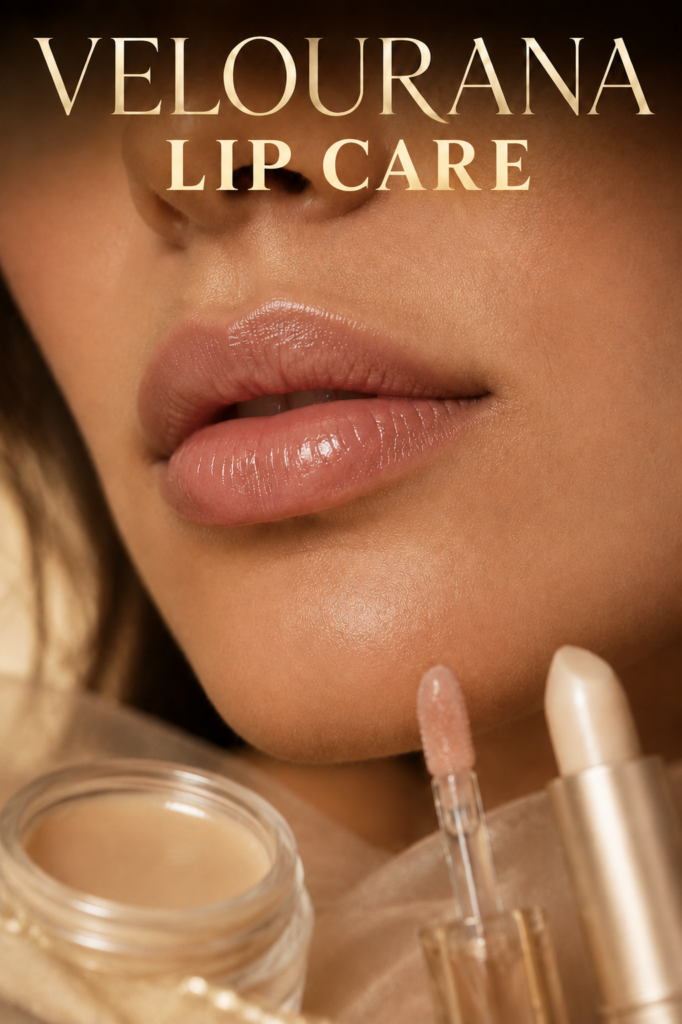
CATEGORY: Overnight Lip Care
Lips often reveal the effects of dryness before many other areas of the face. A day of cold air, indoor heating, air conditioning, sun exposure, frequent talking, lip licking, long-wear lipstick, or simply inadequate protection can leave them feeling tight and rough by evening. Nighttime creates a valuable opportunity to restore comfort because the lips are generally exposed to fewer environmental stresses while the body is at rest. This is the principle behind overnight lip care: rather than treating the lips only when they become visibly chapped, a nighttime routine can provide sustained protection and conditioning during several uninterrupted hours.
Overnight lip care does not have to be elaborate. In many cases, the effectiveness of the routine depends less on the number of products used and more on selecting an appropriate formula and applying it consistently. A well-formulated lip balm, ointment, or sleeping mask can reduce moisture loss and help maintain a softer surface until morning. For lips that frequently become dry, the difference between occasional daytime application and consistent overnight protection can be significant.
The concept is closely related to nighttime facial skincare, but lips have characteristics that make them particularly dependent on external protection. Understanding those characteristics makes it easier to choose products intelligently and avoid routines that feel luxurious but do little to improve persistent dryness.
Why Lips Need Their Own Nighttime Care
Lip skin differs structurally from much of the surrounding facial skin. The visible surface is comparatively thin and has less of the protective machinery that helps other areas maintain moisture. Lips also lack the same abundance of sebaceous glands that produce natural oils elsewhere on the face. As a result, they are especially vulnerable to environmental conditions that encourage water loss.
This vulnerability explains why lips may feel normal in the morning but progressively drier as the day continues. Wind, sun, dry indoor environments, beverages, food, cleansing, makeup removal, and repeated movement can gradually compromise comfort. Lip licking can intensify the problem. Although saliva briefly makes dry lips feel moist, evaporation can leave them feeling even drier, while repeated exposure to saliva may irritate the delicate surface.
Nighttime offers a different environment. There is no eating, drinking, lipstick application, or constant wiping for several hours. A protective formula therefore has an opportunity to remain on the lips much longer than it typically would during the day.
This prolonged contact is one of the main advantages of overnight lip products. They do not necessarily perform an entirely different biological function from good daytime balms. Instead, they take advantage of a period in which a substantial protective layer can remain relatively undisturbed.
A successful nighttime routine therefore focuses primarily on maintaining hydration, reducing water loss, supporting the lip barrier, and minimizing unnecessary irritation.
The Importance of Preventing Moisture Loss
When people think about moisturizing, they often imagine adding water to dry skin. Effective lip care is more complicated. Water at the surface can evaporate rapidly unless something helps retain it. For this reason, many effective overnight lip products combine ingredients that attract or support moisture with ingredients that create a protective film.
Occlusive ingredients are particularly useful for this purpose. Petrolatum is one of the best-known examples. It forms a barrier over the surface that helps reduce transepidermal water loss. Other ingredients, including certain waxes, mineral oil, lanolin derivatives, silicones, and rich plant-derived butters, may also contribute to the protective character of a formula.
The sensation of a thick overnight mask is therefore not purely cosmetic. A richer texture can remain in place and provide sustained coverage. This is particularly useful during winter or in bedrooms where heating or air conditioning keeps humidity low.
Humectants may complement this protection by attracting water. Ingredients such as glycerin and hyaluronic acid are familiar examples in skincare. However, humectants generally work best when incorporated into a balanced formula rather than being considered complete lip treatments by themselves. A product that attracts moisture but offers little protection against evaporation may not provide the same lasting comfort as a formula that combines hydration with an effective protective layer.
Emollients contribute another dimension. They fill spaces between rough surface cells and create a smoother feel. Oils, fatty acids, esters, butters, and similar ingredients can improve flexibility and reduce the sensation of roughness. Many overnight lip treatments therefore contain a mixture of humectant, emollient, and occlusive components.
The balance between these functions matters more than whether a product is marketed specifically as a sleeping mask.
Lip Sleeping Masks Versus Traditional Lip Balms
The popularity of lip sleeping masks has created the impression that nighttime lip care requires a specialized category of product. In practice, the distinction between a sleeping mask and a rich lip balm can be surprisingly small.
Sleeping masks are generally formulated with a dense, cushiony texture designed to remain noticeable on the lips for hours. They may contain oils, butters, waxes, humectants, antioxidants, botanical extracts, or other conditioning ingredients. Packaging and sensory experience often emphasize indulgence, making the product feel like the final step of an evening skincare ritual.
Traditional lip balms vary much more widely. Some are light wax sticks intended primarily for convenient daytime use, while others are rich ointments that provide substantial occlusion. A simple fragrance-free ointment can sometimes be more appropriate for severely dry or sensitive lips than an elaborate sleeping mask containing numerous flavoring or fragrance components.
The best choice therefore depends on the condition of the lips rather than the product name.
Someone whose lips are generally comfortable but occasionally feel dry may enjoy a lightweight balm or moisturizing sleeping mask. Someone dealing with persistent cracking or irritation may benefit more from a simpler, more protective formulation. Sensitive lips frequently respond better when unnecessary fragrance, flavor, cooling agents, and strongly aromatic ingredients are minimized.
Texture also affects adherence to a routine. A treatment that feels excessively sticky may end up on the pillow rather than remaining on the lips. Conversely, a formula that is too thin may disappear quickly. The ideal overnight texture should feel protective without becoming so uncomfortable that it discourages regular use.
Preparing the Lips Before Bed
Nighttime lip care works best when applied to relatively clean lips. Residues from lipstick, lip liner, sunscreen, food, or strongly flavored products can remain around the mouth at the end of the day. Gentle cleansing removes these materials and creates a more suitable surface for the overnight treatment.
Aggressive cleansing is unnecessary. The goal is not to strip the lips completely but to remove accumulated products without increasing dryness. Makeup should be dissolved carefully rather than rubbed away forcefully. Persistent long-wear lip colors may require an oil-based or dedicated makeup remover because repeated friction can leave the lips more irritated than the cosmetic itself.
After cleansing, the lips should not be scrubbed automatically. Exfoliation has become closely associated with lip care, but frequent physical scrubbing is not essential for healthy lips. When lips are cracked, inflamed, bleeding, or actively peeling, abrasive scrubs can worsen discomfort and disturb tissue that is already trying to recover.
Loose surface flakes sometimes soften naturally after an emollient treatment. Allowing them to detach gradually is generally gentler than pulling or biting them away.
If the lips are comfortable and simply have minor surface roughness, very occasional gentle exfoliation may improve smoothness, but it should not become the foundation of the nighttime routine. Moisture retention and protection are usually more important.
Once the lips are clean, an overnight product can be applied in a generous but comfortable layer. There is little benefit in creating an excessively thick coating if most of it immediately transfers elsewhere. Complete, even coverage is more useful than sheer quantity.
Ingredients That Make Sense at Night
Overnight lip products often contain long ingredient lists, yet a few functional categories account for much of their performance.
Petrolatum is notable because of its strong occlusive properties. Although it is sometimes perceived as a basic ingredient, simplicity can be an advantage for sensitive or compromised lips. A petrolatum-based ointment can reduce moisture loss without requiring numerous botanical additions.
Lanolin is another rich conditioning ingredient used in some lip products. Many people find it highly effective, although individuals who are sensitive or allergic to lanolin should avoid it.
Shea butter, cocoa butter, and other plant butters provide emollience and contribute to a rich texture. Plant oils such as jojoba, sunflower, coconut, and various seed oils may also help soften the lips. Their performance depends on the overall formulation; the presence of a fashionable oil alone does not determine whether a product will provide adequate overnight protection.
Ceramides are increasingly used in lip treatments inspired by facial barrier-care products. They are naturally occurring components of the skin barrier and can contribute to formulas designed to support dry, compromised skin. Cholesterol and fatty acids may appear in similar barrier-oriented products.
Humectants such as glycerin can support hydration, particularly when paired with ingredients that reduce evaporation. Hyaluronic acid may also appear in moisturizing lip formulas, although its presence should not automatically be interpreted as evidence that a product is superior.
Antioxidants, including vitamin E and various plant-derived compounds, are frequently added as supportive ingredients. They may contribute to formula stability or conditioning, but the fundamental overnight objective remains straightforward: keep the lips comfortable and protected from excessive moisture loss.
A product with a short ingredient list can therefore be every bit as useful as one containing a long collection of extracts.
When More Ingredients Become Less Helpful
Lip products occupy an unusual position between skincare and sensory cosmetics. Manufacturers frequently add flavors, fragrances, tingling ingredients, cooling sensations, essential oils, or botanical extracts to make application more enjoyable. These ingredients may be perfectly acceptable for many users, but they can become problematic when lips are already irritated.
Menthol, camphor, peppermint-derived ingredients, cinnamon flavorings, and strong fragrances can create sensations that some people interpret as evidence that a treatment is working. Tingling, however, is not necessary for effective moisturization.
Sensitive lips often benefit from uneventful formulas.
This becomes especially important when someone experiences a cycle in which a balm is applied repeatedly yet the lips remain uncomfortable. The instinct may be to apply even more frequently, but the formulation itself may be contributing to irritation. Switching temporarily to a bland, fragrance-free protective product can help determine whether unnecessary ingredients are part of the problem.
Natural ingredients should be considered with the same care. Botanical origin does not guarantee that an ingredient will be non-irritating. Essential oils and aromatic plant extracts contain biologically active compounds and can cause sensitivity in susceptible individuals.
Conversely, synthetic or highly refined ingredients are not automatically harsh. In lip care, a stable and simple formula may be particularly valuable because it minimizes the number of potential irritants contacting delicate skin for several hours.
The Relationship Between Daytime and Overnight Lip Care
A nighttime treatment cannot completely compensate for habits that repeatedly dry or irritate the lips throughout the day. The most effective routine connects daytime protection with nighttime recovery.
Sun protection is an important part of this relationship. Lips receive ultraviolet exposure just as other exposed areas do, yet they are frequently forgotten when sunscreen is applied. A daytime lip product with appropriate SPF can provide protection, while a moisturizing balm can be reapplied as needed after eating or drinking.
At night, SPF is unnecessary. This allows the routine to shift toward comfort, barrier support, and occlusion.
Frequent lip licking should also be addressed. A rich sleeping mask may improve the lips overnight, but repeated licking during waking hours can quickly reverse that improvement. Similarly, habitual biting or peeling can maintain a cycle of roughness.
Long-wear matte lipsticks can be another source of dryness for some people. They are designed to resist transfer and may feel less emollient than traditional creamy lip colors. People who wear these products frequently may find overnight conditioning particularly helpful.
Hydration and environmental humidity can also influence comfort, although simply drinking excessive quantities of water is not a direct cure for ordinary chapped lips. When the surrounding air is very dry, a protective topical barrier remains important.
The objective is continuity: protect during the day, minimize irritating habits, and reinforce moisture retention overnight.
Seasonal Changes and the Nighttime Routine
Lip needs can change considerably with the seasons.
Winter is perhaps the most obvious challenge. Cold outdoor air combined with heated indoor environments can create persistent dryness. Wind further increases discomfort, and respiratory illnesses may lead to mouth breathing that dries the lips overnight. During this period, a richer occlusive treatment can be especially useful.
Summer creates a different set of stresses. Sun exposure becomes more significant, and air-conditioned environments can still be surprisingly dry. Daytime SPF protection is particularly important, while nighttime care can replenish comfort after exposure to heat, salt water, swimming pools, or prolonged outdoor activity.
Travel may disrupt the lips regardless of season. Aircraft cabins have low humidity, and changes in climate can produce dryness even in people who do not normally experience chapped lips. Carrying a familiar lip product and applying a protective layer before sleeping can provide continuity while the skin adjusts to a new environment.
The routine does not necessarily require different products every season. Often, the same reliable formula can simply be applied more generously during periods of increased dryness.
Overnight Lip Care and the Surrounding Skin
The boundary between the lips and surrounding facial skin deserves attention. Dryness does not always stop precisely at the vermilion border. The corners of the mouth and nearby skin can also become irritated, particularly in cold weather or when saliva repeatedly contacts the area.
A nighttime lip treatment can sometimes be applied slightly beyond the visible lip line when the surrounding area feels dry, provided the product is suitable for that skin. Bland ointments are particularly practical for this purpose.
However, persistent cracking at the corners of the mouth should not automatically be treated as ordinary chapping. Conditions affecting the mouth area can have multiple causes, including irritation, infection, allergies, nutritional issues, or dermatological disorders. A cosmetic routine should not be expected to diagnose or resolve every persistent problem.
The same principle applies to recurring swelling, significant pain, sores, unexplained discoloration, bleeding, or lesions that do not heal. These deserve professional assessment rather than progressively more aggressive home treatment.
Everyday overnight lip care is most appropriate for ordinary dryness, roughness, and environmental stress. Recognizing its limits is part of using it responsibly.
What to Expect by Morning
A good overnight lip treatment should generally leave the lips feeling softer, more flexible, and less tight. Some product may remain on the surface in the morning, particularly when a highly occlusive ointment has been used. This is normal.
There is no need to scrub away the remaining layer. It can be gently wiped if necessary, or simply left until normal morning cleansing. If the lips feel comfortable, daytime balm or SPF lip protection can then be applied.
Visible flakes may still remain after a single night. Severe dryness develops over time and may require repeated protection over several nights. The goal should not be instant removal of every rough area. A gradual return to comfort without repeated irritation is preferable.
For people who frequently wake with very dry lips despite using a protective product, the surrounding environment may deserve attention. Mouth breathing, nasal congestion, dry bedroom air, certain medications, habitual irritation, or underlying skin conditions may contribute.
In such circumstances, changing lip products repeatedly may not address the actual cause.
Consistency Matters More Than Complexity
Beauty routines often become complicated because new products promise increasingly specialized functions. Overnight lip care is a useful reminder that simplicity can still be highly effective.
Clean lips, a well-tolerated moisturizing and protective formula, and several hours of uninterrupted contact can accomplish much of what ordinary dry lips need. Additional serums, scrubs, masks, oils, and treatments may be enjoyable, but they are not automatically necessary.
Consistency is particularly valuable because it prevents dryness rather than waiting for severe chapping to develop. Applying a protective product every night can become as routine as moisturizing the face or brushing the teeth. Once established, the habit requires little time.
The ideal product is therefore not necessarily the most expensive or sophisticated one. It is the product that provides adequate protection, does not irritate the lips, feels comfortable enough for nightly use, and produces reliable results.
Nighttime also provides an opportunity to observe the lips without cosmetic distractions. If a product repeatedly causes burning, itching, unusual redness, or swelling, those reactions should not be dismissed as normal signs of effectiveness. Discontinuing the suspected irritant is more sensible than trying to condition the lips through persistent discomfort.
A Quiet but Valuable Part of Everyday Lip Care
Overnight lip care is not a dramatic beauty treatment. Its strength lies precisely in its simplicity. The lips spend hours protected from food, beverages, cosmetics, weather, and many of the habits that disturb products during the day. Using those hours to reduce moisture loss can help maintain a smoother and more resilient lip surface.
A rich balm, ointment, or sleeping mask can all serve this purpose when properly formulated. The most useful products combine lasting protection with comfortable emollience and, where appropriate, moisture-supporting ingredients. Sensitive lips often benefit from simpler formulas with fewer fragrances, flavors, and sensory additives.
Regular nighttime care can also reduce the temptation to respond aggressively to dryness. When lips are kept consistently conditioned, there is less reason to scrub flakes, peel loose skin, or repeatedly change products in search of an immediate transformation.
The result is a more sustainable approach to everyday lip care: protection during the day, restoration of comfort at night, and attention to the habits and environments that influence dryness in the first place.
Overnight treatments work best not as emergency rescue products but as part of that larger rhythm. Applied consistently and chosen thoughtfully, they can make waking with comfortable, supple lips far more routine than occasional.
THE END VELOURANA
 Discover More From Our Family of Websites
 ZodiacBearing (Astrology, Tarot, Numerology, Angel Numbers & Spiritual Guidance)
 Velourana (Beauty, Makeup, Hair Care, Skincare & Beauty Tips)
 HavenBearing (Home, Living, Organization, Décor & Everyday Inspiration)
 PawBearing (Pet Care, Dog Breeds, Animal Health, Training & Pet Products)
 PsyCatherine (Notes From the Journal of a Psychologist on Real Life)

