
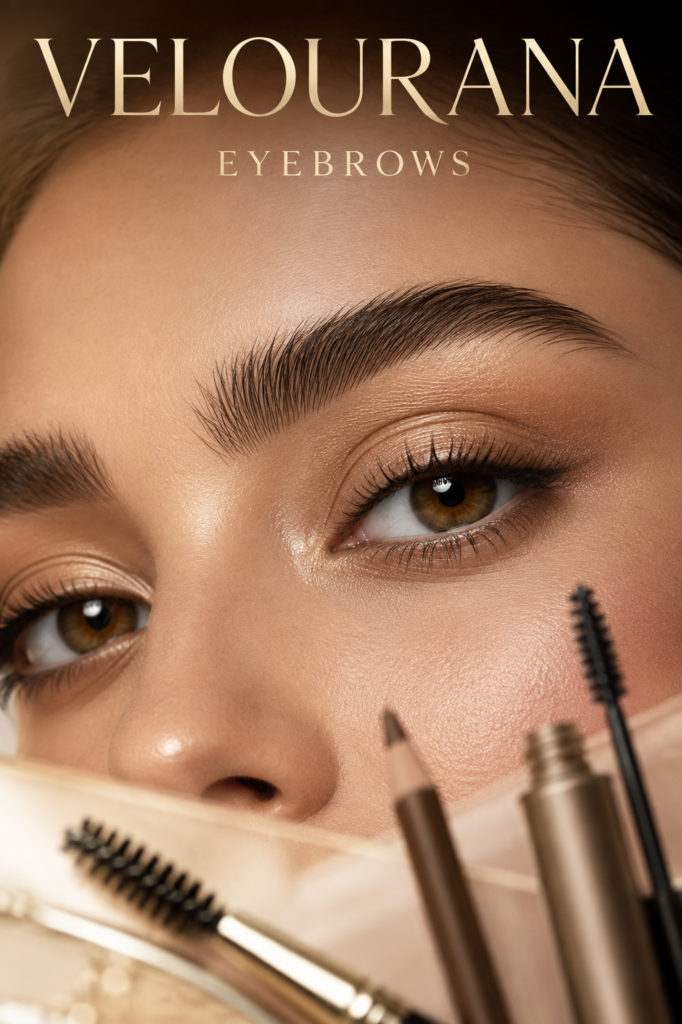
CATEGORY: Natural Brows
Natural brows occupy a distinctive place in modern beauty because their appeal does not depend on obvious perfection. They are shaped, groomed, and often enhanced, yet the finished result preserves the irregularities and variations that make eyebrows look like real hair growing naturally across the face. Instead of transforming the brows into sharply outlined features, the natural-brow approach works with their existing architecture. Density, direction, texture, gaps, asymmetry, and individual hair patterns become elements to refine rather than problems that automatically need to be concealed.
This distinction is important because natural brows are sometimes misunderstood as untouched brows. In reality, an eyebrow can appear exceptionally natural while involving thoughtful grooming and several cosmetic techniques. The difference lies primarily in how those interventions are used. A pencil may replace missing hairs rather than create an obvious border. A gel may encourage direction without freezing every strand into an identical position. Tweezing may clarify the lower edge while preserving enough surrounding growth to avoid an artificially carved shape. The objective is not absence of technique but invisibility of technique.
Natural brows also challenge the idea that every eyebrow should conform to one ideal shape. Faces differ, brow bones differ, hair growth differs, and the relationship between the eyes, forehead, nose, and temples differs. A brow that looks naturally balanced on one person may look imposed on another. Successful natural-brow styling therefore begins with observation. Before changing anything, it considers what the brows are already communicating and how relatively small adjustments could make that structure clearer.
The result is an approach that can range from nearly bare brows brushed into place to subtly filled and carefully balanced brows that still appear untouched from conversational distance. Natural does not necessarily mean minimal effort. It means that the effort remains subordinate to the person wearing the brows.
The Architecture Already Present in the Brow
Every eyebrow contains a natural structure, even when that structure is sparse, uneven, unusually straight, highly arched, or different from the opposite brow. Looking closely at an unstyled eyebrow reveals several zones. The inner brow often contains hairs that grow upward or diagonally. Through the middle, the direction becomes more horizontal. Toward the tail, hairs frequently become finer and angle outward or downward. Density can change dramatically across these areas.
These variations are part of what makes a brow believable. When makeup removes them by filling every area to equal opacity, the eyebrow can begin to resemble a graphic shape rather than hair. Natural-brow technique usually preserves some difference in density. The front may remain lighter and more transparent, the central section somewhat fuller, and the tail defined enough to give the brow direction without becoming excessively dark.
The underlying bone structure is equally important. Eyebrows sit across the brow bone and help frame the eyes, but their most flattering position is not determined solely by conventional mapping formulas. Traditional guidelines that identify a starting point, arch, and endpoint can provide useful orientation, yet natural brows often benefit from interpreting those guidelines flexibly. A naturally wide-set brow should not automatically be drawn significantly inward simply because a formula suggests a different starting point. Likewise, extending a naturally short tail can create balance, but excessive extension may make the brow look disconnected from its original growth.
Observation is therefore more valuable than mechanical correction. The question becomes not “What shape should this eyebrow be?” but “What shape is already emerging here, and what does it need in order to appear more coherent?”
That change in perspective prevents overcorrection. A small gap may need three or four fine strokes rather than an entire layer of pigment. One slightly lower arch may need subtle visual lifting rather than extensive reshaping. A sparse tail may require definition while the naturally dense front needs almost nothing.
Natural brows are strongest when the original eyebrow remains visible beneath the technique.
Why Texture Matters More Than Perfect Edges
Texture is one of the defining characteristics separating a natural-looking eyebrow from a heavily constructed one. Real eyebrow hairs overlap, cross, separate, and change direction. Some are thicker than others. Light reaches the skin between them. Even dense brows rarely form completely opaque blocks.
Preserving this visual complexity is central to natural-brow styling.
A sharply defined lower border can sometimes provide attractive structure, but when both the upper and lower edges are drawn as continuous lines, the brow can quickly lose its softness. Natural brows tend to benefit from broken definition. Rather than outlining the entire perimeter, pigment can be concentrated only where the natural border becomes indistinct.
Hair-like strokes are particularly useful when genuine gaps are visible. Their effectiveness depends not merely on drawing thin lines but on following the direction of existing growth. At the front, strokes may rise upward. Through the central brow, they can become increasingly diagonal. Near the tail, they may lie closer to horizontal. When every stroke points in the same direction, the result can appear patterned even if each individual mark is delicate.
Texture can also be created by combining products with different visual qualities. A fine pencil or brow pen can imitate individual hairs, while a small amount of powder can create the impression of density beneath them. Clear or tinted gel can then separate actual hairs and restore dimension that pigment may have flattened.
The amount of pressure used during application matters as much as product choice. A brow pencil capable of producing an extremely fine line can still create a heavy result when pressed firmly against the skin. Light pressure allows pigment to build gradually and makes corrections easier.
Natural brows generally reward restraint because adding pigment is easier than removing it without disturbing the surrounding makeup. The first pass does not need to produce the final intensity. Building slowly allows the eyebrow to remain visually connected to the real hair rather than becoming a shape placed over it.
Grooming Without Erasing Individuality
Grooming establishes the foundation on which natural-brow makeup rests. Yet aggressive grooming can make achieving a natural result more difficult. When too many hairs are removed, makeup must recreate the density that was intentionally eliminated, creating a cycle in which increasingly precise cosmetic work becomes necessary simply to restore what the natural brow once provided.
For this reason, natural brow grooming often focuses on clarification rather than reconstruction.
Stray hairs that sit noticeably outside the main brow can be removed when they interfere with the desired shape. Hairs directly beneath the arch may be selectively tweezed to reveal the brow's natural lift. Growth between the brows may be tidied according to personal preference. But small irregularities close to the main brow line can contribute softness, and removing every one of them may produce an edge that looks unusually sharp.
Trimming requires similar moderation. Long brow hairs sometimes extend beyond the overall shape when brushed upward. Cutting them all to the same short length can reduce texture and make the brow more difficult to style. Selective trimming of only the hairs that genuinely disrupt the shape tends to preserve movement.
The natural front of the brow deserves particular caution. Excessive removal from the inner corners can create a wide gap that changes facial proportions. Conversely, drawing the fronts dramatically closer together can make the expression appear heavier. The existing starting points usually offer valuable information about what suits the face.
Natural brows also accommodate asymmetry. Human faces are not perfectly symmetrical, and eyebrows frequently reflect this. One may sit slightly higher, contain a stronger arch, or have a fuller tail. Moderate balancing can create harmony, but forcing identical geometry onto both brows may paradoxically make them appear less natural.
The goal is visual relationship rather than duplication. Two brows can belong together without being mirror images.
Filling Sparse Areas While Keeping Skin Visible
Sparse brows present one of the most interesting challenges in natural-brow styling because the instinct to fill every visible space can easily produce too much opacity. Instead, effective filling considers where density is actually necessary.
A useful visual principle is to preserve glimpses of skin. Natural hair does not normally create a perfectly solid surface, particularly at the brow front and along the outer boundaries. Allowing small areas of skin to remain visible creates depth and prevents the eyebrow from appearing stamped onto the face.
Fine pencils are especially suitable for targeted filling because they can deposit pigment precisely where hairs are absent. The product can be used to extend an incomplete tail, strengthen a weak arch, or place individual marks through a sparse front. Brow pens can offer an even more hair-like effect when their fine tips and fluid formulas are handled carefully.
Powder creates a different type of natural effect. Rather than imitating individual hairs, it produces a soft shadow beneath the existing brow. This can be particularly effective for eyebrows that already contain a reasonable amount of hair but need greater visual density. Applied lightly, powder can make the brow appear naturally fuller without drawing attention to individual cosmetic marks.
Pomades can also be used for natural brows, although their pigmentation requires restraint. A very small quantity worked through a fine angled brush can create controlled strokes. The product should not necessarily be dismissed simply because it is capable of dramatic definition; technique determines the result.
Color placement should follow the natural distribution of density. The front usually benefits from the least pigment. Intensity can gradually increase toward the middle and arch, while the tail remains defined but not disproportionately dark.
This gradient does not need to be obvious. In fact, the most successful version is usually barely noticeable. It simply prevents the inner brow from becoming a square block and allows the eyebrow to emerge naturally from the face.
Choosing a Brow Color That Belongs to the Face
Brow color is not simply a matter of matching the hair on the head. Natural eyebrow hairs often contain several tones, and their apparent color changes depending on density, lighting, skin tone, and surrounding makeup.
A cosmetic shade that looks correct in the package may become significantly darker once layered through the brow. This is particularly noticeable with pencils, pomades, and tinted gels because multiple passes intensify pigment. Natural-brow makeup therefore often works well with shades that provide definition without creating an abrupt contrast against the skin.
Undertone also affects believability. Some browns lean warm and reddish, others cool and ashy, while others remain relatively neutral. A shade that conflicts strongly with the natural brow hair can become conspicuous even when its depth seems appropriate.
For very dark brows, maximum-black pigment is not always necessary. Softer black, charcoal, deep neutral brown, or similarly subdued tones can sometimes create definition while retaining visible texture. Blonde and light-brown brows may benefit from taupe, ash-blonde, neutral-brown, or warmer variations depending on the natural coloring.
Gray, silver, white, red, and very light brows each require their own consideration. The purpose is not necessarily to imitate every hair perfectly. Instead, the cosmetic color should integrate with the existing brow so that the eye perceives a unified texture.
Using more than one tone can occasionally make sparse brows appear especially realistic. A slightly softer shade can establish general density while a deeper shade creates a few individual strokes. The difference should remain subtle; strong color contrast can make the technique itself visible.
Ultimately, natural brow color is successful when observers register the eyebrow rather than the product.
The Brow Front and the Importance of Softness
Few areas influence the natural appearance of eyebrows as strongly as the inner front. This region sits close to the center of the face, making excessive definition immediately noticeable.
Natural brow fronts usually contain visible variation. Hairs may stand upright near the base before gradually turning outward. Density may be lighter than through the body of the brow. The boundary closest to the nose may be irregular rather than perfectly vertical.
Cosmetic technique can preserve these characteristics.
Instead of drawing a hard line across the bottom and filling upward, pigment can be introduced between existing hairs. Short upward strokes imitate natural growth. Any background shading can remain extremely light. Brushing through the area afterward helps disperse concentrated pigment and exposes individual hairs again.
The position of the front also affects expression. Brows that begin too heavily or too close together may create visual intensity around the center of the face. Brows beginning too far apart can make the bridge of the nose appear broader and disrupt the connection between the eyes and eyebrows.
There is no universal measurement capable of resolving this perfectly for every face. Natural growth, eye spacing, nose structure, and personal aesthetic all matter. Brow mapping can provide reference points, but the final decision should still be evaluated visually.
The strongest natural brow fronts rarely announce exactly where the eyebrow begins. They transition gradually from skin to hair, creating softness without sacrificing structure.
Creating Shape Without Drawing an Outline
Natural brows still require shape. The misconception is that avoiding sharp outlines means accepting an undefined eyebrow. In practice, shape can be created through strategic density and hair direction rather than continuous borders.
Consider a brow whose lower edge becomes sparse near the arch. Adding several fine strokes in this area can clarify the shape without drawing a line from the front to the tail. If the upper arch lacks definition, a few carefully positioned strokes can create height. If the tail disappears prematurely, extending individual hair-like marks can establish a more complete endpoint.
The eye connects these marks and perceives a coherent shape even though no literal outline exists.
Brushing also contributes significantly to architecture. Directing the inner hairs slightly upward can create fullness. Guiding the middle hairs diagonally toward the temple establishes movement. Smoothing the tail outward emphasizes length. These directional changes reshape the eyebrow visually without requiring additional pigment.
Gel can preserve this arrangement. Clear formulas are useful when natural hair already provides sufficient color, while tinted gels can increase both definition and apparent density. Fiber-containing formulas may create additional fullness by coating hairs and adding subtle bulk.
The result should still allow some movement and separation. Extremely rigid styling can be desirable for particular brow aesthetics, but classic natural brows usually retain a degree of softness.
Rather than constructing a boundary and filling it, the technique constructs the illusion of a more complete collection of hairs.
Natural Brows Across Different Levels of Density
The term natural brows describes an aesthetic rather than a particular amount of hair. A person with very dense eyebrows and someone with naturally sparse eyebrows can both create a natural-brow result, but their techniques will differ considerably.
Dense brows often need less pigment. Their primary concerns may be direction, proportion, and selective grooming. Brushing can reveal the existing shape, after which only small gaps require filling. A clear or lightly tinted gel may provide most of the necessary refinement.
Medium-density brows offer considerable flexibility. They may benefit from subtle filling beneath the arch, strengthening of the tail, and light enhancement through areas where skin becomes more visible. Because there is enough natural hair to disguise cosmetic work, several product types can create convincing results.
Sparse brows require more deliberate reconstruction, but naturalism remains possible. The key is avoiding a uniform block of pigment. Individual strokes, varied spacing, and a soft underlying shadow can suggest depth. The direction and length of the drawn hairs should change across the brow just as genuine hairs do.
Very sparse or partially absent brows may require more extensive mapping because fewer natural landmarks are present. Even then, deliberately introducing slight variation can prevent the result from appearing excessively mechanical.
Density also affects grooming choices. Removing hair from already sparse brows has greater visual consequences than removing comparable growth from extremely dense brows. A conservative approach preserves material that can contribute to texture.
Natural-brow technique therefore adapts to the eyebrow rather than expecting the eyebrow to adapt to a predetermined technique.
The Relationship Between Brows and the Rest of the Makeup
Eyebrows do not exist independently of the rest of the face. Their perceived intensity changes according to complexion makeup, eye makeup, lip color, hairstyle, and even lighting.
A brow that appears moderately defined on bare skin may look comparatively soft beside dramatic eyeliner and deep eyeshadow. The same eyebrow paired with minimal makeup may become one of the strongest features on the face.
Natural brows can therefore be adjusted according to context without losing their identity. With understated makeup, a softly groomed brow may be sufficient. With more elaborate eye makeup, slightly greater definition through the arch and tail can maintain facial balance while the front remains soft.
Foundation and concealer also influence brow appearance. Full-coverage complexion products can accidentally coat fine hairs and reduce their natural depth. Brushing the brows after complexion application can remove residue and restore texture. Conversely, carefully placed concealer around the brow can sharpen its shape, but a highly contrasting carved border may move the result away from a natural aesthetic.
Highlighter placed directly beneath the brow bone can similarly alter the effect. Subtle luminosity can emphasize the arch, whereas an obvious pale stripe creates a more structured makeup look.
Natural brows are therefore less about isolating one particular technique and more about maintaining proportional harmony with everything surrounding them.
Why Overcorrection Can Make Brows Look Less Balanced
Eyebrow asymmetry is often most noticeable to the person looking closely into a mirror. Because each brow is viewed individually during application, small differences can seem larger than they appear when the face is seen as a whole.
This can lead to repeated correction. One arch is raised to match the other. The second then appears too narrow, so it is widened. The first is darkened to restore balance. Gradually, both brows become larger and more defined than intended.
Natural brow styling benefits from periodically evaluating the entire face rather than concentrating continuously on one eyebrow. Distance changes perception. What looks like a significant discrepancy at close range may contribute naturally to facial expression when viewed normally.
This does not mean asymmetry cannot be adjusted. Small changes can be effective. A slightly lower arch may be visually lifted by adding a few strokes along its upper edge rather than removing substantial hair underneath. A shorter tail can be extended. A thinner brow can receive strategic density.
The guiding principle is to correct the difference with the smallest effective intervention.
Faces move constantly, and eyebrows move with expression. Perfect symmetry in a motionless mirror is therefore an unrealistic standard for a living face. Natural brows accept this movement rather than attempting to immobilize the features into mathematical equivalence.
Longevity Without Losing the Natural Finish
A natural appearance should not necessarily mean poor wear. Brows can remain soft-looking while being prepared to last through a normal day.
Longevity begins with the condition of the skin beneath the brow. Excess skincare, facial oil, or foundation can cause certain pencils and powders to fade or shift. Allowing skincare to settle and removing unnecessary residue from the brow area can improve adherence.
Layering can also increase durability without requiring greater visible intensity. A light pencil or powder base can establish shape, while gel secures the natural hairs over it. Because each layer remains thin, the finished brow can retain transparency.
Water-resistant products may be useful in heat, humidity, exercise, or long-wear situations. Their durability does not automatically make them unnatural, although highly pigmented formulas require controlled application.
Touching the brows during the day is another common source of fading. Because natural brow makeup may involve very fine strokes, repeated rubbing can remove them more quickly than a dense layer of pomade. Setting the hairs and minimizing contact helps preserve the effect.
The ideal degree of longevity depends on the wearer. Some prefer a brow that remains virtually unchanged for many hours, while others prioritize flexibility and easy removal. Natural brows can accommodate both preferences as long as durability measures do not overwhelm the desired texture.
Natural Brows as a Modern Beauty Language
The popularity of natural brows reflects a broader evolution in beauty aesthetics. Eyebrow trends have repeatedly moved between thinness and fullness, softness and precision, understatement and dramatic structure. Natural brows do not necessarily reject these histories. Instead, they emphasize personalization.
A naturally straight brow does not need to acquire a pronounced arch simply because arches are considered flattering. A naturally rounded brow can remain rounded. Dense brows can remain substantial rather than being narrowed to fit a standardized outline. Sparse brows can be enhanced without pretending to possess completely uniform density.
This flexibility makes natural brows particularly adaptable. They can accompany polished professional makeup, minimal everyday makeup, romantic looks, editorial beauty, and even more dramatic styles. What remains consistent is the preservation of visible hair texture and a sense that the brow belongs to the face.
The aesthetic also changes the role of technique. Skill is expressed not by how dramatically the original eyebrow can be transformed, but by how intelligently small changes are placed. A handful of strokes may require greater observation than filling an entire predefined shape. Restraint becomes an active decision rather than an absence of effort.
Natural brows ultimately celebrate the eyebrow as a living facial feature rather than a graphic accessory. They recognize that uneven growth, subtle asymmetry, changing hair direction, and variations in density are not necessarily defects. They are the visual evidence that the eyebrow is made of individual hairs.
When those characteristics remain visible after grooming and makeup, the result can feel polished without becoming rigid, defined without appearing drawn, and intentional without losing individuality. That balance is the central language of the natural brow: enhancement that is visible in its effect but difficult to detect in its execution.
THE END VELOURANA
 Discover More From Our Family of Websites
 ZodiacBearing (Astrology, Tarot, Numerology, Angel Numbers & Spiritual Guidance)
 Velourana (Beauty, Makeup, Hair Care, Skincare & Beauty Tips)
 HavenBearing (Home, Living, Organization, Décor & Everyday Inspiration)
 PawBearing (Pet Care, Dog Breeds, Animal Health, Training & Pet Products)
 PsyCatherine (Notes From the Journal of a Psychologist on Real Life)

