
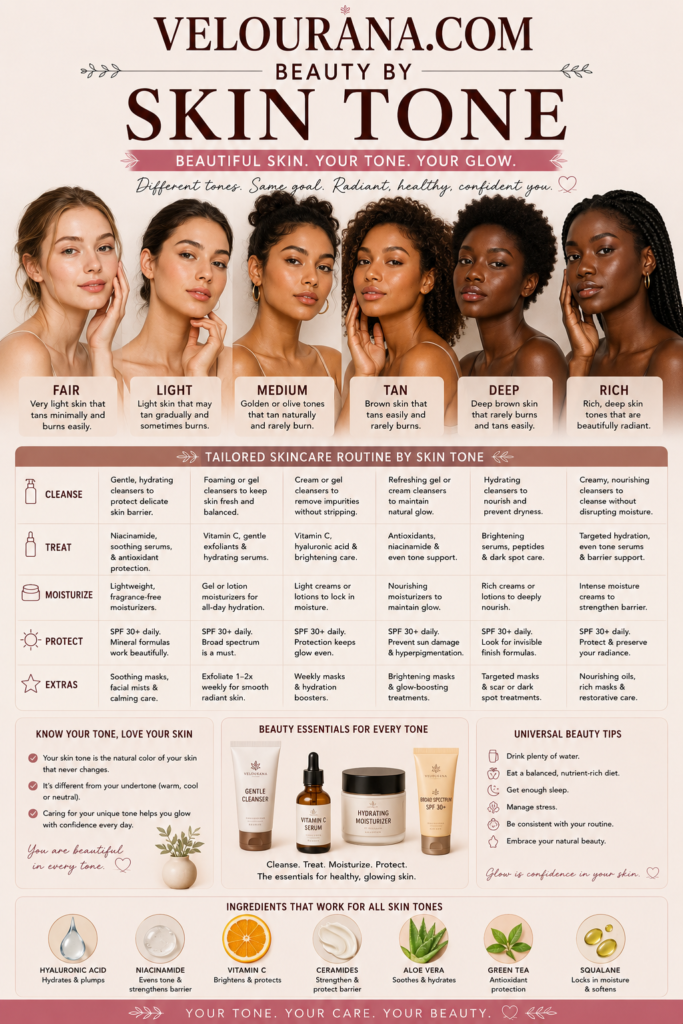
CATEGORY: Medium Skin Foundation
Medium skin offers a wide foundation range in theory, but abundance does not always make matching easier. A large shade selection can still leave gaps in undertone, saturation, and depth. Two foundations may appear equally appropriate on a shade chart while producing completely different results once applied across the face.
One can turn orange.
Another may look too pink.
A neutral shade can appear gray.
A golden formula can look perfect in summer but noticeably too warm in winter.
The complexity comes from the fact that medium skin is not a fixed midpoint. It is a broad group containing warm, cool, neutral, olive, peach, caramel, golden, bronze, and muted complexions.
The natural face may also contain more than one visible color. The cheeks can be redder, the forehead deeper, the neck lighter, and the chest more sun-exposed. Pigmentation, freckles, or previous tanning can create additional variation.
Foundation cannot reproduce every one of these differences simultaneously.
Its role is to create a coherent baseline from which the rest of the complexion makeup can work.
Matching Medium Skin Begins With the Underlying Color
The most effective foundation match begins by identifying what remains consistent beneath surface variation.
A golden complexion may show temporary redness without becoming cool.
An olive complexion may become warmer after sun exposure while retaining a muted green undertone.
A neutral complexion may appear slightly peach under warm lighting and cooler in daylight.
These shifts can make undertone difficult to identify if only one moment or one area is considered.
The jaw and lower cheek often provide useful information because they sit between the central face and neck.
A few candidate shades compared directly against this area can reveal more than a shade description.
Foundation should not be selected because its name sounds correct.
Words such as golden, warm, neutral, beige, honey, sand, tan, and olive vary substantially among brands.
One company's warm may be distinctly yellow.
Another's may contain peach.
A shade labeled neutral may still lean warm.
The complexion itself must remain the final reference.
Medium Golden Skin Needs Nuance Rather Than Maximum Warmth
Golden medium skin can look luminous when foundation respects its warmth.
The problem arises when cosmetic warmth becomes more intense than the natural complexion.
A strongly yellow foundation may make the face look artificial.
A peach-gold shade can turn orange.
A deeper caramel foundation may create a tan effect rather than a true match.
Golden skin still needs accurate depth.
Warmth should be present in proportion to the complexion rather than added as an enhancement.
This distinction is important because warmth can always be increased later through bronzer or blush.
Foundation is much harder to correct once it has shifted the entire face toward orange or yellow.
The most successful golden foundation often looks less dramatic in the bottle than expected.
It contains enough warmth to disappear but not enough to visibly recolor the skin.
Medium Peach Skin Sits Between Traditional Categories
Peach medium skin contains both warm yellow or golden qualities and a red or pink influence.
This can make conventional warm foundation too yellow and conventional cool foundation too pink.
A balanced peach foundation may work better.
The challenge is preventing peach from becoming orange.
Saturation matters enormously.
A medium complexion may be peach without being bright.
If the foundation contains too much red-orange pigment, the face can look warmer than the body.
Peach undertones often benefit from formulas that preserve warmth while remaining relatively balanced.
The best match should make the complexion look cohesive rather than obviously peach-colored.
Medium Neutral Skin Requires Restraint
Neutral medium skin often appears flexible because it does not lean strongly warm or cool.
That flexibility can actually make foundation mismatch more visible.
A golden foundation introduces warmth that was not there.
A rosy formula shifts the entire face pink.
A very muted neutral can make the complexion look gray.
Neutral foundation should contain enough color to remain alive while avoiding obvious direction.
This is one reason exact testing matters.
Neutrality is not absence of undertone.
It is balance.
The correct foundation maintains that balance.
Medium Olive Skin Often Reveals Foundation Errors Immediately
Olive medium skin can look difficult to categorize until foundation is applied.
A product that appears correct in the bottle may suddenly become orange or pink.
This happens because olive undertones contain muted green or gray-green influences that conventional formulas may not include.
When the foundation contains more red than the complexion, the face looks rosy.
When it contains too much yellow and peach, it becomes orange.
Some neutral formulas still contain enough pink to look wrong.
A better olive match usually has a quieter, more muted appearance.
It may seem less vibrant in the bottle but more natural once applied.
This is a valuable reminder that foundation does not need to look attractive as an isolated cosmetic color.
It needs to look accurate on the skin.
Rosy Medium Skin Is Not the Same as Surface Redness
Rosy medium skin can genuinely contain cool or red undertones.
However, medium complexions can also develop visible facial redness while remaining warm or neutral underneath.
The difference matters.
If the cheeks and nose are red but the jaw and neck are golden-neutral, a pink foundation may exaggerate the mismatch.
Localized redness should not automatically control the entire base.
Foundation can match the underlying complexion while concealer or color correction addresses the red areas.
This creates a more natural relationship with the neck and chest.
The goal is not to eliminate every trace of natural color.
It is to prevent one area from forcing the entire face into the wrong undertone.
Foundation Depth Should Be Judged After Blending
A swatch can appear darker simply because it is concentrated.
Once foundation is blended thinly across the skin, its apparent depth can change.
This is why a stripe alone does not always provide the full answer.
Testing should include both swatching and partial blending.
A candidate shade may appear slightly deep as an opaque stripe yet disappear perfectly when spread to normal coverage.
Another may look close in a swatch but become too pale once blended.
The foundation should be judged at the coverage level intended for actual wear.
This is particularly important when comparing medium shades that differ only slightly in depth.
The Value of Letting Foundation Dry Down
Foundation can change as it dries.
The wet formula may appear lighter or more luminous.
As moisture evaporates, pigment becomes more concentrated visually.
Some formulas also oxidize and deepen further.
Medium skin can make this shift particularly confusing because a foundation may remain close enough to look acceptable while still becoming warmer or deeper than ideal.
Allowing the swatch to settle reveals whether the initial match remains accurate.
A foundation should not be judged solely at the moment of application.
Its final color matters more than its first impression.
Sheer Coverage Preserves the Natural Undertone
A sheer foundation allows the complexion itself to participate in the final color.
This can be especially useful for medium skin with complex undertones.
Olive, peach, and neutral skin may find sheer formulas more forgiving because natural undertone remains visible through the product.
Freckles and pigmentation also remain part of the complexion.
The result often looks more dimensional.
This does not mean sheer foundation is always the most natural choice.
If the product undertone is strongly wrong, even a light layer can shift the overall complexion.
The advantage is that the shift is moderated by transparency.
Medium Coverage Balances Correction and Skin Character
Medium coverage is often ideal when the complexion contains uneven pigmentation, redness, or tonal variation but does not require complete opacity.
It creates a more uniform base while allowing some natural depth to remain visible.
This can reduce the need for heavy contouring or bronzing afterward because the face has not been completely flattened.
Medium coverage can also be layered selectively.
Areas that need more correction receive another thin application.
Clearer areas remain lighter.
This creates visual dimension before any additional complexion makeup is applied.
Full Coverage Can Be Beautiful When the Shade Is Exact
Full coverage is not inherently unnatural.
It can create an elegant, perfected complexion.
The issue is that opacity increases the importance of accurate color.
A full-coverage foundation becomes the visible skin color.
If it is too warm, the entire face becomes warm.
If it is too deep, the face becomes darker than the neck.
If the undertone is wrong, natural skin can no longer show through enough to disguise it.
This makes full coverage less forgiving but not less effective.
When the shade and texture are correct, the result can be exceptionally polished.
Finish Changes the Character of Medium Skin
Matte, satin, natural, and luminous foundation finishes can all work beautifully on medium skin.
Matte foundation creates control and can emphasize clean structure.
Satin preserves some natural reflection.
Luminous foundation introduces additional dimension.
The choice should relate to skin behavior and the final aesthetic.
Dry skin may reveal texture beneath an aggressively matte foundation.
Oily skin may cause luminous foundation to become increasingly reflective.
Combination skin may need different preparation in different areas.
Foundation should not be chosen by finish alone.
A beautiful finish that breaks apart after several hours does not remain beautiful.
Wear behavior matters as much as first application.
Medium Skin and Hyperpigmentation
Medium complexions can display post-inflammatory marks, sun pigmentation, or uneven areas that are deeper than surrounding skin.
The temptation is to choose a foundation closer to the darker pigmentation.
This usually creates too much depth across the rest of the face.
Foundation should match the main complexion.
Pigmentation can then be corrected locally.
Color correction may also reduce the amount of concealer required, depending on the tone of the discoloration.
The principle remains the same.
A localized difference should not determine the color of the whole face.
Concealer Can Refine Rather Than Replace Foundation
A well-matched foundation reduces the amount of corrective work required.
Concealer can then be used strategically.
A blemish needs coverage close to the complexion depth.
Under-eye darkness may require correction and controlled brightness.
Pigmentation can be addressed without applying additional foundation everywhere.
This approach often looks more natural because product thickness remains concentrated only where necessary.
It also prevents the central face from becoming dramatically lighter than the perimeter.
Medium skin often supports subtle under-eye brightness beautifully, but excessive contrast can make the makeup appear divided into separate zones.
Bronzer Should Begin After Foundation Matching Ends
Foundation and bronzer should not solve the same problem.
Foundation matches.
Bronzer warms.
Using a darker foundation to imitate a tan makes it difficult to create believable dimension later.
Medium skin may already contain natural warmth, but bronzer can still be used selectively to increase it.
A correct base preserves the distinction between actual skin depth and cosmetic warmth.
This distinction is what allows bronzer to look intentional rather than simply making the face one uniform darker color.
Contour Works Better Against an Accurate Base
Contour relies on contrast with the surrounding skin.
If foundation is already too dark, contour loses definition or requires an even deeper shade.
If the foundation is too warm, cool shadow tones can appear disconnected.
An accurate base allows contour to behave more naturally.
The same applies to blush and highlighter.
Every complexion product depends on the foundation beneath it.
Foundation therefore influences the success of the entire makeup structure.
Powder Can Introduce Unexpected Warmth
Many setting powders designed for medium skin contain visible tint.
This can be useful when the tint matches the complexion, but it can also alter an accurate foundation.
Yellow powder can make a neutral or cool complexion warmer.
Peach powder may intensify orange tendencies.
A deep beige powder can shift foundation darker.
Testing the completed routine is therefore as important as testing foundation alone.
A perfect foundation can become inaccurate after several layers of tinted product.
Mixing Is Useful for Seasonal Medium Skin
Medium skin often shifts more noticeably between seasons than very fair complexions.
Summer can deepen the complexion substantially.
Winter can reduce surface warmth and depth.
Maintaining two neighboring foundation shades can provide practical flexibility.
They can be mixed in different proportions rather than replacing the entire routine several times a year.
This method also makes gradual seasonal transitions easier.
The complexion does not move instantly from winter to summer depth.
The foundation can change with it.
Undertone Usually Changes Less Than Depth
Sun exposure can make medium skin appear warmer because of tanning and increased surface pigment.
This can create the impression that the undertone has changed.
Usually the fundamental undertone remains more stable than the visible depth.
A neutral-olive complexion may become deeper and more golden in summer but still require an olive-neutral foundation rather than a conventional orange-golden shade.
Recognizing this prevents the common mistake of choosing increasingly warm foundations simply because the complexion becomes darker.
Depth and undertone should continue to be evaluated separately.
Skin Preparation Influences the Final Color
Foundation does not sit on an empty surface.
Moisturizer, sunscreen, primer, and skincare all influence how it spreads and settles.
Rich skincare can increase luminosity or cause movement.
Mattifying primer can reduce shine but may also change how pigment distributes.
Certain combinations can cause separation.
When foundation breaks apart, areas of increased or reduced coverage develop, making the complexion look uneven in color.
Good preparation therefore supports both texture and color accuracy.
The same foundation can look different on poorly prepared and well-prepared skin.
Brushes, Sponges, and Fingers Change Opacity
Application tools influence how much pigment reaches the skin.
A dense brush can create higher coverage.
A damp sponge often produces a more diffused layer.
Fingers can warm certain textures and press them into the complexion.
Because opacity affects the visibility of foundation undertone, the chosen tool can influence how accurate the shade appears.
A foundation that works beautifully with a sponge may become too warm when applied heavily with a brush.
The shade should therefore be evaluated using the method intended for regular wear.
Photography Can Reveal Different Problems
Foundation may look balanced in person but different in photographs.
Flash, white balance, exposure, and reflective ingredients can alter apparent depth and brightness.
A face can look lighter than the neck in a photograph even when the shade appears accurate in natural light.
This should not automatically be treated as proof of a poor match.
For events where photography matters, testing the complete makeup under similar conditions can reveal whether foundation, powder, or reflective products need adjustment.
A Medium-Skin Foundation Wardrobe Can Be More Practical Than One Perfect Bottle
The idea of one permanent perfect foundation is attractive but not always realistic.
Medium skin can vary through seasons, skin condition, tanning, and changing coverage preferences.
A sheer tint may suit everyday wear.
A medium-coverage foundation may work for most occasions.
A more stable or higher-coverage formula may be preferred for events.
Two neighboring shades can handle seasonal depth changes.
This does not mean a large collection is necessary.
It simply acknowledges that the complexion and the purpose of makeup are not always identical.
Foundation can adapt.
The Correct Foundation Makes Every Other Decision Easier
When foundation matches medium skin accurately, the rest of the makeup becomes easier to evaluate.
Blush appears true to its intended color.
Bronzer can add warmth without becoming orange.
Contour creates shadow without fighting the base.
Highlighter reflects light without revealing a mismatch underneath.
Lipstick and eye makeup sit against a complexion that still looks like the wearer.
The foundation does not need to attract attention.
Its success lies in disappearing.
Medium skin contains enough variation and undertone complexity that finding this balance can take careful observation.
But once achieved, the complexion gains something more valuable than simple coverage.
It gains continuity.
The face remains connected to the neck and body.
Natural undertone remains recognizable.
Texture and finish support rather than obscure the skin.
That is the purpose of medium skin foundation: not to create a new complexion, but to refine the one already there.
THE END VELOURANA
 Discover More From Our Family of Websites
 ZodiacBearing (Astrology, Tarot, Numerology, Angel Numbers & Spiritual Guidance)
 Velourana (Beauty, Makeup, Hair Care, Skincare & Beauty Tips)
 HavenBearing (Home, Living, Organization, Décor & Everyday Inspiration)
 PawBearing (Pet Care, Dog Breeds, Animal Health, Training & Pet Products)
 PsyCatherine (Notes From the Journal of a Psychologist on Real Life)

