CATEGORY: Makeup Terminology
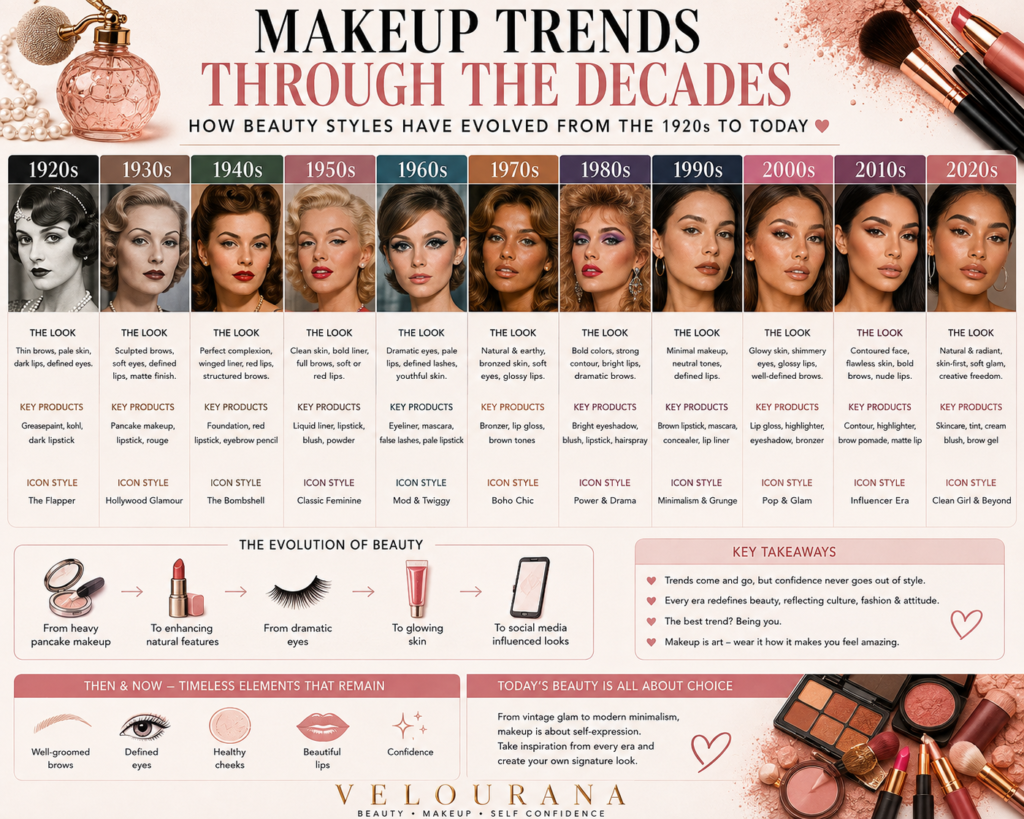
Makeup is more than a way to enhance appearance—it reflects culture, fashion, technology, and society. Every decade has introduced iconic beauty trends that continue to inspire modern cosmetics. From the bold lips of the 1920s to today’s skin-first approach and multifunctional products, makeup has continuously evolved alongside changing ideals of beauty.
Understanding the history of makeup helps explain why certain products exist, how application techniques have developed, and why many classic styles continue to return in modern beauty trends.
This comprehensive guide explores the most influential makeup trends from the last century and how they continue to shape today’s beauty industry.
—
The 1920s: The Birth of Modern Glamour
The 1920s marked one of the first major revolutions in cosmetic fashion.
Inspired by silent film stars, women embraced dramatic makeup as a symbol of independence and modern femininity.
Signature Trends
- Dark, smoky eyes.
- Thin, rounded eyebrows.
- Pale matte skin.
- Deep red lipstick.
- Cupid’s bow lips.
Compact powders, lipstick tubes, and mascara became increasingly accessible to everyday consumers during this period.
—
The 1930s: Sophisticated Elegance
During the 1930s, makeup became more refined.
Hollywood actresses heavily influenced beauty standards.
Popular Looks
- Soft eyeshadow.
- Carefully sculpted brows.
- Longer eyelashes.
- Satin skin.
- Classic red lips.
Eyebrows became thinner and more dramatically arched than in previous decades.
—
The 1940s: Beauty During Difficult Times
Despite wartime shortages, makeup remained an important symbol of confidence.
Many women simplified their routines while maintaining polished appearances.
Hallmarks
- Fresh complexion.
- Defined brows.
- Winged eyeliner.
- Bright red lipstick.
- Natural cheeks.
Red lipstick became particularly iconic during this era.
—
The 1950s: Classic Hollywood Beauty
The 1950s introduced one of history’s most recognizable makeup styles.
Movie stars inspired elegant, feminine looks emphasizing flawless skin and perfectly defined features.
Signature Makeup
- Matte foundation.
- Soft pink blush.
- Black winged eyeliner.
- Full lashes.
- Red or pink lipstick.
Beauty icons of this era helped establish many techniques still taught today.
—
The 1960s: Dramatic Eyes
The 1960s shifted attention toward expressive eye makeup.
Popular Features
- Bold eyeliner.
- Graphic eye shapes.
- White eyeliner.
- Large false eyelashes.
- Nude lips.
- Pale matte skin.
Eyes became the primary focus of makeup.
—
The 1970s: Natural Beauty
The 1970s embraced softer, more relaxed makeup.
Common Trends
- Light foundation.
- Warm bronzed skin.
- Earth-toned eyeshadow.
- Glossy lips.
- Natural brows.
The decade celebrated effortless beauty inspired by nature.
—
The 1980s: Bold Color Everywhere
The 1980s were defined by confidence and experimentation.
Characteristic Looks
- Bright blush.
- Vibrant eyeshadow.
- Bold lipstick.
- Heavy contouring.
- Thick eyebrows.
- Colorful mascara.
Beauty became expressive rather than subtle.
—
The 1990s: Minimalism Arrives
The 1990s introduced cleaner, simpler makeup.
Popular Styles
- Matte skin.
- Brown lipstick.
- Neutral eyeshadow.
- Thin eyebrows.
- Soft contouring.
Many trends from this decade have returned in recent years.
—
The 2000s: Frost and Shine
The early 2000s favored shimmering finishes.
Typical Products
- Frosted eyeshadow.
- Glossy lips.
- Heavy bronzer.
- Glitter.
- Metallic finishes.
Lip gloss became one of the defining beauty products of the decade.
—
The 2010s: Social Media Revolution
Beauty tutorials transformed how people learned makeup.
New techniques spread globally through online platforms.
Defining Trends
- Full coverage foundation.
- Dramatic contour.
- Bright concealer.
- Highlighting.
- Bold brows.
- Liquid lipstick.
- Precision blending.
Professional techniques became accessible to everyday makeup enthusiasts.
—
The 2020s: Skin-First Beauty
Today’s makeup philosophy emphasizes healthy skin and versatility.
Rather than masking the complexion, many products are designed to enhance natural features.
Current Trends
- Lightweight foundation.
- Skin tints.
- Cream blush.
- Cream bronzer.
- Soft contour.
- Natural brows.
- Glossy lips.
- Hybrid skincare-makeup products.
Comfort and healthy-looking skin have become major priorities.
—
The Rise of Multifunctional Products
Modern beauty increasingly favors products that perform multiple roles.
Examples include:
- Lip and cheek tints.
- Foundation with skincare ingredients.
- SPF makeup.
- Tinted moisturizers.
- Hydrating concealers.
- Lip oils.
These products simplify routines while reducing the number of items needed.
—
How Technology Has Changed Makeup
Advances in cosmetic science have improved nearly every aspect of makeup.
Today’s products offer:
- Better shade ranges.
- Longer wear.
- Improved ingredients.
- Lightweight textures.
- More inclusive formulations.
- Enhanced skin compatibility.
Consumers now have access to products suitable for virtually every skin tone and skin type.
—
Sustainability in Modern Cosmetics
Environmental awareness has influenced product development.
Many beauty brands now focus on:
- Refillable packaging.
- Recycled materials.
- Reduced plastic use.
- Responsibly sourced ingredients.
- Cruelty-free testing.
- Vegan formulations.
Sustainability has become an important consideration for many shoppers.
—
Timeless Makeup Techniques
Although trends constantly change, several principles remain consistent across generations.
These include:
- Matching foundation to your skin tone.
- Blending thoroughly.
- Preparing the skin properly.
- Choosing colors that complement your complexion.
- Maintaining clean makeup tools.
- Applying products with moderation.
Good technique never goes out of style.
—
Which Makeup Trends Return?
Beauty trends are famously cyclical.
Styles that frequently return include:
- Glossy lips.
- Soft blush.
- Brown lipstick.
- Winged eyeliner.
- Natural skin.
- Bold red lips.
- Metallic eyeshadow.
- Full brows.
Each new generation often reinterprets classic looks with modern products and techniques.
—
Creating Your Own Signature Style
Rather than following every trend, many makeup enthusiasts find the greatest confidence by developing a style that reflects their own preferences.
Consider:
- Your skin type.
- Your face shape.
- Your daily routine.
- Your wardrobe.
- Your comfort level.
- Your favorite colors.
The most flattering makeup is often the makeup that feels authentic to you.
—
Final Thoughts
The history of makeup demonstrates how beauty has continuously adapted to changing cultures, lifestyles, and innovations. From the dramatic glamour of the 1920s to today’s focus on healthy, radiant skin, every decade has contributed techniques, products, and styles that continue to influence modern cosmetics.
Understanding these evolving trends not only provides fascinating insight into beauty history but also helps you appreciate the versatility of today’s makeup products. Whether you prefer timeless classics or contemporary minimalism, the best makeup is the one that enhances your natural features while allowing your personality to shine.
The End,
Velourana
 Discover More From Our Family of Websites
 ZodiacBearing (Astrology, Tarot, Numerology, Angel Numbers & Spiritual Guidance)
 Velourana (Beauty, Makeup, Hair Care, Skincare & Beauty Tips)
 HavenBearing (Home, Living, Organization, Décor & Everyday Inspiration)
 PawBearing (Pet Care, Dog Breeds, Animal Health, Training & Pet Products)
 PsyCatherine (Notes From the Journal of a Psychologist on Real Life)