CATEGORY: Makeup Techniques
A flawless makeup look begins long before foundation touches the skin. One of the most overlooked yet essential products in modern cosmetics is makeup primer. While some people consider primer an optional step, professional makeup artists know that the right primer can dramatically improve how makeup looks, feels, and lasts throughout the day.
Whether your goal is smoother skin, longer-lasting foundation, reduced shine, or a radiant glow, choosing the right primer can make a noticeable difference. However, with dozens of different formulas available—including mattifying, hydrating, gripping, illuminating, blurring, and color-correcting primers—it can be difficult to know which one best suits your needs.
This comprehensive guide explains everything you need to know about makeup primer, including how it works, the different types available, how to apply it correctly, and how to select the ideal formula for your skin type.
—
What Is Makeup Primer?
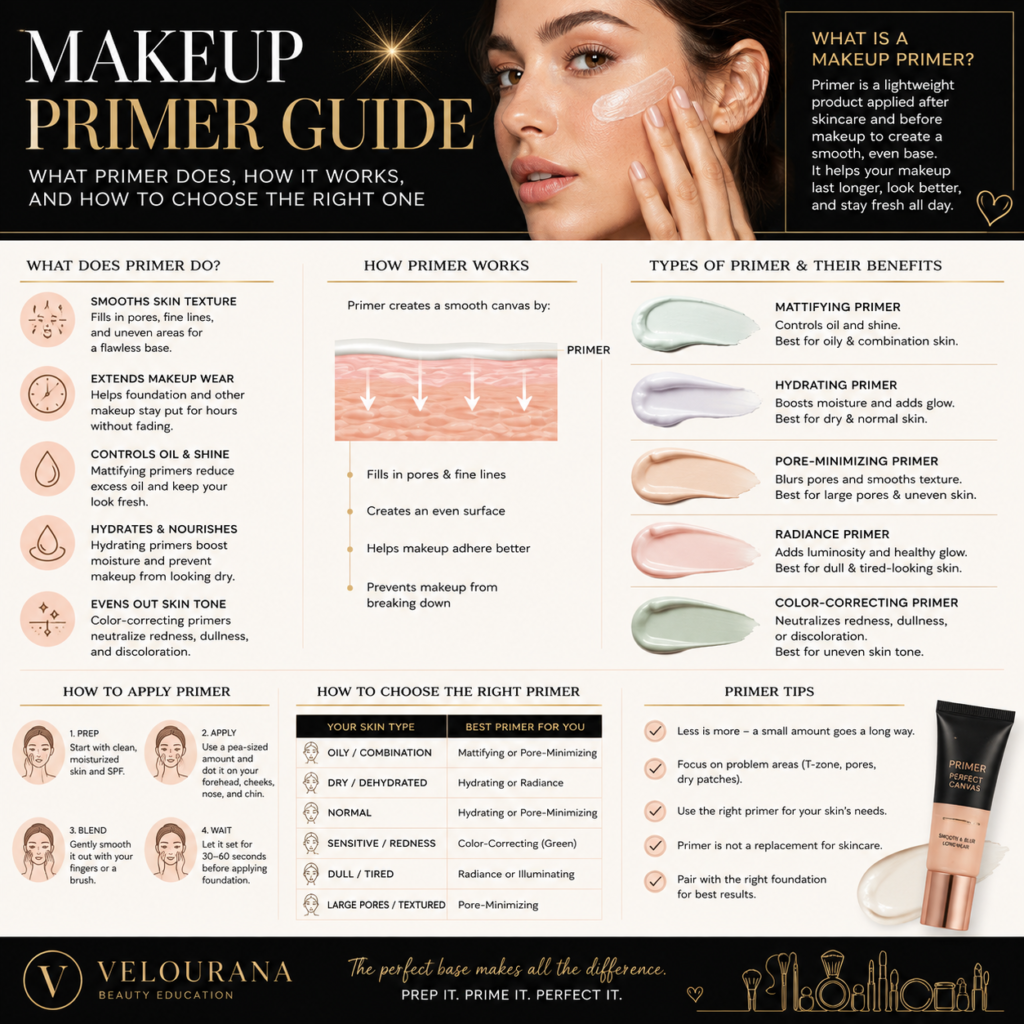
Makeup primer is a cosmetic product applied after skincare and before foundation. Its purpose is to prepare the skin by creating a smoother surface, helping makeup apply more evenly and remain in place for longer.
Unlike foundation, primer usually provides little or no coverage. Instead, it focuses on improving the texture and performance of makeup.
Many modern primers also include skincare ingredients that hydrate, soothe, or protect the skin while creating the perfect base for cosmetics.
—
Why Use a Primer?
Although primer is not always essential for every makeup routine, it offers several important benefits.
A quality primer can:
- Smooth uneven skin texture.
- Minimize the appearance of pores.
- Reduce visible fine lines.
- Help foundation blend more easily.
- Extend makeup wear time.
- Prevent foundation from separating.
- Improve oil control.
- Add hydration to dry skin.
- Enhance overall makeup appearance.
For people who wear makeup for long workdays, weddings, events, or photography, primer often becomes one of the most valuable products in their routine.
—
How Makeup Primer Works
Primer forms a thin layer between the skin and foundation.
This barrier helps by:
- Filling tiny surface irregularities.
- Reducing friction during makeup application.
- Preventing excess oil from breaking down foundation.
- Helping pigments adhere more evenly.
- Creating a smoother finish.
The result is makeup that looks fresher for longer and is less likely to fade, crease, or become patchy.
—
Different Types of Makeup Primers
Not all primers perform the same function. Understanding the different categories helps you select the most appropriate product for your skin.
—
Hydrating Primer
Hydrating primers are designed for dry, dehydrated, or mature skin.
They often contain ingredients such as:
- Hyaluronic acid.
- Glycerin.
- Aloe vera.
- Squalane.
- Ceramides.
These ingredients provide moisture while preventing foundation from clinging to dry patches.
Hydrating primers typically create a fresh, radiant complexion.
—
Mattifying Primer
Mattifying primers help control excess oil production.
They are especially suitable for:
- Oily skin.
- Combination skin.
- Humid climates.
- Long workdays.
Many mattifying primers reduce shine without making the skin feel overly dry.
—
Blurring Primer
Blurring primers focus on improving skin texture.
Their primary purpose is to minimize the appearance of:
- Enlarged pores.
- Fine lines.
- Small wrinkles.
- Uneven texture.
These primers often create an airbrushed effect that photographs beautifully.
—
Illuminating Primer
Illuminating primers contain light-reflecting particles that give the skin a healthy glow.
They are popular for:
- Dry skin.
- Dull complexions.
- Bridal makeup.
- Natural glowing makeup looks.
Unlike glitter products, quality illuminating primers create subtle radiance rather than obvious sparkle.
—
Gripping Primer
Gripping primers have become increasingly popular in recent years.
Their slightly tacky texture helps foundation adhere more securely to the skin.
Benefits include:
- Improved makeup longevity.
- Better resistance to humidity.
- Reduced fading.
- Stronger adherence of foundation.
Many professional makeup artists rely on gripping primers for all-day events.
—
Color-Correcting Primer
Some primers contain color pigments that neutralize uneven skin tone before foundation.
Common varieties include:
Green Primer
Neutralizes redness.
Suitable for acne-prone skin or rosacea.
—
Lavender Primer
Brightens dull or yellow-looking complexions.
Creates a fresher appearance.
—
Peach Primer
Helps reduce the appearance of blue undertones in fair complexions.
—
Yellow Primer
Softens purple discoloration while adding warmth to the skin.
—
Silicone-Based vs Water-Based Primers
One of the most important yet often overlooked considerations is primer formulation.
Silicone-Based Primers
Silicone primers create an exceptionally smooth surface.
Advantages include:
- Excellent pore blurring.
- Smooth application.
- Long-lasting makeup.
- Soft texture.
However, they perform best when paired with silicone-based foundations.
—
Water-Based Primers
Water-based primers feel lighter and are often preferred by people with sensitive or acne-prone skin.
Benefits include:
- Lightweight texture.
- Hydrating feel.
- Better compatibility with water-based foundations.
- Comfortable everyday wear.
Matching the primer formula with the foundation formula usually produces the best results.
—
Choosing Primer According to Skin Type
Dry Skin
Look for primers containing hydrating ingredients.
Avoid products specifically designed to absorb oil, as they may emphasize dryness.
—
Oily Skin
Choose mattifying or oil-control primers.
These help reduce shine while extending makeup wear.
—
Combination Skin
Combination skin may benefit from using different primers on different parts of the face.
For example:
- Mattifying primer on the forehead, nose, and chin.
- Hydrating primer on the cheeks.
—
Mature Skin
Hydrating and smoothing primers generally produce the most flattering results.
They help soften the appearance of fine lines without settling into wrinkles.
—
Sensitive Skin
Choose fragrance-free, dermatologist-tested primers with minimal potential irritants.
Patch testing before regular use is recommended.
—
How Much Primer Should You Use?
Using too much primer can interfere with foundation application.
A pea-sized amount is usually sufficient for the entire face.
Additional product may be applied only where needed, such as the T-zone or areas with enlarged pores.
—
How to Apply Primer Correctly
A consistent application method helps maximize its effectiveness.
Step 1
Complete your skincare routine first.
Allow moisturizer and sunscreen to absorb fully.
—
Step 2
Apply a small amount of primer to the center of the face.
—
Step 3
Spread gently outward using clean fingertips, a brush, or a makeup sponge.
—
Step 4
Allow the primer to set for approximately one minute before applying foundation.
This brief waiting period helps improve adhesion.
—
Common Primer Mistakes
Many makeup users unintentionally reduce the effectiveness of primer.
Common mistakes include:
- Applying too much product.
- Skipping moisturizer before primer.
- Mixing incompatible primer and foundation formulas.
- Applying foundation before the primer has set.
- Choosing the wrong primer for your skin type.
- Expecting primer to replace skincare.
Avoiding these habits can noticeably improve the overall finish and longevity of your makeup.
—
Do You Need Primer Every Day?
Not necessarily.
For quick, everyday makeup on healthy skin, some people prefer to skip primer entirely.
However, primer is especially beneficial when:
- Wearing makeup for long hours.
- Attending weddings or special occasions.
- Working in hot or humid environments.
- Preparing for photography or filming.
- Wanting smoother, more polished results.
Using primer selectively allows you to tailor your routine to your daily needs.
—
Can Primer Be Worn Without Foundation?
Yes.
Many modern primers improve the appearance of the skin even without additional makeup.
Blurring, hydrating, and illuminating primers can create a naturally smoother, fresher complexion while maintaining a lightweight feel.
This makes primer an excellent option for minimal makeup days.
—
Final Thoughts
Makeup primer is far more than an optional cosmetic step. It prepares the skin, enhances the performance of foundation, and helps create a smoother, longer-lasting finish. Whether your priority is hydration, oil control, pore minimization, or achieving a radiant glow, there is a primer designed to address your specific needs.
Choosing the right formula for your skin type and applying it correctly can significantly improve the appearance and durability of your makeup. Rather than treating primer as an unnecessary extra, consider it the foundation of a well-executed makeup routine that allows every product applied afterward to perform at its best.
The End,
Velourana
 Discover More From Our Family of Websites
 ZodiacBearing (Astrology, Tarot, Numerology, Angel Numbers & Spiritual Guidance)
 Velourana (Beauty, Makeup, Hair Care, Skincare & Beauty Tips)
 HavenBearing (Home, Living, Organization, Décor & Everyday Inspiration)
 PawBearing (Pet Care, Dog Breeds, Animal Health, Training & Pet Products)
 PsyCatherine (Notes From the Journal of a Psychologist on Real Life)