
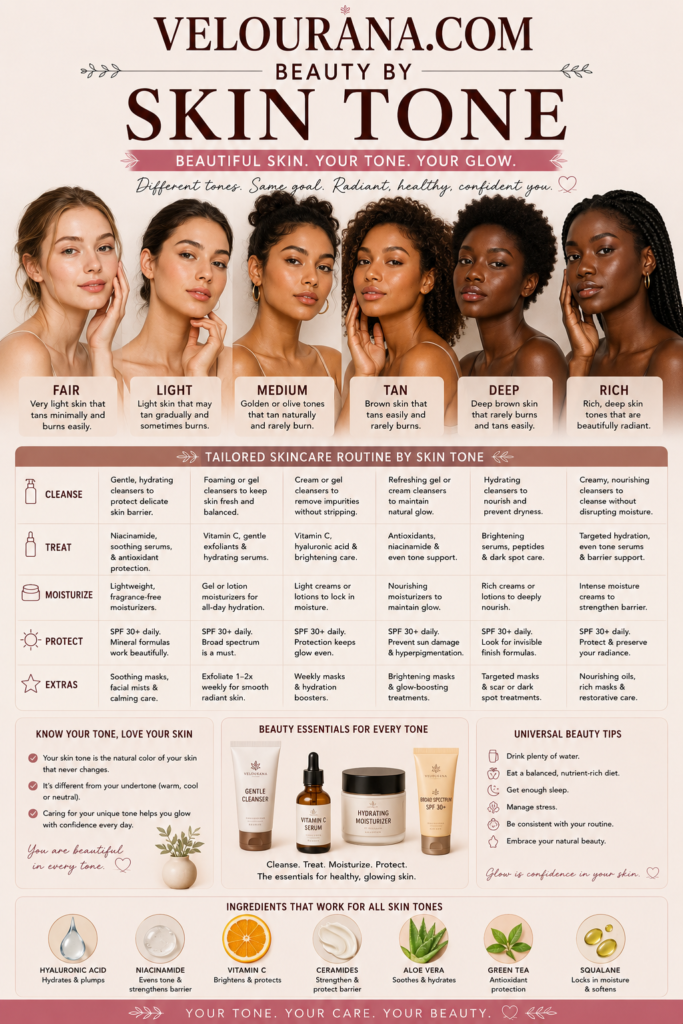
CATEGORY: Tan Skin Makeup
Tan skin offers a makeup canvas with enough natural depth to support both restrained and highly saturated color. This allows the complexion to move between quiet tonal makeup and dramatic glamour without requiring an entirely different approach to balance. The same underlying principles remain important whether the makeup consists of little more than blush and mascara or includes sculpted cheeks, smoky eyes, metallic shadow, and deep lipstick.
The complexion itself provides structure.
Tan skin may be golden, bronze, caramel, olive, neutral, peach, rosy, or cool. Each variation changes how cosmetic colors appear. Warm brown can disappear almost naturally into one complexion while becoming a visible contrast on another. Berry can feel sophisticated and tonal against cool tan skin yet much richer against golden skin. Coral can create seamless warmth or strong saturation depending on the undertone beneath it.
This is why makeup for tan skin should not begin with a rigid set of recommended colors.
It should begin with understanding the visual relationship between product and complexion.
Some shades should blend.
Others should contrast.
Some products need to remain quiet.
Others can become focal points.
The finished face becomes more sophisticated when these roles are deliberate.
Foundation Should Create Continuity Before Anything Else Is Added
Foundation determines the color environment for all subsequent makeup.
If the base is too warm, blush and bronzer can become excessively orange.
If the foundation is too red, the complexion can appear flushed before color is even introduced.
If the shade is too pale, bronzer may be forced to compensate.
If the base is too deep, the face can become disconnected from the neck and body.
Tan skin often changes seasonally, which can complicate foundation matching.
The summer complexion may be deeper, more golden, or more bronze.
Winter can bring a lighter, more muted appearance.
The undertone usually changes less than the depth.
A golden-olive complexion often remains golden-olive even as the tan fades.
A neutral complexion generally remains neutral.
This distinction matters because foundation should follow the actual complexion rather than assuming deeper automatically means more orange.
Coverage can be chosen according to preference.
A sheer tint preserves natural color variation.
Medium coverage refines the complexion while maintaining some dimension.
Full coverage can create a polished, formal surface.
The foundation's success depends on whether the face still belongs naturally to the surrounding skin.
Concealer Should Refine Specific Areas Rather Than Rebuild the Entire Face
Tan skin can contain hyperpigmentation, deeper areas around the mouth, under-eye discoloration, or visible marks that require more coverage than the rest of the complexion.
These areas do not necessarily justify heavy foundation everywhere.
Concealer can provide targeted correction.
For blemishes and pigmentation, the product should usually remain close to the surrounding foundation depth.
Under-eye correction may involve peach, orange, or another warm tone depending on the discoloration, but the corrective pigment should disappear beneath the final concealer.
The under-eye area can be brightened if desired, but excessive brightness can create a pale zone that looks separate from the rest of the face.
The most seamless result comes from correction that reconnects with the complexion.
Bronzer Should Create Placement-Based Warmth
Tan skin can look exceptionally rich with bronzer when the product adds warmth selectively.
The mistake is assuming that more bronzer automatically creates more healthy-looking skin.
Uniform warmth can flatten the face.
Controlled warmth creates dimension.
Golden or bronze tan skin may suit caramel, warm cocoa, golden brown, or bronze shades.
Olive-tan skin may need reduced orange and slightly more muted warmth.
Neutral tan skin can often wear balanced bronzers with both warm and neutral characteristics.
Cool tan skin may look more natural with bronzers containing less obvious orange.
The amount of product should be built gradually.
A bronzer with enough depth to remain visible can look very natural when diffused lightly.
A pale but highly orange bronzer can look more artificial.
Color relationship matters more than simply choosing the lightest available shade.
Contour Should Follow the Logic of Shadow
Contour gives tan skin structure because it introduces controlled recession.
Natural shadow is generally lower in saturation than bronzer.
This means contour often benefits from neutral brown, cool cocoa, taupe-brown, or muted brown tones.
The product should look like an absence of light rather than a new warm color.
Placement can be subtle or strong depending on the desired makeup style.
Soft everyday sculpting may require only a small amount beneath the cheekbones or around the perimeter of the face.
Glamorous makeup can carry stronger structure.
Tan skin has enough depth to support more visible contour, but blending still determines whether the result looks deliberate.
Blush Can Create Warmth, Freshness, or Depth
Blush gives tan skin one of its widest ranges of expression.
Peach and coral can create warmth.
Rose can create polish.
Terracotta adds earthiness.
Berry introduces depth.
Mauve creates cool sophistication.
Warm red can mimic an intensified flush.
Plum can create a richer evening effect.
The natural undertone determines whether these shades blend or contrast.
Golden tan skin may integrate easily with warm rose, terracotta, peach, and coral.
Cool tan skin may respond naturally to berry, mauve, plum, and rose.
Olive-tan skin can carry both muted warmth and strong complementary colors beautifully.
Neutral tan skin has considerable flexibility.
The goal is not necessarily to choose the blush that blends most naturally.
Sometimes a contrasting blush creates the most interesting effect.
The rest of the makeup should simply support that choice.
Richer Blush Shades Can Look More Natural Than Pale Ones
Tan skin can sometimes make very pale blush appear chalky or weak, especially when the formula contains a large amount of white pigment.
A slightly deeper shade can integrate more naturally because its depth relates better to the complexion.
Berry, rose, terracotta, plum, muted coral, and warm red may therefore look softer in practice than a pale pink with a chalky base.
The amount applied is more important than the darkness of the product in the pan.
A deep color used sheerly can create a translucent flush.
A pale color applied heavily can appear more obvious.
Pigment concentration should be judged on the face rather than by packaging.
Eye Makeup Can Be Soft Without Being Light
Natural eye makeup on tan skin does not require very pale eyeshadow.
Medium-depth shades often create more believable structure.
Taupe, cocoa, bronze, warm brown, olive-brown, soft plum, and muted gray can define the eye without becoming dramatic.
These colors sit far enough from the complexion to remain visible but close enough to feel integrated.
A lighter shimmer can then be introduced strategically.
This creates dimension rather than covering the entire eyelid in one pale shade.
Softness comes from diffusion and placement.
It does not necessarily come from lightness.
Smoky Eyes Can Use More Than Black
Tan skin supports smoky eye makeup particularly well because the complexion provides enough depth to balance darker pigment.
Black is only one option.
Espresso creates warm intensity.
Charcoal provides cool smoke.
Navy introduces subtle blue.
Plum creates violet depth.
Burgundy adds red richness.
Forest green and deep teal can function almost like colored neutrals.
Deep bronze can produce a warm smoky effect without relying on gray or black.
The strongest makeup often keeps the deepest shade close to the lashes and outer eye while allowing softer transitions around it.
This preserves dimension and prevents the eye from becoming one uniform dark block.
Jewel-Toned Eye Makeup Can Create Strong Contrast
Emerald, sapphire, cobalt, amethyst, deep teal, garnet, and rich plum can look particularly powerful against tan skin.
The complexion is deep enough to support their saturation.
Warm tan skin can become more golden beside cobalt or sapphire.
Olive-tan skin can create exceptional contrast with burgundy, ruby, or fuchsia-based eye accents.
Cool tan skin may harmonize naturally with amethyst, plum, navy, and blue-green.
These shades can be used as full shadow, liner, lower-lash color, or metallic accents.
They do not need to cover the entire eye in order to make an impact.
Metallic Eyes Can Become Part of the Complexion Story
Gold and bronze are often associated with tan skin because they can reinforce natural warmth.
The relationship is certainly effective, but the range can extend far beyond these two shades.
Copper adds red-orange depth.
Champagne provides lighter reflection.
Rose gold adds pink warmth.
Pewter introduces coolness.
Silver can create crisp contrast.
Metallic olive and teal can produce rich complexity.
The choice depends on whether the metallic should merge with the complexion or deliberately stand apart.
Warm harmony creates one aesthetic.
Cool metallic contrast creates another.
Tan skin can support both.
Eyeliner Can Control the Entire Level of Drama
Eyeliner can change the character of the eye without requiring elaborate shadow.
Black provides strong structure.
Espresso offers nearly the same depth with more warmth.
Deep brown is softer.
Navy introduces cool definition.
Plum and burgundy provide red-violet depth.
Forest green and teal introduce color while remaining dark enough to frame the eye.
The shape matters as much as the color.
A tight line can make lashes appear denser.
A wing adds visible design.
Smudging creates softness.
Graphic liner creates intentional contrast.
Tan skin can support stronger eyeliner particularly well when the brows and lashes already provide natural structure.
Brows Should Remain Connected to the Hair
The brow should help the face feel balanced rather than becoming a separate visual feature.
Tan skin with dark hair can naturally support stronger brows.
Caramel, honey, auburn, or lighter hair may require softer or warmer brow shades.
Ash-toned hair may need more muted products.
The brow should not be chosen simply because the skin is tan.
Hair and natural brow color provide a better guide.
Texture remains important.
A softly structured brow can support strong eye makeup without competing with it.
A more sculpted brow can work beautifully in full glamour when stronger facial architecture is part of the desired effect.
Nude Lipstick Should Preserve the Mouth's Natural Depth
A pale nude can sometimes disappear against tan skin or create an ashy appearance.
More successful nude shades often contain enough brown, rose, peach, mauve, caramel, or berry to preserve lip definition.
The exact depth should relate to the natural lips.
Warm tan skin may suit cinnamon, caramel-rose, peach-brown, warm nude, and terracotta-beige.
Cool tan skin may prefer mauve-brown, rose-brown, berry nude, and soft plum-brown.
Olive-tan skin often responds beautifully to muted brown-rose, terracotta nude, mauve-brown, and complex neutral shades.
Neutral tan skin can usually move across several of these families.
The lips should remain visible.
A nude should reduce contrast, not erase the mouth.
Red Lipstick Can Define the Entire Look
Tan skin can carry saturated red with exceptional balance.
A classic red can become the focal point without making the rest of the face look pale or unfinished.
Blue-red creates clear contrast.
Tomato red adds warmth.
Orange-red feels energetic.
Brick red adds earthiness.
Deep crimson provides sophistication.
Wine and burgundy create richer drama.
The blush and eye makeup can then be adjusted according to how dominant the lip should be.
Minimal eyes create a cleaner red-lip look.
Smoky eyes create stronger glamour.
Tan skin provides enough natural depth for both styles to remain balanced.
Deep Lip Colors Can Feel Luxurious Rather Than Heavy
Plum, burgundy, blackberry, chocolate-red, wine, and deep berry can look particularly rich against tan skin.
The complexion gives these colors enough context to prevent them from appearing visually detached.
The texture changes the result.
Gloss makes dark color more dimensional.
Satin maintains richness.
Matte increases structure.
A blurred lip can soften the depth.
Precise liner can turn the same shade into a sharper statement.
Deep lipstick can therefore be adjusted according to mood without changing the basic color family.
Highlighter Can Create Warmth or Contrast
Highlighter should be chosen according to both depth and undertone.
Gold can emphasize warm tan skin.
Bronze-gold creates richer tonal luminosity.
Champagne provides a lighter but still integrated reflection.
Rose gold can add pink warmth.
Copper-gold offers deeper red-orange reflection.
Pewter or silver can create cool contrast.
The base pigment should not create an ashy patch.
A shade that is too pale can sit on top of tan skin rather than blending into it.
The finish can be subtle or intense.
Fine sheen resembles naturally reflective skin.
Metallic highlight creates visible glamour.
The intended style determines which is more appropriate.
The Relationship Between Blush and Lipstick Creates Cohesion
Blush and lip color do not need to match.
They do need enough relationship to feel intentional.
A berry lip can work with muted rose cheeks.
Terracotta lipstick can pair with warm peach or earthy blush.
Red lips can sit beside neutral rose.
A deep plum lip can work with restrained mauve cheeks.
The connection can come from temperature, depth, or saturation rather than exact color.
This creates a more sophisticated result than repeating one identical shade everywhere.
Monochromatic Makeup Can Make Tan Skin Look Especially Polished
Tan skin supports tonal makeup particularly well because medium and deeper related colors remain visible against the complexion.
A bronze palette can use metallic bronze eyes, caramel cheeks, and a brown-rose lip.
A terracotta palette can combine warm brown shadow, muted terracotta blush, and a deeper cinnamon mouth.
A berry palette can use plum-brown eyes, muted berry cheeks, and wine lips.
The makeup feels unified without becoming repetitive.
Different finishes prevent flatness.
Matte shadow, satin blush, glossy lip, and reflective highlight can all remain within the same family while producing clear visual separation.
Contrasting Makeup Can Create a More Modern Effect
High contrast can be equally effective.
Silver eyes with warm bronzer.
Cobalt liner with caramel lips.
Fuchsia lipstick with neutral eyes.
Emerald shadow with muted rose cheeks.
Blue-red lipstick against golden skin.
These combinations do not rely on harmony.
They rely on deliberate separation.
Tan skin can support this because its natural depth provides visual stability.
The strong color becomes expressive rather than overpowering.
Day Makeup Can Remain Rich Without Becoming Heavy
Day makeup does not need to be pale.
A medium-depth rose blush, soft bronze eye, brown liner, and caramel lip can look entirely natural on tan skin.
The depth of the complexion allows color to remain richer while still feeling restrained.
A sheer base and controlled application can preserve freshness.
Daytime softness comes from transparency, blending, and limited contrast rather than from choosing only very light colors.
This is an important distinction.
Tan skin often looks more natural in medium-depth cosmetics than in products designed to appear almost white or pastel.
Evening Makeup Can Intensify Selected Areas
Evening makeup can increase contrast by deepening the eye, enriching the lip, strengthening the blush, or increasing reflection.
It does not need to make every feature stronger simultaneously.
A deep smoky eye can become the center of the look while the lips remain soft.
A rich burgundy lip can lead while the eyes remain defined but restrained.
A metallic eye can create intensity while the cheeks stay muted.
This distribution creates hierarchy.
The complexion remains readable because there are areas of visual rest.
Seasonal Depth Can Change the Balance of the Makeup
Tan skin may become deeper during periods of greater sun exposure.
This can make familiar cosmetics appear softer.
Blush may require slightly more intensity.
A nude lip can need more depth.
Bronzer may need to shift richer.
Highlighter may support deeper gold or bronze.
During lighter seasons, the same products may appear stronger.
This does not mean the entire palette needs replacing.
Application amount and a few seasonal depth adjustments can often be enough.
Tan Skin Does Not Need to Be Warmed Everywhere
There is a difference between healthy-looking warmth and covering the entire complexion in warm pigment.
Tan skin may already contain substantial warmth.
Applying golden foundation, orange bronzer, peach blush, copper eyes, and warm nude lips simultaneously can create a very warm composition.
This may be intentional.
If balance is desired, cooler or neutral elements can create contrast.
Navy eyeliner, mauve blush, plum shadow, or berry lips can interrupt excessive warmth and make the complexion appear more dimensional.
Color balance often becomes more interesting when warm and cool elements coexist.
The Most Successful Makeup Lets Tan Skin Remain Tan
The complexion should remain the organizing element of the face.
Foundation should preserve its real depth.
Bronzer should add selective warmth.
Contour should create shadow.
Blush should introduce color.
Eyes should establish structure and intensity.
Brows and lashes should frame the face.
Lipstick should control focus.
Highlighter should manipulate light.
When each product performs a clear role, tan skin can support an enormous range of makeup without losing its natural character.
The makeup can be subtle, earthy, colorful, sculpted, luminous, dramatic, or experimental.
The skin does not need to become lighter, darker, warmer, or more neutral before any of these styles can work.
Its natural depth is already part of the design.
The strongest tan-skin makeup uses that depth as a foundation for contrast and harmony rather than trying to cover it.
Once that principle is understood, makeup becomes less about rules and more about composition.
Tan skin can carry softness and drama equally well because the complexion itself provides enough richness to support both.
THE END VELOURANA
 Discover More From Our Family of Websites
 ZodiacBearing (Astrology, Tarot, Numerology, Angel Numbers & Spiritual Guidance)
 Velourana (Beauty, Makeup, Hair Care, Skincare & Beauty Tips)
 HavenBearing (Home, Living, Organization, Décor & Everyday Inspiration)
 PawBearing (Pet Care, Dog Breeds, Animal Health, Training & Pet Products)
 PsyCatherine (Notes From the Journal of a Psychologist on Real Life)

