
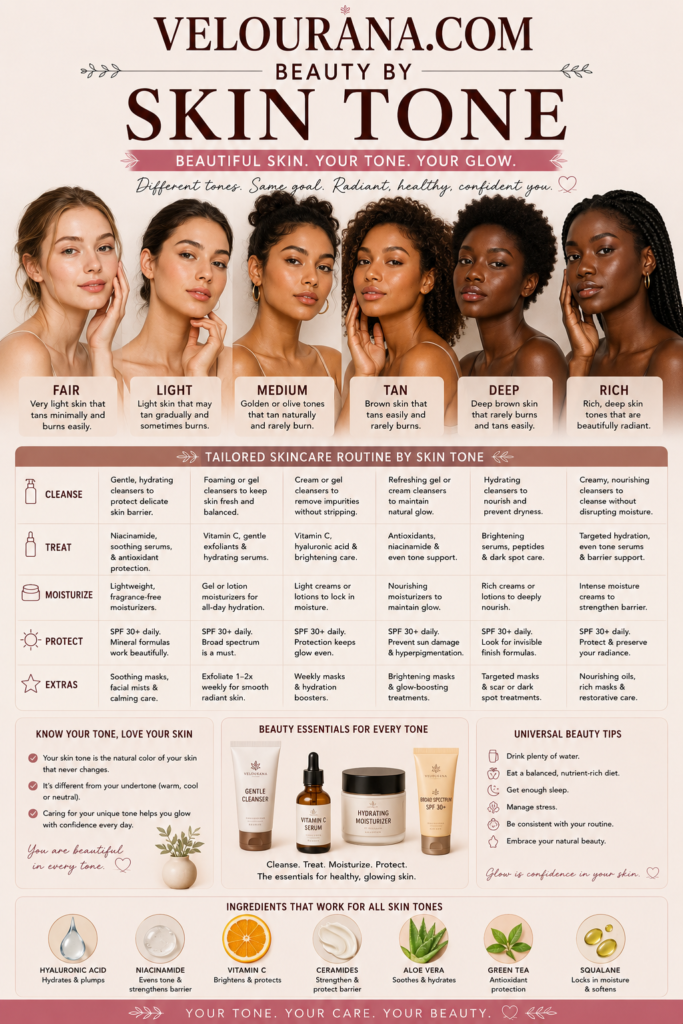
CATEGORY: Medium Skin Makeup
Medium skin has a remarkable ability to carry color without surrendering its own presence. Soft shades can remain visible, deeper tones can add definition without immediately becoming severe, and saturated pigments can create strong focal points while still feeling connected to the complexion. This versatility makes medium skin exceptionally adaptable, but it also means that the most successful makeup comes from understanding balance rather than relying on one prescribed palette.
The complexion itself may contain golden, peach, rosy, neutral, bronze, muted, or olive characteristics. These undertones influence whether a cosmetic color blends naturally, creates subtle contrast, or becomes a dominant visual element.
A terracotta blush on warm medium skin may look almost seamless. The same shade on cool medium skin may become a deliberate source of warmth. Berry can harmonize with rosy undertones while creating richer contrast against golden skin. Olive complexions may transform conventional pinks and oranges in surprising ways because the green or muted undertone changes the way surrounding color is perceived.
This means that makeup should not be selected according to medium skin as though it were one universal category.
It should be composed around the individual face.
Natural hair color, brow depth, eye color, lip pigmentation, facial contrast, and personal style all influence how much color the complexion can visually absorb before that color becomes the primary focus.
The goal is not necessarily subtlety.
Medium skin can carry very strong makeup.
The goal is intentionality.
A Good Base Creates Freedom for Every Other Product
Foundation establishes the color environment for the entire face.
When the base accurately represents the complexion, every later product becomes easier to evaluate. Bronzer can add genuine warmth rather than compensate for an overly pale foundation. Blush can reveal its true temperature. Contour can create believable shadow. Highlighter can reflect from skin that still looks naturally connected to the neck.
Medium skin often contains natural variations that should be considered part of the complexion rather than immediate flaws.
The forehead may be slightly deeper.
The cheeks may have more red.
The mouth and jaw may contain different amounts of pigmentation.
The neck may be lighter.
A foundation designed to erase all of these differences can create a highly perfected look, but it may also remove some of the natural dimension that makes the face visually convincing.
Coverage should therefore be chosen deliberately.
A skin tint allows undertone and pigmentation to remain visible.
Medium coverage creates a more controlled canvas while preserving some natural character.
Full coverage can be used when a more uniform or formal finish is preferred.
The most important requirement is that the depth and undertone remain accurate.
Foundation that is too orange can make medium skin look artificially tanned. Foundation that is too yellow can reduce natural rosiness or olive complexity. Too much pink can make the face look flushed. A shade that is significantly lighter than the neck may create a disconnected brightness that concealer and bronzer cannot fully repair.
Correcting the foundation after it has been applied incorrectly usually leads to additional layers.
Beginning with an accurate base reduces the need for compensation.
Sculpting Medium Skin Is About Creating Controlled Differences
Dimension is visible because neighboring areas are not identical.
This is the principle behind contouring, bronzing, highlighting, and blush.
Medium skin can support more depth in sculpting products than lighter complexions, but stronger pigment is not automatically more effective. The objective is to create transitions that resemble light, shadow, and natural warmth rather than separate bands of cosmetic color.
Bronzer should sit within a believable range of warmth.
Golden skin may carry bronze, caramel, golden brown, or warm cocoa beautifully. Olive skin often benefits from bronzers with less obvious orange. Neutral medium skin can move between warmer and more balanced browns. Cooler medium skin may prefer bronzers with a slightly rosy or neutralized quality.
Application can remain concentrated around areas where warmth contributes to structure rather than spreading equally over the entire face.
Contour should be considered separately.
It usually benefits from lower saturation because shadow is not inherently warm. Neutral brown, taupe-brown, cool cocoa, and muted deeper beige can create shape without introducing additional bronzing.
The distinction becomes especially important around the cheekbones and jaw, where a warm product can look like color placement rather than recession.
Highlight creates the opposite effect by increasing reflection.
When these three dimensions are used together, the face can become highly sculpted without appearing artificially recolored.
The skin remains medium.
Only the distribution of light, shadow, and warmth changes.
Blush Can Move Medium Skin Between Freshness and Drama
Blush provides perhaps the widest emotional range of any complexion product.
A muted rose can create quiet refinement.
Peach can bring warmth.
Coral can make the face look energetic.
Terracotta can create earthy sophistication.
Mauve can cool the complexion.
Berry can introduce depth.
Deep rose or warm red can create a powerful flush that remains highly wearable on medium skin.
The most useful shade often depends on what the rest of the makeup is doing.
A heavily bronzed complexion may benefit from blush that introduces a different color rather than repeating the same warmth. A cool smoky eye may look balanced with neutral rose cheeks. A strong berry lip may require only a softly related blush to keep the complexion from appearing colorless.
Blush does not need to match lipstick, but the relationship between them influences the entire makeup.
Medium skin also allows blush placement to become part of facial architecture.
Higher placement can contribute to a lifted composition.
Central placement creates a softer flush.
Color extended subtly toward the temple can visually connect the cheek with the eye area.
A diffused application across a broader area can look modern and editorial when the edges remain controlled.
The deeper natural skin tone allows richer shades to be blended without automatically appearing bruised or overly dramatic, but undertone remains important.
A purple-based blush can become sophisticated on some medium complexions and overly cool on others. Orange-coral can look luminous on warm skin but far brighter against olive undertones.
The solution is not to avoid unusual color.
It is to understand how the complexion changes it.
Medium Skin Can Support Strong Eye Makeup Without Losing Facial Balance
The eye area provides one of the best places to take advantage of medium skin's natural depth.
Soft neutral makeup can use taupe, cocoa, bronze, olive-brown, warm gray, or muted plum to create definition without appearing heavy.
More dramatic makeup can introduce espresso, charcoal, navy, burgundy, forest green, black, dark bronze, plum, and jewel tones.
Because medium skin already contains moderate depth, the transition into dark eye makeup can be less extreme than it is on very light skin. This makes smoky eyes particularly adaptable.
The best smoky effect does not necessarily require black across the entire eye.
Deep brown can create warmth.
Charcoal produces cooler structure.
Plum adds color and depth simultaneously.
Navy can provide richness without looking obviously blue from a distance.
Forest green or deep teal can behave almost like unconventional neutrals.
The placement of depth remains more important than simply choosing a dark shade.
Keeping the greatest intensity near the lashes creates a grounded eye.
Diffusing outward prevents the color from looking boxed in.
Leaving strategic areas of the lid or inner eye lighter preserves dimension.
Metallic shades can then add reflection within this structure.
Gold, bronze, copper, rose gold, champagne, pewter, and metallic olive all interact beautifully with medium skin. The metallic base should relate to the complexion enough that the reflection looks integrated rather than sitting as an isolated patch of color.
Eye makeup becomes especially effective when it relates to the brows and lashes.
Strong brows can support deeper shadow.
Soft brows may make an intense smoky eye appear more dominant, which can be balanced by slightly more brow structure or deliberate contrast elsewhere.
Eyeliner, Brows, and Mascara Define the Architecture of the Upper Face
Not every makeup look requires elaborate shadow.
On medium skin, carefully defined brows, lashes, and eyeliner can create enough structure to make the entire upper face feel finished.
Black eyeliner offers the greatest contrast and often works beautifully when the natural coloring already contains dark hair or strong brows.
Deep brown softens the effect while retaining structure.
Espresso can appear almost black while introducing warmth.
Charcoal provides a cooler alternative.
Navy, plum, and burgundy can introduce subtle color while remaining sufficiently dark to frame the eye.
The thickness and placement of liner matter as much as the shade.
A fine line pressed into the lashes creates definition without becoming a visible graphic feature. A larger wing becomes part of the design of the face. Smudged liner creates a softer transition into shadow.
Brows should contribute structure without becoming detached from the natural hair.
Medium skin can support considerable brow depth, but warmth and saturation still matter. A brow shade that is too orange can look artificial. Excessively gray pigment can look disconnected from warm hair.
Natural brow texture should remain visible when a softer result is desired.
More defined or sculpted brows can support glamorous makeup where sharper facial structure is intentional.
Mascara reinforces this framework.
Black creates maximum clarity.
Brown-black softens slightly.
Colored mascara can add subtle depth through navy, burgundy, plum, or green without changing the overall eye structure radically.
When these elements work together, relatively little eyeshadow may be necessary.
Lipstick Can Either Integrate With the Complexion or Deliberately Break Away From It
Lip color determines how much visual weight sits in the lower half of the face.
A nude lip can create continuity with the complexion, but nude should not mean skin-colored.
Medium lips often contain visible pink, brown, mauve, red, or peach pigmentation. Removing all of that color with pale beige can make the mouth appear flat.
More successful nudes often contain enough brown, rose, peach, mauve, caramel, or berry influence to preserve definition.
Warm medium skin may work beautifully with caramel-rose, peach-brown, cinnamon, terracotta nude, and warm pink-brown.
Cool medium skin can carry mauve, rose-brown, berry nude, and cooler pink-brown.
Olive skin often responds well to complex muted colors that combine rose, brown, and mauve rather than relying on obvious beige.
Red lipstick creates a completely different relationship.
Classic red can become the focal point of an otherwise restrained face. Brick red feels earthier. Orange-red introduces warmth. Blue-red creates crisp contrast. Deep crimson and wine provide stronger sophistication.
Medium skin can carry these colors with considerable ease because the complexion has enough depth to prevent many reds from appearing visually detached.
Berry, plum, burgundy, deep rose, and brown-red extend the dramatic range further.
The texture changes how strong the shade feels.
Gloss allows the natural lip to influence the color and introduces reflection.
Satin maintains richness without the full graphic effect of matte.
Matte increases opacity and edge definition.
A blurred finish can make deep lipstick softer and more contemporary.
Lip liner can either disappear into the lipstick or create deliberate dimensional contrast.
There is no requirement for one approach.
The lip can be integrated or intentionally emphasized.
Highlight, Finish, and Texture Can Shape the Face Without Adding More Color
Medium-skin makeup becomes more sophisticated when dimension is created not only through pigment but also through finish.
A satin base, matte contour, luminous cheekbone, metallic eyelid, and glossy lip can all coexist within a relatively restrained palette and still create significant visual variety.
Highlighter is particularly effective because medium skin can support reflective shades with more pigment depth.
Champagne can create balanced luminosity.
Warm gold may integrate naturally with golden skin.
Rose gold can bridge pink and warmth.
Bronze-gold can provide richer evening reflection.
Pewter or neutral metallics can create cooler sophistication.
The highlighter should still be evaluated when it is not directly catching light. If its base looks substantially darker or lighter than the surrounding skin, it may create an unintended patch.
Texture should also be considered.
Strong metallic reflection can emphasize the skin's surface.
A finer sheen may integrate more smoothly on areas with visible texture.
Luminous complexion makeup does not need to mean universal shine.
Reflection works because it contrasts with areas that remain more controlled.
Strategic luminosity can therefore create more dimension than applying reflective products everywhere.
Monochromatic Makeup Can Look Especially Sophisticated on Medium Skin
Medium skin can support monochromatic makeup beautifully because related colors remain visible without always merging into the complexion.
The concept does not require identical pigment across eyes, cheeks, and lips.
Instead, the makeup can stay within one broad family while varying depth, saturation, and finish.
A terracotta composition might use muted warm brown around the eyes, terracotta-rose blush, and a deeper cinnamon lip.
A berry composition could combine soft plum eyes, muted berry cheeks, and wine-stained lips.
A bronze look might use metallic bronze lids, warm caramel cheeks, and a brown-rose lip.
The unity comes from shared undertone.
Differences in depth prevent the face from becoming flat.
Medium skin provides enough natural contrast for these tonal variations to remain visible.
Monochromatic makeup can also be subtle or dramatic.
Sheer textures create a soft wash.
Opaque formulas and stronger contrast create a more editorial interpretation.
This approach is particularly useful when someone wants cohesive color without having to coordinate several unrelated families.
High-Contrast Makeup Can Be Equally Natural to Medium Skin
Monochromatic harmony is only one possibility.
Medium skin can also serve as a strong background for deliberate contrast.
A cool cobalt liner can sit against warm golden skin.
Fuchsia lips can create vivid separation from olive undertones.
Silver eyes can contrast with warm bronzing.
Deep plum can add cool depth to a peach complexion.
These combinations work because contrast itself can become the organizing principle.
The mistake is not mixing temperatures.
The mistake is allowing the contrast to look accidental.
Repeating a small element elsewhere can help create coherence. A cool lip can be connected to the eye through a subtle mauve or charcoal. Warm blush can bridge bronze eye makeup and a neutral lip. Jewelry and clothing can also reinforce the overall direction.
Medium skin provides enough visual stability to support these contrasts without requiring every product to match the undertone perfectly.
This creates enormous creative freedom.
Minimal and Dramatic Makeup Should Both Respect Natural Skin Depth
Minimal makeup can be highly effective on medium skin because relatively small changes in definition remain visible.
A light base, targeted concealer, softly structured brows, mascara, blush, and tinted lips can create a finished face without heavy coverage.
The natural complexion does much of the work.
Dramatic makeup increases intensity rather than replacing this principle.
Foundation does not need to become several shades lighter or darker.
The eyes can deepen.
The blush can become more saturated.
The lips can become richer.
The contour can become more pronounced.
Highlight can become more reflective.
Each increase should remain deliberate.
This allows medium skin to support glamour without losing its natural relationship with the body.
The complexion remains medium.
The makeup becomes dramatic around it.
Personal Style Matters More Than a Prescribed Medium-Skin Palette
There is no single correct version of medium-skin makeup.
One person may feel most comfortable in taupe, rose, caramel, and soft brown.
Another may prefer emerald, black, burgundy, and gold.
Someone else may gravitate toward coral, bronze, cinnamon, and terracotta.
Another may prefer mauve, charcoal, berry, and silver.
All can work because medium skin contains many undertones and because makeup is not solely about reproducing natural harmony.
Personal style determines whether the face should look soft, sculpted, luminous, colorful, dramatic, minimal, classic, or experimental.
Color theory helps predict how a product will behave.
It should not decide whether that behavior is desirable.
A vivid contrast may be exactly the point.
The Most Successful Medium-Skin Makeup Uses the Complexion as Part of the Design
Medium skin should not disappear beneath makeup.
Its undertone, depth, and natural warmth are part of the finished composition.
An accurate base allows them to remain present.
Bronzer enhances warmth without replacing skin color.
Contour introduces shadow without turning the complexion muddy.
Blush adds life.
Eye makeup controls depth and structure.
Brows and lashes frame the face.
Lipstick determines the focal balance.
Highlighter manipulates reflection.
When each of these elements performs a distinct role, medium skin becomes extraordinarily versatile.
It can support quiet neutral makeup, warm tonal looks, dramatic smoky eyes, vivid lipstick, rich jewel colors, earthy palettes, modern monochromatic makeup, and high-contrast experimentation.
The complexion is not merely the background.
It participates actively in every color relationship.
That is the central principle of medium skin makeup.
The goal is not to hide the skin beneath a theoretically perfect palette.
It is to understand the complexion well enough that makeup can work with it, against it, or around it intentionally.
When that happens, medium skin does not become one standardized beauty category.
It becomes a flexible foundation for an enormous range of personal expression.
THE END VELOURANA
 Discover More From Our Family of Websites
 ZodiacBearing (Astrology, Tarot, Numerology, Angel Numbers & Spiritual Guidance)
 Velourana (Beauty, Makeup, Hair Care, Skincare & Beauty Tips)
 HavenBearing (Home, Living, Organization, Décor & Everyday Inspiration)
 PawBearing (Pet Care, Dog Breeds, Animal Health, Training & Pet Products)
 PsyCatherine (Notes From the Journal of a Psychologist on Real Life)

