
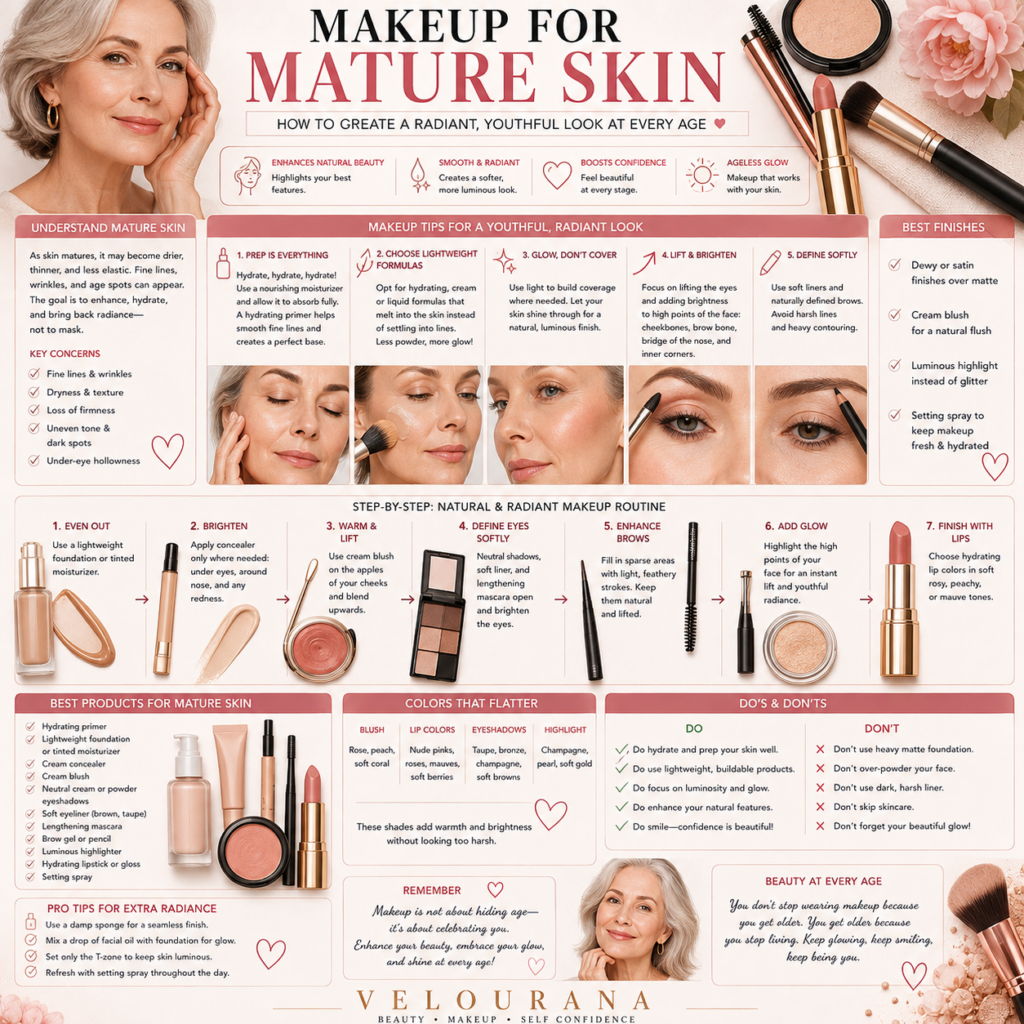
CATEGORY: Mature Skin Makeup
Makeup is not about hiding age—it is about enhancing natural beauty, celebrating confidence, and helping the skin look healthy and radiant. As skin matures, its texture, elasticity, and hydration levels naturally change. Products and techniques that worked well in your twenties may not produce the same results decades later.
Fortunately, modern cosmetics offer countless options specifically suited to mature skin. By choosing hydrating formulas, applying makeup strategically, and focusing on skin preparation, you can achieve a fresh, elegant, and timeless appearance without heavy layers of product.
This comprehensive guide explains how to choose makeup for mature skin, the best products for every step of your routine, and the techniques that create smooth, luminous, and flattering results.
—
Understanding Mature Skin
As we age, our skin naturally undergoes several changes.
These may include:
- Reduced collagen production.
- Loss of elasticity.
- Increased dryness.
- Fine lines.
- Wrinkles.
- Uneven skin tone.
- Age spots.
- Less natural oil production.
These changes are completely normal and simply require a slightly different approach to makeup application.
—
Skin Preparation Is the Most Important Step
Beautiful makeup begins with healthy, hydrated skin.
Before applying cosmetics:
- Cleanse gently.
- Apply a hydrating serum if desired.
- Use a nourishing moisturizer.
- Apply sunscreen during the day.
- Allow skincare products to absorb fully.
Well-moisturized skin helps foundation glide on more smoothly and minimizes the appearance of dry patches.
—
Choosing the Right Primer
Primer helps create a smoother canvas for makeup.
Look for formulas that:
- Hydrate the skin.
- Blur the appearance of fine lines.
- Improve makeup longevity.
- Add subtle radiance.
Heavy mattifying primers may make mature skin appear flatter or drier unless oil control is specifically needed.
—
Selecting Foundation
Foundation should even out the complexion while allowing the skin’s natural texture to remain visible.
Many people with mature skin prefer:
- Lightweight liquid foundations.
- Hydrating foundations.
- Satin-finish formulas.
- Skin tints.
- Serum foundations.
These products often provide comfortable wear while maintaining a natural-looking finish.
—
Build Coverage Gradually
Rather than applying a thick layer of foundation across the entire face:
- Start with a thin layer.
- Add extra coverage only where needed.
- Blend thoroughly.
Lighter application often creates a fresher appearance.
—
Concealer Tips
Concealer helps brighten the under-eye area and cover discoloration.
To avoid emphasizing fine lines:
- Apply only a small amount.
- Blend carefully.
- Choose hydrating formulas.
- Set lightly only if necessary.
Less product often produces better results.
—
Powder: Use Sparingly
Powder can help control shine, but excessive use may emphasize dryness.
Instead:
- Powder only areas that become oily.
- Choose finely milled translucent powders.
- Apply with a light hand.
Many people find that only the T-zone requires setting.
—
Cream vs Powder Products
Cream formulas often complement mature skin beautifully.
Examples include:
- Cream blush.
- Cream bronzer.
- Cream highlighter.
These products tend to blend seamlessly and provide a natural-looking glow.
Powder products can also work well when applied lightly.
—
Choosing Blush
Blush restores warmth and vitality to the complexion.
Flattering shades often include:
- Soft rose.
- Peach.
- Coral.
- Warm pink.
Apply blush slightly upward along the cheekbones to create a lifted appearance.
—
Bronzer
Bronzer adds healthy warmth without looking heavy.
Choose:
- Neutral or warm tones.
- Soft finishes.
- Buildable formulas.
Avoid applying excessive bronzer, particularly along the lower cheeks.
—
Contour
Subtle contour can gently define facial features.
Focus on:
- Light application.
- Thorough blending.
- Soft shadows.
The goal is gentle definition rather than dramatic sculpting.
—
Highlighter
Highlighter should create a soft glow rather than obvious sparkle.
Look for:
- Satin finishes.
- Cream formulas.
- Finely milled powders.
Apply lightly to:
- Upper cheekbones.
- Brow bone.
- Cupid’s bow.
Avoid placing shimmer directly over pronounced skin texture if it emphasizes those areas.
—
Eye Makeup for Mature Skin
Eyes naturally change over time.
Common concerns include:
- Hooded eyelids.
- Fine lines.
- Reduced lid space.
- Drier eyelids.
Soft, blended eye makeup often appears especially elegant.
—
Eyeshadow
Neutral shades remain highly versatile.
Popular colors include:
- Taupe.
- Soft brown.
- Champagne.
- Bronze.
- Mauve.
- Warm beige.
Matte and satin finishes often create the most refined appearance.
—
Eyeliner
Instead of very thick eyeliner:
- Keep lines thin.
- Blend softly if desired.
- Consider dark brown instead of black for a softer look.
A subtle wing can gently lift the eyes when applied carefully.
—
Mascara
Mascara helps open the eyes and define the lashes.
Lengthening formulas often create a naturally elegant effect.
Curling the lashes before applying mascara may also make the eyes appear brighter and more awake.
—
Eyebrows
Eyebrows naturally become thinner over time.
Fill sparse areas using:
- Brow pencil.
- Brow powder.
- Brow gel.
Use light, hair-like strokes rather than drawing a solid outline.
—
Lip Makeup
Lips may lose some natural fullness with age.
Hydrating products help maintain comfort and create a smoother appearance.
Good choices include:
- Satin lipstick.
- Cream lipstick.
- Tinted lip balm.
- Lip oil.
- Nourishing lip gloss.
Lip liner can help define the lip shape while reducing feathering.
—
Choosing Lip Colors
Many shades complement mature skin beautifully.
Examples include:
- Soft rose.
- Peach.
- Warm nude.
- Berry.
- Coral.
- Classic red.
Choose colors that enhance your complexion while reflecting your personal style.
—
Setting Spray
A hydrating setting spray helps:
- Reduce the appearance of powder.
- Blend makeup together.
- Increase wear time.
- Add a healthy-looking finish.
It often creates a more natural appearance than applying additional powder.
—
Makeup Mistakes to Avoid
Common mistakes include:
- Applying too much foundation.
- Using overly matte products on dry skin.
- Choosing concealer that is much lighter than the skin tone.
- Applying excessive powder.
- Using harsh contour lines.
- Neglecting skincare.
- Skipping hydration before makeup.
Subtle, well-blended makeup usually provides the most flattering results.
—
Building a Makeup Kit for Mature Skin
A practical collection may include:
- Gentle cleanser.
- Moisturizer.
- Hydrating primer.
- Lightweight foundation.
- Cream concealer.
- Finely milled setting powder.
- Cream blush.
- Soft bronzer.
- Neutral eyeshadow palette.
- Brown or black eyeliner.
- Lengthening mascara.
- Brow pencil.
- Satin lipstick.
- Lip balm.
- Setting spray.
This collection supports a polished everyday routine without requiring an excessive number of products.
—
Final Thoughts
Makeup for mature skin is about enhancing natural beauty rather than concealing every line or change that comes with age. By prioritizing hydration, choosing lightweight and comfortable formulas, and applying products with a gentle touch, you can create a fresh, radiant look that celebrates healthy, confident skin.
The most beautiful makeup is timeless—it complements your features, reflects your personality, and allows your natural beauty to shine through at every stage of life. With thoughtful product choices and simple techniques, mature skin can look luminous, elegant, and effortlessly beautiful every day.
The End,
Velourana
 Discover More From Our Family of Websites
 ZodiacBearing (Astrology, Tarot, Numerology, Angel Numbers & Spiritual Guidance)
 Velourana (Beauty, Makeup, Hair Care, Skincare & Beauty Tips)
 HavenBearing (Home, Living, Organization, Décor & Everyday Inspiration)
 PawBearing (Pet Care, Dog Breeds, Animal Health, Training & Pet Products)
 PsyCatherine (Notes From the Journal of a Psychologist on Real Life)

