
CATEGORY: Makeup Techniques
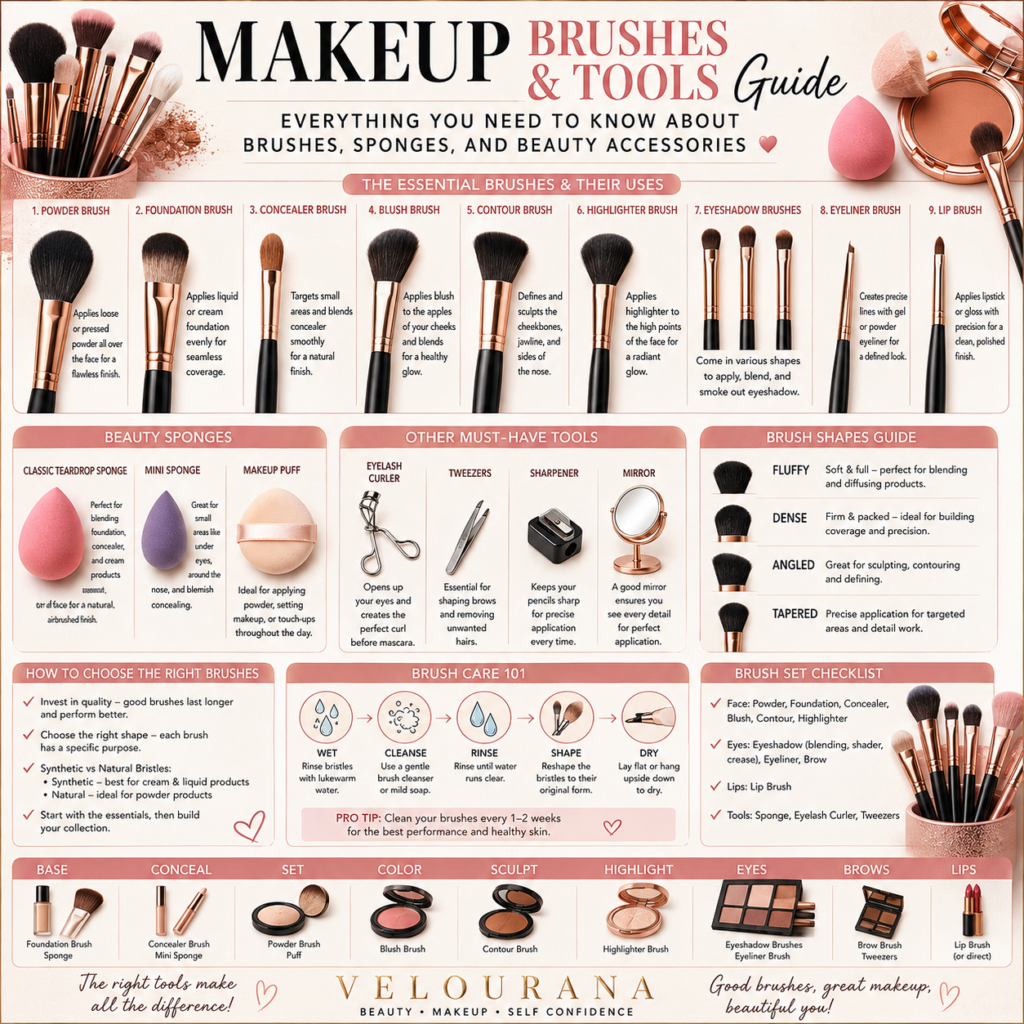
Even the highest-quality makeup products can produce disappointing results when applied with the wrong tools. Professional makeup artists understand that brushes, sponges, and beauty accessories are just as important as the cosmetics themselves. The right tool improves blending, creates smoother finishes, prevents product waste, and helps makeup last longer.
For beginners, however, the variety of brushes and applicators can be confusing. Foundation brushes, powder brushes, blending brushes, angled brushes, kabuki brushes, beauty sponges, eyelash curlers, powder puffs—the choices seem endless.
This comprehensive guide explains the purpose of every essential makeup tool, how to use it correctly, how to clean it, and how to build a practical collection without buying unnecessary accessories.
—
Why Makeup Tools Matter
Quality makeup tools offer several important benefits.
They help you:
- Apply makeup more evenly.
- Blend products seamlessly.
- Use less product.
- Improve makeup longevity.
- Create more professional-looking results.
- Maintain better hygiene.
While luxury brushes can be excellent investments, proper technique matters far more than expensive equipment.
—
Understanding Makeup Brush Materials
Modern makeup brushes are generally made from two types of bristles.
—
Synthetic Bristles
Synthetic brushes are manufactured using man-made fibers.
Advantages include:
- Excellent for cream products.
- Ideal for liquid makeup.
- Easy to clean.
- Durable.
- Less product absorption.
- Suitable for sensitive skin.
Most modern professional makeup artists use synthetic brushes because they perform exceptionally well with today’s cosmetic formulas.
—
Natural Bristles
Natural hair brushes are traditionally used for powder products.
Benefits include:
- Soft application.
- Excellent powder pickup.
- Smooth blending.
However, many high-quality synthetic brushes now perform equally well while being easier to maintain.
—
Foundation Brushes
Foundation brushes come in several different shapes.
—
Flat Foundation Brush
The classic flat brush spreads liquid foundation efficiently.
Best for:
- Liquid foundation.
- Cream foundation.
- Quick application.
After application, blending usually improves the finish.
—
Dense Buffing Brush
A dense rounded brush works foundation into the skin using circular motions.
Advantages include:
- Airbrushed appearance.
- Excellent blending.
- Medium to full coverage.
- Minimal streaking.
This style has become one of the most popular foundation brushes.
—
Kabuki Brush
Kabuki brushes feature short handles with dense rounded bristles.
Excellent for:
- Powder foundation.
- Mineral foundation.
- Buffing.
- Natural finishes.
Their dense shape distributes powder evenly across the skin.
—
Concealer Brushes
Concealer brushes are smaller than foundation brushes.
They allow precise application around:
- Under-eye area.
- Nose.
- Blemishes.
- Hyperpigmentation.
- Small scars.
Flat synthetic brushes usually provide the highest coverage.
—
Powder Brushes
Powder brushes are among the largest makeup brushes.
Their fluffy bristles distribute powder lightly without disturbing foundation.
Used for:
- Setting powder.
- Finishing powder.
- Loose powder.
- Pressed powder.
Large powder brushes create soft, natural-looking results.
—
Blush Brushes
Blush brushes are generally medium-sized with rounded or angled shapes.
They help place blush precisely while blending seamlessly into the cheeks.
An angled blush brush often follows the cheekbone naturally.
—
Bronzer Brushes
Bronzer brushes are usually larger than blush brushes.
Their fluffy shape allows warm color to spread gradually across the face.
This prevents harsh patches and encourages smooth blending.
—
Contour Brushes
Contour requires greater precision.
Popular contour brush styles include:
- Small angled brush.
- Dense rounded brush.
- Tapered contour brush.
Smaller brushes provide greater control when sculpting facial features.
—
Highlighter Brushes
Because highlighter is applied only to selected areas, smaller brushes generally work best.
Common options include:
- Fan brush.
- Small tapered brush.
- Precision highlighting brush.
These brushes allow delicate application while preventing excessive shine.
—
Eyeshadow Brushes
Eye makeup requires the greatest variety of brushes.
Fortunately, beginners need only a few essentials.
—
Flat Shader Brush
Used for placing eyeshadow directly onto the eyelid.
Produces rich color payoff.
—
Blending Brush
Perhaps the most important eyeshadow brush.
Its fluffy shape softens edges between colors.
Proper blending creates professional-looking eye makeup.
—
Pencil Brush
Small rounded tip.
Ideal for:
- Lower lash line.
- Inner corners.
- Precise crease work.
—
Angled Brush
Typically used for:
- Eyeliner.
- Eyebrows.
- Fine detailing.
Works beautifully with powder, gel, or pomade products.
—
Eyebrow Brushes
Eyebrow grooming often uses two simple tools.
Angled Brow Brush
Creates hair-like strokes using brow powder or pomade.
—
Spoolie Brush
Looks similar to a clean mascara wand.
Used to:
- Brush eyebrow hairs.
- Blend brow products.
- Remove excess pigment.
Many brow pencils include an integrated spoolie.
—
Lip Brushes
Lip brushes provide precise lipstick application.
Benefits include:
- Cleaner lip edges.
- Greater color control.
- Reduced product waste.
Although optional for everyday makeup, they are popular for bold lip colors.
—
Makeup Sponges
Beauty sponges have become one of the most widely used makeup tools.
When dampened before use, they expand and create exceptionally smooth application.
Advantages include:
- Natural finish.
- Seamless blending.
- Minimal streaks.
- Easy foundation application.
- Soft concealer blending.
Many professionals alternate between brushes and sponges depending on the desired finish.
—
Powder Puffs
Powder puffs have experienced a resurgence in popularity.
They are especially useful for:
- Setting powder.
- Baking.
- Under-eye application.
- Precision shine control.
Velour puffs provide excellent control while pressing powder gently into the skin.
—
Eyelash Curlers
An eyelash curler gently lifts natural lashes before mascara application.
Benefits include:
- More open-looking eyes.
- Longer-looking lashes.
- Better mascara performance.
Always curl lashes before applying mascara to reduce the risk of breakage.
—
Tweezers
Tweezers remain essential for eyebrow maintenance.
They help remove stray hairs while refining brow shape.
Choose tweezers with aligned tips for greater precision.
—
Makeup Brush Cleaning
Dirty brushes accumulate:
- Makeup residue.
- Natural oils.
- Dead skin cells.
- Dust.
- Bacteria.
Regular cleaning helps maintain skin health and improves makeup performance.
—
How Often Should Brushes Be Cleaned?
General recommendations include:
Foundation and Concealer Brushes
Wash approximately once each week with regular use.
—
Powder Brushes
Every one to two weeks.
—
Eyeshadow Brushes
Weekly, or immediately when changing between very different colors.
—
Beauty Sponges
Clean after every use whenever possible.
Their porous structure retains moisture, making frequent cleaning particularly important.
—
How to Clean Makeup Brushes
A simple cleaning routine includes:
- Wet only the bristles with lukewarm water.
- Apply a gentle brush cleanser or mild soap.
- Massage the bristles gently.
- Rinse thoroughly.
- Remove excess water with a clean towel.
- Reshape the brush.
- Allow it to dry flat.
Avoid standing wet brushes upright while drying, as water may loosen the adhesive inside the handle.
—
Common Makeup Tool Mistakes
Several common habits reduce both brush lifespan and makeup quality.
Avoid:
- Using dirty brushes.
- Applying excessive pressure.
- Storing brushes while damp.
- Sharing eye makeup tools.
- Using the wrong brush for detailed work.
- Skipping regular sponge cleaning.
Proper care keeps tools performing well for years.
—
Building a Beginner Makeup Brush Collection
You do not need dozens of brushes to create beautiful makeup.
A practical starter collection includes:
- Foundation brush.
- Powder brush.
- Blush brush.
- Bronzer brush.
- Small contour brush.
- Flat eyeshadow brush.
- Blending eyeshadow brush.
- Angled eyebrow brush.
- Spoolie.
- Beauty sponge.
- Powder puff.
- Eyelash curler.
This collection allows you to complete nearly every everyday makeup look while avoiding unnecessary purchases.
—
Final Thoughts
Makeup brushes and tools are the foundation of successful makeup application. While cosmetic products provide color and coverage, the right tools determine how smoothly those products blend, how natural they appear, and how long they last throughout the day.
By investing in a small selection of quality brushes, keeping them clean, and learning the purpose of each one, you can achieve polished, professional-looking makeup without needing an oversized collection. Good technique, proper maintenance, and thoughtful tool selection will improve every step of your beauty routine and help every makeup product perform at its best.
The End,
Velourana
 Discover More From Our Family of Websites
 ZodiacBearing (Astrology, Tarot, Numerology, Angel Numbers & Spiritual Guidance)
 Velourana (Beauty, Makeup, Hair Care, Skincare & Beauty Tips)
 HavenBearing (Home, Living, Organization, Décor & Everyday Inspiration)
 PawBearing (Pet Care, Dog Breeds, Animal Health, Training & Pet Products)
 PsyCatherine (Notes From the Journal of a Psychologist on Real Life)

