
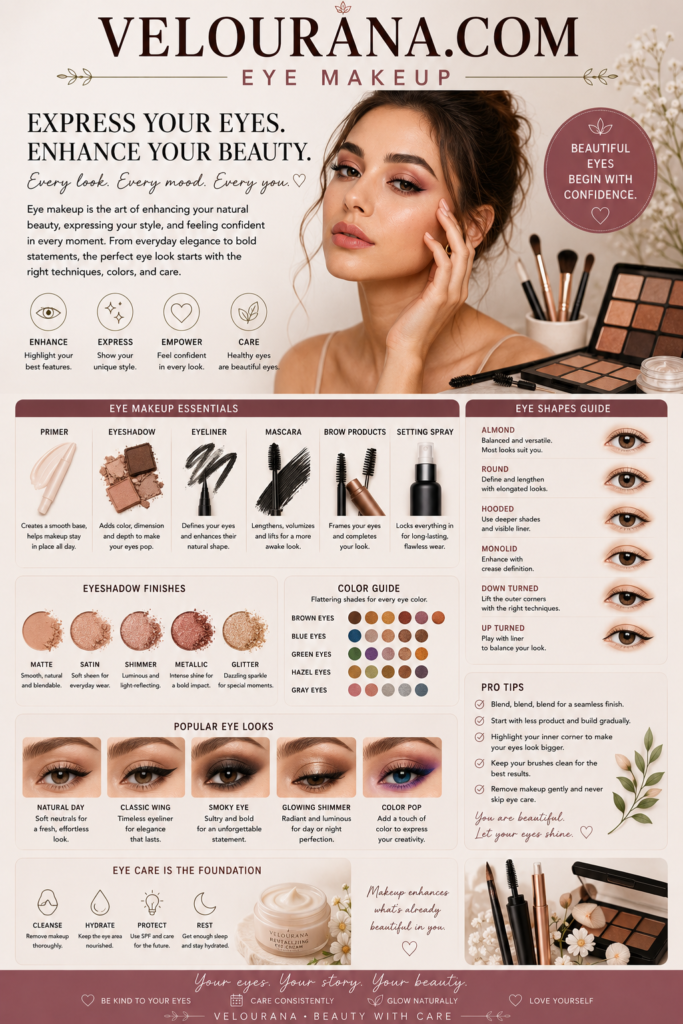
CATEGORY: Liquid Eyeshadow
Liquid eyeshadow belongs naturally to contemporary beauty because modern eye makeup increasingly values finish as much as color. The way pigment reflects, sets, stretches across skin and responds to movement can be just as important as the shade itself. Liquid formulas make these qualities especially visible.
A conventional powder palette offers immediate variety through multiple pans. Liquid shadow often works differently. One carefully chosen shade can contain enough complexity to create the entire eye.
A bronze liquid may appear softly translucent near the crease, deeper at the lash line and almost metallic where it is layered densely across the lid. A taupe can behave like natural contour when diffused and like smoky liner when concentrated. A shifting metallic may reveal several colors under different angles of light.
This ability to change according to density makes liquid eyeshadow unusually efficient.
It also suits a broad range of aesthetics.
Bare-looking makeup can use a nearly transparent satin wash. Classic glamour can rely on smooth metallic gold or bronze. Smoky makeup can be built from deep liquid pigment. Graphic beauty can use opaque pastel or vivid color as though the eyelid were a painted surface.
The same category accommodates all of these approaches because its defining quality is not a particular finish.
It is fluidity.
The Sheer Wash as Modern Minimalism
One of the most contemporary uses of liquid eyeshadow is almost invisible.
A transparent neutral shade can be swept over the lid and blended until the natural skin remains clearly visible beneath it.
The shadow may create only a small shift in tone.
Taupe adds subtle depth.
Rose introduces a hint of warmth.
Champagne reflects light gently.
Bronze gives the lid a soft sunlit quality.
The simplicity is deceptive.
Because the layer is thin, the eye retains natural texture and movement.
The makeup looks less like a separate cosmetic object and more like an altered version of the skin.
This style works particularly well with minimal base makeup because the eye does not feel disconnected from the complexion.
Satin Liquids and Polished Everyday Makeup
Satin liquid eyeshadow provides enough reflection to make the eye appear alive without producing obvious sparkle.
It can be one of the easiest ways to create polished daytime makeup.
A satin taupe blended across the lid creates dimension.
A soft bronze introduces warmth.
A muted champagne brightens without becoming intensely metallic.
These shades work beautifully with mascara and a restrained lash line.
The result feels finished without looking overconstructed.
The fluid texture helps because the product can be spread thinly until it becomes almost part of the eyelid.
Metallic Liquids and Maximum Reflection
Metallic liquid shadow represents the opposite extreme.
Here the objective is not subtle integration.
The surface is deliberately reflective.
A dense metallic formula can make the lid appear coated in liquid gold, silver, copper or jewel-toned pigment.
This effect is difficult to reproduce exactly with powder because the liquid medium allows reflective particles to align more continuously.
The eye catches broad bands of light rather than scattered shimmer.
Layering increases the effect.
A single coat may create luminous transparency.
A second can transform the finish into something approaching foil.
Gold Liquid Eyeshadow
Gold is one of the most natural partners for the liquid format because the fluid base enhances its molten quality.
Pale gold can feel delicate and luminous.
Yellow gold creates stronger traditional glamour.
Antique gold introduces greater depth and works beautifully beside olive, chocolate and black.
Gold liquid shadow can cover the entire lid or remain concentrated through the center.
When surrounded by matte brown, the contrast between warm reflection and soft shadow creates dimension without requiring a complicated color story.
Bronze and Copper Liquids
Bronze and copper provide greater warmth and depth than pale gold.
Bronze often behaves almost like a neutral because it contains enough brown to integrate naturally with the lashes and crease.
Copper introduces stronger red-orange warmth and can become particularly dramatic under evening lighting.
Both colors work well as one-product eye looks.
The liquid can be applied heavily near the lash line and diffused outward.
The result combines shadow and luminosity in one tone.
Silver and Pewter Liquid Eyeshadow
Silver creates a cooler and more graphic atmosphere.
A pale silver wash can appear futuristic but delicate.
Dense silver produces strong reflective contrast.
Pewter provides a darker, smokier alternative.
These shades pair naturally with charcoal, navy, black and cool taupe.
Silver liquid shadow can also be used selectively.
A small amount through the inner or center lid can illuminate an otherwise dark smoky eye.
The metallic reflection interrupts the shadow and creates visual depth.
Jewel-Toned Liquids
Emerald, sapphire, amethyst and burgundy liquids combine strong color with reflective surface.
These shades can create dramatic eye makeup without requiring several coordinating products.
A deep emerald liquid across the lid can become darker toward the crease as it is diffused.
Sapphire can function as both shadow and liner.
Amethyst can shift between romantic and dramatic depending on the surrounding makeup.
Jewel tones gain even greater intensity when layered over deeper bases.
A blackened underlying shadow can make metallic color appear richer and more dimensional.
Multichrome and Color-Shifting Liquids
Some liquid shadows contain pigments that change appearance according to angle.
A shade may shift from green to blue, violet to gold or copper to rose.
The fluid base is particularly effective for these pigments because it creates a smooth surface on which the optical shift can remain visible.
Simple surrounding makeup often serves them best.
When the liquid itself contains several visual colors, elaborate additional shadow can reduce clarity.
A neutral crease, defined lashes and one shifting lid may be enough.
The eye becomes different every time the light changes.
Matte Liquid Shadow as Sculpting Color
Matte liquid eyeshadow deserves more attention because it offers a different form of sophistication.
A neutral matte can create seamless contour around the eye.
The product can be stretched thinly through the crease and outer lid until it resembles natural depth.
There is no obvious sparkle and little visible powder texture.
This makes matte liquid ideal for understated makeup.
It can also act as a base beneath brighter or more reflective products.
A matte taupe or brown creates structure while metallic liquid is added only where light is wanted.
The contrast between the two finishes produces a more dimensional eye.
Liquid Shadow as a Creamy Smoke
Deep liquid eyeshadow can create smoky makeup with remarkable speed.
Instead of layering several powders, one brown, charcoal or plum shade can be placed close to the lashes and blended upward.
The gradient emerges from density.
Where the liquid is concentrated, the color appears deep.
Where it is stretched thinly, the skin shows through.
This produces the essential smoke without requiring multiple transition shades.
The edges can remain soft and slightly imperfect, creating a lived-in finish.
The Lived-In Liquid Eye
Perfectly polished makeup is not the only desirable result.
Liquid shadow can produce a beautifully relaxed eye when the edges are allowed to remain slightly diffused and irregular.
A brown or bronze liquid pressed over the lid with a finger can create depth without formal structure.
The pigment may gather more strongly near the lashes and become lighter toward the crease.
This variation can feel modern because it preserves evidence of movement and touch.
The makeup looks worn rather than manufactured.
Intentional softness still requires coherence.
The product should appear diffused, not accidentally patchy.
Liquid Shadow and the Center-Lid Highlight
The center of the lid is a natural position for reflective liquid shadow because the curvature catches light.
A metallic or shimmer formula placed there can transform a matte eye immediately.
Gold over brown creates warmth.
Silver over charcoal creates cool contrast.
Rose metallic over plum produces a softer luminous effect.
The liquid can remain concentrated rather than covering the entire lid.
This makes the reflection stronger by comparison with the surrounding matte areas.
Liquid Shadow in the Inner Eye
A pale liquid shadow can brighten the inner lid or inner corner.
Champagne creates a soft glow.
Silver produces sharper brightness.
Pale pink and lavender introduce color while still functioning as light.
Because the product is fluid, only a tiny amount may be necessary.
The brightness can then be blended outward until it becomes part of the surrounding shadow.
Liquid Shadow as a Base for Glitter
Liquid eyeshadow can provide a color foundation beneath glitter.
A metallic bronze base beneath gold glitter creates layered reflection.
Black or charcoal liquid can intensify multicolored glitter.
A colored base can change the apparent hue of transparent reflective particles.
The liquid should be used according to its own setting behavior and the glitter according to appropriate eye-area instructions.
The combination can produce extraordinary depth because the eye contains both continuous reflection and separate sparkling points.
Liquid Shadow and Powder Transitions
A liquid lid does not require the entire eye to remain liquid.
Powder can provide softer transitions through the crease.
A metallic liquid across the mobile lid paired with matte powder above it creates a classic texture contrast.
The powder absorbs light while the liquid reflects it.
This makes the lid appear even more luminous.
The two formats can therefore complement rather than replace one another.
Building a Halo Eye With Liquid Texture
A halo eye concentrates brightness through the center while keeping greater depth toward the inner and outer lid.
Liquid shadow can create the reflective center beautifully.
A bronze, gold or silver liquid can be pressed into the middle after deeper matte or cream colors establish the surrounding structure.
The reflective center becomes more pronounced as the eye moves.
A jewel-toned liquid can create a more colorful variation.
Emerald, violet or blue can provide the central light while deeper related shades frame it.
Liquid Shadow for Cut-Crease Effects
Opaque liquid eyeshadow can create strong separation between the lid and crease.
A pale or metallic formula placed cleanly beneath a deeper crease color produces a defined contrast.
Because liquid can create smooth coverage, the lid may appear almost painted.
The sharper the boundary, the more formal and graphic the result becomes.
A softly blended liquid produces the opposite effect.
The same product category can therefore support both precision and diffusion.
Pastel Liquid Eyeshadow
Pastel shades benefit particularly from liquid opacity.
Powder pastels can sometimes appear uneven or become muted by the natural eyelid tone.
An opaque liquid can maintain the intended color more clearly.
Lavender, baby blue, mint, pale peach and soft pink can create fresh graphic eyes.
Their mood depends largely on edge treatment.
Softly blended pastel feels dreamy and delicate.
A clean geometric pastel shape becomes more editorial.
White Liquid Eyeshadow
White liquid shadow can be used as a bright base, graphic color or mixing influence.
An opaque white lid creates dramatic contrast with dark lashes.
A thinner white layer can brighten pastel shades applied above it.
White liquid can also be used in isolated shapes rather than full coverage.
The absence of conventional shadow color makes geometry especially visible.
Black Liquid Eyeshadow
Black liquid shadow creates maximum depth.
Applied thinly, it can behave like charcoal smoke.
Layered densely, it becomes nearly graphic.
The ability to change between these states makes black liquid particularly useful for dramatic eye makeup.
It can provide the foundation beneath metallics, glitter and jewel tones.
A sheer black base can darken another color without completely replacing it.
Brown Liquid Shadow as an Everyday Essential
Brown may be one of the most versatile liquid shadow colors.
A medium brown can create soft contour.
A deep espresso can become smoky liner.
Bronze-brown can introduce reflection while remaining neutral.
Because brown relates naturally to lash and shadow tones, it can be blended widely without appearing excessively decorative.
One bottle can potentially create an entire range of everyday eye looks.
Liquid Eyeshadow Sticks Versus Wand Formulas
Some products described as liquid or liquid-cream eyeshadows come in different delivery systems.
Wand formats place fluid product directly onto the eyelid.
They are useful for precise dots, swipes and concentrated pigment.
Stick formulas are usually more cream-like but may set similarly after blending.
The delivery system changes application but not necessarily the final effect.
What matters more is the relationship between initial slip and final set.
A very fluid wand formula can create extremely thin layers.
A denser stick may provide more immediate opacity.
The Role of Applicator Shape
Doe-foot applicators allow both broad swipes and smaller precise placement.
A flat side can cover the lid quickly.
The tip can place product near the inner corner or lash line.
Some applicators are narrower and designed for precision.
Others carry more product and suit full-lid application.
The applicator is only the starting point.
Fingers and brushes can still refine the shadow after deposition.
Working Quickly Without Rushing
Fast-setting liquid shadow can create pressure because the product becomes less movable over time.
The solution is not frantic application.
It is controlled sequencing.
A small amount is placed.
That area is blended.
Only then is additional product introduced.
This method preserves control and prevents the entire lid from drying before the shape is resolved.
Correcting Liquid Shadow
Correction is easiest before the product has fully set.
A clean brush or fingertip can soften an edge immediately.
Once dry, repeated rubbing can disturb the surface.
At that stage, a small amount of fresh product may blend more effectively than trying to move the existing layer.
For sharp graphic shapes, surrounding edges can be refined carefully rather than repeatedly widening the pigment.
The objective is to correct without turning a thin liquid layer into heavy buildup.
Why Thin Layers Matter
The elegance of liquid eyeshadow often comes from how little physical product is required.
A thin layer moves more naturally with the eyelid.
It is less likely to feel heavy.
It also allows light to interact with the skin rather than sitting on a thick cosmetic surface.
Even intense metallic looks can often be achieved through controlled layering rather than one heavy coat.
The final result appears smoother and more flexible.
Creasing and Natural Eyelid Movement
No eye makeup exists on a completely stationary surface.
The eyelid folds every time the eye opens.
Some liquid shadows resist creasing exceptionally well once set.
Others remain more flexible and may move slightly during wear.
Whether this is acceptable depends on the intended finish.
A highly graphic metallic eye may require greater stability.
A sheer lived-in wash can tolerate some natural movement without appearing ruined.
The aesthetic should determine how much permanence is necessary.
Liquid Eyeshadow and Oily Lids
Oil can interfere with adhesion.
People with oilier eyelids may benefit from preparing the lid lightly before applying liquid shadow.
A primer may help some formulas.
A very thin dusting of appropriate powder through areas prone to movement can also be useful in certain cases.
However, excessive preparation can alter the finish.
The objective is balance rather than automatically mattifying the entire eyelid.
Liquid Shadow and Dry Lids
Very dry eyelids present a different challenge.
Some fast-setting formulas may catch on texture before they can spread evenly.
A well-prepared but not excessively greasy surface can help.
The formula itself should remain sufficiently flexible.
Thin satin or shimmer liquids may appear smoother than extremely opaque matte products depending on individual skin texture.
Color Intensity Through Layering
Liquid shadow becomes more versatile when opacity is treated as adjustable.
The first layer can remain transparent.
A second can deepen the center or outer lid.
A third may be reserved only for the strongest focal point.
This creates dimension without introducing another color.
Opacity becomes a design element.
Liquid Eyeshadow and Photography
Metallic liquid shadow can photograph dramatically because its continuous reflective surface responds strongly to light.
Direct flash may increase the brightness.
Soft lighting can reveal more of the base color.
Multichrome formulas can appear different depending on angle.
This means the same eye may look relatively subtle in one photograph and extremely reflective in another.
Lighting is effectively part of the makeup.
Daytime Liquid Eyeshadow
Liquid shadow does not need to be dramatic.
A sheer taupe, champagne or brown can be ideal for daytime because it offers polish with minimal visible texture.
The application can remain close to the lid without heavy lower-lash definition.
Mascara may provide all the additional structure required.
The eye looks finished while remaining light.
Evening Liquid Eyeshadow
Evening lighting allows reflective liquids to become much more prominent.
Bronze, gold, silver and jewel tones can produce stronger flashes.
Deeper liquid shadows can create intense smoke.
The same products can therefore move easily between daytime and evening simply through increased density and contrast.
Liquid Shadow in Monochromatic Makeup
Repeating related tones across eyes, cheeks and lips can create sophisticated harmony.
A rose liquid shadow can sit within a broader muted pink composition.
Bronze eyes can accompany warm neutral cheeks.
Plum can be echoed by berry lips.
The colors do not need to match exactly.
Shared undertones are enough to create connection.
Liquid Shadow as the Only Strong Feature
A vivid liquid eye can carry the entire face.
A smooth cobalt lid with restrained skin and lips can appear more powerful than a complicated multi-feature look.
Metallic silver can become similarly dominant.
The simplicity around the eye gives the liquid texture space to remain legible.
This is particularly effective in editorial beauty.
When Liquid Shadow Should Remain Soft
Not every formula needs maximum opacity.
Some shades are most beautiful when the skin remains visible.
Taupe, beige, rose and bronze can look exceptionally sophisticated as thin washes.
The temptation to build every liquid to full saturation can remove some of the texture's elegance.
The formula should be allowed to express its intended transparency.
When Maximum Opacity Works
Other looks depend on saturation.
Pastels need enough coverage to remain true.
Graphic color needs clear edges.
Metallic statement eyes gain impact from dense pigment.
The success lies in matching opacity to purpose.
The Fluidity That Defines the Category
Liquid eyeshadow is ultimately defined by transformation.
It begins mobile.
It can be stretched, layered, softened or shaped.
Then it sets into something more stable.
That transition gives the product its creative range.
Before setting, it behaves almost like paint.
Afterward, it can resemble powder, cream, metal, stain or liner depending on the formula.
This makes liquid shadow one of the most adaptable formats in eye makeup.
Why Liquid Eyeshadow Continues to Grow in Importance
The appeal of liquid eyeshadow reflects broader changes in beauty.
Modern makeup increasingly values products that can do several things at once.
Liquid shadow fits this perfectly.
One shade can create a wash, liner, smoky base, topper or metallic focal point.
It can support quick everyday makeup and highly technical editorial work.
Its texture allows the eyelid to remain visible and alive rather than buried beneath many layers.
The product responds to light, movement and density.
It changes according to how it is used.
That is the defining strength of liquid eyeshadow.
The formula does not dictate one finished look.
It provides a fluid starting point from which many different eyes can emerge.
THE END VELOURANA
 Discover More From Our Family of Websites
 ZodiacBearing (Astrology, Tarot, Numerology, Angel Numbers & Spiritual Guidance)
 Velourana (Beauty, Makeup, Hair Care, Skincare & Beauty Tips)
 HavenBearing (Home, Living, Organization, Décor & Everyday Inspiration)
 PawBearing (Pet Care, Dog Breeds, Animal Health, Training & Pet Products)
 PsyCatherine (Notes From the Journal of a Psychologist on Real Life)

