
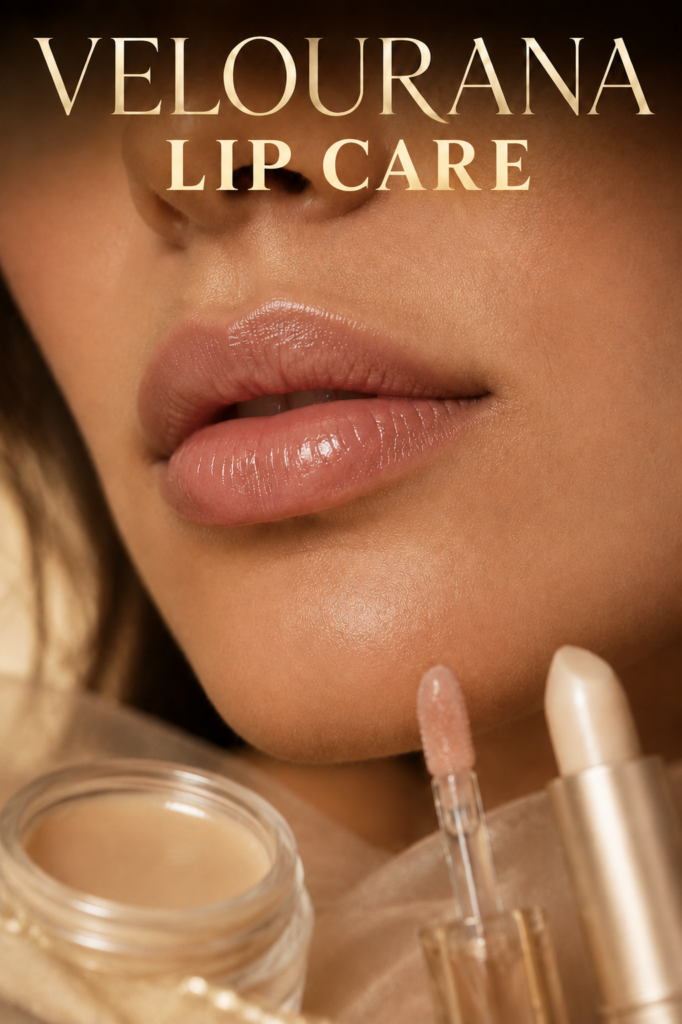
CATEGORY: Lip Moisturizing
Lips rarely behave exactly the same way every day of the year. A balm that feels perfectly adequate during a humid summer evening may seem almost invisible against a cold winter wind. A rich ointment that feels comforting during a long flight may feel unnecessarily heavy on an ordinary spring morning. Lip moisturizing is therefore not merely a matter of choosing a good product. It is the practice of matching protection to circumstances.
This adaptability is particularly important because lips are continuously exposed. Unlike areas covered by clothing, the lips meet wind, sunlight, temperature changes, food, beverages, cosmetics, cleansing products, and indoor climate directly. They also move constantly through speech, eating, smiling, and facial expression.
The resulting dryness can vary from a slight feeling of tightness to obvious flaking and cracking. Understanding why those changes occur makes it possible to moisturize more intelligently, without turning lip care into an unnecessarily complicated ritual.
A well-designed approach focuses on preserving the lip barrier, selecting textures according to environmental demands, avoiding habits that perpetuate dryness, and recognizing the difference between ordinary cosmetic dryness and persistent irritation that may need professional evaluation.
The Delicate Architecture of the Lips
The visible lips look smooth and simple, but their structure helps explain their vulnerability.
The outer lip surface is thinner and less heavily protected than many other areas of the skin. It also does not receive the same natural oil coating that helps support facial skin. This creates the soft appearance that distinguishes the lips, but it leaves them relatively dependent on their own limited barrier and on external protection.
Water is continually moving through the upper layers of the skin and escaping into the surrounding environment. This process occurs everywhere, but when the protective barrier is limited or disturbed, water can be lost more readily.
Environmental conditions influence the speed of that loss. Low humidity encourages evaporation. Wind removes the humid layer of air immediately above the skin. Heating and air conditioning alter indoor moisture levels. Repeated contact with saliva or water can create cycles of wetting and evaporation.
The sensation of dryness is therefore often a barrier problem rather than simply an absence of something wet on the surface.
This is why licking dry lips produces such disappointing results. Saliva temporarily creates moisture, but that moisture evaporates. The protective problem remains, and repeated licking may add irritation.
A lip moisturizer works most effectively when it does more than create a momentary wet sensation. It should help the surface remain soft while reducing the rate at which moisture disappears.
Three Dimensions of Moisturizing
The word "moisturizer" covers several functions that are worth separating conceptually.
Hydration concerns water. Ingredients known as humectants can help attract and retain water in the upper layers of the skin. Glycerin is a familiar example, while hyaluronic acid appears in some modern lip products as well.
Emollience concerns softness and flexibility. Emollient ingredients smooth the spaces between rough surface cells and reduce the sensation of a dry, uneven texture. Oils, butters, and many cosmetic emollients perform this role.
Occlusion concerns protection. Occlusive ingredients form a layer that slows water loss from the surface. Petrolatum is widely recognized for this function, while waxes and other film-forming ingredients can provide varying degrees of protection.
Many successful lip products combine these functions. A formula might contain ingredients that help maintain hydration, oils or butters that improve softness, and waxes or ointment-like materials that keep the entire mixture on the lips.
Understanding these roles is more useful than assuming that a product category automatically determines performance. A lip oil can be wonderfully emollient but relatively light in protection. A dense balm may be highly protective but less cosmetically elegant. A glossy treatment may combine both functions.
The correct balance depends on what the lips are experiencing.
Winter and the Need for Stronger Protection
Cold weather has an almost iconic association with chapped lips, and for good reason.
Winter air can contain relatively little moisture. Indoor heating may create another dry environment, meaning that lips move from cold outdoor conditions into warm but dehydrating indoor air repeatedly throughout the day.
Wind compounds the problem. A cold breeze across already dry lips can produce tightness quickly, particularly when no protective layer is present.
During these conditions, a more substantial moisturizer often makes sense. Waxier balms and ointment-style products remain on the lips longer and create a stronger physical barrier than very light products.
Timing also matters. Applying protection before leaving a building is more useful than waiting until the lips already feel uncomfortable outdoors. Preventive application allows the barrier to be present during exposure.
Winter also encourages habits that can worsen dryness. People may lick their lips when cold air makes them feel tight, peel visible flakes, or scrub the lips in an attempt to restore smoothness. Each behavior can disturb a surface that is already under environmental stress.
A richer product and a gentler philosophy generally work better. The objective is to preserve the surface, not continually remove it.
Summer Moisturizing Is Different, Not Unnecessary
Warm weather can create the impression that moisturizing is less important. In humid environments, lips may indeed feel naturally more comfortable, and dense ointments may be less appealing.
Summer, however, introduces another major environmental factor: sunlight.
The lips are exposed to ultraviolet radiation whenever they are uncovered outdoors. This makes sun protection an important component of daytime lip care, particularly during prolonged exposure.
A lip product specifically formulated with sun protection can provide both conditioning and ultraviolet protection. Reapplication remains important because products are readily removed from the mouth through eating, drinking, swimming, wiping, and ordinary movement.
Heat can also change product preferences. A thick balm that felt pleasant in winter may become uncomfortable, encouraging the user to wipe it away. A lighter moisturizing texture may therefore produce better real-world results simply because it is worn consistently.
Summer activities introduce additional challenges. Salt water, chlorinated pools, wind at the beach, and prolonged sun exposure can all leave lips feeling dry by the end of the day. Applying a protective moisturizer afterward can restore comfort, while nighttime care gives the surface an opportunity to recover.
Seasonal adaptation is not evidence that one product has failed. It reflects the changing demands placed on the lips.
Spring, Autumn, and Transitional Dryness
Transitional seasons can be surprisingly challenging because weather changes rapidly.
A mild morning can become windy by afternoon. Indoor heating may still be operating while outdoor temperatures rise. Humidity can fluctuate dramatically over several days.
These conditions reward flexibility. Rather than automatically using the heaviest winter product or abandoning balm entirely, lip care can respond to how the lips actually feel.
A medium-weight balm often works well during transitional periods because it provides meaningful protection without excessive heaviness. A richer product can remain available for windy days or nighttime use.
This approach illustrates a broader principle: lip moisturizing should be responsive rather than rigid.
Skin does not follow the calendar. Environmental exposure, travel, workplace conditions, cosmetic choices, and individual tendencies can matter more than the month printed on the calendar.
Indoor Environments Matter More Than They Seem
People often associate chapped lips with outdoor weather while overlooking the number of hours spent indoors.
Air conditioning can create persistent dryness during summer. Central heating can do the same during winter. Offices, hotels, airplanes, shopping centers, and vehicles all create artificial climates that influence evaporation from the skin.
Long periods at a computer may also coincide with reduced awareness of lip habits. Someone concentrating on work may unconsciously lick, bite, or touch the lips repeatedly.
Keeping a comfortable moisturizer nearby can reduce the need to wait until dryness becomes distracting.
Air travel deserves particular mention because aircraft cabins are characteristically dry environments. During a long flight, lips may lose comfort even when they felt perfectly normal at departure.
A more protective balm or ointment can be useful in this setting. Applying it before the lips become dry is again preferable to treating significant tightness later.
The same logic applies to long hours in heavily air-conditioned workplaces. Environmental dryness does not have to feel dramatic to influence the lip surface over time.
Night Care and the Opportunity for Repair
The hours spent sleeping create one of the longest uninterrupted periods available for lip care.
During the day, products are constantly disturbed. At night, a protective layer can remain largely untouched for several hours.
This makes bedtime particularly suitable for richer textures. An ointment or dense balm can form a persistent surface film without interfering with lipstick, eating, drinking, or conversation.
Some products marketed as sleeping masks contain combinations of oils, butters, waxes, humectants, and occlusive ingredients. Others rely on simpler formulas. The category name is less important than the product's ability to remain comfortable and protective.
People who wake with dry lips despite applying moisturizer may need to consider additional influences. A very dry bedroom, sleeping with the mouth open, or repeated irritation from products used around the mouth can all contribute.
A humidifier can alter a very dry indoor environment, although lip protection may still be useful. The objective is to reduce the environmental pressure on the lips while maintaining a supportive surface layer.
Night care does not need to become elaborate. In many cases, one reliable product applied consistently is enough.
Moisturizing Beneath Lip Makeup
Lip cosmetics create an interesting challenge because the qualities that make a lipstick long lasting can sometimes conflict with the qualities associated with a rich moisturizer.
Long-wear and matte formulas generally need to adhere closely to the lip surface. A thick layer of oil or balm underneath can reduce adhesion, alter color, or make the product move.
This does not mean moisturizing should be skipped.
Applying balm earlier in the routine gives the lips time to soften. By the time lipstick is applied, much of the product may have settled. If the surface remains excessively slippery, a small amount can be gently removed without stripping the lips completely.
This creates a smoother base without sacrificing the intended finish of the lipstick.
Creamy and satin lipsticks are often easier to combine with moisturizing products because their formulas already contain more slip. Glosses can provide additional comfort, although a glossy finish should not automatically be confused with long-term moisturization.
At the end of the day, removal technique becomes part of lip care. Persistent formulas should be dissolved rather than aggressively rubbed away. Cleansing oils, balms, or appropriate makeup removers can loosen pigments so that less friction is required.
Following removal with moisturizer restores protection at a moment when the lip surface may otherwise be left exposed.
Fragrance, Flavor, and the Sensory Appeal of Lip Products
Lip products occupy an unusual position between skincare and sensory pleasure.
Vanilla, fruit, mint, chocolate, floral aromas, and sweet flavors can make a balm enjoyable to apply. Cooling sensations may create an impression of freshness, while warming or tingling ingredients are sometimes used in plumping products.
For many people, these features cause no difficulty. For others, particularly those with sensitive or already irritated lips, sensory ingredients may become part of the problem.
A balm that causes persistent burning, stinging, itching, or worsening redness should not be considered effective simply because it is marketed as moisturizing.
When lips are irritated, simpler formulations can be useful because they reduce the number of potential variables. Once comfort has returned, more elaborate products can be introduced according to preference.
The distinction between enjoyment and necessity is valuable. A beautifully flavored lip oil can be a pleasurable cosmetic product. A plain ointment can be an excellent protective product. They do not need to compete for the same role.
An everyday lip collection can include both, provided the user understands what each product contributes.
Why Peeling Dry Skin Can Prolong the Problem
A dry flake on the lip creates a powerful temptation to pull it away.
The difficulty is that visible loose skin may still be attached to healthier tissue. Pulling can therefore remove more than the dry surface, creating a tender spot that needs additional time to recover.
The cycle can repeat: dryness creates a flake, the flake is removed, the exposed area becomes irritated, and new roughness develops.
Moisturizing offers a slower but gentler solution. A protective layer softens dry surface material and reduces friction. Over time, naturally shedding cells can separate without force.
This is one reason aggressive lip scrubbing is often unnecessary. Scrubs may produce immediate smoothness, but frequent friction can work against barrier recovery.
Cosmetic smoothness should not be pursued at the expense of comfort.
When lips need to look particularly smooth for an event or lipstick application, preparation in the preceding hours or overnight can be more effective than intensive exfoliation immediately beforehand. Giving moisturizer time to soften the surface allows the lips to improve gradually.
The Relationship Between Lip Care and Facial Skincare
Products used on the surrounding face can unintentionally affect the lips.
Facial cleansers may travel onto the lip surface during rinsing. Exfoliating acids, retinoids, acne treatments, and other active products applied close to the mouth may reach the lip border. Toothpaste can also remain around the mouth after brushing.
For someone experiencing unexplained dryness, examining the surrounding routine can therefore be useful.
A protective balm applied before potentially irritating facial treatments can sometimes act as a boundary, although products should still be used according to their instructions.
Careful application technique matters. Facial skincare does not need to extend onto the lips unless the product is specifically designed for them.
After cleansing, gently drying the mouth area and restoring lip moisturizer can prevent the lips from remaining unprotected.
This connection demonstrates why lip dryness cannot always be understood by looking only at the lip balm being used. The entire environment around the mouth matters.
Choosing Between Balm, Oil, Mask, and Ointment
The modern lip-care market offers many formats, and marketing language can make them appear more different than they actually are.
A balm is generally designed for regular protective use. Stick balms prioritize portability, while pot and tube formulas can accommodate softer textures.
Lip oils emphasize emollience, shine, and cosmetic elegance. Some contain substantial conditioning systems, while others are closer to makeup glosses.
Lip masks are typically richer treatments intended for extended wear, particularly overnight. In functional terms, many overlap considerably with dense balms.
Ointments usually emphasize occlusion and persistence. Their simple, protective character can make them useful during significant dryness or environmental exposure.
Rather than asking which category is universally superior, it is more useful to consider the desired outcome.
Someone preparing lips for lipstick may prefer a light balm. Someone walking outside in freezing wind may prefer a waxier barrier. Someone going to bed with rough lips may choose a dense mask or ointment. Someone wanting shine with moderate conditioning may enjoy an oil.
The format becomes a tool rather than an identity.
The Problem With Chasing Instant Smoothness
Beauty products often promise immediate transformation, and lip products can certainly create rapid cosmetic improvement.
A glossy coating makes the surface appear smoother because light reflects evenly. Oils reduce friction. Thick balms fill irregularities temporarily.
These effects are useful, but they should not be confused with complete recovery of a compromised lip surface.
Barrier improvement takes time. If lips have been repeatedly peeled, licked, exposed to harsh weather, or irritated by products, one application cannot instantly reverse everything that has occurred.
This is where consistency becomes more important than intensity.
A modest protective layer maintained over several days can produce greater improvement than alternating between neglect and aggressive treatment.
The lips benefit from stability. Frequent changes in products, repeated exfoliation, and constant touching introduce variables when the surface may simply need protection and time.
When a Minimal Routine Works Best
A sophisticated lip routine is optional.
For many people, effective everyday care can be built around a daytime balm and a richer nighttime product. If the daytime balm includes appropriate sun protection when needed, the routine becomes even simpler.
Additional products can be added for enjoyment or specific cosmetic purposes, but they are not automatically necessary.
Minimalism becomes especially useful when lips are reacting unpredictably. Reducing the routine to a straightforward moisturizer can help determine whether another product is contributing to irritation.
Once the lips feel comfortable again, cosmetics or flavored products can be reintroduced gradually.
This philosophy prevents lip care from becoming a cycle in which every new symptom produces another purchase.
A product earns its place through performance and tolerability, not through the number of claims printed on its packaging.
Reading the Lips Instead of Following a Fixed Schedule
There is no universal number of times a person must apply lip moisturizer each day.
Someone working indoors in moderate humidity may need relatively little. Someone spending hours outdoors in cold wind may need considerably more. A person wearing long-lasting matte lipstick will have different requirements from someone wearing a creamy balm.
The lips themselves provide information.
Tightness suggests that protection may be insufficient. Roughness can indicate that the surface needs time and emollience. Frequent disappearance of product may simply reflect eating and drinking rather than poor formulation.
Repeated stinging, cracking, inflammation, or swelling suggests that the issue may extend beyond routine dryness.
Responding to these signals produces a more intelligent routine than applying products according to arbitrary rules.
Lip moisturizing is ultimately an exercise in maintaining equilibrium. The surface needs enough hydration and protection to remain flexible without being constantly manipulated.
Long-Term Lip Comfort
The most useful lip-care habits are remarkably ordinary.
Avoiding repeated licking preserves the surface. Resisting the urge to peel flakes prevents unnecessary injury. Gentle makeup removal limits friction. Protective products reduce moisture loss. Sun protection addresses daytime exposure. Richer nighttime care gives the lips an uninterrupted period of support.
None of these practices requires a complicated collection.
Over time, consistency creates a more stable baseline. Instead of repeatedly allowing the lips to become severely dry and then attempting to rescue them, moisturizing becomes preventive.
That shift changes the purpose of lip balm. It is no longer simply an emergency response to cracking. It becomes a small form of everyday maintenance, comparable to using facial moisturizer before the skin becomes uncomfortable.
The best lip moisturizer is therefore not defined solely by ingredient trends or luxurious packaging. It is the product that fits the environment, provides sufficient protection, feels comfortable, and encourages regular use without causing irritation.
Lips will always respond to weather, cosmetics, habits, and surroundings. The goal is not to make them immune to those influences. It is to give their delicate surface enough support to handle ordinary changes without repeatedly falling into a cycle of dryness and damage.
When moisturizing is approached as protection rather than temporary shine, everyday lip care becomes both simpler and more effective. The result is not merely lips that look smooth immediately after application, but lips that remain softer, more flexible, and more comfortable as the conditions around them change.
THE END VELOURANA
 Discover More From Our Family of Websites
 ZodiacBearing (Astrology, Tarot, Numerology, Angel Numbers & Spiritual Guidance)
 Velourana (Beauty, Makeup, Hair Care, Skincare & Beauty Tips)
 HavenBearing (Home, Living, Organization, Décor & Everyday Inspiration)
 PawBearing (Pet Care, Dog Breeds, Animal Health, Training & Pet Products)
 PsyCatherine (Notes From the Journal of a Psychologist on Real Life)

