
CATEGORY: Makeup Techniques
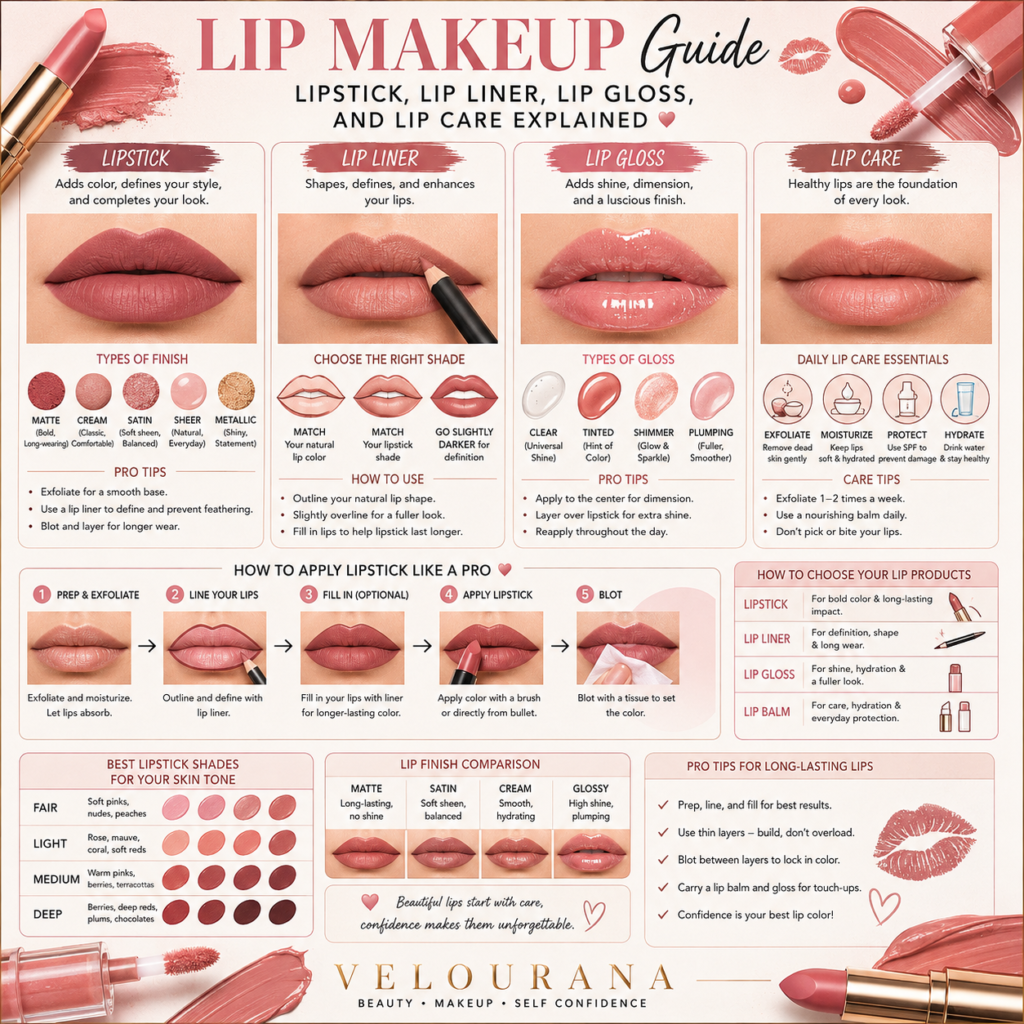
Beautiful lips can complete a makeup look just as effectively as flawless skin or perfectly blended eyeshadow. Whether you prefer a natural nude lip, a bold red statement, or a glossy finish, understanding lip makeup products helps you create results that are comfortable, long-lasting, and flattering.
Modern lip cosmetics have evolved far beyond traditional lipstick. Today’s beauty market includes lip liners, liquid lipsticks, lip glosses, lip oils, lip stains, tinted balms, lip masks, and volumizing products, each designed to achieve a different effect.
This comprehensive guide explains everything you need to know about lip makeup, including the different products available, how to choose the right shades, proper application techniques, and tips for keeping your lips healthy and beautiful.
—
Why Lip Makeup Matters
Lip products do much more than add color.
They can:
- Balance the overall makeup look.
- Enhance lip shape.
- Create the illusion of fuller lips.
- Add hydration.
- Improve facial harmony.
- Express personal style.
- Complement different occasions.
Even the simplest makeup routine often looks more polished after applying an appropriate lip product.
—
Healthy Lips Come First
No lipstick looks its best on dry, cracked lips.
Healthy lips provide the perfect canvas for every lip product.
A simple lip care routine should include:
- Regular hydration.
- Gentle exfoliation.
- Daily lip balm.
- Protection from excessive sun exposure.
- Drinking enough water.
Proper lip care improves both comfort and the appearance of makeup.
—
Understanding Lip Balm
Lip balm is primarily a skincare product.
Its purpose is to moisturize and protect the lips.
Benefits include:
- Preventing dryness.
- Reducing cracking.
- Improving softness.
- Creating a smoother lipstick application.
Many lip balms also contain nourishing ingredients such as:
- Shea butter.
- Beeswax.
- Vitamin E.
- Coconut oil.
- Hyaluronic acid.
Some formulas include SPF protection to help shield delicate lip skin from ultraviolet rays.
—
Lip Primers
Lip primers prepare the lips before lipstick application.
They help:
- Smooth lip texture.
- Improve lipstick longevity.
- Reduce feathering.
- Enhance color payoff.
Although optional, lip primers are particularly useful for long events and matte lip products.
—
Lip Liner
Lip liner is designed to define the lip contour before applying lipstick.
Benefits include:
- Sharper lip edges.
- Reduced lipstick bleeding.
- Longer-lasting color.
- Improved symmetry.
- Fuller-looking lips.
Many makeup artists also fill the entire lips with liner before lipstick to improve wear time.
—
Choosing the Right Lip Liner
The safest option is to choose a liner that closely matches your lipstick.
Nude lip liners are especially versatile because they pair well with many everyday lipstick shades.
Slightly darker liners can add subtle dimension, but strong contrasts are generally less popular than they were in previous decades.
—
Lipstick
Lipstick remains one of the world’s most iconic beauty products.
Available in countless shades and finishes, lipstick allows endless creative possibilities.
—
Types of Lipstick
Cream Lipstick
Cream lipsticks provide rich color with comfortable wear.
Advantages include:
- Smooth application.
- Hydrating feel.
- Medium to full coverage.
- Comfortable daily wear.
Cream formulas remain one of the most popular choices for everyday makeup.
—
Matte Lipstick
Matte lipsticks contain little or no shine.
Benefits include:
- Sophisticated appearance.
- Long wear.
- Highly pigmented color.
- Modern finish.
Some matte formulas may feel drying, making lip preparation especially important.
—
Satin Lipstick
Satin finishes balance moisture with soft shine.
They offer:
- Comfortable texture.
- Elegant finish.
- Moderate hydration.
- Versatility for both day and evening.
—
Sheer Lipstick
Sheer lipsticks provide lighter color with greater transparency.
Ideal for:
- Natural makeup.
- Beginners.
- Everyday wear.
- Quick touch-ups.
—
Metallic Lipstick
Metallic formulas contain reflective pigments.
Often used for:
- Evening makeup.
- Editorial beauty.
- Creative looks.
—
Liquid Lipstick
Liquid lipstick has become one of the most popular lip products in modern beauty.
Advantages include:
- Intense pigmentation.
- Exceptional longevity.
- Minimal transfer.
- Precision application.
Many liquid lipsticks dry to a matte finish, although satin and glossy versions are also available.
—
Lip Gloss
Lip gloss adds shine while making the lips appear fuller and healthier.
Modern glosses vary considerably.
Some provide:
- Clear shine.
- Light color.
- High pigmentation.
- Glitter effects.
- Plumping ingredients.
Unlike older sticky formulas, many contemporary glosses feel lightweight and comfortable.
—
Lip Oils
Lip oils combine makeup with skincare.
Benefits include:
- Deep hydration.
- Soft shine.
- Comfortable wear.
- Nourishing ingredients.
Lip oils have become increasingly popular among people who prefer natural-looking makeup.
—
Lip Stains
Lip stains provide long-lasting color by lightly tinting the lips.
Advantages include:
- Lightweight feel.
- Minimal transfer.
- Natural appearance.
- Excellent longevity.
They are especially popular for everyday makeup because they gradually fade rather than wearing away unevenly.
—
Choosing Lip Color According to Skin Tone
Although personal preference always comes first, certain shades naturally complement different complexions.
—
Fair Skin
Beautiful shades include:
- Soft pink.
- Nude beige.
- Peach.
- Rose.
- Light coral.
—
Light to Medium Skin
Suitable colors include:
- Warm nude.
- Coral.
- Mauve.
- Dusty rose.
- Soft berry.
—
Olive Skin
Olive complexions pair beautifully with:
- Terracotta.
- Warm peach.
- Caramel nude.
- Brick red.
- Warm berry.
—
Tan Skin
Popular choices include:
- Cinnamon.
- Coral.
- Rich pink.
- Warm red.
- Deep nude.
—
Deep Skin
Striking shades include:
- Burgundy.
- Plum.
- Chocolate.
- Deep berry.
- Rich red.
These tones create beautiful contrast while complementing deeper complexions.
—
Matching Lipstick to Makeup Style
Different makeup looks often pair better with different lip colors.
Natural Makeup
Works beautifully with:
- Nude shades.
- Soft pink.
- Tinted balm.
- Lip oil.
—
Glamorous Evening Makeup
Often includes:
- Classic red.
- Deep berry.
- Wine.
- Rich plum.
—
Bold Eye Makeup
A softer lip usually creates better balance.
—
Minimal Eye Makeup
Allows stronger lip colors to become the focal point.
—
How to Apply Lipstick
A simple routine produces cleaner, longer-lasting results.
Step 1
Prepare the lips with lip balm.
—
Step 2
Blot away excess moisture if necessary.
—
Step 3
Outline the lips using lip liner.
—
Step 4
Apply lipstick evenly from the center outward.
—
Step 5
Blot gently with tissue if desired.
—
Step 6
Apply a second light layer for improved longevity.
—
Creating Fuller-Looking Lips
Several simple techniques create the illusion of greater volume.
These include:
- Slightly overlining the cupid’s bow.
- Applying lighter lipstick in the center of the lips.
- Adding gloss only to the center.
- Highlighting the cupid’s bow.
- Maintaining well-hydrated lips.
Subtle enhancement generally produces the most natural appearance.
—
Common Lip Makeup Mistakes
Avoid these common errors:
- Applying lipstick to dry lips.
- Using a lip liner much darker than lipstick.
- Choosing the wrong nude shade.
- Applying excessive gloss.
- Forgetting to blend the liner.
- Skipping lip preparation before matte lipstick.
- Neglecting to remove old lipstick before reapplying.
Small adjustments often make a significant difference.
—
How Long Do Lip Products Last?
Typical shelf life varies by product.
General guidelines include:
- Lipstick: approximately 12–24 months after opening.
- Liquid lipstick: approximately 12–18 months.
- Lip gloss: approximately 6–12 months.
- Lip balm: approximately 12 months.
Replace products if you notice:
- Unpleasant odor.
- Texture changes.
- Separation.
- Mold.
- Irritation during use.
—
Building a Beginner Lip Collection
A practical starter collection may include:
- Hydrating lip balm.
- Nude lipstick.
- Soft pink lipstick.
- Classic red lipstick.
- Matching nude lip liner.
- Clear lip gloss.
- Tinted lip balm.
- Lip oil.
This small collection offers enough versatility for everyday wear, work, special occasions, and seasonal makeup.
—
Final Thoughts
Lip makeup is one of the simplest yet most effective ways to transform your appearance. Whether you prefer the elegance of a satin lipstick, the longevity of a liquid matte formula, or the effortless shine of a nourishing lip gloss, choosing products that suit your lips, skin tone, and personal style allows you to create looks that feel both comfortable and confident.
By combining proper lip care with thoughtful product selection and careful application techniques, you can enjoy lip makeup that not only looks beautiful but also keeps your lips healthy, smooth, and naturally attractive every day.
The End,
Velourana
 Discover More From Our Family of Websites
 ZodiacBearing (Astrology, Tarot, Numerology, Angel Numbers & Spiritual Guidance)
 Velourana (Beauty, Makeup, Hair Care, Skincare & Beauty Tips)
 HavenBearing (Home, Living, Organization, Décor & Everyday Inspiration)
 PawBearing (Pet Care, Dog Breeds, Animal Health, Training & Pet Products)
 PsyCatherine (Notes From the Journal of a Psychologist on Real Life)

