
CATEGORY: Lip Colors
Lip color is one of the smallest elements in a beauty look and one of the most visually influential. A shift of only a few degrees—from a blue-based red to a tomato red, from dusty rose to warm terracotta, from caramel nude to beige nude—can change the apparent warmth of the complexion, the brightness of the eyes, the whiteness of the teeth, and even the overall balance of the face. This is why choosing lipstick purely because a shade looks beautiful in its tube can be disappointing. The color itself may be attractive, yet the relationship between that color and the person wearing it determines whether the final effect feels harmonious.
Color matching offers a more useful way to understand lipstick. Rather than dividing lip shades into simplistic categories of colors that certain people supposedly can or cannot wear, it examines relationships: skin depth, undertone, natural lip pigmentation, contrast, saturation, finish, surrounding makeup, and personal aesthetic. These elements interact continuously. A lipstick that appears sophisticated and muted on one complexion may become dramatically pale on another. A brown that creates subtle definition on one person may read almost burgundy on someone with lighter coloring. Even two people with apparently similar skin tones can experience the same lipstick differently because their undertones and natural lip colors are not identical.
The most successful approach therefore begins with observation rather than restriction. Lip color becomes easier to choose when the face is treated as a complete color composition. The goal is not to obey rigid rules. It is to understand why certain shades create effortless harmony, why others create deliberate contrast, and how both effects can be used intentionally.
Why Lipstick Changes Once It Reaches the Face
A lipstick shade never exists independently of its surroundings. In a product photograph or tube, it is viewed against a controlled background. Once applied, it sits beside skin, teeth, hair, eyes, blush, clothing, and the natural pigmentation of the lips themselves. Every neighboring color influences how the lipstick is perceived.
This phenomenon explains why descriptions such as rose, nude, berry, coral, or red are only starting points. A rose lipstick might contain a significant amount of brown, mauve, peach, violet, or beige. Those secondary characteristics often determine whether the shade integrates naturally with a complexion. Similarly, a red can lean blue, orange, pink, brown, or even slightly purple. The word red describes the broad family, but the undertone determines much of its behavior.
Natural lip pigmentation is especially important and frequently underestimated. Lip products are not normally applied to a neutral white surface. They are layered over tissue that may naturally appear pale pink, rosy brown, mauve, peach, purple-brown, or deeply pigmented. Unless the lipstick is completely opaque, that underlying color participates in the final result. A sheer coral over strongly mauve lips may become more subdued than expected. A translucent berry over naturally deep lips can look exceptionally rich. A beige nude over pigmented lips may require greater opacity to resemble the color shown in promotional imagery.
Lighting adds another variable. Warm indoor lighting emphasizes golden, orange, and brown tones, while cool daylight may reveal blue or violet undertones more clearly. A lipstick that seemed perfectly neutral under bathroom lighting can look unexpectedly warm outdoors. This does not mean the color is wrong. It simply demonstrates that color matching is contextual rather than absolute.
Understanding these shifts removes much of the frustration from lipstick selection. When a shade looks different on the lips than expected, the product has not necessarily failed and the wearer has not chosen incorrectly. The surrounding colors have changed the visual equation.
Skin Depth and Undertone Create the Foundation
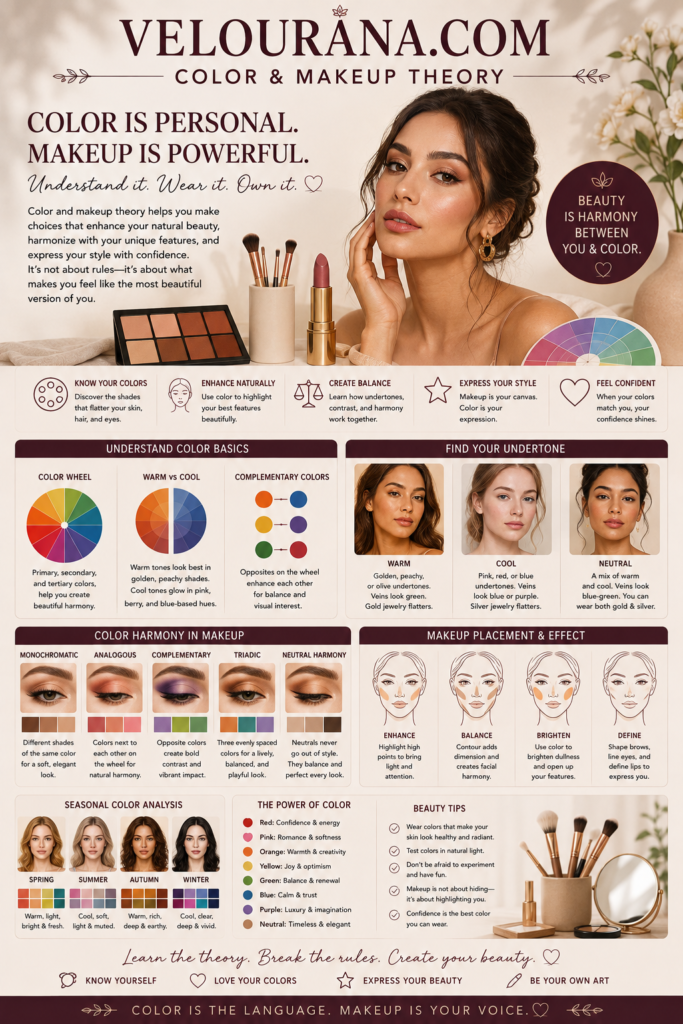
Skin depth describes how light or deep the complexion appears, while undertone describes the subtler coloration beneath that surface depth. The two concepts work together but should not be confused. People across a wide range of skin depths can have warm, cool, neutral, olive, or mixed undertones.
Undertone becomes particularly noticeable when lipstick creates an unexpected effect. A beige nude may suddenly appear orange. A pink may become almost lavender. A brown may look redder than anticipated. These changes often reveal the interaction between the lipstick's undertone and the complexion.
Warm complexions frequently create natural continuity with lip colors containing peach, caramel, brick, cinnamon, terracotta, warm rose, coral, coppery brown, or orange-red influences. Cool complexions often harmonize beautifully with blue-red, cranberry, raspberry, plum, mauve, cool rose, wine, and pink-based berry tones. Neutral coloring has considerable flexibility because neither strongly warm nor strongly cool qualities dominate. Olive complexions introduce another fascinating dimension because greenish or muted undertones can transform lipstick dramatically, sometimes making overly pale shades appear chalky or certain pinks unusually bright.
These relationships should be treated as explanations rather than prohibitions. A person with warm coloring can absolutely wear a blue-red lipstick. In fact, the contrast may be precisely what makes the shade striking. Color theory becomes most useful when it predicts the effect rather than dictates the choice.
Harmony tends to produce a sense that the lipstick belongs naturally within the face. Contrast makes the lips more visually independent. Neither is inherently superior. A soft daytime look may benefit from close harmony, while an editorial evening look may intentionally introduce a cooler, darker, or brighter lipstick that stands apart from the complexion.
Depth matters equally. Very pale lip colors can create strong contrast against deeper skin, while deep shades can become dramatically prominent against fair skin. Mid-depth colors often integrate more quietly with medium complexions, although saturation and undertone can completely alter this effect.
What matters is understanding the visual result before deciding whether it suits the intended look.
The Complicated Beauty of the Nude Lip
Few lipstick categories demonstrate color matching more clearly than nude lipstick. The phrase itself is misleading because there is no universal nude. Nude is not one specific beige. It is a relationship between the lip color and the wearer.
A successful nude usually preserves enough distinction between the lips and surrounding skin to maintain facial structure. When the shade becomes too close to the complexion without sufficient undertone or depth, the mouth can visually disappear. Sometimes that erased effect is intentional, particularly in dramatic eye-focused makeup. More often, however, a flattering nude contains enough rose, peach, brown, mauve, caramel, or berry influence to keep the lips alive.
On fair complexions, soft pink-beige, muted rose, peach-beige, and gentle mauve shades can create a natural effect without overwhelming the face. Light-to-medium complexions often accommodate richer rosy browns, warm beige-pinks, caramel roses, and muted peach tones. Medium and tan skin can be beautifully complemented by cinnamon nudes, terracotta roses, warm browns, deeper mauves, and caramel shades. Rich and deep complexions frequently gain dimension from cocoa, chestnut, raisin, deep rose-brown, mahogany, and warm chocolate variations.
Yet skin depth alone cannot determine the ideal nude. Natural lip pigmentation changes everything. Someone with strongly pigmented lips may find that a sheer pale nude barely alters the natural color, while an opaque formulation produces a completely different result. A lip liner can also change the relationship between skin and lipstick by restoring definition around a lighter central shade.
The modern nude lip is therefore better understood as a spectrum. Pink nude, peach nude, caramel nude, brown nude, mauve nude, rosewood, cocoa, cinnamon, and beige all occupy different places within it. The most sophisticated nude is rarely the shade that makes the lips invisible. It is often the shade that appears quietly connected to the wearer's natural coloring while preserving enough contrast to keep the mouth expressive.
This is also why swatching nude lipstick on the hand provides incomplete information. The skin of the hand differs from the lips in both color and texture. A hand swatch can reveal opacity and general undertone, but the final judgment belongs on the face.
Red, Berry, Rose, and Brown as Color Families
Classic lip colors become far easier to navigate when viewed as families containing many undertones rather than as single colors.
Red offers perhaps the clearest example. A blue-based crimson creates a very different impression from a warm tomato red, even though both are unmistakably red. Cooler reds often appear crisp and dramatic, while orange-reds can feel energetic, sunlit, and vivid. Brick reds introduce brown and warmth, making the color earthier. Burgundy moves toward wine and sometimes violet, producing greater depth and drama.
The complexion influences which aspect of the red becomes most noticeable. Warm skin can amplify orange in a warm red, creating intense tonal harmony. Cool skin can make that same shade appear even warmer by comparison. Conversely, a blue-red may merge elegantly with cool coloring while appearing more deliberately contrasting against golden or olive skin.
Berry shades occupy an equally broad territory. Raspberry can be bright and pink-driven. Cranberry combines red and cool berry tones. Blackberry and black cherry approach deeper purple-red territory. Mulberry often incorporates brown or muted violet. These shades can become exceptionally sophisticated because they bridge several color families at once.
Rose shades are among the most adaptable because rose itself can lean warm, cool, muted, dusty, brown, or vivid. A muted rose can behave almost like a natural lip color, while a bright rose can become the focal point of the entire face. Rosewood introduces brown and often works beautifully when a conventional pink feels too sweet or conspicuous.
Brown lipstick has undergone a particularly important evolution in modern beauty because the category now encompasses everything from pale beige-brown to deep espresso. Warm caramel browns can create softness, reddish browns can echo natural warmth in the complexion, and cooler taupe-browns produce a more sculpted, contemporary effect. Chocolate and mahogany shades offer depth without relying exclusively on burgundy or purple.
The usefulness of these families lies in their flexibility. Instead of asking whether red, berry, rose, or brown "suits" a complexion, it is more revealing to ask which version of that family creates the desired relationship with the skin.
Contrast, Saturation, and the Rest of the Face
Undertone receives considerable attention in beauty discussions, but contrast and saturation can be equally decisive.
Contrast describes how strongly the lips differ from surrounding features. Someone with light skin and dark hair already has substantial natural contrast. A deep lipstick may reinforce that intensity, creating a highly defined appearance. A softer lipstick may reduce it and shift attention toward the eyes. Someone whose hair, skin, brows, and eyes occupy relatively similar tonal depths may experience a vivid lipstick as a dramatic new focal point.
Saturation refers to the purity or intensity of a color. Bright fuchsia and muted dusty rose may share a pink foundation, but they create completely different visual energy. Some complexions appear especially vibrant beside clear, saturated color. Others develop remarkable elegance beside softened, smoky, or brown-influenced shades.
This is where personal coloring becomes more nuanced than the familiar warm-versus-cool distinction. A lipstick can technically share the wearer's undertone yet still feel overpowering because it is too saturated for the desired effect. Another shade may technically contrast with the undertone but look excellent because its depth and softness complement the face.
Hair and eye color contribute to this composition. Deep brunette hair can visually anchor stronger lip shades. Blonde, silver, red, black, or highly dimensional hair changes the balance in different ways. Eye color may also appear more pronounced when lipstick introduces a complementary or contrasting tone, although this effect is usually subtler than the relationship between lips and skin.
Clothing matters too. A cool berry lipstick paired with a warm rust garment creates a different overall palette from the same lipstick worn with charcoal, navy, or cool pink. Jewelry can shift perception as well. Gold, silver, bronze, pearls, and colorful stones introduce additional reflective colors around the face.
Lipstick matching therefore does not end at the jawline. The entire visible palette participates.
Texture and Finish Alter the Perception of Color
The same nominal shade can behave differently in matte, satin, cream, balm, gloss, stain, or metallic formulations because texture changes how light interacts with color.
Matte lipstick tends to present color with greater visual solidity. Without strong surface reflection, the pigment itself becomes prominent. Deep matte shades can therefore feel particularly intense and architectural. Pale mattes may reveal undertone differences very clearly, especially when the shade contrasts strongly with natural lip pigmentation.
Cream and satin finishes introduce reflected light, which can make color appear softer and more dimensional. A rich berry in satin may feel more fluid and luminous than the same hue in an opaque matte. Cream textures can also blend visually with the natural contours of the lips, giving strong colors a less severe appearance.
Gloss introduces another layer of complexity. Reflection can make lips appear fuller and can visually lighten the center of a dark shade. Transparent gloss over lipstick also increases depth by allowing the base color to remain visible beneath a reflective surface. Tinted glosses interact strongly with natural lip pigmentation because their transparency allows the underlying lip color to participate.
Stains often produce a different kind of harmony. Because they can resemble color emerging from within the lips rather than sitting opaquely on top, berries, reds, and roses may appear more organic. The blurred edges associated with some stains can further reduce the formal precision of strong color.
Finish therefore belongs inside the color-matching conversation. A person who feels uncomfortable in a fully opaque bright red may discover that the same color family becomes effortless as a translucent balm or stain. Someone who finds a brown lipstick too subdued may prefer it with gloss, which adds light and dimension without changing the fundamental undertone.
This flexibility is important because it prevents color theory from becoming unnecessarily restrictive. Sometimes the solution is not a different hue but a different way of presenting that hue.
Lip Liner as a Color-Matching Instrument
Lip liner is often treated as a practical accessory for defining edges, but it can also function as one of the most sophisticated tools in color matching.
A liner slightly deeper than the natural lips can create a transitional zone between lipstick and complexion. This is particularly useful when a nude lipstick is lighter than the natural lip color or when a pale shade otherwise creates too abrupt a boundary against deeper skin. The liner restores structure while allowing the central lip color to remain soft.
Brown liners are especially versatile because brown naturally connects with many skin tones. Depending on their undertone, they can warm a pink lipstick, deepen a nude, soften a bright shade, or make a pale color more wearable. Rose-brown and mauve-brown liners perform similar functions while introducing more visible color.
Liner can also correct an undertone that feels slightly wrong. A lipstick that appears too peach can be moderated with a cooler brown or rose liner. A shade that feels too cool may become more integrated over a warm neutral base. This does not completely transform every lipstick, but it demonstrates that lip color is layered rather than fixed.
The gradient created by liner also changes perceived depth. A darker perimeter and lighter center produce dimensional contrast, while liner and lipstick of nearly identical depth create a cleaner, more uniform result. Blurring the liner inward can make the transition subtle enough that no obvious outline remains.
For naturally pigmented lips, liner can provide continuity where lipstick coverage varies. Instead of trying to erase natural pigmentation completely, the liner can incorporate it into the finished design.
Seen this way, lip liner is not merely a border. It is part of the color composition, capable of connecting complexion, natural lip color, and lipstick into a more coherent whole.
Matching Lip Color Without Losing Individuality
Color theory is most valuable when it expands choice rather than narrowing it. The danger of overly rigid matching systems is that they can turn useful observations into artificial restrictions. Beauty becomes less interesting when every complexion is assigned a tiny approved palette.
A harmonious lipstick can be beautiful precisely because nothing appears visually disconnected. The undertones relate, the depth feels balanced, and the face looks naturally coherent. But deliberate disharmony can be equally compelling. An icy pink against warm skin, a blazing orange-red against cool coloring, or an almost-black berry against a light complexion can create memorable contrast.
The distinction is intention.
When a contrasting lipstick is chosen knowingly, the rest of the makeup can support it. Blush may create a bridge between lips and complexion. Eye makeup can repeat or balance the temperature of the lip color. Clothing can reinforce the lipstick's undertone. Alternatively, everything else can remain deliberately understated so that the mouth becomes the sole statement.
Personal preference must remain central. Some people want lipstick to resemble an enhanced version of their natural lips. Others want transformation. Some feel most themselves in muted rosewood; others feel incomplete without saturated crimson. A technically harmonious color that makes the wearer feel anonymous is not necessarily a better choice than an unconventional shade that creates confidence and character.
Age does not eliminate any lip color family either. What may change over time are preferences for texture, edge definition, hydration, or intensity. A deep wine, vivid red, warm coral, or soft nude does not belong to a particular age group. Adjusting finish and application can make virtually any family feel contemporary and comfortable.
The strongest color-matching knowledge therefore creates freedom. Once someone understands what warm, cool, muted, bright, deep, pale, sheer, and opaque shades do against their coloring, lipstick selection becomes intentional rather than uncertain.
A More Intelligent Way to See Lip Color
The most refined approach to lipstick begins by abandoning the search for a single universally "perfect" shade. Faces change with seasons, hair color, sun exposure, clothing, lighting, makeup, and mood. A lipstick that feels ideal in winter may seem subdued in summer. A color that once appeared dramatic can become an everyday signature as personal style evolves.
Instead, it is more useful to build an understanding of relationships. Notice whether the natural lips lean pink, brown, peach, mauve, or purple. Observe whether the complexion becomes brighter beside warm or cool colors. Pay attention to whether clear saturated shades create vitality or whether softened shades produce greater elegance. Notice the depth at which the lips remain defined without becoming more dominant than desired.
These observations gradually create a personal color language.
The result is not a rigid collection of approved lipstick shades. It is a wardrobe of possibilities. There may be a quiet nude that almost merges with the natural lips, a polished rose for everyday definition, a brown that adds sophistication, a berry that deepens the entire face, and a red that changes the mood instantly. Each serves a different visual purpose.
Lip color is powerful because it sits at the intersection of complexion and expression. It can harmonize, contrast, brighten, deepen, soften, sharpen, modernize, or dramatize. The best matching is not simply about finding a lipstick that "goes with" the skin. It is about understanding what happens when those colors meet.
Once that relationship becomes clear, choosing lipstick becomes less about following rules and more about controlling the effect. That is where color matching becomes genuinely useful: not as a system that decides what someone should wear, but as knowledge that makes virtually every color easier to wear deliberately.
THE END VELOURANA
 Discover More From Our Family of Websites
 ZodiacBearing (Astrology, Tarot, Numerology, Angel Numbers & Spiritual Guidance)
 Velourana (Beauty, Makeup, Hair Care, Skincare & Beauty Tips)
 HavenBearing (Home, Living, Organization, Décor & Everyday Inspiration)
 PawBearing (Pet Care, Dog Breeds, Animal Health, Training & Pet Products)
 PsyCatherine (Notes From the Journal of a Psychologist on Real Life)

