
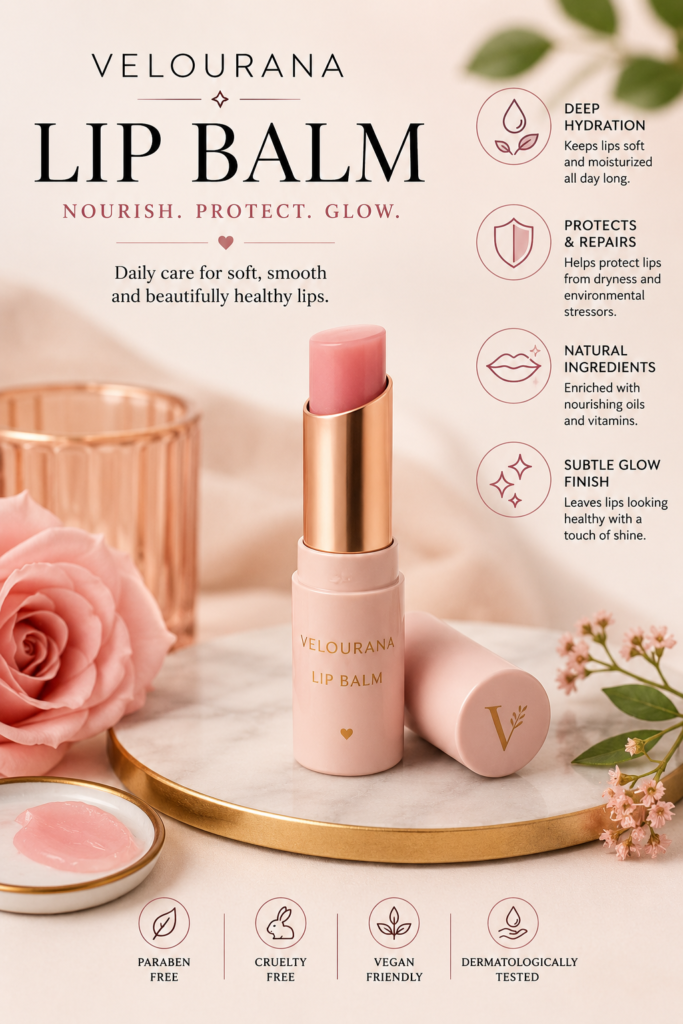
CATEGORY: Lip Balm
Lip balm is one of the simplest skincare products most people own, yet very few people ever read the ingredient list beyond recognising familiar words like “shea butter” or “beeswax.” In reality, every ingredient inside a lip balm serves a specific purpose. Some create a protective barrier, others soften rough skin, some attract moisture, while others help stabilise the formula or protect it from spoiling.
Understanding these ingredients allows you to choose products based on their actual performance instead of marketing claims alone. Rather than selecting a lip balm simply because it promises “24-hour hydration” or “intensive repair,” you can identify the ingredients most likely to provide the benefits your lips genuinely need.
This knowledge is particularly valuable because lips differ significantly from the rest of the face. The skin covering the lips is thinner, contains very few oil glands, and loses moisture much faster than most other areas of the body. For that reason, the ingredients inside a lip balm often work together to replace functions that healthy skin normally performs naturally.
Once you understand the role of each ingredient group, comparing products becomes much easier, allowing you to build a lip care routine that truly supports healthy, comfortable lips throughout every season.
Occlusive Ingredients: Creating a Protective Barrier
The primary job of many lip balms is reducing water loss.
To achieve this, formulas often contain occlusive ingredients, which create a thin protective layer over the lips.
This barrier slows the evaporation of moisture from the skin.
Some of the most common occlusive ingredients include:
- Petrolatum
- Beeswax
- Lanolin
- Candelilla wax
- Carnauba wax
- Microcrystalline wax
These ingredients do not necessarily add water to the lips.
Instead, they help preserve the moisture already present by reducing transepidermal water loss.
For people experiencing frequent dryness, occlusive ingredients often form the foundation of effective lip care.
Emollients: Making Lips Feel Softer
Emollients improve the texture and flexibility of the skin.
They help fill tiny gaps between skin cells, making the lips feel smoother and more comfortable.
Common emollients include:
- Shea butter
- Cocoa butter
- Mango butter
- Jojoba oil
- Sweet almond oil
- Avocado oil
- Squalane
- Sunflower seed oil
These ingredients contribute to the luxurious texture found in many premium lip balms.
Although they provide nourishment, they often work best when combined with protective occlusive ingredients that help keep moisture from escaping.
Humectants: Helping Attract Moisture
Humectants perform a different role.
Instead of sealing moisture inside, they attract water toward the outer layers of the skin.
Frequently used humectants include:
- Glycerin
- Hyaluronic acid
- Panthenol
- Sorbitol
These ingredients help improve hydration when environmental conditions allow sufficient moisture to be available.
Because humectants attract water, many modern lip balms combine them with occlusive ingredients that help prevent that moisture from evaporating again.
Plant Oils: Natural Nourishment
Plant oils have become increasingly popular in modern lip care.
Each oil offers slightly different characteristics depending upon its fatty acid composition.
Popular examples include:
- Argan oil
- Coconut oil
- Olive oil
- Rosehip oil
- Grapeseed oil
- Castor oil
- Macadamia oil
These oils often improve spreadability while helping soften dry skin.
Many also contain naturally occurring antioxidants and vitamin E, which support overall skin care.
Their lightweight textures make them especially pleasant for daytime use.
Butters: Rich Comfort for Dry Lips
Natural butters provide thicker, richer textures than many oils.
They are particularly popular in lip balms designed for intensive nourishment.
Common examples include:
- Shea butter
- Cocoa butter
- Mango butter
These ingredients melt gradually upon contact with body temperature, producing a comforting protective layer.
People experiencing winter dryness often appreciate butter-rich formulas because they remain on the lips longer than thinner products.
Antioxidants: Supporting Skin Protection
Many lip balms now include antioxidants.
These ingredients help protect formulations from oxidation while also supporting the skin against environmental stress.
Frequently used antioxidants include:
- Vitamin E (Tocopherol)
- Vitamin C derivatives
- Green tea extract
- Coenzyme Q10
- Botanical extracts
Although antioxidants do not replace sunscreen, they often complement broader lip care routines by supporting healthy-looking skin over time.
SPF Filters: Defending Against UV Exposure
Sun protection remains one of the most overlooked aspects of lip care.
Modern SPF lip balms may contain mineral filters such as zinc oxide or titanium dioxide, or carefully selected organic UV filters designed for cosmetic use.
Broad-spectrum SPF products help reduce ultraviolet exposure during outdoor activities including:
- Hiking
- Skiing
- Beach holidays
- Cycling
- Gardening
Because lips receive direct sunlight throughout the year, incorporating SPF into your daytime routine can become an important preventive measure.
Ingredients Some People Prefer to Avoid
Not every ingredient suits every individual.
Some people with sensitive lips choose to avoid heavily fragranced products or formulas containing strong flavouring agents.
Others may prefer products without certain essential oils if they notice irritation.
This does not mean these ingredients are harmful for everyone.
Instead, it highlights the importance of recognising your own skin’s preferences.
If your lips consistently become uncomfortable after using a particular product, switching to a simpler formula may be worthwhile.
Why Ingredient Combinations Matter
No single ingredient creates an excellent lip balm.
The most effective products combine multiple ingredient categories.
For example:
Occlusive ingredients reduce moisture loss.
Humectants help attract moisture.
Emollients soften rough skin.
Plant oils improve nourishment.
Antioxidants support skin care.
SPF ingredients protect against ultraviolet exposure.
Together, these components create balanced formulas capable of addressing several lip care needs simultaneously.
A carefully designed ingredient combination usually performs better than relying upon one “hero ingredient” alone.
Reading Ingredient Lists More Confidently
Ingredient lists can initially appear intimidating.
However, recognising a few key ingredients quickly makes comparison easier.
Rather than focusing on advertising slogans, consider whether a product contains:
- Protective barrier ingredients
- Moisturising emollients
- Hydrating humectants
- Nourishing oils or butters
- SPF if daytime protection is needed
This practical approach allows you to judge products by formulation rather than marketing language.
Over time, you may discover certain ingredients consistently work particularly well for your own lips.
Final Thoughts
Every ingredient in a well-formulated lip balm plays a specific role, whether protecting delicate skin, improving softness, attracting moisture, or supporting long-term lip health. Understanding the differences between occlusives, emollients, humectants, botanical oils, butters, antioxidants, and SPF ingredients allows you to choose products based on their actual function rather than attractive packaging or promotional claims. Small differences in formulation can significantly influence how comfortable and effective a lip balm feels during everyday use.
The best lip balm is rarely defined by one miraculous ingredient. Instead, it is the result of a balanced formula that matches your individual needs, climate, and daily routine. By learning how common lip balm ingredients work together, you become better equipped to select products that keep your lips soft, protected, and healthy throughout every season of the year.
The End
Velourana
 Discover More From Our Family of Websites
 ZodiacBearing (Astrology, Tarot, Numerology, Angel Numbers & Spiritual Guidance)
 Velourana (Beauty, Makeup, Hair Care, Skincare & Beauty Tips)
 HavenBearing (Home, Living, Organization, Décor & Everyday Inspiration)
 PawBearing (Pet Care, Dog Breeds, Animal Health, Training & Pet Products)
 PsyCatherine (Notes From the Journal of a Psychologist on Real Life)

