
CATEGORY: Light Skin Makeup
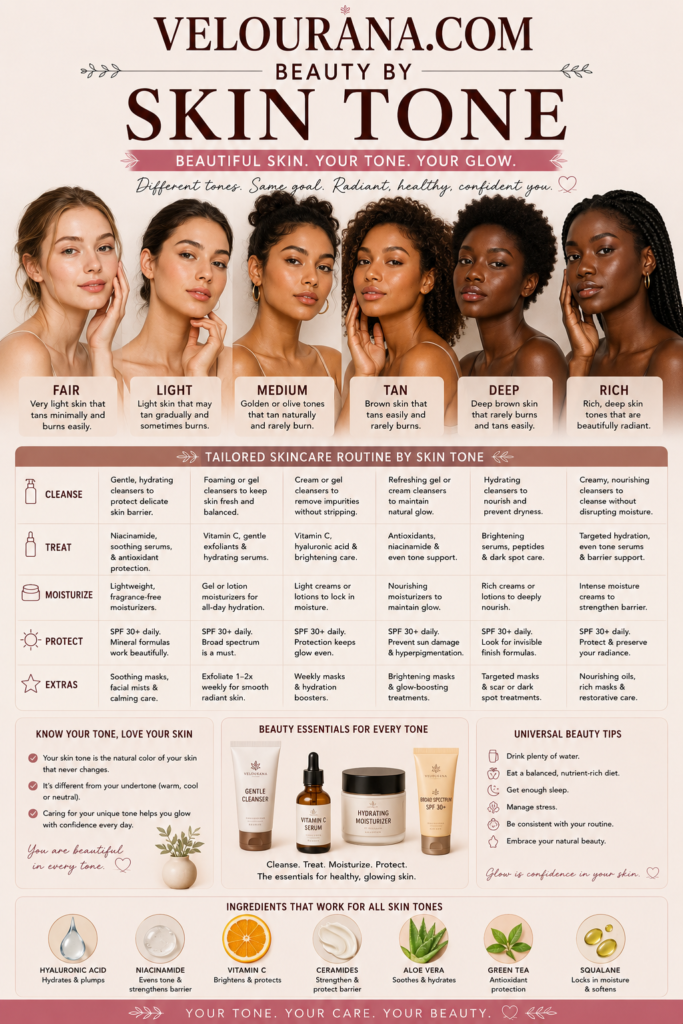
Makeup on light skin can move effortlessly between softness and drama, but the most convincing results begin with an understanding of proportion. Because the complexion provides a relatively bright background, pigment can become visible quickly. A small amount of blush may transform the face, a moderately deep eyeshadow can create substantial definition, and a rich lipstick can become the dominant element of an entire look. This sensitivity to color is not a limitation. It is one of the qualities that makes light skin remarkably versatile.
The mistake is to assume that light skin requires universally pale makeup. Soft colors can certainly create beautiful harmony, but deeper shades can provide structure, contrast, and sophistication. Likewise, strong colors do not automatically overwhelm a light complexion. Their success depends on placement, saturation, undertone, and the relationship among the different areas of the face.
There is also no single light-skin makeup palette. Light complexions can be cool, warm, neutral, peach, golden, rosy, muted, or olive. Hair, eyes, brows, freckles, natural lip color, and facial contrast influence the result just as strongly as skin depth. Two people wearing the same foundation depth may require very different approaches to blush, bronzer, eye makeup, and lip color.
The most useful approach is therefore not to search for rules about which makeup light skin is permitted to wear. It is to understand how pigment behaves against a lighter complexion and use that visibility deliberately.
Beginning With a Complexion That Still Looks Like Skin
The foundation of successful makeup is not necessarily foundation itself. It is the decision about how much of the natural complexion should remain visible.
Light skin frequently displays subtle variations clearly. There may be redness through the cheeks, faint veins around the eyes, freckles, areas of warmth, small changes in pigmentation, or a slightly different color between the face and neck. Covering every one of these variations can create a perfectly uniform surface, but uniformity is not always necessary for polish.
A sheer base can soften differences while preserving freckles and natural tonal movement. Medium coverage can create greater consistency without completely removing the skin's character. Full coverage can provide a deliberately perfected canvas when that is the desired aesthetic.
The important factor is accuracy. Foundation that is too dark can create an artificial boundary around the face. Excessive yellow may turn the complexion golden or orange, while too much pink can amplify visible redness. Because the rest of the makeup is viewed against this base, an inaccurate foundation changes the behavior of every color applied afterward.
Concealer can provide precision where foundation does not need to. Redness around the nose, a blemish, pigmentation, or under-eye darkness can be addressed locally rather than increasing coverage across the entire face. This keeps the complexion dimensional and prevents unnecessary layers.
Powder deserves similar restraint. Light skin can reveal tinted powders more clearly than expected, particularly when a supposedly translucent formula contains yellow, peach, or beige pigment. Strategic setting often preserves the original foundation color and natural finish more effectively than covering the entire face with a heavy layer.
Once the complexion has been balanced, the purpose of the remaining makeup is not to correct its lightness. It is to introduce dimension, structure, color, and emphasis.
Restoring Dimension After the Base
Foundation and concealer inevitably reduce some of the natural differences in color that give the face structure. Blush, bronzer, and contour can restore that dimension, but each performs a different role.
Bronzer introduces warmth. On light skin, the difference between believable warmth and an obvious stripe can be relatively small because deeper pigment becomes visible quickly. A bronzer does not need to be extremely pale, but its depth should allow it to be blended gradually into the complexion.
Undertone matters as much as depth. A strongly orange bronzer can look disconnected from cool or muted skin. An excessively red bronzer may resemble sunburn. Very gray-brown bronzer can lose the warmth that distinguishes bronzing from contouring.
The most natural effect usually comes from building color rather than attempting to achieve full intensity in one application. This allows the complexion to remain visible through the product and creates a transition rather than a boundary.
Contour has a different purpose. It represents shadow rather than sunlight. A contour shade that is too warm can look like misplaced bronzer, while one that is excessively gray can appear artificial. Light skin often benefits from subtle shadow because the natural face already contains relatively gentle transitions between illuminated and recessed areas.
The objective is not to redraw the face. It is to reinforce structure where desired.
Blush introduces another form of dimension by returning living color to the complexion. It can make a heavily perfected base appear immediately more natural because real skin is rarely one uniform beige tone.
The relationship among these products is more important than the intensity of any one of them. When bronzer, contour, and blush compete equally for attention, the complexion can become fragmented. When each has a clear purpose, even noticeable color can remain cohesive.
Blush as the Emotional Center of Light-Skin Makeup
Few products can change the appearance of light skin as quickly as blush.
A small amount can make the complexion appear fresher, warmer, cooler, softer, or more sculpted depending on its color and placement. This visibility gives blush unusual expressive power.
The traditional assumption that light skin requires only pale pink is unnecessarily restrictive. Rose, peach, coral, mauve, berry, muted red, apricot, and terracotta can all work beautifully when their intensity is controlled.
Undertone influences how naturally these colors integrate. Cool rosy complexions often create easy harmony with rose, mauve, cool pink, and certain berry shades. Warm light skin may respond naturally to peach, apricot, coral, and warm rose. Neutral skin can move comfortably between many of these families, while light olive complexions may find muted rose, earthy peach, mauve, or softened berry especially sophisticated.
Harmony is only one possibility. A warm blush against cooler skin can create deliberate warmth. A cool rose against golden skin can produce fresh contrast. Makeup becomes more interesting when undertone knowledge is used to predict an effect rather than prohibit it.
Placement changes the character of the blush just as dramatically as color.
Blush concentrated on the apples can create softness and fullness. Color carried outward toward the temples can produce a more lifted impression. A diffused application across the cheeks can resemble a natural flush, while stronger placement high on the cheekbones becomes more sculptural.
Light skin makes the edges of blush particularly important. A beautiful color can look disconnected when its boundary remains visible. Diffusion allows the shade to appear as though it emerges from the complexion rather than sitting above it.
Pigmentation should therefore be approached gradually. The ability to add another layer is far more useful than attempting to remove excessive color after one heavy application.
Eye Makeup and the Power of Contrast
Eye makeup on light skin does not need to remain pale to look balanced. In fact, medium and deep shades can provide some of the most elegant definition because the complexion gives them a clear background.
The key is understanding where the contrast should be concentrated.
Taupe, beige-brown, soft gray, muted bronze, dusty rose, and similar medium shades can create understated structure. They deepen the eye area without becoming the primary feature of the face.
Chocolate, charcoal, plum, navy, forest green, espresso, burgundy, and deeper metallics create stronger definition. Applied close to the lashes or concentrated through the outer eye, they can add intensity while allowing lighter areas of the eyelid to remain visible.
Black introduces the strongest conventional contrast. It can look graphic and sophisticated, particularly when dark lashes, brows, or hair already provide similar depth elsewhere in the appearance. On lower-contrast coloring, black becomes more dramatic precisely because it does not repeat the person's natural contrast.
This is not a reason to avoid it. It simply changes the character of the makeup.
Brown liner can provide softer structure. Charcoal creates cool depth. Deep plum can define the eyes while retaining visible color. Navy can behave almost like a neutral while subtly changing the appearance of the whites of the eyes and surrounding complexion.
Eyeshadow undertone offers another layer of possibility. Warm bronze and copper can emphasize blue or gray eyes through contrast. Plum and burgundy can draw attention to green. Olive, bronze, and gold can emphasize warmth in hazel eyes. Brown eyes can interact with an exceptionally broad range of colors because their natural depth provides a strong anchor.
The most sophisticated eye makeup often combines contrast levels rather than using one intensity everywhere. A softer transition around a deeper lash line creates dimension. A concentrated dark outer corner can coexist with a lighter lid. A bold liner can be balanced by restrained shadow.
Light skin provides enough contrast for these distinctions to remain clearly visible.
Brows and Lashes as the Framework of the Face
Brows have a disproportionate influence on light-skin makeup because they create structure in an area where even moderate depth can become visually prominent.
The objective is rarely to make the brows as dark as possible. It is to create enough definition to frame the eyes while preserving the natural relationship with the hair and facial features.
Brows that are filled with a shade significantly darker or warmer than their natural color can dominate the face. This is particularly noticeable when the surrounding coloring is soft.
Texture can provide definition without excessive darkness. Fine strokes, controlled shading, and visible natural hairs create depth while avoiding a solid block of pigment.
Hair color provides useful context, although brows do not need to match it exactly. Blonde hair can work with brows that are slightly deeper. Brunette hair may naturally support stronger brow definition. Red hair often interacts well with warm brown, auburn, or neutral-brown tones depending on its particular color. Gray or cool hair can make overly warm brow products especially noticeable.
Lashes perform a similar framing function.
Black mascara creates clear definition and can be dramatic even without eyeliner. Brown or brown-black can create a softer transition on lower-contrast coloring. The choice depends on the desired level of structure rather than on a rule that light skin requires one particular mascara color.
When brows and lashes provide enough definition, the rest of the eye makeup can remain surprisingly minimal while the face still looks finished.
Lip Color Can Change the Entire Balance
Lipstick is one of the easiest ways to demonstrate how versatile light skin can be.
A soft nude can keep attention on the eyes. Rose can create balanced everyday color. Peach introduces warmth. Berry provides depth. Red creates immediate focus. Burgundy or plum can transform the entire makeup into something more dramatic.
Because lip color occupies a relatively concentrated area, it can carry considerably more saturation than might seem possible when looking only at skin depth.
The challenge with nude lipstick is often not excessive darkness but insufficient distinction from the complexion. A very pale beige lip can remove natural lip definition and create a washed-out effect, particularly when the foundation has already reduced facial color.
A successful nude does not necessarily imitate the skin. It often relates more closely to the natural lip pigmentation while refining its undertone. Rosy beige, peach-brown, muted mauve, caramel-rose, or soft pink-brown can provide enough distinction to keep the mouth visible.
Red creates the opposite effect. It intentionally separates the lips from the complexion.
Cool blue-red can create crisp contrast. Tomato and orange-red introduce warmth. Brick red adds earthiness. Muted red creates sophistication without maximum saturation.
Light skin does not require red to be diluted. A saturated red can look exceptionally balanced when the rest of the makeup allows it to remain the focal point.
Deep lipstick works by the same principle. Burgundy, wine, plum, deep berry, and brown-red create substantial contrast, but they can remain elegant when the complexion is clean and the other features are intentionally balanced.
The question is not whether the lipstick is too dark for light skin.
The question is whether the overall makeup has been composed around that depth.
Highlight and Luminosity Without Turning the Skin Metallic
Light skin already reflects a considerable amount of visible light, particularly when the complexion is hydrated or the base has a luminous finish. Highlighter can enhance this quality, but the effect is most convincing when it appears integrated with the skin rather than deposited as an obvious contrasting stripe.
The base color of a highlighter matters.
A highlighter significantly deeper than the complexion may create a shadow when viewed straight on, even if it reflects beautifully under direct light. A strongly colored gold can appear like eyeshadow on very light areas of the face. An icy product can look disconnected from warm skin if its base is too white or blue.
Champagne, pearl, soft gold, pale rose, neutral beige, and other reflective tones can all work depending on undertone and desired effect.
Texture is equally important.
Very fine reflection can resemble naturally luminous skin. Larger particles create a more obvious cosmetic effect. Neither is inherently better; they simply belong to different makeup aesthetics.
Placement determines whether luminosity supports facial structure. Strategic reflection on high points can create dimension after foundation and powder have reduced natural shine.
When the entire face becomes equally reflective, that structure disappears.
Light-skin makeup often benefits from contrast not only between colors but also between finishes. Matte, satin, and luminous areas can coexist to create depth even within a relatively restrained color palette.
Creating Harmony Without Making Everything Match
A cohesive makeup look does not require the eyes, cheeks, and lips to use the same color.
Harmony can come from shared temperature, similar saturation, repeated undertones, or balanced levels of contrast.
A warm composition might combine bronze eyes, peach-rose cheeks, and a muted coral lip without any two shades being identical. A cooler composition could bring together taupe-plum eyes, rose blush, and berry lips. A neutral look might use soft brown eyes, muted pink cheeks, and a rose-beige lip.
Mixed-temperature makeup can be equally successful.
Cool eyes with a warm cheek can create tension and interest. A neutral complexion can act as a bridge between contrasting colors. A strong cool red lip can become more dramatic when the eye makeup contains subtle warmth.
What usually creates imbalance is not difference itself but competition.
If the eyes are intensely smoky, the blush extremely saturated, the bronzer strong, and the lips equally deep, every feature asks for attention simultaneously. This can be intentional in theatrical or highly glamorous makeup, but everyday balance usually benefits from some hierarchy.
One feature can lead while the others support it.
A bold lip can sit above softly defined eyes. Dramatic eyes can coexist with a quieter lip. Strong blush can become the central color when the eyes and mouth remain comparatively restrained.
This hierarchy allows light skin to carry surprisingly strong makeup without the result becoming visually crowded.
Daylight, Evening Light, and the Changing Face of Makeup
Makeup does not look identical under every lighting condition.
Natural daylight reveals color differences and blending with unusual clarity. Blush edges, foundation undertones, bronzer saturation, and mismatched concealer become easier to see.
Evening and artificial lighting can absorb some subtle color, making stronger definition appear more balanced than it did in daylight.
This is one reason evening makeup often tolerates greater depth and saturation. Deeper eyeshadow, stronger liner, richer lipstick, and more sculpted complexion products can remain visible under lower illumination.
Photography introduces another environment. Flash, exposure, white balance, and digital processing can change the apparent brightness of the complexion and intensity of makeup.
The most useful approach is to consider where the makeup will actually be seen.
A daytime look intended for natural light benefits from seamless blending and carefully controlled pigment. Evening makeup can often support stronger contrast. Makeup for photography may require testing because products that appear subtle in person can behave differently through a camera.
Light skin remains the same complexion, but the visual environment around it changes.
Letting Light Skin Remain Light
One of the most persistent misconceptions in complexion makeup is that light skin needs to be warmed until it resembles a deeper or more tanned complexion.
Bronzer can be beautiful. Warm blush can be beautiful. Golden highlighter can be beautiful. None of them needs to disguise the actual skin depth.
When foundation is deliberately too dark and bronzer is extended broadly across the face, the complexion can lose its natural relationship with the neck, ears, and body. The result may appear less dimensional because warmth has become uniform rather than strategically placed.
Light skin can be the brightest element of the makeup and still look healthy, sophisticated, and complete.
Warmth is most effective when it remains distinguishable from the base complexion.
Blush is most expressive when the skin beneath it remains visible.
Contour works because it contrasts with lighter areas.
Highlighter works because not everything is equally bright.
Makeup depends on these relationships.
Preserving the natural depth of the complexion gives every other product more room to perform its intended role.
A Complete Light-Skin Makeup Look Is a Composition
The strongest light-skin makeup is not defined by one perfect blush, one foundation shade, or one supposedly ideal lipstick. It is created by the relationship among all of them.
The base establishes an accurate complexion without erasing unnecessary natural character. Concealer refines specific areas. Bronzer adds controlled warmth rather than changing the person's skin depth. Blush returns life and can establish the emotional tone of the look. Brows and lashes create structure around the eyes. Shadow and liner determine the level of contrast. Lip color provides either balance or a deliberate focal point. Highlight manipulates light rather than simply adding shine.
Each element affects the perception of the others.
This is why makeup becomes more successful when it is approached as composition rather than correction.
Light skin does not present a problem that makeup must solve. Its brightness simply makes color relationships highly visible, which rewards thoughtful choices.
Soft makeup can preserve delicate contrast and create understated refinement.
Rich makeup can use berry, chocolate, plum, bronze, navy, charcoal, or red to create depth.
Bold makeup can introduce saturated color and graphic structure.
Minimal makeup can rely on a few carefully placed pigments and allow the natural complexion to carry much of the visual character.
All of these approaches can belong naturally to light skin.
The defining principle is not restraint for its own sake. It is control.
When depth, undertone, saturation, placement, and finish are deliberately balanced, light skin can support an enormous range of makeup without losing its identity beneath it.
THE END VELOURANA
 Discover More From Our Family of Websites
 ZodiacBearing (Astrology, Tarot, Numerology, Angel Numbers & Spiritual Guidance)
 Velourana (Beauty, Makeup, Hair Care, Skincare & Beauty Tips)
 HavenBearing (Home, Living, Organization, Décor & Everyday Inspiration)
 PawBearing (Pet Care, Dog Breeds, Animal Health, Training & Pet Products)
 PsyCatherine (Notes From the Journal of a Psychologist on Real Life)

