
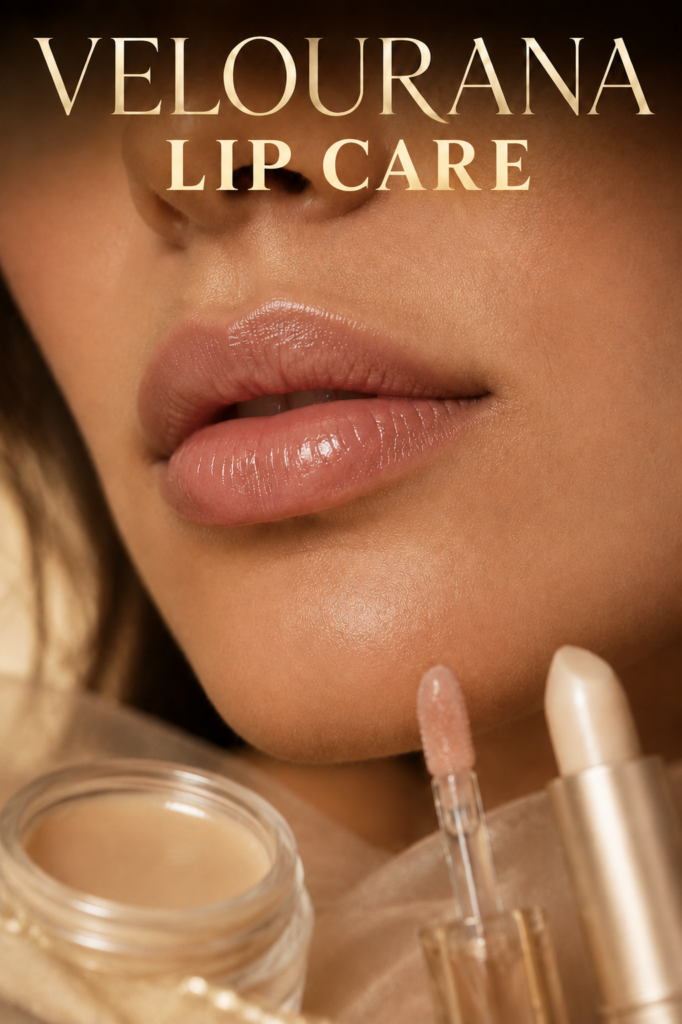
CATEGORY: Intensive Lip Treatments
An intensive lip product occupies a distinctive place between an everyday cosmetic and a barrier-support treatment. It is richer than the balm carried casually in a handbag, more persistent than a lip oil, and generally calmer than the stimulating products designed to plump, peel, or resurface. Its purpose is to remain in contact with the lips long enough to soften roughness, limit moisture loss, and protect tender areas from the constant movement and exposure that make lip recovery difficult.
This category includes overnight masks, dense ointments, restorative balms, cream treatments, and concentrated salves. Their names differ, and their packaging may range from clinical tubes to luxurious jars, but their performance depends on similar formulation principles. An effective intensive product must provide enough occlusion to slow evaporation, enough emollience to improve flexibility, and sufficient tolerance for frequent or prolonged use. Decorative elegance can improve the experience, but it cannot compensate for a formula that stings, disappears quickly, or encourages further irritation.
The best choice is not automatically the most expensive product or the one with the longest ingredient list. Severely dry lips often need fewer variables, not more. A plain ointment can be more useful than a sophisticated mask if the latter relies heavily on fragrance, flavor, or botanical extracts that compromised skin cannot tolerate. At the same time, well-formulated masks can combine humectants, barrier lipids, antioxidants, and protective agents in a texture that feels more refined than a basic occlusive.
Understanding these distinctions helps separate genuine intensive care from products that merely look rich. It also clarifies how to use concentrated treatments effectively, how to combine them with daytime protection, and how to judge whether the lips are improving or whether persistent symptoms point to a problem beyond cosmetic dryness.
The Difference Between a Mask, an Ointment, and a Restorative Balm
The terms used for lip treatments are not governed by a single universal standard. A “mask” may be a thick leave-on balm, a gel patch, a glossy sleeping product, or a cream intended for short contact. An “ointment” usually suggests a dense, highly occlusive, low-water formula. A “restorative balm” may sit somewhere between an everyday stick and a medical-style ointment. Because naming can be influenced by branding, the formula and directions matter more than the title on the package.
Overnight lip masks are typically designed to create a comfortable, cushion-like layer. They may contain butters, waxes, oils, silicones, humectants, and conditioning agents. Their sensory qualities are important because they are expected to remain on the lips for hours. Some have a plush, glossy finish; others melt into a thinner film. A good mask should still be noticeable in the morning without feeling excessively mobile or spreading far beyond the lip area.
Ointments tend to prioritize function. Petrolatum-based products are among the most occlusive and are often suitable when the lips are cracked or painfully tight. Their semi-solid consistency forms a durable film, although they may appear shinier or feel heavier than a conventional balm. They can be used alone or as the final layer over a compatible hydrating product.
Restorative balms often combine portability with richer care. A tube or stick can be applied hygienically throughout the day without touching the product directly. Some contain ceramides, panthenol, glycerin, squalane, or soothing agents. Yet a stick format does not automatically make a product less intensive, and a jar does not automatically make it stronger. The amount applied, the persistence of the film, and the balance of ingredients determine how protective the treatment actually feels.
Short-contact masks and lip patches provide a different experience. Hydrogel patches may temporarily hydrate and cool the surface, but their effects can be brief unless followed by a sealing balm. Peel-off lip products are generally not ideal for damaged lips because removal can create friction. The leave-on format is usually the most practical for genuine barrier support.
Reading an Intensive Lip Formula by Function
Ingredient lists can look complicated, but they become more understandable when read according to function. Occlusives form a film that reduces water loss. Emollients smooth and soften. Humectants attract water. Additional ingredients may support texture, preservation, flavor, appearance, antioxidant protection, or marketing identity.
Petrolatum is a benchmark occlusive. It sits on the surface and creates a highly effective barrier against evaporation. Mineral oil, dimethicone, waxes, and lanolin-related ingredients can also contribute to occlusion. Plant butters such as shea or cocoa butter offer both richness and emollience, although their protective performance varies with the complete formulation.
Emollient oils make the lips feel flexible and reduce the rough sensation caused by dry surface cells. Squalane, castor oil, jojoba oil, sunflower oil, and many other lip-compatible oils may appear in treatments. Each has a different weight, shine, and stability. Castor oil is common in lip cosmetics because of its thick, glossy character, while squalane can feel lighter and silkier. The presence of a fashionable oil is less important than whether the total blend remains on the lips and feels comfortable.
Humectants such as glycerin and hyaluronic acid are associated with hydration. They can be useful, but an intensive product should not rely on them alone. Water attracted to the upper surface may evaporate in dry conditions if there is no adequate seal. This is why an ointment layered over a humectant-containing balm can work well: the first product contributes hydration, while the second helps retain it.
Ceramides, cholesterol, and fatty acids are frequently used in barrier-focused skincare. In lip products, they may support a more skin-compatible conditioning effect. Panthenol can help improve the sensation of dryness and support hydration. Bisabolol, allantoin, and certain oat-derived ingredients may be included for soothing purposes, although individual sensitivity remains possible.
Antioxidants such as vitamin E can help protect the formula’s oils from oxidation and may contribute conditioning benefits. They should not be mistaken for guaranteed healing agents. Likewise, peptides, collagen-related claims, and luxury botanical complexes may add appeal but are not substitutes for a durable occlusive base when the central problem is moisture loss.
The Sensory Appeal of Lip Masks and Its Hidden Risks
Intensive lip care is often designed as a pleasurable ritual. Soft textures, fruit aromas, sweet flavors, and attractive colors make a mask feel indulgent. Enjoyment can improve consistency, which matters because repeated application is central to recovery. However, the same sensory ingredients that create pleasure can become disadvantages when the lips are irritated.
Fragrance and flavoring are not inherently harmful to everyone. Many users tolerate them without difficulty. The issue is that damaged lips are more permeable and reactive, and repeated exposure may lead to stinging or contact irritation. Cinnamon, peppermint, menthol, citrus oils, camphor, and strongly aromatic extracts are especially likely to feel intense on cracks. Even if the initial cooling or warming sensation seems refreshing, persistent tingling is not evidence that the product is repairing the barrier.
Sweet-tasting products may encourage licking. The habit can be nearly unconscious: the wearer repeatedly passes the tongue over the lips, removing the product and wetting the surface with saliva. Evaporation then leaves the lips drier, and digestive enzymes can irritate the skin. A neutral-tasting treatment may be less entertaining but more effective during a severe episode.
Color can create a healthy-looking tint, yet pigments add another set of potential variables. A tinted restorative balm may be useful once the lips are stable, but a plain treatment is easier to evaluate when they are inflamed. If symptoms improve with a basic fragrance-free ointment and return with a flavored or tinted mask, the contrast may reveal a tolerance issue.
The product’s physical behavior matters as much as its ingredients. A mask that migrates beyond the lip border may contribute to clogged pores or irritation around the mouth. One that feels extremely sticky may increase friction against hair or bedding. A formula that is too slippery may disappear during sleep. Sensory sophistication should support the treatment’s purpose rather than distract from it.
Layering Hydration and Occlusion Without Overcomplicating Care
Layering can make intensive care more effective, but it does not require a long routine. The essential logic is simple: introduce a small amount of water or a water-based conditioning product, then cover it with a more occlusive layer. This approach can be especially helpful when the lips feel dehydrated beneath a hard, dry surface.
After gently cleansing the mouth area, a small amount of compatible hydrating balm or lip cream can be applied. The formula should not sting. A dense ointment can then be pressed over it to reduce evaporation. If the first product already contains a strong occlusive base, a second layer may be unnecessary. More products do not automatically create more hydration.
Directly wetting the lips and immediately sealing them can also work, but prolonged soaking is not useful. Repeated cycles of wetting and drying can worsen chapping. The objective is to trap a modest amount of surface moisture beneath a protective film, not to leave the lips exposed while water evaporates.
Layering becomes counterproductive when several active products are combined. An exfoliating acid, retinoid, plumper, fragranced mask, and occlusive ointment may create a sealed environment over ingredients that are already irritating. Occlusion can increase the contact and sometimes the penetration of substances underneath it. For compromised lips, only well-tolerated, non-stimulating products should be sealed beneath a heavy layer.
The surrounding facial routine deserves consideration as well. Retinoids, benzoyl peroxide, exfoliating acids, and strong cleansers applied near the mouth can migrate onto the lip border. Before using them, a protective ointment may be placed around the lips as a buffer, provided this is compatible with the facial treatment instructions. Careful application prevents an intensive lip routine from being undermined by products used elsewhere on the face.
Overnight Treatment as a Controlled Recovery Period
Nighttime treatment is popular because it creates several uninterrupted hours of contact. There is less eating, drinking, speaking, and exposure to wind or sunlight. This does not mean the lips biologically repair themselves only at night; it means the treatment is less likely to be disturbed.
Preparation should be gentle. Any lipstick or sunscreen residue can be dissolved with a mild cleanser or makeup remover. Rubbing should be avoided, particularly around cracks. Once the lips are clean, treatment can be applied across the entire surface and slightly over the border if that area is dry. A substantial, even coating is preferable to a mound of product concentrated in the center.
People who breathe through the mouth during sleep may experience persistent morning dryness because airflow increases evaporation. An ointment can reduce the effect on the lip surface, but it does not address the reason for mouth breathing. Nasal congestion, sleep-related breathing problems, medication effects, and environmental dryness may require separate attention. Ongoing mouth breathing accompanied by snoring, gasping, daytime sleepiness, or other concerning symptoms should be discussed with a healthcare professional.
Bedroom humidity can influence comfort. Heating and air conditioning often create dry air, particularly during winter or hot summers. A properly maintained humidifier may help, but it is not a replacement for treatment and should be cleaned carefully. An unclean humidifier can release microorganisms or mineral particles into the air.
The next morning, the remaining product can be gently blotted if necessary. Softened flakes should not be pulled away simply because they are more visible. If the lips feel comfortable and intact, a soft damp cloth may remove material that is already detached, but active peeling should be avoided. Daytime balm and sun protection should follow so that overnight progress is not lost.
Treating Cracks Without Turning Them Into Wounds
Cracks are among the most uncomfortable features of severely dry lips. They may open when smiling, eating, or yawning, and their edges can repeatedly separate. A dense ointment reduces friction and helps keep the area flexible, making reopening less likely. Frequent reapplication is usually more useful than repeatedly cleansing the crack.
Picking creates a major obstacle. A rough edge can be difficult to ignore, but pulling it away may enlarge the fissure and produce bleeding. Covering the area with ointment smooths the edge and reduces the tactile trigger. Keeping fingernails away from the lips is part of the treatment, not merely a cosmetic preference.
Bleeding that results from a minor dry crack may stop with gentle pressure, after which a bland protective ointment can be applied. Repeated or unexplained bleeding, significant pain, signs of infection, or a wound that does not heal should be professionally evaluated. Cosmetic masks are not appropriate for deep injuries or infected tissue.
Cracks at the corners of the mouth can have different causes from central lip chapping. Saliva often collects there, and the area may become inflamed, macerated, or infected. Dental appliances, changes in facial structure, nutritional issues, and various health conditions can contribute. A barrier ointment may protect the skin temporarily, but recurring corner cracks should be assessed rather than indefinitely covered with flavored lip masks.
Intensive Treatment During Cold, Heat, Travel, and Illness
The lips face different stresses depending on the environment. Cold weather combines low humidity with wind and rapid surface cooling. A dense balm applied before going outside forms a physical barrier, while a scarf can reduce direct wind exposure. Application should occur before the lips begin to sting, because prevention requires less effort than recovery.
Hot climates introduce strong sunlight, heat, salt water, chlorine, and air conditioning. A rich nighttime treatment may be combined with a broad-spectrum SPF lip balm during the day. After swimming, the lips should be rinsed if necessary and protected again. A glossy product without stated sun protection should not be treated as sunscreen.
Aircraft cabins are notably dry, and long flights encourage irregular drinking, salty food, and extended exposure to conditioned air. Applying an ointment before boarding and reapplying after meals can maintain comfort. Lip products should not be shared, and hands should be cleaned before dipping into a jar.
Illness can also produce severe dryness. Fever, dehydration, nasal congestion, vomiting, and mouth breathing all affect the lips. Some medications contribute as well. Barrier ointment can reduce discomfort, but hydration and appropriate medical management remain important. If the person cannot maintain fluids, has severe symptoms, or shows signs of dehydration, lip treatment is a minor concern compared with clinical care.
Dental procedures can stretch the mouth and expose the lips to friction, instruments, and prolonged airflow. Applying a bland ointment beforehand may improve comfort if the dental professional agrees. Treatment can be reapplied afterward, taking care around numb areas to avoid accidental injury.
The Limits of “Repair” Claims
Cosmetic language often promises repair, renewal, rescue, transformation, or healing. These words can create unrealistic expectations. An intensive product may substantially improve softness and reduce moisture loss, but it cannot correct every cause of inflamed lips. If an allergy, infection, medication, inflammatory condition, or nutritional problem is present, occlusion alone will not resolve it.
True improvement should be judged through changes in comfort and resilience. The lips should sting less, remain flexible for longer, crack less readily, and require less constant reapplication as they recover. A mask that creates a glossy surface but leaves the lips equally painful underneath is offering camouflage rather than adequate relief.
Immediate plumping is also different from barrier improvement. Some products create temporary swelling through stimulation. This can make lines less visible, but it may worsen sensitive or fissured lips. Similarly, products that remove surface flakes dramatically may produce short-lived smoothness while increasing vulnerability.
Clinical-looking packaging does not prove medical effectiveness, just as luxurious packaging does not make a formula superficial. Claims should be interpreted alongside the ingredient list, directions, and personal response. A treatment that consistently causes burning, redness, or swelling should be discontinued regardless of its branding.
Hygiene, Packaging, and Safe Reapplication
Intensive products are reapplied frequently, so packaging affects hygiene. Tubes and sticks minimize direct contact with the bulk formula. Jars allow easy access to rich textures but require clean fingers or a clean applicator. Repeatedly dipping unwashed hands into a jar can introduce contamination, particularly when the product is shared.
Lip products should remain personal. Sharing can transfer microorganisms, including viruses associated with cold sores. A product used directly on an active cold sore should not be casually passed over unaffected lips later or shared with another person. Applicators should be cleaned or discarded according to the situation and product design.
Changes in smell, color, separation, or texture may signal that a product has deteriorated. The period-after-opening symbol and storage instructions provide guidance. Leaving a balm in a hot car can melt or destabilize it, while exposure to direct sunlight may affect delicate oils. A treatment does not become safer simply because it contains little water; proper storage still matters.
If an active cold sore is suspected, treatment should focus on appropriate antiviral guidance rather than exfoliation or shared cosmetic masks. A pharmacist or clinician can advise on suitable care, particularly for severe, frequent, or first-time outbreaks.
How Long an Intensive Treatment Should Be Used
There is no fixed recovery timetable. Mild environmental dryness may improve within a few days, while deeper chapping can require a longer period of protection. The important question is whether the overall direction is positive. Less pain, fewer new cracks, and longer-lasting comfort suggest that the routine is working.
A treatment may be used several times daily during recovery and retained as an overnight product after the lips improve. Some people use ointment every night indefinitely without difficulty. Others prefer to return to a lighter balm and reserve intensive care for winter, travel, illness, or episodes of irritation.
If there is no meaningful improvement after consistent, gentle care, repeatedly switching among masks may only prolong uncertainty. Persistent symptoms call for investigation of toothpaste, cosmetics, habits, medications, allergies, sun exposure, and medical conditions. A dermatologist may recommend patch testing when allergic contact cheilitis is suspected.
Treatment should be stopped and medical advice sought if it produces increasing swelling, blistering, severe burning, hives, or spreading irritation. Difficulty breathing or swelling of the tongue or throat is an emergency. No skincare product should be tested again at home after a serious reaction without professional guidance.
Building a More Resilient Lip-Care Routine
After recovery, the intensive treatment becomes part of prevention rather than constant rescue. A dependable daytime balm, SPF protection, and an overnight ointment during challenging periods may be sufficient. The lips do not need continuous exfoliation to remain smooth. Regular protection allows normal shedding to occur with less visible disruption.
Awareness of personal triggers is particularly valuable. One person may react to mint toothpaste, another to fragranced balms, another to cold wind or matte lipstick. Recognizing patterns makes the routine more precise. Instead of adding more products whenever dryness appears, the person can reduce exposure to the known trigger and return temporarily to a plain treatment.
The most successful intensive routine is therefore not defined by luxury, novelty, or complexity. It is defined by compatibility and consistency. A treatment should protect without provoking, soften without stripping, and remain comfortable enough to use whenever the barrier is vulnerable. When combined with gentle behavior and realistic expectations, a well-chosen mask or ointment can turn severe dryness from a recurring emergency into a manageable interruption.
Concentrated lip care works best when it respects the lips’ fragility. The surface does not need to be forced into smoothness; it needs time, protection, and freedom from repeated irritation. Intensive treatments provide that sheltered interval. Their value lies not in making the lips dependent on constant product, but in helping them regain the comfort and flexibility that ordinary maintenance can then preserve.
THE END VELOURANA
 Discover More From Our Family of Websites
 ZodiacBearing (Astrology, Tarot, Numerology, Angel Numbers & Spiritual Guidance)
 Velourana (Beauty, Makeup, Hair Care, Skincare & Beauty Tips)
 HavenBearing (Home, Living, Organization, Décor & Everyday Inspiration)
 PawBearing (Pet Care, Dog Breeds, Animal Health, Training & Pet Products)
 PsyCatherine (Notes From the Journal of a Psychologist on Real Life)

