
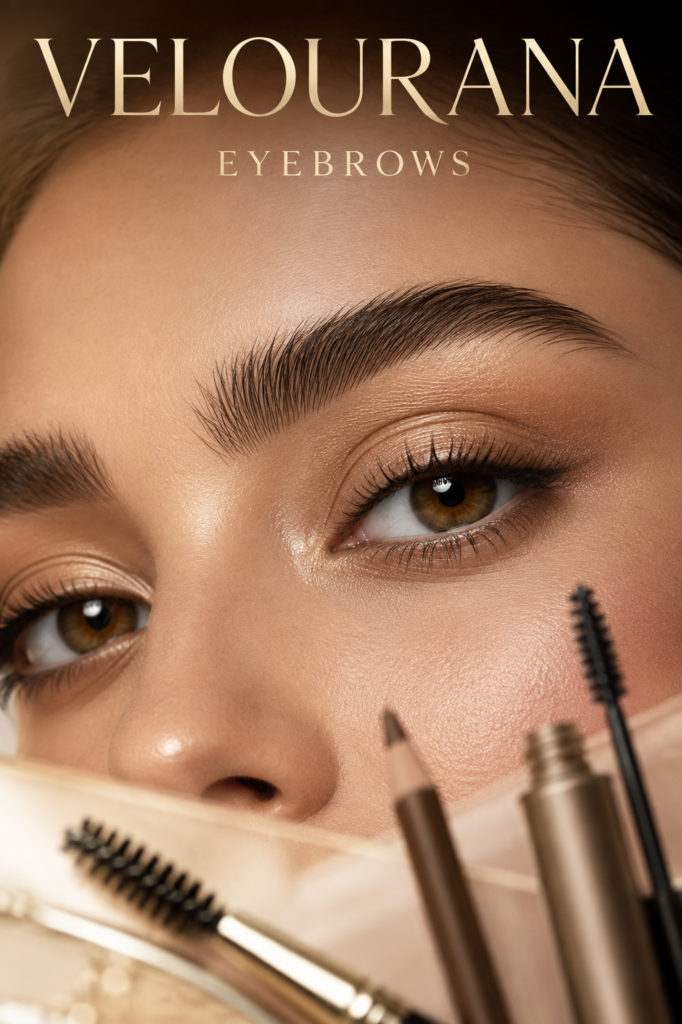
CATEGORY: Brow Waxes
The difference between an eyebrow that looks merely filled and one that appears deliberately styled often lies in the direction of its hairs. Color can increase apparent density, but direction determines structure. A brow with relatively few hairs can look surprisingly full when those hairs are lifted and distributed intelligently, while a naturally dense brow can appear smaller or less defined when its hairs overlap or grow downward. Brow wax addresses this structural dimension of brow makeup.
Although the product itself may look uncomplicated, successful wax styling requires an understanding of proportion, texture, hair behavior, and restraint. The objective is not simply to make brow hairs stick upward. A sophisticated result considers where each section of the eyebrow naturally travels, how the brow relates to the eye and surrounding bone structure, and how much product is necessary to maintain that arrangement without leaving an obvious coating.
This makes brow wax both practical and creative. It can tame a single unruly section, create a softly feathered brow, support a carefully defined arch, or produce the dramatic lifted appearance associated with laminated brows. The difference between these results comes largely from technique.
Begin With the Brow That Exists
Before changing the brow, it is useful to observe it.
Eyebrows rarely contain hairs that all grow in the same direction. The hairs nearest the nose often rise more vertically. Those through the body of the brow tend to angle outward. Around the arch, the direction can become increasingly horizontal, while the tail may contain finer hairs that lie close to the skin. Some brows contain curls, crossing hairs, downward-growing sections, or small areas where the growth pattern suddenly changes.
These characteristics are not flaws. They are the natural architecture with which styling products must work.
The strongest wax cannot make every brow behave identically. Fine, straight hairs may remain in almost any position with minimal encouragement. Thick or curved hairs can exert considerably more resistance. Long hairs create more visible lift but may extend beyond the desired silhouette. Short hairs are often easier to control but cannot cover as much surface area.
Recognizing these differences prevents an important mistake: assuming that a technique seen on one eyebrow should produce exactly the same result on another. Brow styling becomes more predictable when the natural direction and physical characteristics of the hairs are treated as the starting point.
Clean Hair Gives Wax a More Predictable Surface
The condition of the eyebrow before styling can determine whether wax grips effectively.
Modern skincare routines often involve several layers of product, including moisturizer, sunscreen, facial oil, primer, foundation, and concealer. Some of these materials inevitably reach the eyebrow. When they coat the hairs, they can create slip between the wax and the hair surface. A formula that would normally provide substantial control may then seem unexpectedly weak.
The solution is not harsh cleansing. The skin around the eyes and brows should remain comfortable. Instead, the brow hairs can simply be kept relatively free of excessive emollient product immediately before styling.
This becomes especially important when a strong lifted effect is desired. Downward-growing hairs must resist their natural orientation for many hours, and an oily surface makes that more difficult.
Complexion makeup creates another issue. If foundation is already sitting through the eyebrow, a wax-coated spoolie can combine with it and create visible beige or pale residue. The brush may also drag foundation onto the hairs, reducing the clarity of the finished texture.
Beginning with relatively clean brow hairs gives the wax an uncomplicated surface on which to work and allows its actual performance to be evaluated more accurately.
Understanding the Amount of Product Required
One of the easiest ways to make brow wax perform poorly is to use far more than the hairs can accommodate.
Wax needs to create a thin film around or between the hairs. When that film becomes excessively thick, several problems can emerge. Hairs may clump together instead of remaining individually defined. Clear formulas can become visible. The brow may feel sticky. Pigment applied afterward may struggle to adhere to the skin. Dried product may eventually flake.
A smaller amount, thoroughly distributed, can create surprisingly strong hold because the product is being used efficiently.
The appropriate quantity nevertheless varies. A dense, coarse brow naturally presents more hair surface than a fine, sparse brow and may therefore require additional product. The point is not to use the smallest possible quantity but to avoid assuming that visible excess equals stronger performance.
Distribution is more important than accumulation. A spoolie containing a moderate amount of wax can be worked through the brow so that individual hairs receive a light coating. The hairs can then be repositioned and pressed into their final arrangement.
When additional control is necessary, a small second application can be concentrated on resistant sections rather than covering the entire brow again.
Coating the Hairs Before Final Styling
Trying to create the finished shape immediately can make wax application uneven. A more controlled approach distinguishes between coating the hairs and positioning them.
During the first contact with the brow, the spoolie can move through the hairs in a way that distributes product across them. Depending on the formula and desired result, this may involve brushing slightly against the natural direction before returning the hairs to their intended position. The purpose is not to leave them disordered but to prevent wax from sitting only on the most visible surface.
Once the product has been distributed, styling becomes easier because the hairs respond more consistently.
This stage also reveals how much hold the formula provides. Fine hairs may already begin to remain wherever the brush places them. Resistant hairs may require additional pressure or a short period for the formula to become tackier.
Wax texture can change during application. Some products are initially slippery and become more adhesive as they begin to set. Trying to press the hairs firmly into position while the product is still extremely wet may simply cause them to slide back. Allowing the formula a brief moment to develop grip can make the final shaping stage more effective.
The Inner Brow Should Look Lifted, Not Mechanical
The beginning of the eyebrow has a disproportionate influence on whether the finished brow looks natural.
When the inner hairs are drawn into a dense rectangular shape, the brow can appear severe. Wax offers an opportunity to avoid this because it allows the actual hairs to create the front boundary rather than requiring a solid block of pigment.
Brushing these hairs upward creates visible separation and can make the brow appear fuller. Yet perfectly vertical alignment is not always necessary. Slight differences in angle preserve movement and prevent the front from resembling a row of identical lines.
The amount of wax used here should usually be controlled carefully. The inner hairs may be finer than those elsewhere in the brow, and heavy product can cause several hairs to merge together. The resulting spikes may be appropriate for a deliberate editorial look but can appear overly stylized when the goal is softness.
The transition from the inner brow into the central section should also be gradual. If the front hairs point vertically while the next group suddenly becomes completely horizontal, the change can look abrupt. Allowing the direction to rotate progressively outward creates a more natural flow.
Building Direction Through the Body of the Brow
The central portion of the eyebrow contains much of its visual density. This is where wax can dramatically change the perceived shape.
Hairs that lie flat or point downward can make the brow appear narrower. Lifting them diagonally reveals more of their length and increases the vertical dimension of the brow. The effect can create fullness without any additional pigment.
However, the direction should remain connected to the overall brow shape. Brushing every central hair directly upward may produce excessive height and an irregular upper edge. A diagonal angle often gives the benefits of lift while preserving horizontal continuity.
The spoolie can be used almost like a sculpting tool. Small changes in wrist angle alter the trajectory of the hairs. Rather than making one large sweep from the inner brow to the tail, working with shorter controlled movements allows each region to be directed according to its natural behavior.
This is particularly helpful where growth patterns change. A section that naturally points downward may require firmer pressure than the surrounding hairs. Applying the same force everywhere can unnecessarily flatten areas that already behave well.
Defining the Arch With Hair Rather Than Heavy Pigment
The arch is frequently treated as a point that must be drawn. Wax provides another possibility: creating definition through the arrangement of existing hairs.
When hairs beneath and around the arch are lifted diagonally, the highest point of the brow can become more apparent. This can make the brow look structured before a pencil or powder is introduced.
The technique is especially effective on brows that contain adequate hair but appear shapeless because the hairs overlap. Separating and aligning them exposes the natural architecture.
A very high artificial arch is not automatically more flattering. The relationship between the eyebrow and the underlying brow bone matters. Wax can enhance the existing rise rather than forcing a dramatically different geometry.
If pigment is later required, it can be concentrated in genuine gaps instead of being used to manufacture the entire arch. The result tends to retain more texture because the visible hairs remain responsible for much of the shape.
The Tail Requires Control Without Excess Weight
The tail is often the most delicate part of the eyebrow. Hair density may decrease, individual hairs may become finer, and the direction may flatten toward the temple.
Wax can sharpen this area by aligning stray hairs and encouraging them to follow a clean outward path. Unlike the front of the brow, where upward lift is often desirable, excessive vertical movement at the tail can disrupt the taper.
A controlled diagonal or outward direction usually maintains the sense that the eyebrow is flowing across the face.
Because the tail contains less hair, excess wax can be particularly visible. A heavy deposit may create shine or residue on the surrounding skin. Precise application becomes more important as the brow narrows.
If the natural tail is sparse, wax alone cannot replace missing hair. What it can do is organize the existing hairs so their full length contributes to the shape. A fine pencil or brow pen can then extend or reinforce the tail without competing with disordered natural hairs.
Pressing Creates a Different Finish From Brushing
The spoolie establishes direction, but pressing changes the relationship between the brow hairs and the skin.
For a soft feathered effect, brushing may be sufficient. The hairs retain some dimension and sit slightly away from the skin, creating visible texture.
For a laminated appearance, the hairs are often pressed closer to the skin after they have been coated and positioned. This can be done with the side of a clean applicator or another appropriate brow tool. The pressure encourages the waxed hairs to adhere more closely to the surface beneath them.
The result is sleeker and often appears more dramatic because the hairs are displayed along more of their length.
Pressing should not become aggressive scraping. The objective is to establish contact, not irritate the skin or pull the hairs. Excessive manipulation can also disturb product that has already begun to set.
The distinction between brushed and pressed finishes is useful because it allows one wax to create several different aesthetics. A product does not need to produce an extreme laminated result every time it is used.
Working With Sparse Brows
Sparse brows present an interesting challenge because aggressive lifting can either increase or decrease apparent fullness depending on direction.
Imagine several hairs lying diagonally across a small gap. If they are all brushed vertically, the gap may suddenly become completely visible. The brow gains height but loses horizontal coverage. If those same hairs are lifted only slightly while retaining some diagonal direction, they can contribute both height and coverage.
This illustrates why sparse brow styling requires strategic distribution rather than simply following a trend.
Wax can help identify which areas genuinely require pigment. After the hairs have been arranged, some gaps may disappear while others become clearer. Pencil or pen can then be applied only where the skin remains conspicuous.
This selective approach can create a more believable result than filling the entire brow first. Natural hair and cosmetic strokes remain visually integrated rather than existing as two separate layers.
A clear wax is particularly useful when the wearer wants complete control over where pigment appears. A tinted wax may provide additional density by coating lighter hairs, although its color must still harmonize with the natural brow.
Working With Dense and Coarse Brows
Very full brows have a different relationship with wax. They may not need any visual increase in density, but they can require considerable organization.
Dense hairs often overlap, creating areas that appear darker than others. Wax can separate these layers and distribute the hairs more evenly. This can actually make a very full brow look lighter and more refined even though no hair has been removed.
Coarse hairs may resist direction. In this case, product strength becomes important, but application technique remains equally significant. A thin coating worked thoroughly around the hairs can outperform a large amount sitting only on their surface.
Pressing can be useful for particularly stubborn sections, especially after the wax has developed some tack.
The objective does not have to be complete immobilization. A dense natural brow often looks attractive when some of its texture remains visible. Controlling the overall silhouette while allowing subtle variation between individual hairs can preserve character.
Trimming may sometimes influence how manageable long, coarse brows feel, but unnecessary trimming can create blunt ends or gaps. Wax provides a nonpermanent way to experiment with direction before deciding whether any grooming changes are actually needed.
Pairing Brow Wax With a Pencil
Pencil and wax can complement each other because they solve different problems. Wax manages the hair; pencil addresses areas where the visual impression of hair is missing.
After the brow has been styled, the need for pencil often becomes more specific. Instead of filling the entire shape, individual gaps can be targeted.
The texture of the wax affects how easily this can be done. If wax has been pressed heavily onto the skin, a very hard pencil may struggle to deposit pigment. A softer pencil may work more easily but can also become coated with wax.
Allowing the styling product to settle before adding pencil can improve control. Another approach is to avoid pressing wax onto areas of bare skin where pencil will be required.
Hair-like strokes generally integrate most naturally when they follow the direction established by the wax. If the real hairs have been lifted diagonally while pencil marks run horizontally, the contrast can reveal the cosmetic work. Aligning both creates continuity.
The front of the brow benefits from particularly delicate pencil use. Wax has already separated the natural hairs, so only the most obvious gaps may need additional strokes.
Pairing Brow Wax With Powder
Powder creates a softer type of density than pencil. Instead of imitating individual hairs, it introduces shadow beneath them. This can be effective when a brow is generally sparse rather than containing a few isolated gaps.
Wax and powder require careful sequencing because loose pigment can be disturbed by brushing.
If powder is applied heavily before wax, the spoolie may redistribute it or mix it into the styling formula. If wax is applied heavily first, powder may adhere unevenly to tacky areas.
A refined result often involves keeping the wax concentrated primarily on the hairs and allowing it to settle before introducing modest amounts of powder where necessary.
The combination can be particularly attractive for a softly structured brow. Wax provides visible hair texture while powder creates an understated background density. Neither product needs to dominate.
Pairing Brow Wax With Brow Pens
Brow pens are designed to create extremely fine lines, which makes them valuable for achieving a hair-by-hair appearance. Their performance, however, often depends on a relatively clean and stable skin surface.
A pen applied directly over fresh wax may skip or fail to release pigment consistently. Wax can also transfer onto the tip and interfere with future application.
For this reason, the relationship between the two formulas should be considered carefully. Wax can be restricted mainly to the natural hairs, leaving sparse skin accessible to the pen. Alternatively, the wax can be allowed to set fully before fine strokes are added.
Once again, direction matters. The artificial strokes should visually continue the pattern created by the real hairs. Near the front they may rise more vertically; through the body they can become increasingly diagonal; toward the tail they can follow the outward flow.
When executed with restraint, the combination can create a brow in which it becomes difficult to distinguish immediately between natural hairs and cosmetic additions.
Creating a Soft Feathered Brow
Not every use of wax needs to produce extreme lift.
A feathered brow emphasizes texture while retaining softness. The hairs are separated and encouraged upward and outward, but they are not necessarily pressed flat against the skin. Some movement and variation remain.
This style works particularly well when the natural brow already contains moderate fullness. The wax improves organization while allowing the hair itself to remain the main feature.
A flexible formula can be advantageous because the brow does not need to feel rigid. Light pressure with the spoolie maintains air between the hairs and avoids creating an excessively sleek surface.
Pigment, if required, can remain understated. The purpose is not to construct a sharply outlined brow but to support areas where density is inconsistent.
The feathered approach demonstrates how brow wax can make makeup appear lighter even while increasing definition. Structure replaces some of the pigment that might otherwise have been necessary.
Creating a Strong Laminated-Looking Brow
The laminated aesthetic takes the same basic principles and intensifies them.
More emphasis is placed on lift, alignment, and close contact with the skin. Hairs are thoroughly coated, directed, and pressed so that their length becomes highly visible.
The front may rise almost vertically, while the body transitions diagonally toward the arch and tail. Maintaining this transition prevents the brow from becoming an indiscriminate wall of upward-pointing hairs.
Strong hold is valuable, especially for coarse or resistant brows. Yet the final appearance still depends on avoiding visible excess. A beautifully laminated-looking brow should reveal clean individual strands rather than thick layers of dried product.
Once the structure is established, gaps can be filled sparingly. Because the hairs have been stretched across a greater visible area, significantly less pigment may be needed than expected.
The result is temporary and cosmetic. Unlike professional lamination treatments, wax does not chemically restructure the brow hair. This impermanence can be an advantage because the style can be changed or removed whenever desired.
Preventing Flaking and Visible Residue
Flaking is often less about the inherent quality of a wax and more about how several variables interact.
Quantity is one of the first considerations. Thick layers dry less evenly and create more material that can later break apart.
Repeated manipulation is another. Once a strong wax begins forming a film, continuing to brush aggressively through it can fracture that film. Styling is therefore best completed while the product remains workable.
Underlying makeup can contribute residue as well. Powder, foundation, sunscreen, and skincare may combine with clear wax and become visible. Keeping the brow relatively clean before application reduces the number of materials being mixed together.
The applicator itself should also be considered. A spoolie covered with dried product can introduce old flakes into a fresh application. Cleaning reusable tools regularly helps maintain smooth distribution.
When residue appears consistently despite careful technique, the formula may simply be incompatible with the wearer's skin, skincare, or preferred application method. Brow products vary, and changing formulas can be more productive than repeatedly increasing the amount of the same product.
Maintaining Shape Without Making the Brow Rigid
There is an aesthetic difference between controlled hair and hair that appears frozen.
Some brow looks intentionally pursue extreme rigidity, but everyday styling often benefits from a degree of softness. The brow moves subtly with facial expression, and retaining this natural quality can make makeup feel more integrated with the face.
Flexible waxes are designed around this idea, but technique can create flexibility even with stronger formulas. Using a thinner layer and avoiding excessive pressing allows more movement.
The choice should reflect both the brow and the occasion. A long day in heat or humidity may justify stronger hold. A short, minimal makeup look may require very little.
The best level of control is therefore contextual rather than absolute.
Correcting the Shape Before the Wax Fully Sets
Wax offers a limited working period during which direction can be adjusted relatively easily. This is the moment to assess the brow from normal viewing distance rather than focusing exclusively on individual hairs.
A brow may look beautifully separated at close range yet appear disproportionately tall when the entire face is considered. The tail may seem neat under magnification but too low relative to the opposite brow. Stepping back visually helps reveal these relationships.
Corrections are easier before the product becomes rigid. A hair that extends too far above the silhouette can be redirected diagonally. A dense cluster can be separated. The arch can be softened if it appears overly sharp.
Once the overall balance is satisfactory, the brow can be allowed to set with minimal further manipulation.
This pause is valuable because brow styling can become increasingly exaggerated when every small irregularity is repeatedly corrected. Natural brows are not mathematically uniform, and some variation contributes to their realism.
How Wax Changes the Perceived Proportions of the Brow
The physical number of brow hairs remains unchanged when wax is applied, yet the visual proportions can shift considerably.
Lifting hairs increases apparent height. Directing them outward can increase apparent length. Separating overlapping hairs increases visible surface coverage. Pressing hairs flat can make individual strands appear longer because more of each hair is exposed.
These effects explain why wax can sometimes reduce the need for other makeup.
They also explain why direction should be chosen carefully. A naturally high brow may not require dramatic vertical lift. A long brow may benefit more from organization than extension. A sparse tail may need hairs directed outward rather than upward.
Thinking in terms of proportions transforms wax from a simple setting product into a tool for visual design.
Brows Do Not Need to Match Perfectly
Wax can make differences between the two eyebrows more noticeable because the hairs become clearly defined. This can tempt the wearer to pursue exact symmetry.
Perfect duplication is rarely necessary. The two sides of a face naturally differ in bone structure, muscle movement, hair density, and growth direction. Trying to force one brow to become a mirror image of the other can result in excessive manipulation or pigment.
A more realistic goal is visual balance. The brows can share a similar degree of lift, general thickness, and level of polish while retaining their individual structure.
One brow may require slightly stronger wax at the arch. The other may need a few additional pencil strokes near the tail. These differences in technique can produce greater overall harmony than applying precisely the same process to both.
Removing Brow Wax at the End of Wear
Removal is part of brow styling, particularly when strong formulas are used regularly.
Wax should be softened by an appropriate cleanser or makeup remover rather than scraped from the hairs. Gentle massage can loosen the film, after which the area can be rinsed or cleansed according to the product being used.
Repeated aggressive rubbing is unnecessary and may place stress on both hair and skin.
The brows can then be left free of styling product until the next application. Keeping reusable spoolies clean also prevents old wax from hardening between the bristles and affecting subsequent use.
If a formula repeatedly causes discomfort, persistent redness, or irritation, continued use is not worthwhile merely because the hold is strong. Performance includes compatibility with the skin as well as the ability to control hair.
Brow Wax as a Tool for Modern Brow Styling
The importance of brow wax reflects a broader change in how eyebrows are approached. Makeup no longer needs to conceal the natural brow in order to perfect it. Increasingly, the existing hairs themselves become the central design element.
Wax supports this approach because it changes position rather than merely adding pigment. It reveals the length of hairs that previously overlapped. It lifts sections that naturally fall downward. It distributes density. It can make sparse brows appear more expansive and dense brows more organized.
Used subtly, the product may be almost invisible. Used more dramatically, it can create one of the strongest textural features on the face.
Its effectiveness ultimately depends on understanding that brow hairs are not lines drawn on a flat surface. They are three-dimensional fibers with their own direction, thickness, flexibility, and resistance. Wax interacts with those physical characteristics, and successful styling respects them.
The most polished result is therefore not necessarily the brow with the greatest amount of hold or the highest possible lift. It is the brow in which product, hair direction, facial proportion, and desired aesthetic work together. Sometimes that means an almost untouched-looking feathered brow. Sometimes it means a sleek laminated structure. Sometimes it means nothing more than guiding several unruly hairs back into place.
In each case, brow wax performs the same fundamental task: it gives the wearer greater control over how the natural eyebrow occupies space. That control, used with precision and restraint, can transform the brow without sacrificing the texture and individuality that make it look like a real part of the face.
THE END VELOURANA
 Discover More From Our Family of Websites
 ZodiacBearing (Astrology, Tarot, Numerology, Angel Numbers & Spiritual Guidance)
 Velourana (Beauty, Makeup, Hair Care, Skincare & Beauty Tips)
 HavenBearing (Home, Living, Organization, Décor & Everyday Inspiration)
 PawBearing (Pet Care, Dog Breeds, Animal Health, Training & Pet Products)
 PsyCatherine (Notes From the Journal of a Psychologist on Real Life)

