
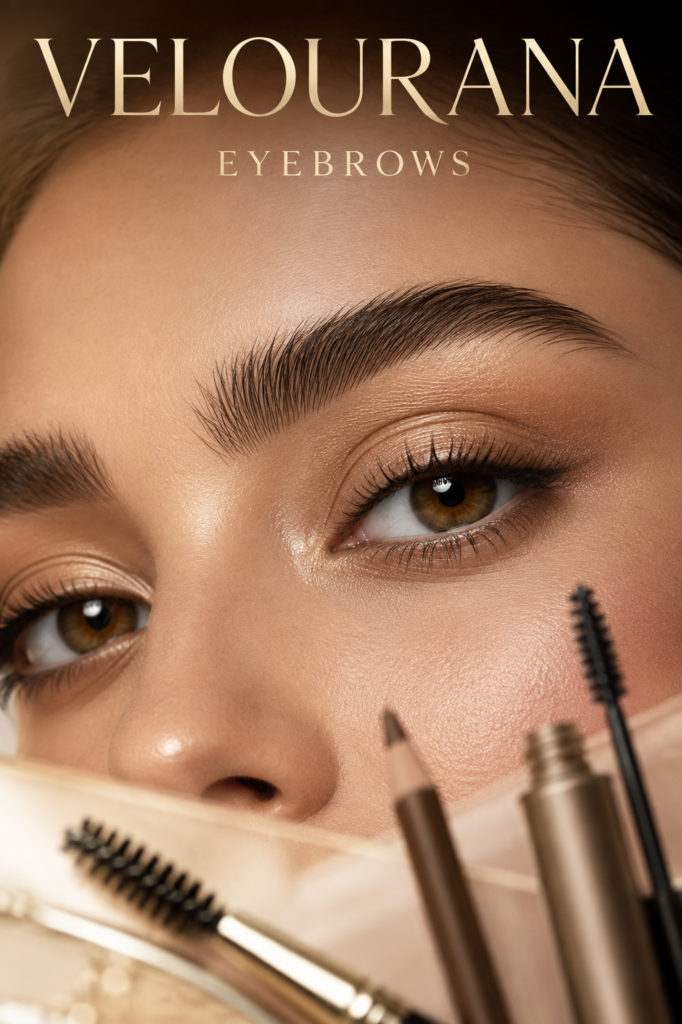
CATEGORY: Brow Powders
Using brow powder effectively is less about filling every visible space and more about understanding how the eye reads density. Eyebrows appear full when hairs and shadows combine into a coherent shape. They appear sparse when the contrast between individual hairs and exposed skin becomes too obvious. Brow powder works by softening that contrast.
This is why it can transform an eyebrow without significantly altering its basic architecture. The product creates a veil of pigment beneath and between the hairs, making them appear more numerous and more evenly distributed.
The technique can range from almost invisible correction to polished evening definition. What distinguishes successful powder application is not necessarily the amount of product but how intelligently it is distributed.
A good brow powder routine follows the natural hierarchy of the eyebrow. The front remains softer. The body gains density. The arch receives structure. The tail becomes more defined. Throughout the process, the natural hairs remain part of the finished design rather than being buried under color.
Understanding this progression is the foundation of sophisticated brow powder application.
Beginning With the Natural Brow
Before powder is applied, the brow should be observed in its natural state.
Brushing the hairs into their normal growth direction reveals the actual shape more clearly.
This simple step can expose differences that were previously hidden.
A sparse area may turn out to be caused by overlapping hairs rather than missing growth. A tail that appears weak may simply contain lighter hairs. One eyebrow may begin slightly farther inward than the other. The arch may be naturally stronger on one side.
Powder can address some of these differences, but only when they are identified first.
Immediate filling often leads to unnecessary product.
Instead, the brow can be treated as a structure containing zones of different density.
The goal is not to make every zone equally dark. It is to make them visually harmonious.
Preparing the Brow and Surrounding Skin
Brow powder adheres differently depending on the surface underneath.
On completely bare, dry skin, the product may remain soft and easily blended.
On skin containing foundation or concealer, the powder may grip more strongly because it has something to adhere to.
On oily or heavily moisturized skin, the pigment may darken or become less stable.
These differences affect application.
If complexion makeup is already present, excess foundation should not be packed heavily into the brow hairs.
A spoolie can remove some of this buildup.
The surrounding skin can remain finished normally, but reducing unnecessary product inside the eyebrow helps the brow powder maintain its intended tone.
A light dusting of translucent face powder around an oily brow area can sometimes create a more predictable surface, although this is not essential for everyone.
The objective is simply to avoid an unstable or excessively creamy base.
Understanding the Amount of Product on the Brush
One of the easiest ways to create overly heavy brows is loading too much powder onto the applicator.
Brow powder often appears less intense in the pan than it does once layered on the skin.
A small amount is usually sufficient for the first pass.
The brush can be pressed or lightly swept into the powder depending on the formula.
Excess product can be removed before touching the brow.
This step is especially useful with highly pigmented powders.
Beginning with less color provides control.
More can always be added to the arch or tail if necessary.
Removing an excessive amount after it has bonded with foundation or skincare is more difficult.
Choosing Where to Start
Many people instinctively begin at the front of the eyebrow because that is where the brow begins anatomically.
From a makeup perspective, however, this is often the least forgiving starting point.
The brush contains its greatest concentration of pigment during the first contact.
If that contact occurs at the inner brow, the front may immediately become too dark.
Beginning around the central or outer portion is usually easier.
The first pigment can be deposited where greater density is naturally acceptable.
As the brush contains less product, it can move toward softer areas.
This automatically helps create a gradient.
The exact starting position depends on the brow. If the tail is already dense but the center is sparse, beginning centrally makes more sense.
The principle is to place the highest initial pigment load where the brow genuinely needs it.
Defining the Lower Brow Without Drawing a Harsh Line
The lower edge of the eyebrow provides much of its visual structure.
Brow powder can reinforce this line without creating the rigid effect associated with some pomade techniques.
Using the narrow edge of an angled brush, pigment can be softly pressed beneath the hairs.
The movement should follow the natural direction of the brow rather than creating a completely independent outline.
Small connected strokes generally look more natural than one uninterrupted line.
The lower edge can be slightly stronger from the central brow toward the tail.
Near the front, it should usually fade.
This subtle structure gives the eyebrow a clean foundation while preserving softness above.
The effect is especially useful when the natural lower boundary contains small irregularities.
Powder can visually smooth these without requiring hair removal.
Filling the Body of the Brow
Once the basic lower structure is established, the broader side of the brush can be used to shade through the body.
The aim is not to paint over the hairs.
Instead, the pigment should settle between them.
Short movements following the direction of hair growth usually create the most integrated result.
In the central brow, these movements may be diagonal.
Toward the arch and tail, they gradually become more horizontal.
The pressure can remain light.
Because powder builds quickly, several soft passes generally produce more dimension than one heavy application.
The body should look fuller without losing evidence of individual hairs.
If the skin becomes completely obscured in an area where it would naturally be slightly visible, the brow may begin to look artificial.
Creating a Soft Inner Brow
The inner brow strongly influences facial expression.
A heavily filled front can make the entire eyebrow appear severe even if the rest is softly applied.
Powder should therefore be introduced gradually.
After most of the product has been deposited elsewhere, the brush can move toward the front using the residual pigment.
Light upward or slightly diagonal motions imitate the direction of natural growth.
The front edge does not need to form a perfect vertical boundary.
Allowing some hairs to extend beyond the powder creates a more convincing transition.
A spoolie can further diffuse the color.
If the brow front still appears too strong, brushing outward from the nose can remove or redistribute some pigment.
This area should generally look lighter than the middle and tail.
Developing the Arch
The arch provides the eyebrow with character.
Some brows have a pronounced natural peak, while others are softly curved or almost straight.
Powder can enhance the existing architecture but should be used carefully when attempting to create a dramatically different shape.
A small increase in density beneath the highest point can make an arch look more defined.
Pigment can also be concentrated just beyond the arch to strengthen the transition into the tail.
The upper edge should usually remain softer than the lower edge.
This avoids a stamped appearance.
If the natural brow is sparse around the arch, powder can establish a background, but fine pencil strokes may still be needed to reproduce missing hair texture.
The combination can look more convincing than forcing powder alone to create a sharp peak.
Refining the Tail
The tail is where brow powder can become most precise.
A tapered ending usually appears more natural than a blunt one.
Using a narrow angled brush, pigment can be directed along the natural line of the brow.
Pressure should decrease as the brush reaches the end.
This creates a gradual taper.
If more length is needed, the extension should remain modest when using powder alone.
A very long powder extension can appear like a shadow because there are no hairs to support it.
For greater reconstruction, pencil or pen can be introduced selectively.
The powder then acts as the underlying tonal base.
Building Symmetry Gradually
Completing one eyebrow perfectly before beginning the other can make symmetry more difficult.
A gradual alternating method often produces better balance.
A light layer can be applied to both brows first.
Their density and shape can then be compared.
Additional color can be introduced where necessary.
This allows natural differences to remain visible while preventing one brow from becoming unintentionally heavier.
Brows should be viewed from normal facial distance during this process.
Close-up mirrors magnify tiny inconsistencies that are virtually invisible in ordinary interaction.
Attempting to correct every microscopic difference can lead to overfilling.
Balanced brows do not need to be mathematically identical.
Using More Than One Brow Powder Shade
Dual-shade brow powders can create greater dimension.
A lighter shade can be used through the front and central brow.
A deeper shade can define the arch and tail.
The transition should be blended enough that the brow does not appear divided into two colors.
This approach is especially useful when the natural brow hairs vary in depth.
It can also help people whose hair color sits between two available brow shades.
Mixing powders allows customization.
The ratio can be adjusted depending on season, hair color changes or makeup intensity.
However, two shades are not mandatory.
A single well-chosen powder can create gradient through differences in pressure and product concentration alone.
Working With Sparse Brow Fronts
When the inner brow itself is sparse, the usual advice to use minimal product may need adjustment.
Some pigment may be necessary to create continuity.
The key is maintaining transparency.
Rather than filling the entire area with one block of powder, the product can be diffused lightly across the skin.
A pencil or pen can then introduce a few vertical or diagonal hair-like marks.
This is often more realistic than relying on heavy powder alone.
The powder creates a subtle background tone so that the individual strokes do not look isolated.
Together, they create the impression of density.
Working With Sparse Tails
Sparse tails are common and can significantly alter the perceived proportions of the eyebrow.
Powder can deepen the existing hairs and provide some extension.
A small angled brush should be used with greater precision in this area.
The color can gradually become stronger toward the outer brow before tapering.
If the tail contains only a few hairs, powder should not be spread too broadly around them.
Instead, the pigment can stay close to the natural growth line.
This keeps the result believable.
Where additional length is necessary, fine pencil strokes can complete the shape.
Correcting Uneven Brow Color
Some eyebrows contain hairs of different shades.
This can occur naturally, with age, through sun exposure or after changes in hair color.
Powder can create visual continuity because it adds one underlying tone across the brow.
The product does not necessarily need to coat every hair.
By reducing the contrast of the skin underneath, the overall brow can appear more uniform.
Tinted gel can be added if the hairs themselves require stronger color correction.
The two products can therefore solve different aspects of unevenness.
Brow Powder for Very Light Brows
Very light eyebrows require careful shade selection because even moderate pigment can create a dramatic change.
Using a powder close to the natural depth or only slightly deeper generally provides greater control.
Taupe and neutral blonde tones are common choices, although undertone should still correspond to the individual.
The front should remain particularly soft.
A heavy inner brow can look disconnected from light hair and fair facial coloring.
Layering is preferable to beginning with a dark shade.
If stronger definition is desired for evening makeup, intensity can be concentrated at the arch and tail rather than across the entire brow.
Brow Powder for Dark Brows
Dark eyebrows can also be easily overfilled.
Because the hairs already create strong contrast, the powder may need to be significantly softer than expected.
Deep brown, espresso, charcoal-brown or black-brown shades often provide sufficient depth.
Pure black can appear severe unless the natural brow and overall coloring genuinely support it.
The purpose of powder in a dark brow is often not to make the hairs darker.
It is to reduce visible gaps.
A slightly softer shade can accomplish this while maintaining dimension.
Brow Powder and Red Hair
Red hair presents unique shade challenges because natural brows may be cooler or browner than the hair on the head.
Matching bright copper exactly can sometimes produce an artificial result.
Muted auburn, warm taupe or soft reddish-brown powders may integrate more naturally depending on the individual's brows.
The actual brow hair should remain the primary reference.
Powder can also be mixed when no single shade fits.
The objective is harmony rather than exact duplication of scalp color.
Brow Powder for Gray and Silver Hair
Gray and silver hair can pair beautifully with softly defined brows.
Very warm brown powders may create unnecessary contrast.
Neutral taupe, gray-brown, ash brown or soft charcoal can be more harmonious depending on the natural brow.
The desired intensity is also important.
Some people prefer maintaining darker brows for facial definition.
Others prefer a softer result that reflects the lighter hair color.
Brow powder offers flexibility because the depth can be built gradually.
Combining Powder and Pencil Intelligently
Powder and pencil are among the most complementary brow products.
Powder provides broad, soft density.
Pencil provides precise structural detail.
A routine can begin with powder through the main body of the eyebrow.
Once the overall density looks balanced, a pencil can address the remaining areas.
These may include a missing section at the tail, one sparse patch through the arch or a few hair-like strokes at the front.
Because the powder has already created background color, fewer pencil strokes are usually needed.
This prevents the brow from becoming excessively drawn.
Alternatively, pencil can establish the shape first and powder can soften and blend it.
Both approaches can work.
The choice depends on the formulas and the desired finish.
Combining Powder and Brow Pen
Brow pens create very fine marks that can imitate individual hairs.
When used over a subtle powder base, they can produce sophisticated texture.
The powder reduces visible skin while the pen adds strategic strands.
This is useful for brows containing larger sparse areas.
Instead of drawing dozens of pen strokes, a light powder base can provide fullness.
Only the most visible missing hairs need to be reproduced.
The finished brow retains dimension because the powder and strokes exist at different visual levels.
Combining Powder and Pomade
Powder and pomade create a stronger brow.
Pomade can define edges and create extensions, while powder softens the interior.
This combination was especially associated with more sculpted brow styles, but it can still be adapted to modern makeup.
The key is preventing both products from being equally intense.
If pomade creates the outline, the powder can remain softer through the body.
Alternatively, powder can provide the main brow while pomade is used only at the tail.
Layering products becomes most effective when each has a specific purpose.
Combining Powder and Clear Brow Gel
Clear gel can complete a powder brow by restoring three-dimensional hair texture.
Once powder is applied, the brow may appear visually fuller but slightly flat.
Brushing gel through lifts and separates the hairs.
This allows them to stand above the shaded background.
The combination is particularly effective for natural daytime makeup.
The gel can be brushed upward at the front and diagonally through the rest of the eyebrow.
A strong laminated effect is not necessary.
Even mild separation increases realism.
Combining Powder and Tinted Brow Gel
Tinted gel adds pigment directly to the hairs.
This can enhance the effect of powder but may also intensify the brow quickly.
A strategic approach is preferable.
Powder can be used only in sparse areas, while tinted gel handles the general color and shape.
Alternatively, a very soft powder can create density beneath a stronger gel.
The formulas should be evaluated together rather than individually.
A powder that appears subtle on its own may become much darker once a tinted gel is added.
Brow Powder Under Brow Soap
Brow soap can dramatically change the direction of the hairs, which may expose areas of skin that were previously hidden.
Powder can compensate for those areas.
Applying powder first creates a base, but vigorous brushing with soap can disturb it.
Applying soap first may create a surface that powder struggles to adhere to.
The optimal sequence depends on the particular products.
When combining them, minimalism becomes especially important.
Too much soap and too much powder can create visible buildup.
The goal is for the soap to shape the hairs and the powder to quietly support density.
Using Brow Powder on Oily Skin
Oil can affect how powder develops through the day.
Pigment may darken as it mixes with skin oils.
The edges can also soften or move.
Preparing the brow area with a small amount of translucent powder may help create a drier surface.
Long-wear brow powders or primers designed for the eye and brow area may also improve stability when compatible with the user's routine.
However, excessive powdering can create a dry, heavy texture.
Balance remains important.
The brow should look like hair and skin, not layers of cosmetics.
Using Brow Powder on Dry Skin
Dry skin can make certain powders appear patchy if they cling to texture.
Appropriate skincare preparation can create a smoother base.
The skin should be comfortable but not excessively slippery.
A softer brush and lighter pressure may prevent pigment from catching unevenly.
If the brow area contains visible dryness, adding more powder is rarely the best correction.
Improving the underlying skin condition and using controlled amounts generally produces a cleaner result.
Maintaining Brow Powder Through the Day
Powder longevity depends on formula, skin type, environment and the products underneath.
Touching the eyebrows can remove pigment.
Heat and oil can soften the finish.
Rain or heavy moisture may affect non-water-resistant products.
A clear setting gel can help keep hairs and some surrounding pigment more stable, although it does not make every powder waterproof.
Long-wear formulas can be useful when endurance is a priority.
Still, the most natural finish often comes from thin layers rather than heavy application intended solely to improve wear time.
Removing Brow Powder
Brow powder is generally straightforward to remove as part of normal makeup cleansing.
The product may sit on both skin and hairs, so cleansing should reach through the brow rather than only passing across the surface.
There is usually no benefit in leaving pigment accumulated around the brow overnight.
Regular cleansing also helps prevent old product from mixing with the next day's application.
Brushes should likewise be cleaned periodically to maintain smooth performance.
Common Problems With Brow Powder
A brow that looks too dark usually contains excessive pigment, an overly deep shade or both.
A brow that appears warm or reddish may need a more neutral or cool-toned powder.
A brow that looks gray may require slightly greater warmth.
A blocky inner brow usually results from starting with too much product at the front.
A blunt tail can come from using too wide a brush or failing to taper pressure.
Patchiness may reflect the surface underneath rather than the powder itself.
Understanding the cause is more useful than simply adding more product.
Softening a Brow That Has Become Too Strong
A clean spoolie is one of the best correction tools.
Brushing through the brow can redistribute pigment and expose individual hairs again.
A clean angled brush can also diffuse a sharp upper edge.
If the entire brow is too dark, some pigment may be lifted with a clean cotton swab or small brush depending on the surrounding makeup.
Adding more complexion product around the brow should be approached carefully because excessive concealer can create a visibly carved effect.
Often, soft blending is sufficient.
Brow Powder and Facial Balance
Brows influence the perceived width, length and expression of the upper face.
A darker brow can create stronger contrast.
A wider brow can make the eye area appear more structured.
A longer tail can visually extend the face laterally.
Because powder works softly, it allows these changes without creating extremely visible boundaries.
This makes it useful for subtle correction.
The brow can be strengthened while still appearing connected to the natural face.
The Difference Between Fullness and Darkness
One of the most important concepts in brow makeup is that fullness and darkness are not identical.
A brow can appear fuller without becoming much darker.
Powder achieves this by placing pigment primarily where skin is visible.
If the same amount is spread across dense areas, the entire eyebrow darkens unnecessarily.
Selective filling creates fullness.
Uniform filling creates intensity.
Understanding this difference allows brow powder to look much more sophisticated.
Why Softness Requires Precision
Soft makeup is sometimes mistaken for easy makeup.
In reality, creating a diffused but intentional brow requires precise control of pressure and placement.
Too little structure can leave the eyebrow undefined.
Too much pigment eliminates the softness.
The technique therefore operates within a narrow balance.
A good brow powder application may involve many tiny decisions that are invisible in the final result.
That invisibility is the point.
Brow Powder in Contemporary Brow Trends
Modern brow styling often emphasizes visible hairs, texture and less obvious outlining.
Brow powder adapts well to this aesthetic when used selectively.
Instead of filling the entire eyebrow, it can create a subtle shadow beneath feathered hairs.
This makes the brow look naturally dense while maintaining the texture produced by clear gel or soap.
Powder therefore remains compatible with newer brow trends even though it predates them.
Its role has simply shifted from complete filling toward strategic support.
Brow Powder as a Standalone Product
Despite the popularity of multi-product routines, brow powder can still produce a complete eyebrow on its own.
This is especially true when the natural brow already has sufficient hair and a recognizable shape.
A single powder can fill small gaps, deepen the tail and softly reinforce the arch.
A spoolie can provide the finishing blend.
The routine is simple but capable of looking highly polished.
Its strength lies in working with the eyebrow rather than reconstructing it.
The Enduring Value of Brow Powder
Brow powder remains one of the most useful products for anyone who values natural-looking density.
Its visual language is shadow rather than line.
This allows it to correct without dominating.
It can make a sparse brow appear fuller, a pale brow more defined and an uneven brow more balanced.
It can work alone or form the foundation beneath pencils, pens, gels and soaps.
Its effectiveness comes from understanding where not to apply it as much as where to place it.
Dense areas may need nothing.
The front may need only residual pigment.
The arch may benefit from controlled structure.
The tail may require a little additional depth.
When these differences are respected, the eyebrow retains dimension.
The finished result does not look like a shape that has been colored in.
It looks like a natural brow with better density, stronger balance and more intentional definition.
That combination of flexibility, softness and control explains why brow powder continues to hold a permanent place within brow makeup.
THE END VELOURANA
 Discover More From Our Family of Websites
 ZodiacBearing (Astrology, Tarot, Numerology, Angel Numbers & Spiritual Guidance)
 Velourana (Beauty, Makeup, Hair Care, Skincare & Beauty Tips)
 HavenBearing (Home, Living, Organization, Décor & Everyday Inspiration)
 PawBearing (Pet Care, Dog Breeds, Animal Health, Training & Pet Products)
 PsyCatherine (Notes From the Journal of a Psychologist on Real Life)

