
CATEGORY: Makeup Terminology
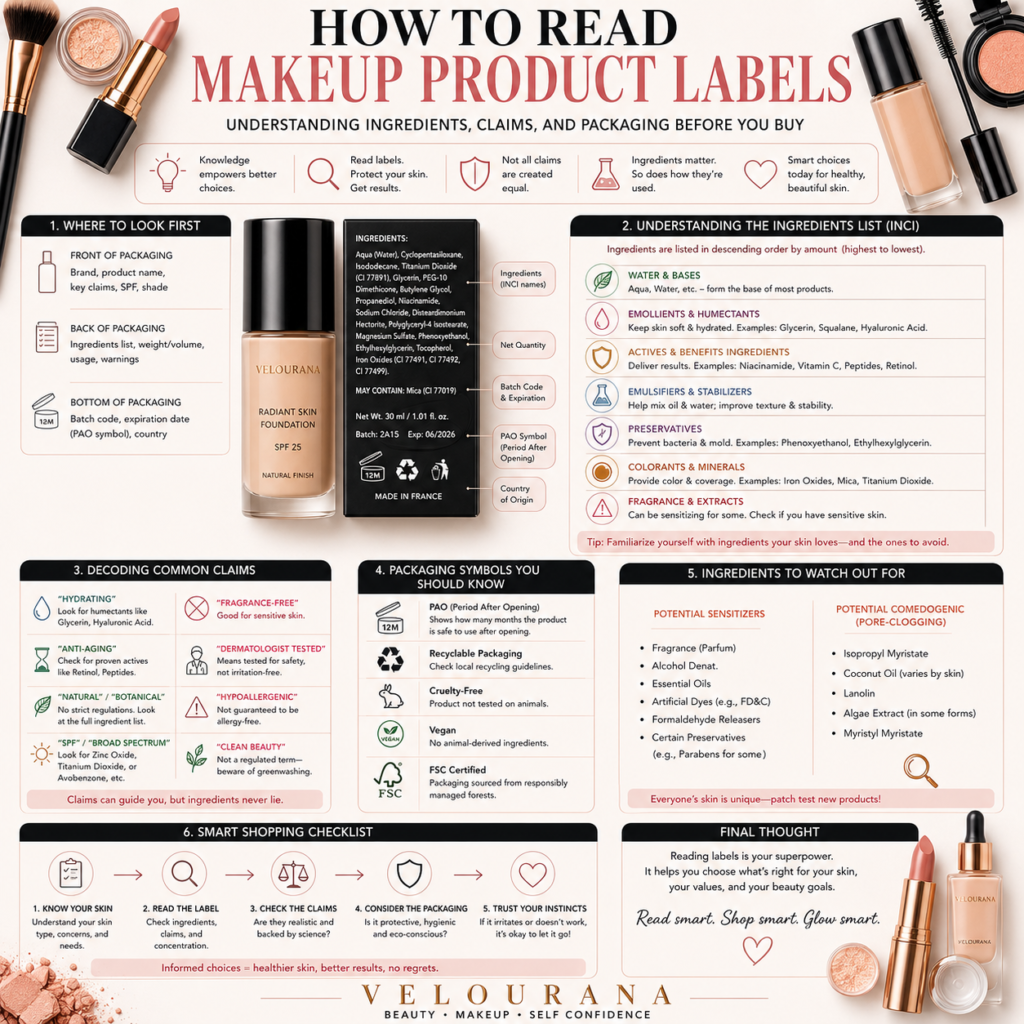
Buying makeup today is more complicated than simply choosing a pretty color. Modern cosmetic packaging is filled with marketing terms, ingredient lists, symbols, and performance claims that can be confusing, especially for beginners. Words such as non-comedogenic, dermatologist tested, fragrance-free, vegan, cruelty-free, oil-free, and long-wear appear on countless products—but what do they actually mean?
Learning how to read makeup labels allows you to make smarter purchasing decisions, avoid products that may not suit your skin, and better understand exactly what you’re applying to your face.
This comprehensive guide explains the most common makeup label terminology, ingredient lists, packaging symbols, and cosmetic claims so you can shop with greater confidence.
—
Why Reading Makeup Labels Matters
Understanding product labels helps you:
- Choose products suitable for your skin type.
- Identify potential irritants.
- Compare similar products more effectively.
- Avoid unnecessary marketing hype.
- Build a smarter makeup collection.
- Spend money more wisely.
Rather than relying solely on advertising, informed shoppers evaluate products based on their ingredients, intended use, and overall suitability.
—
Understanding the Ingredient List (INCI)
Most cosmetics use the International Nomenclature of Cosmetic Ingredients (INCI) system.
Ingredients are generally listed in descending order by concentration, meaning the ingredients present in the highest amounts usually appear first.
Toward the end of the list, ingredients are typically present in much smaller quantities.
Learning to recognize common ingredient names makes comparing products much easier.
—
Common Makeup Base Ingredients
Many complexion products contain a combination of:
- Water (Aqua)
- Silicones
- Emollients
- Pigments
- Preservatives
- Thickening agents
- Film-forming ingredients
Each ingredient contributes to how the product looks, feels, applies, and wears throughout the day.
—
What Does “Non-Comedogenic” Mean?
A product labeled non-comedogenic is formulated to reduce the likelihood of clogging pores.
While no cosmetic can guarantee that every individual will avoid breakouts, these formulations are often preferred by people with oily or acne-prone skin.
—
Oil-Free Makeup
Oil-free products are designed without traditional oils.
They may be beneficial for:
- Oily skin.
- Combination skin.
- People who prefer lightweight textures.
However, “oil-free” does not automatically mean better—it simply indicates a different formulation.
—
Fragrance-Free vs Unscented
These terms are not identical.
Fragrance-Free
No fragrance ingredients have been intentionally added.
Unscented
The product may contain ingredients that mask natural odors, even though it does not have a noticeable scent.
People with sensitive skin often prefer fragrance-free products.
—
Dermatologist Tested
This phrase indicates that dermatologists were involved in some level of product testing.
However, it does not necessarily mean:
- The product is hypoallergenic.
- The product is suitable for everyone.
- The product cannot cause irritation.
Always consider your own skin’s needs and sensitivities.
—
Hypoallergenic
“Hypoallergenic” generally means the product is formulated to reduce the risk of allergic reactions.
However, there is no universal guarantee that every individual will tolerate it.
If you have particularly sensitive skin, performing a patch test before full use is still a sensible precaution.
—
Long-Wear Claims
Products labeled as:
- Long-lasting
- Long-wear
- 12-hour wear
- 24-hour wear
are formulated to maintain their appearance for extended periods under typical conditions.
Actual performance depends on factors such as skin type, climate, activity level, and application technique.
—
Waterproof vs Water-Resistant
These terms describe different levels of moisture resistance.
Waterproof
Designed to withstand greater exposure to water.
Often used for:
- Mascara.
- Eyeliner.
Water-Resistant
Offers some resistance to moisture but may wear away more easily than waterproof formulas.
—
Cruelty-Free Cosmetics
Cruelty-free generally indicates that the finished product has not been tested on animals according to the company’s stated policies or relevant certification standards.
Many shoppers choose cruelty-free products as part of their personal purchasing preferences.
—
Vegan Makeup
Vegan cosmetics do not contain animal-derived ingredients.
Examples of ingredients avoided may include:
- Beeswax.
- Carmine.
- Lanolin.
A product can be vegan without necessarily being cruelty-free, and vice versa, so these terms should not be assumed to mean the same thing.
—
SPF in Makeup
Some foundations, BB creams, and tinted moisturizers contain sun protection.
Although helpful, makeup alone is usually not applied in sufficient quantities to replace a dedicated sunscreen.
Daily sunscreen remains an important part of a skincare routine.
—
Understanding Shade Numbers
Foundation shades often include:
- A number indicating depth.
- A letter indicating undertone.
Examples might include:
- C (Cool)
- W (Warm)
- N (Neutral)
Always consult the brand’s shade guide, as naming systems vary between manufacturers.
—
Batch Codes and Expiration
Many cosmetic packages include:
- Batch code.
- Manufacturing information.
- Period After Opening (PAO) symbol.
The open-jar icon with a number such as 12M indicates the recommended number of months the product should be used after opening.
—
Packaging Symbols You May See
Common symbols include:
Open Jar Symbol
Indicates the recommended usage period after opening.
Recycling Symbol
Shows that packaging may be recyclable according to local facilities.
“e” Mark
Indicates compliance with certain packaging quantity regulations in applicable markets.
These symbols provide useful information about product handling and packaging.
—
Marketing Claims to Evaluate Carefully
Some claims are subjective rather than standardized.
Examples include:
- Flawless finish.
- Airbrush effect.
- Instant perfection.
- Miracle formula.
These descriptions often reflect marketing language rather than measurable performance.
Reading reviews and testing products when possible can provide a more realistic expectation.
—
Comparing Two Similar Products
When deciding between products, consider:
- Ingredients.
- Finish.
- Coverage.
- Skin type recommendations.
- Packaging.
- Price.
- Shade range.
- Reviews from users with similar skin concerns.
The best choice is not always the most expensive one.
—
Patch Testing New Makeup
Whenever trying a new cosmetic product, especially if you have sensitive skin, consider testing a small amount on an inconspicuous area first.
Wait for an appropriate period to check for irritation before applying the product more broadly.
—
Building Confidence as a Smart Shopper
Reading labels becomes easier with practice.
Focus first on understanding:
- Product type.
- Intended skin type.
- Finish.
- Wear claims.
- Key ingredients.
- Expiration guidance.
Over time, you’ll become much more confident in identifying products that match your needs.
—
Final Thoughts
Makeup labels contain valuable information that goes far beyond attractive packaging and marketing slogans. By understanding ingredient lists, cosmetic terminology, packaging symbols, and common product claims, you can make more informed purchasing decisions and build a makeup collection that truly suits your skin, lifestyle, and preferences.
Rather than choosing products based solely on trends or advertising, learning to interpret cosmetic labels empowers you to shop with confidence, avoid unsuitable formulations, and invest in products that deliver the performance you expect.
The End,
Velourana
 Discover More From Our Family of Websites
 ZodiacBearing (Astrology, Tarot, Numerology, Angel Numbers & Spiritual Guidance)
 Velourana (Beauty, Makeup, Hair Care, Skincare & Beauty Tips)
 HavenBearing (Home, Living, Organization, Décor & Everyday Inspiration)
 PawBearing (Pet Care, Dog Breeds, Animal Health, Training & Pet Products)
 PsyCatherine (Notes From the Journal of a Psychologist on Real Life)

