CATEGORY: Makeup Techniques
A healthy, luminous complexion has become one of the defining features of modern makeup. At the center of this glowing beauty trend is highlighter—a cosmetic product designed to reflect light, enhance facial features, and create the appearance of naturally radiant skin.
When used correctly, highlighter adds dimension without looking glittery or artificial. It emphasizes the high points of the face where light naturally falls, making the skin appear fresh, youthful, and vibrant. However, choosing the wrong formula or applying too much product can produce an overly shiny or textured appearance.
This comprehensive guide explains everything you need to know about makeup highlighter, including the different formulas, finishes, shades, application techniques, and common mistakes to avoid.
—
What Is Highlighter?
Highlighter is a cosmetic product formulated with light-reflecting pigments that brighten specific areas of the face.
Unlike foundation or concealer, highlighter does not conceal imperfections. Instead, it enhances natural facial structure by attracting light to selected areas.
The goal is to create subtle luminosity rather than obvious sparkle.
Professional makeup artists often describe highlighter as the finishing touch that gives makeup its healthy, polished appearance.
—
Why Use Highlighter?
Highlighter serves several purposes in makeup.
It can:
- Add radiance to the complexion.
- Emphasize facial structure.
- Create youthful-looking skin.
- Balance contour and bronzer.
- Enhance photography.
- Produce a fresh, healthy glow.
- Make the complexion appear more vibrant.
Used sparingly, highlighter creates dimension without making the face appear oily.
—
Different Types of Highlighter
Highlighter is available in several formulations, each producing slightly different results.
—
Powder Highlighter
Powder highlighter remains the most popular option.
Advantages include:
- Easy application.
- Buildable intensity.
- Long-lasting wear.
- Suitable for oily and combination skin.
- Excellent layering over powder makeup.
It is often recommended for beginners because it offers greater control.
—
Cream Highlighter
Cream formulas create a softer, skin-like glow.
Benefits include:
- Natural finish.
- Seamless blending.
- Comfortable texture.
- Hydrating appearance.
Cream highlighters work especially well for dry or mature skin.
—
Liquid Highlighter
Liquid highlighters provide exceptional versatility.
They may be:
- Mixed into foundation.
- Applied directly to the skin.
- Layered over foundation.
- Used on the body.
Liquid formulas often create the most radiant finish.
—
Stick Highlighter
Stick highlighters combine convenience with precision.
Advantages include:
- Easy travel.
- Quick application.
- Direct placement.
- Creamy texture.
Many stick formulas blend effortlessly using fingertips.
—
Balm Highlighter
Highlighter balms provide subtle dewiness without obvious shimmer.
They are particularly popular for natural makeup looks and “glass skin” styles.
—
Understanding Highlighter Finishes
Different finishes produce different effects.
—
Satin Finish
Creates soft luminosity without visible shimmer.
Suitable for everyday makeup.
—
Pearl Finish
Produces elegant light reflection.
Works beautifully for bridal and classic makeup.
—
Metallic Finish
Provides intense shine.
Popular for glamorous evening makeup and editorial looks.
—
Glitter Finish
Contains larger reflective particles.
Best reserved for creative or festive makeup rather than everyday wear.
—
Choosing Highlighter According to Skin Tone
Selecting the correct shade makes the glow appear much more natural.
—
Fair Skin
Popular shades include:
- Pearl.
- Soft champagne.
- Light ivory.
- Cool pink.
These shades brighten without appearing too dark.
—
Light to Medium Skin
Beautiful choices include:
- Champagne.
- Soft gold.
- Light peach.
- Warm ivory.
These tones complement most neutral complexions.
—
Olive Skin
Olive complexions pair especially well with:
- Warm gold.
- Honey.
- Soft bronze.
- Golden champagne.
—
Tan Skin
Rich golds and warm bronze shades enhance naturally sun-kissed skin beautifully.
—
Deep Skin
Highly reflective shades create stunning results.
Popular options include:
- Rich gold.
- Copper.
- Bronze.
- Rose gold.
- Deep champagne.
These colors complement deeper skin tones while maintaining natural radiance.
—
Choosing Highlighter According to Skin Type
Dry Skin
Cream and liquid highlighters generally provide the most flattering finish.
They enhance glow without emphasizing dryness.
—
Oily Skin
Powder highlighters often perform better because they add controlled luminosity without increasing shine.
—
Combination Skin
Any formula can work depending on the desired finish.
Many people combine cream and powder products for extended wear.
—
Mature Skin
Finely milled cream or liquid highlighters usually create the smoothest appearance.
Large glitter particles may emphasize skin texture and fine lines.
—
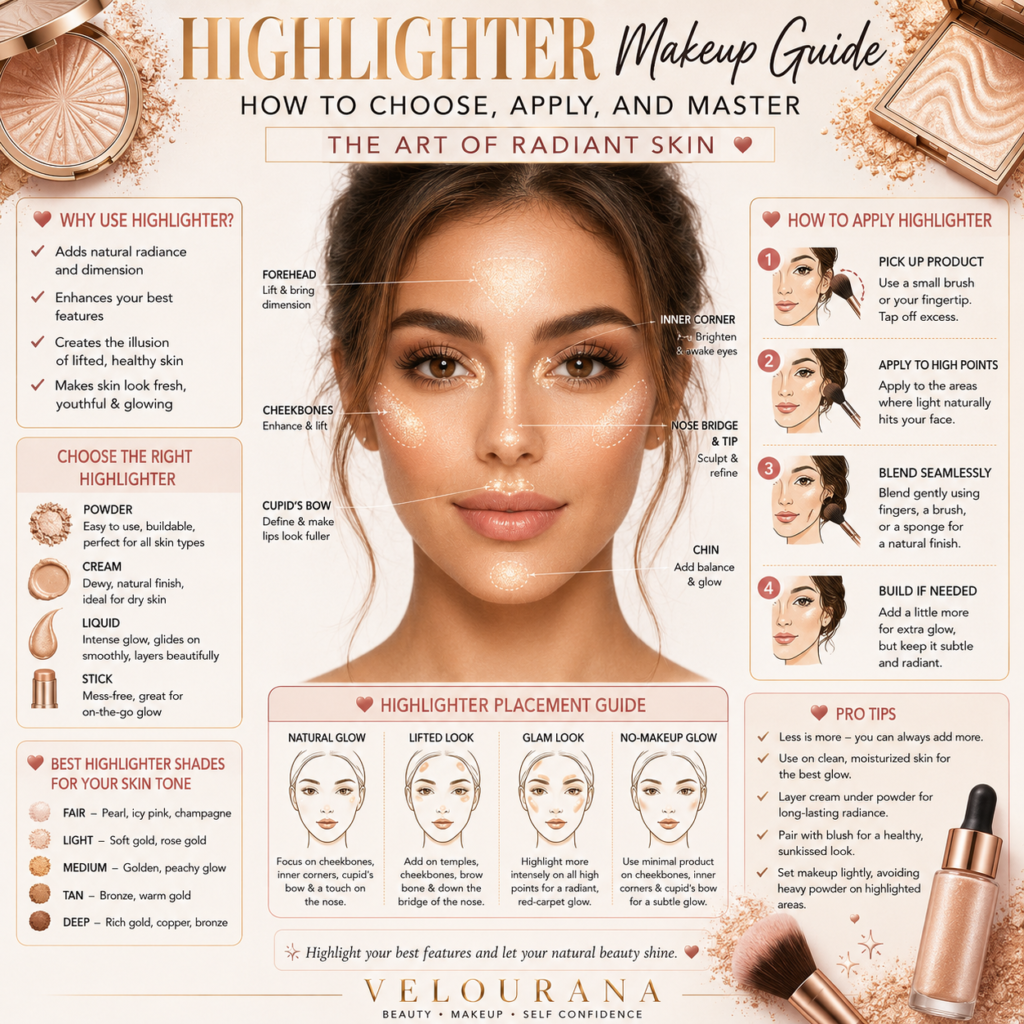
Where to Apply Highlighter
Correct placement is essential for natural-looking results.
—
Top of the Cheekbones
This is the most common application area.
Highlighting the cheekbones creates lifted, sculpted facial contours.
—
Brow Bone
A small amount beneath the highest point of the eyebrow helps define the eye area.
—
Inner Corners of the Eyes
Adding highlighter here brightens tired-looking eyes and creates the illusion of larger eyes.
—
Bridge of the Nose
A thin line along the bridge creates subtle definition.
Avoid applying too much to the tip if your nose already has noticeable shine.
—
Cupid’s Bow
Highlighting the area above the upper lip enhances lip shape and creates the illusion of fuller lips.
—
Center of the Chin
A tiny amount can help balance facial proportions.
Apply sparingly.
—
Collarbones and Shoulders
Highlighter is not limited to the face.
Many people apply it to exposed collarbones and shoulders for special occasions.
—
How to Apply Powder Highlighter
Step 1
Use a small fluffy highlighting brush.
—
Step 2
Lightly dip the brush into the product.
—
Step 3
Tap away excess powder.
—
Step 4
Apply using light sweeping motions over the high points of the face.
—
Step 5
Blend until no visible edges remain.
The glow should appear to emerge naturally from the skin.
—
How to Apply Cream or Liquid Highlighter
Cream and liquid formulas may be applied using:
- Fingertips.
- Makeup sponge.
- Synthetic brush.
Gently tap the product into the skin rather than rubbing.
This preserves the foundation underneath while maintaining a seamless finish.
—
Mixing Highlighter with Foundation
Many liquid highlighters can be mixed directly into foundation.
Benefits include:
- Overall radiant complexion.
- Lightweight glow.
- Natural-looking luminosity.
- Smooth blending.
This technique is especially popular for bridal makeup and dewy everyday looks.
—
Can Highlighter Replace Blush or Bronzer?
No.
Each product performs a unique function.
- Bronzer adds warmth.
- Contour creates depth.
- Blush restores color.
- Highlighter reflects light.
Together they create balanced facial dimension.
—
Common Highlighter Mistakes
Several common mistakes can reduce the effectiveness of highlighter.
Avoid:
- Applying too much product.
- Using glitter instead of fine shimmer for everyday makeup.
- Highlighting textured acne.
- Choosing the wrong shade.
- Forgetting to blend.
- Applying highlighter to naturally oily areas unnecessarily.
Subtle application almost always produces more elegant results.
—
Highlighter Trends
Modern makeup trends have expanded how highlighter is used.
Popular styles include:
- Glass skin.
- Soft-focus glow.
- Natural radiant makeup.
- Monochromatic makeup.
- No-makeup makeup.
- Bridal luminosity.
Current trends generally favor refined radiance over heavy metallic shine.
—
Building a Highlighter Collection
A practical collection may include:
- Champagne powder highlighter for everyday wear.
- Cream highlighter for natural makeup.
- Liquid highlighter for mixing with foundation.
- Rich gold shade for summer makeup.
- Soft pearl shade for bridal or elegant looks.
This selection provides versatility without unnecessary duplication.
—
Final Thoughts
Highlighter is one of the most effective products for bringing light, freshness, and dimension to the face. By choosing the right formula for your skin type, selecting shades that complement your complexion, and applying the product thoughtfully to the areas where light naturally falls, you can achieve a radiant finish that enhances rather than overwhelms your features.
Whether you prefer a soft everyday glow or a luminous evening look, mastering highlighter techniques will help you create makeup that appears polished, balanced, and effortlessly radiant.
The End,
Velourana
 Discover More From Our Family of Websites
 ZodiacBearing (Astrology, Tarot, Numerology, Angel Numbers & Spiritual Guidance)
 Velourana (Beauty, Makeup, Hair Care, Skincare & Beauty Tips)
 HavenBearing (Home, Living, Organization, Décor & Everyday Inspiration)
 PawBearing (Pet Care, Dog Breeds, Animal Health, Training & Pet Products)
 PsyCatherine (Notes From the Journal of a Psychologist on Real Life)