
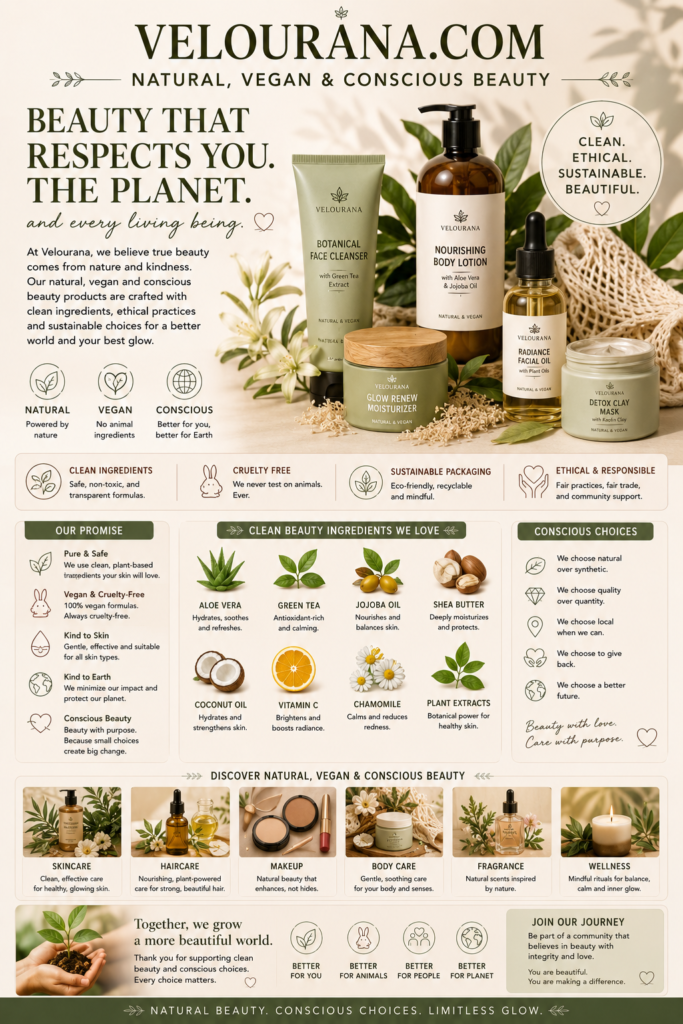
CATEGORY: Botanical Ingredients
The appeal of botanical beauty is easy to understand. Plants connect cosmetics with nature, tradition, scent, texture, color, agriculture, and centuries of personal-care practices. A jar containing shea butter, a serum featuring green tea, or a facial oil made with rosehip can feel more tangible than a product described entirely through technical ingredient terminology.
Yet the simplicity suggested by botanical marketing can be misleading.
Plants themselves are extraordinarily complex.
A single botanical source can contain hundreds of naturally occurring chemical substances. Different parts of the same plant can produce entirely different cosmetic materials. Processing can change the composition further, and the final formulation determines how the botanical interacts with every other ingredient in the product.
Natural beauty therefore becomes more interesting when botanical ingredients are understood rather than romanticized.
Aloe is not simply aloe.
Rose is not simply rose.
Coconut oil behaves differently from jojoba.
A plant extract behaves differently from an essential oil.
A butter behaves differently from a hydrosol.
The form, concentration, processing, stability, and purpose of the ingredient all matter.
This understanding allows botanical skincare and hair care to remain enjoyable while avoiding the misleading assumption that plant origin automatically guarantees safety, sustainability, effectiveness, or ethical production.
Botanical Beauty Starts With the Plant but Does Not End There
The journey from plant to cosmetic product can involve cultivation, harvesting, drying, pressing, distillation, extraction, purification, refinement, standardization, transportation, storage, and formulation.
By the time a botanical ingredient reaches a finished serum or cream, it may look nothing like the original plant.
This does not make it less meaningful.
Processing is often what makes plant materials practical for cosmetic use.
Seeds can be pressed to release oils.
Flowers can undergo extraction or distillation.
Roots can be processed to isolate desirable components.
Plant materials can be converted into standardized extracts with more predictable characteristics.
Modern botanical beauty is therefore a collaboration between agriculture and cosmetic science.
Aloe Vera Is More Than a Cooling Gel
Aloe vera is one of the most recognizable botanical ingredients in beauty.
Its association with cooling and soothing products has made it particularly familiar in after-sun care, lightweight moisturizers, gels, masks, body products, and scalp formulations.
However, commercial aloe products are formulated systems.
The gel inside an aloe leaf is not identical to a preserved cosmetic gel sold in a bottle.
Commercial formulas need stability.
They may contain humectants, thickeners, preservatives, pH adjusters, emollients, and other ingredients.
This distinction helps consumers appreciate why a professionally formulated aloe product can behave differently from raw plant material.
Rosehip Seed Oil Is a Botanical Lipid, Not Rose Fragrance
Rosehip oil illustrates how plant names can create confusion.
It is obtained from the fruit and seeds associated with rose plants rather than functioning as a concentrated rose perfume.
Its cosmetic role is primarily associated with its lipid composition and emollient characteristics.
Rose essential oil is entirely different.
Rose water is different again.
A rose extract may represent another material.
The shared plant family does not make these ingredients interchangeable.
This lesson can be applied throughout botanical beauty.
Always ask which part of the plant and which type of preparation is actually being used.
Jojoba Has a Distinctive Chemical Character
Jojoba is commonly described as an oil because it behaves like one in cosmetic use.
Chemically, however, it is primarily a liquid wax composed differently from typical triglyceride plant oils.
This contributes to its distinctive stability and sensory characteristics.
Jojoba is used in facial oils, moisturizers, hair products, lip products, cleansers, and body care.
Its popularity demonstrates why botanical ingredients should be understood individually.
The category plant oil contains enormous chemical variation.
Argan Oil Became a Global Beauty Ingredient
Argan oil became internationally prominent through hair care and facial products emphasizing shine, softness, and conditioning.
It can function as an emollient within complex formulas or appear as a more concentrated oil product.
In hair care, small amounts can help create a smoother feel and increase shine.
In skincare, it can contribute to lipid-rich formulations.
The amount matters.
Fine hair may require only a very small quantity of an oil-based product.
Coarse or textured hair may tolerate more.
The ingredient itself does not determine the correct dose.
Hair characteristics do.
Coconut Oil Behaves Differently Across Beauty Categories
Coconut oil is one of the most recognizable botanical oils and also one of the easiest to oversimplify.
It can be used in hair products, body products, cleansers, soaps, lip formulas, and moisturizers.
Its physical and chemical properties give it a distinctive behavior compared with many liquid oils.
Some hair types respond well to coconut-oil-containing treatments.
Others dislike the feel.
Some people enjoy coconut oil in body care while preferring different textures on the face.
The lesson is not that coconut oil is universally good or bad.
It is that botanical ingredients need context.
Sunflower Seed Oil Can Be Quietly Useful
Not every useful botanical needs to be exotic.
Sunflower seed oil appears in many cosmetic formulations because it can provide effective emollience and integrate well into creams, lotions, cleansers, and body products.
Its familiarity may make it less exciting from a marketing perspective than rare botanical oils, but rarity does not determine cosmetic value.
This is an important principle in natural beauty.
A common, well-formulated ingredient can be more useful than an exotic botanical included primarily to make a product sound luxurious.
Shea Butter Defines Rich Botanical Moisturization
Shea butter has become one of the defining ingredients of rich natural beauty.
It appears in hand creams, body butters, moisturizers, lip products, hair masks, conditioners, and styling creams.
Its richness can be extremely useful for dry skin and coarse or textured hair.
The same richness can become excessive in other contexts.
A shea-heavy face cream may be ideal for someone seeking substantial emollience and uncomfortable for someone who prefers lightweight hydration.
A curl cream containing shea can support coarse hair while weighing down fine waves.
The ingredient should be selected according to the desired texture and application.
Cocoa Butter Brings Texture and Sensory Richness
Cocoa butter contributes firmness, emollience, and a characteristic richness to cosmetic formulas.
It is common in body care and lip products and can appear in hair and facial formulations as well.
Its sensory identity also contributes to its popularity.
Botanical beauty often works through a combination of function and experience.
The texture of a butter and the ritual of applying it can be part of why the product is valued.
Cosmetics do not need to justify every ingredient through dramatic treatment claims.
Pleasant texture is itself a legitimate cosmetic quality.
Green Tea Represents the Modern Botanical-Science Relationship
Green tea is an excellent example of a traditional plant becoming part of modern technical skincare.
Tea contains polyphenolic compounds that have generated scientific interest, particularly in relation to antioxidant activity.
Cosmetic formulators can incorporate tea-derived extracts into serums, moisturizers, eye products, masks, and other formulas.
The quality of the finished product still depends on formulation.
An unstable or poorly designed product does not become excellent merely because green tea appears on the label.
The botanical needs to exist within a system capable of supporting it.
Centella Shows How Global Beauty Expands Botanical Awareness
Centella asiatica has become internationally recognized through the growth of Asian skincare and global interest in soothing, barrier-conscious formulas.
Its rise demonstrates how beauty markets exchange botanical knowledge.
Consumers now encounter plant ingredients originating from traditions and regions far beyond their own.
This can expand appreciation for botanical diversity.
It can also create waves of ingredient hype.
A newly fashionable plant may suddenly appear in cleansers, toners, serums, creams, masks, and makeup.
Popularity should not be mistaken for necessity.
A person does not need centella simply because it is currently prominent.
The product should still serve a purpose.
Licorice Root Has Become Associated With Brightening Formulas
Licorice-derived cosmetic ingredients are commonly used in products targeting the appearance of uneven tone and dullness.
Different extracts and compounds associated with licorice may be incorporated depending on the formula.
This demonstrates how modern botanical skincare can become highly refined.
The useful cosmetic component may be standardized or processed rather than simply consisting of powdered root.
Botanical science can involve considerable technical sophistication.
Chamomile Demonstrates the Difference Between Reputation and Guarantee
Chamomile has a long-standing association with gentle care.
It appears in cleansers, creams, eye products, body formulas, and products positioned toward sensitive skin.
That reputation can be useful, but it should not become a guarantee.
A chamomile product can still contain fragrance.
It can contain other active ingredients.
An individual can react to botanical materials.
The complete formulation determines the experience.
Sensitive skin should never be expected to tolerate a product simply because a familiar calming plant appears on the front label.
Calendula Fits Naturally Into Comfort-Oriented Beauty
Calendula is another botanical commonly used in products designed around softness and comfort.
Oil infusions, extracts, creams, and balms can all incorporate calendula-derived materials.
The format determines how the product behaves.
An oil infusion may provide a very different sensory experience from a water-based cream.
This illustrates why consumers benefit from moving beyond ingredient-name recognition toward understanding cosmetic format.
Oat Ingredients Can Be Valuable in Dry-Skin Formulas
Oat-derived materials are frequently included in products intended for dry or sensitive-feeling skin.
They can appear in bath products, cleansers, moisturizers, creams, and body treatments.
The association between oats and comfort has made them particularly prominent in family and sensitive-skin products.
Yet an oat ingredient remains only part of the complete formulation.
Preservation, fragrance, cleansing agents, emollients, and other ingredients continue to influence compatibility.
Turmeric Illustrates the Gap Between Food and Cosmetic Formulation
Turmeric is frequently discussed in natural beauty because of its long history of traditional use and its recognizable color and cultural significance.
Applying kitchen turmeric directly to the skin, however, is not equivalent to using a professionally formulated cosmetic containing a turmeric-derived ingredient.
Concentration, purity, staining, formulation, and stability differ.
This distinction applies to many edible plants.
A substance being safe to eat does not automatically establish that every form or concentration is ideal for direct cosmetic use.
Food and skincare are different exposure contexts.
Cucumber Is Often More About Sensory Identity Than Miracles
Cucumber has a powerful cosmetic association with freshness and cooling.
It appears in eye products, gels, masks, cleansers, and lightweight moisturizers.
The imagery of cucumber slices over the eyes has become almost symbolic of home beauty.
A cucumber-containing formula can certainly be pleasant.
The problem begins only when a familiar botanical is given unrealistic powers.
Cosmetic ingredients do not need miracle claims to justify their inclusion.
A refreshing sensory contribution can be enough.
Lavender Demonstrates the Complexity of Aromatic Botanicals
Lavender can appear as essential oil, extract, floral water, or fragrance-related material.
Its aroma is strongly associated with relaxation and traditional herbal beauty.
However, aromatic plant ingredients are not universally suitable for sensitive skin.
Someone who enjoys fragrance may love lavender skincare.
Someone whose skin reacts to fragrance may prefer to avoid it.
Neither response changes the botanical origin.
This is why natural should never be used as shorthand for non-irritating.
Peppermint Can Create Sensation Without Necessarily Creating Benefit
Peppermint and menthol-associated botanical materials can create a cooling or tingling sensation.
This can feel refreshing in scalp products, foot creams, cleansers, and body products.
Sensation is not automatically evidence that a product is working more effectively.
Tingling can simply reflect sensory stimulation.
For sensitive skin, strong cooling ingredients may be uncomfortable.
Botanical beauty benefits from distinguishing sensory effects from treatment effects.
Citrus Botanicals Require Precise Identification
Citrus-derived ingredients can include fruit extracts, peel oils, flower waters, seed oils, and other materials.
They are not interchangeable.
Some citrus essential oils contain compounds that require particular formulation considerations, including sensitivity to light depending on the specific oil and processing.
This is another reason direct DIY use of concentrated essential oils deserves caution.
Commercial formulation can select appropriate materials and concentrations while considering stability and safety.
The phrase citrus extract alone is too broad to describe every possibility.
Essential Oils Are Powerful Botanical Concentrates
Essential oils deserve separate consideration because they can be extremely concentrated compared with the original plant.
A small bottle may contain aromatic materials obtained from a much larger quantity of plant matter.
This concentration explains their intense scent.
It also explains why careless direct application can be problematic.
Essential oils used in properly formulated cosmetics are incorporated according to the design of the product.
Using concentrated essential oils independently requires far more knowledge than simply recognizing that they come from plants.
Natural origin does not eliminate potency.
Carrier Oils and Essential Oils Are Not the Same
The language of natural beauty sometimes places all oils into one category.
Carrier oils such as jojoba, sunflower, sweet almond, or argan are very different from concentrated essential oils such as peppermint, lavender, or certain citrus oils.
Carrier oils primarily consist of lipids.
Essential oils consist largely of volatile aromatic compounds.
Their use levels and safety considerations differ substantially.
Understanding this difference is one of the most useful pieces of botanical beauty literacy.
Hydrosols Offer Another Botanical Format
Hydrosols or floral waters are associated with the water fraction produced during certain botanical distillation processes.
Rose water and orange blossom water are familiar examples.
They provide a different aromatic and chemical profile from the corresponding essential oil.
Hydrosols can appear in mists, toners, creams, and other formulations.
They still require appropriate preservation when incorporated into water-based cosmetic products.
Natural aromatic water is not automatically microbiologically stable forever.
Botanical Powders Can Serve Multiple Cosmetic Roles
Plants can also be dried and processed into powders.
These may appear in masks, cleansers, hair products, color cosmetics, or traditional beauty preparations.
Powders can provide texture, absorbency, color, or other formulation characteristics.
As with other botanicals, particle size, processing, purity, and concentration influence the experience.
Raw plant powder from a kitchen is not necessarily equivalent to cosmetic-grade material prepared for formulation.
Clay Is Natural but Not Botanical
Natural beauty language sometimes places clays and plant ingredients together.
Clay is naturally derived but mineral rather than botanical.
This distinction illustrates how broad the word natural can become.
Natural beauty may include plant, mineral, marine, and other naturally sourced materials.
Botanical specifically refers to plants.
Using terminology accurately makes product discussions clearer.
Seaweed Is Natural but Belongs to a Different Biological Category
Algae and seaweed ingredients are also frequently grouped with botanical beauty because they create a natural, plant-like impression.
Biologically, the classification is more complicated than ordinary terrestrial plants.
From a cosmetic perspective, algae-derived ingredients can still contribute useful polysaccharides, minerals, texture, and sensory properties depending on the material.
The broader lesson is that natural beauty contains many ingredient families.
Botanical is only one of them.
Botanical Ingredients Can Be Refined Without Losing Their Origin
Some consumers associate refinement with artificiality.
In reality, refinement can remove unwanted material, improve consistency, reduce odor, change color, or increase stability.
A refined plant oil still originates from a plant.
Whether refined or unrefined material is preferable depends on the intended cosmetic use.
Unrefined oils may retain stronger natural aromas and colors.
Refined versions may integrate more easily into products requiring predictable sensory characteristics.
Neither is automatically superior.
Formulation determines the appropriate choice.
Standardized Extracts Improve Predictability
Plants naturally vary.
A standardized botanical extract can be processed so that particular components remain within a defined range.
This helps cosmetic manufacturers produce more consistent formulas from batch to batch.
Standardization represents an important meeting point between nature and technology.
The plant provides the biological material.
Processing creates greater predictability.
This is one reason sophisticated botanical skincare should not be imagined as simply putting raw herbs into jars.
Preservatives Protect Natural Formulas
Water, plant extracts, sugars, proteins, and other organic materials can create environments where microorganisms may grow if products are not properly preserved.
Preservation is therefore especially important in many botanical formulas.
The idea of preservative-free beauty can sound attractive because preservatives have technical names.
Yet a contaminated cosmetic is not more natural in any beneficial sense.
A well-designed preservation system is part of responsible formulation.
Antioxidants and Preservatives Perform Different Jobs
These two ingredient categories are sometimes confused.
Antioxidants can help protect certain ingredients, particularly oils, from oxidation.
Preservatives primarily help control microbial contamination in appropriate formulations.
An antioxidant such as vitamin E does not automatically replace a complete preservation system in a water-based cosmetic.
This distinction becomes particularly important in homemade botanical beauty.
Adding an antioxidant to an oil blend can support oxidative stability, but it does not magically make every water-containing DIY mixture microbiologically safe.
DIY Botanical Products Need Realistic Expectations
A simple anhydrous oil blend is different from attempting to manufacture a complex facial cream at home.
Once water, fresh botanical material, or other contamination-prone ingredients enter a formula, preservation and stability become more complicated.
Kitchen tools are not cosmetic laboratories.
Measurements may be inaccurate.
Raw materials may vary.
The finished mixture may not have undergone microbial or stability testing.
Natural beauty can include home rituals, but they should remain proportionate to the level of formulation knowledge available.
More Exotic Does Not Mean More Effective
Beauty marketing frequently celebrates rare plants from distant locations.
Exotic sourcing can make a product feel special.
It does not automatically make the ingredient more useful than familiar alternatives.
Sunflower, oat, and other common materials can be excellent cosmetic ingredients.
A rare oil may offer a beautiful sensory profile but should not be assumed superior simply because it is scarce.
Effectiveness should not be measured through geographic novelty.
Local Botanicals Can Be Equally Interesting
Natural beauty can become more connected to place when local plant traditions and agricultural ingredients are explored responsibly.
Olive-derived ingredients, grape-derived materials, herbs, seed oils, and regionally abundant plants can all become part of cosmetic formulation depending on location.
Local sourcing may reduce some transport requirements and support regional producers, although sustainability still depends on the entire supply chain.
The value lies partly in reconnecting beauty with agricultural environments rather than assuming desirable botanicals must come from distant regions.
Ethical Sourcing Matters for High-Demand Botanicals
When a plant becomes globally fashionable, demand can increase rapidly.
This can create economic opportunities for producing regions but can also create pressure on land, labor, ecosystems, or wild plant populations.
Responsible botanical beauty should therefore consider sourcing as well as ingredient origin.
A plant being natural does not guarantee that its supply chain is ethical.
Transparency, agricultural practices, fair economic relationships, and biodiversity can all matter.
Organic Certification Answers a Specific Question
Organic botanical ingredients are produced according to particular agricultural standards established by the relevant certification system.
This can be meaningful to consumers who prioritize organic farming.
However, organic does not automatically mean cruelty-free, vegan, zero-waste, or suitable for sensitive skin.
One certification cannot answer every ethical or cosmetic question.
Consumers make better choices when they understand what each label actually covers.
Cruelty-Free Status Must Be Checked Separately
A beautifully botanical formula can still require separate verification of animal-testing policy.
The plant origin of ingredients does not determine what testing standards a company follows.
Someone who wants both botanical and cruelty-free beauty should therefore evaluate both criteria.
The same applies to vegan status.
Ethical beauty often involves several overlapping but distinct filters.
Botanical Packaging Can Create Misleading Impressions
Green bottles, kraft paper, flowers, leaves, handwritten typography, and earthy colors can make a product appear natural before the ingredient list is read.
This visual language is powerful.
It can communicate genuine brand philosophy, but it can also function primarily as marketing.
Packaging should not substitute for information.
A highly botanical formula can arrive in sleek laboratory-style packaging.
A conventional formula can arrive covered in leaves.
The ingredients and policies matter more than the design language.
Botanical Beauty Can Still Be Luxurious
Plant-focused products have long been part of luxury beauty.
Rare oils, floral extracts, aromatic waters, rich butters, and carefully designed textures can create highly indulgent products.
Luxury does not make a botanical ingredient more effective automatically.
It can, however, provide sensory pleasure, packaging quality, craftsmanship, and a particular experience.
These qualities can legitimately matter to consumers.
Natural beauty does not need to be rustic or inexpensive.
Affordable Botanical Products Can Be Excellent
Common botanical ingredients can also be incorporated effectively into inexpensive products.
A basic moisturizer containing sunflower seed oil may provide exactly what someone's skin needs.
A simple oat cleanser can outperform a much more elaborate botanical formula for a sensitive individual.
Price should therefore remain separate from assumptions about botanical quality.
The most expensive plant is not necessarily the best plant for the job.
Skin Type Still Matters More Than Botanical Fashion
Dry skin may enjoy richer plant oils and butters.
Oily skin may prefer lightweight emulsions with smaller amounts of emollient botanicals.
Sensitive skin may benefit from simpler products with fewer aromatic ingredients.
Combination skin may require flexible application.
The product should match the complexion rather than the current ingredient trend.
This is one of the most reliable principles in natural beauty.
Hair Type Determines How Botanical Oils Behave
Fine hair may need extremely small amounts of oil.
Coarse hair can often tolerate richer application.
Low-porosity hair may become coated when heavy products are layered repeatedly.
Highly processed hair may respond differently from untreated hair.
Curl pattern, density, climate, and styling habits all influence the result.
A botanical hair oil should therefore be treated as a styling or conditioning tool rather than a universal treatment.
Botanical Ingredients Cannot Repair Everything
Natural beauty marketing sometimes gives plants almost unlimited powers.
Cosmetics have real limitations.
An oil can improve softness and reduce friction.
A moisturizer can support hydration and comfort.
A botanical extract may contribute useful cosmetic properties.
These products cannot reverse every form of structural damage or permanently transform biological characteristics.
Realistic expectations protect consumers from disappointment and make botanical ingredients easier to appreciate for what they genuinely contribute.
Plant-Based Beauty Does Not Need to Reject Synthetic Ingredients
Synthetic and botanical ingredients can complement one another.
A plant oil may provide emollience while a synthetic polymer improves texture.
A botanical extract may sit alongside a laboratory-produced humectant.
A plant-derived active can be stabilized using modern formulation technology.
Preservatives can protect the entire system.
This combination can produce products that are elegant, stable, effective, and enjoyable.
The natural-versus-synthetic conflict is often far less useful than asking whether the formula is safe, stable, appropriate, and well designed.
Botanical Ingredients Can Connect Beauty With Culture
Plants often carry cultural histories that extend far beyond cosmetics.
Oils, flowers, herbs, and aromatic materials may have traditional roles in bathing, hair care, ceremonies, medicine, perfumery, cooking, or household rituals.
Modern beauty can draw inspiration from these traditions.
Respectful presentation matters.
A plant tradition should not be stripped of its cultural context merely to create an exotic marketing story.
Botanical beauty becomes richer when origins and histories are acknowledged accurately.
Science Can Strengthen Traditional Botanical Knowledge
Scientific investigation can examine plant chemistry, extraction methods, stability, and potential cosmetic functions.
This does not necessarily invalidate traditional use.
It can help distinguish promising applications from exaggerated claims.
Traditional knowledge can suggest where investigation may be valuable.
Modern research can clarify mechanisms and limitations.
The relationship can be complementary.
Consumers Benefit From Asking Better Questions
Instead of asking whether an ingredient is natural, more useful questions can be asked.
What form of the botanical is present?
Is it an oil, extract, essential oil, water, powder, butter, or isolated compound?
What role does it play in the formula?
Is the complete product suitable for the skin or hair?
Does it contain fragrance?
Is it properly preserved?
Does the sourcing align with personal values?
Are cruelty-free or vegan standards independently relevant?
These questions produce more meaningful information than a simple natural label.
A Botanical Routine Can Remain Simple
Loving plant-based beauty does not require owning dozens of oils and extracts.
A cleanser may contain oat-derived ingredients.
A moisturizer may use shea butter or sunflower oil.
A serum may feature green tea or centella.
A hair product may contain argan or jojoba.
That can already represent a botanical-focused routine.
There is no prize for maximizing the number of plant names on the shelf.
Botanical Beauty Works Best Without Purity Myths
The idea of purity is attractive but difficult to define in modern cosmetics.
Plants themselves contain complex mixtures of chemicals.
Extraction changes those mixtures.
Refinement changes them again.
Cosmetic formulation combines them with additional materials.
Preservation keeps products usable.
Packaging protects them.
The final product is a technological object built partly from biological raw materials.
That does not make botanical beauty less authentic.
It makes it more interesting.
The Future of Botanical Beauty Is Likely to Become More Technical
Advances in extraction, biotechnology, agricultural science, fermentation, green chemistry, and formulation are expanding the ways plant-derived materials can be used.
The future of natural beauty may therefore look less like a return to completely raw ingredients and more like increasingly sophisticated use of renewable biological resources.
Botanical compounds can be studied more precisely.
Agricultural by-products may become useful cosmetic raw materials.
Extraction can become more efficient.
Traceability can improve.
Formulators can potentially obtain greater consistency while reducing unnecessary resource use.
Natural beauty and technology are likely to become more interconnected rather than less.
Botanical Ingredients Are Most Valuable When Their Complexity Is Respected
Plants have given beauty an extraordinary range of oils, butters, aromas, extracts, colors, textures, and traditions.
Their value does not depend on pretending that they are universally gentle or magically effective.
They are valuable precisely because they are chemically diverse.
That diversity creates possibilities.
It also creates limitations and individual differences.
A botanical ingredient can be beautifully suited to one formula and unnecessary in another.
An aromatic plant can make a body product pleasurable and irritate someone else's sensitive skin.
A rich butter can transform dry body care while overwhelming fine hair.
A plant extract can support a sophisticated serum without needing to dominate the entire ingredient list.
This is the mature version of natural beauty.
It appreciates plants without turning them into mythology.
It respects traditional knowledge while accepting scientific evaluation.
It recognizes sustainability without assuming every plant-based material is automatically environmentally harmless.
It values ethical sourcing, formulation quality, preservation, stability, and individual compatibility.
Most importantly, it understands that botanical ingredients do not need exaggerated promises to deserve a place in beauty.
Plants already offer extraordinary chemical and sensory diversity.
Used thoughtfully, they can make skincare, hair care, body care, and makeup richer, more interesting, and deeply connected to both nature and modern cosmetic science.
THE END VELOURANA
 Discover More From Our Family of Websites
 ZodiacBearing (Astrology, Tarot, Numerology, Angel Numbers & Spiritual Guidance)
 Velourana (Beauty, Makeup, Hair Care, Skincare & Beauty Tips)
 HavenBearing (Home, Living, Organization, Décor & Everyday Inspiration)
 PawBearing (Pet Care, Dog Breeds, Animal Health, Training & Pet Products)
 PsyCatherine (Notes From the Journal of a Psychologist on Real Life)

