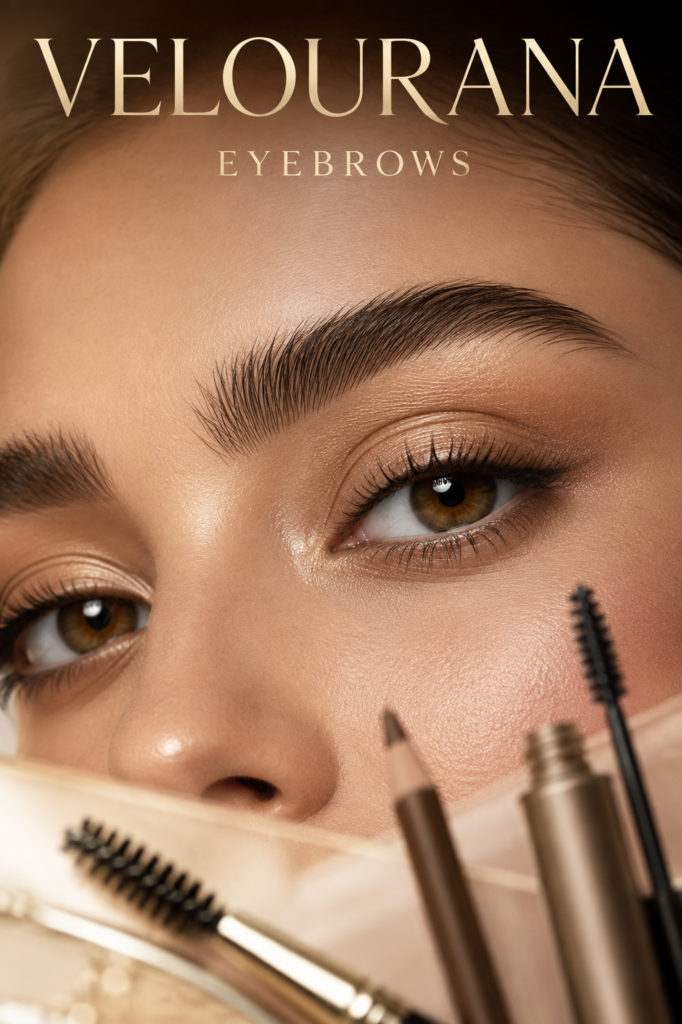
CATEGORY: Fluffy Brows
The beauty of fluffy brows lies in an apparent contradiction. They look relaxed, spontaneous, and almost untouched, yet creating a convincing feathered eyebrow often requires more judgment than creating a sharply defined one. A conventional sculpted brow can rely on obvious boundaries and uniform pigment. A fluffy brow has fewer places to hide mistakes because the individual hairs, spaces, and changes in direction remain visible.
This is why fluffy brows are best understood as a texture technique rather than merely a brow shape. The natural architecture of the eyebrow remains important, but the transformation happens primarily through the positioning of individual hairs. Lift creates volume, separation introduces dimension, and carefully controlled irregularity prevents the result from looking artificial.
The style has evolved through several beauty movements, including the return of fuller eyebrows, the popularity of brow lamination, and a wider preference for makeup that preserves natural texture. Yet a genuinely fluffy brow is not identical to a laminated brow. It does not necessarily require every hair to be fixed flat against the skin or held vertically. Its defining characteristic is an airy, feathered quality that gives the brow visual movement.
Understanding this distinction makes the technique more versatile. Fluffy brows can be subtle enough for barely there makeup, polished enough for sophisticated beauty looks, or exaggerated for editorial styling. What changes is the intensity. The fundamental principles of visible hair, directional flow, and restrained pigment remain consistent.
Feathered Texture Begins With Hair Direction
Eyebrow hairs do not grow uniformly. Even within a single brow, their angle can change substantially from the inner edge to the tail. Observing these patterns is one of the most valuable parts of creating a fluffy result.
At the front, hairs commonly have a stronger upward direction. Some stand almost vertically, while others angle slightly toward the temple. This natural lift provides the foundation for the characteristic feathered front associated with fluffy brows.
Moving through the center, hairs generally become more diagonal. Their overlap contributes to natural density, and separating them can make the eyebrow appear wider or fuller. The styling direction should usually follow this gradual shift rather than abruptly changing from vertical to horizontal.
Near the arch, the relationship between lift and shape becomes particularly important. Brushing everything straight upward can alter the perceived position of the arch and create excessive height. Guiding the hairs upward and outward tends to preserve the brow's architecture while still introducing texture.
Tail hairs commonly grow outward and sometimes downward. Forcing them vertically can shorten the visual length of the brow or produce an uneven upper boundary. Following their natural outward direction generally creates a cleaner transition from the fuller body to the tapered end.
These directional changes are subtle, but they determine whether the finished eyebrow appears organic. A fluffy brow should have flow. The viewer's eye should travel naturally from the soft vertical movement at the front into increasingly horizontal movement toward the tail.
The Difference Between Fullness and Heaviness
Fullness is desirable in fluffy brows, but heaviness is usually not. The difference is created largely by how much skin remains visible and how pigment is distributed.
When individual hairs are separated, tiny areas of skin appear between them. These spaces introduce visual lightness. Even a dark, thick eyebrow can appear airy when its hairs remain distinct. Conversely, a relatively thin brow can look heavy when every space has been filled with dense pigment.
This principle explains why adding more color is not always the best solution for making brows look fuller. Strategic separation can create apparent volume without changing the color at all. Lifting hairs exposes their full length, and their shadows add subtle dimension.
Where additional pigment is needed, it works most naturally when it imitates this existing texture. Fine strokes can visually extend the density of the real hairs without closing every gap. The objective is to support the pattern rather than create a continuous background.
Powder can also be used, but its diffusion needs to remain controlled. A soft veil of color beneath sparse sections may improve balance, while a densely packed application can flatten the texture. The more visible the individual hairs remain, the more convincingly fluffy the result tends to appear.
This relationship between fullness and negative space is central to the aesthetic. Fluffy brows are not simply brows with more material. They are brows in which the existing material has been arranged to occupy space more effectively.
Product Texture Changes the Finished Character
Brow products can produce dramatically different interpretations of fluffiness. The choice is not merely about longevity; it affects the visual character of the hair.
A lightweight clear gel can provide soft definition while allowing the eyebrow to retain flexibility. This often creates the most understated version of the look. The hairs are more organized and separated, but they continue to behave like natural hair.
A strong-hold gel can create more pronounced elevation. This is useful for brows that naturally grow downward or lose shape quickly, although it can create stiffness when overapplied. The most convincing finish usually comes from using enough product to maintain direction without leaving a thick visible coating.
Tinted gels combine styling with color. They can be particularly useful for fine or light brow hairs because the tint makes individual strands more visible. Some formulas contain fibers or volumizing components that further enhance apparent density. These effects can support a fluffy aesthetic as long as they do not accumulate into visible clumps.
Waxes and soap-style products offer greater manipulation. They can help stubborn hairs remain elevated and may create dramatic feathering. Their strength also makes technique especially important. Too much product or excessive pressure can flatten the hairs against the skin, shifting the result toward a laminated appearance rather than an airy one.
Pencils and pens perform a different role. They do not primarily control the hair; they create the illusion of additional hair. Fine-tipped products are especially useful for extending texture into sparse areas, while softer pencils can provide gentle shadow where more generalized density is needed.
The most elaborate product combination is not necessarily the most effective. Some brows require only gel. Others benefit from a small amount of pencil followed by hold. Product selection should respond to an actual need rather than to the assumption that every stage is mandatory.
Working With Fine and Sparse Brows
Fine and sparse brows can achieve a fluffy appearance, but the technique depends more heavily on illusion. When there are fewer hairs, aggressive separation can expose gaps instead of creating volume. The balance between lifting existing hairs and adding believable strokes therefore becomes crucial.
Fine hairs often respond well to lightweight styling products because they require relatively little force to change direction. Heavy waxes can overwhelm them or make them appear stuck to the skin. A thin gel can provide enough support while preserving their delicate texture.
Sparse areas can then be addressed individually. Rather than outlining the entire brow, small strokes can be placed where additional density is visually necessary. Their direction should change across the eyebrow in the same way natural hair direction changes.
At the front, restraint becomes especially valuable. Sparse brows may tempt the wearer to construct a dense beginning, but a strongly drawn inner block can make the difference between real and artificial hair more obvious. Leaving slight transparency and using a limited number of fine strokes usually creates greater realism.
The body of the brow can tolerate more reinforcement because natural hairs overlap more densely there. Even so, maintaining slight variations in spacing helps preserve dimension.
Where the tail is particularly sparse, a combination of delicate shading and hairlike strokes can create a stronger structure. The tail should still appear connected to the texture of the rest of the brow rather than becoming an isolated drawn line.
Fluffiness in a sparse brow is therefore often more subtle. It may not produce the dramatic volume seen in naturally dense brows, but it can create softness, movement, and a convincing impression of greater fullness.
Managing Naturally Thick or Coarse Brows
Dense brows present almost the opposite challenge. There may be abundant hair, but controlling it without creating excessive bulk requires restraint.
Coarse hairs often have strong natural growth patterns. Attempting to force every strand into a dramatically different position can require so much product that the eyebrow becomes rigid. Working partly with the existing direction usually creates a softer and more durable result.
The front may need only a slight lift rather than complete vertical positioning. Through the body, brushing upward and outward can distribute the density more evenly. Areas where hairs naturally overlap heavily may benefit from separation, but they do not necessarily need additional pigment.
Strong-hold gel, wax, or a brow styling product can be useful, especially where hairs naturally point downward. Applying product in controlled amounts allows the brow to retain dimensionality. Saturating the entire eyebrow may provide excellent hold but can also make the hairs look glossy, stiff, or flattened.
Dense brows also require careful decisions about trimming. Long hairs can contribute beautifully to the feathered silhouette, so shortening every strand to the same length may reduce the very texture the style is designed to emphasize. Only hairs that significantly disrupt the intended outline may need adjustment.
The natural richness of thick brows means that less cosmetic intervention is often required. Their strongest fluffy interpretation frequently comes from styling rather than filling.
The Inner Brow Sets the Tone
Few areas influence the character of a fluffy eyebrow as strongly as the inner section. A soft beginning creates openness, while a dark or geometrically precise beginning can make the entire brow appear more formal.
The first hairs should generally remain visible as individual strands. Brushing them upward or slightly outward creates height without requiring a drawn border. If there are gaps, small strokes can supplement the existing hairs.
The transition into the body should be gradual. An inner brow that is extremely light followed immediately by a heavily filled center can appear disconnected. Color and density should build progressively.
This gradient does not need to be mathematically perfect. In fact, slight irregularity often makes it more believable. Natural eyebrows contain variations, and retaining some of them contributes to the relaxed character of the style.
The lower edge of the inner brow is another area where over-definition can quickly change the effect. A sharply penciled baseline creates structure but may make the front appear boxed. Allowing the individual hairs to establish the lower boundary produces a softer result.
The goal is not to make the inner brow invisible. It should have enough presence to frame the face while maintaining transparency and texture.
Preserving Shape While Encouraging Movement
Because fluffy brows emphasize texture, it can be tempting to ignore the overall silhouette. Yet shape remains essential. Without an underlying structure, feathered hairs can appear random rather than intentional.
The natural lower line often provides a useful anchor. It does not need to be heavily drawn, but its general trajectory helps maintain the brow's relationship with the eye. The upper line can remain more irregular because lifted hairs naturally create a feathered boundary.
At the arch, the brow should retain enough directional change to frame the eye. If all hairs are treated identically, the distinction between body, arch, and tail can disappear. Subtle differences in brushing direction preserve the architecture.
The tail completes the shape. A fluffy brow does not require a dramatically sharp point, but the outer section generally benefits from becoming narrower and more directional. This prevents the entire eyebrow from appearing equally wide from beginning to end.
Movement therefore exists within structure. The hairs can look free and textured while the eyebrow as a whole remains balanced.
Fluffy Brows and Brow Lamination
Fluffy brows and brow lamination are closely associated but should not be treated as interchangeable concepts. Lamination is a treatment designed to make brow hairs more flexible and easier to reposition, while fluffy brows describe a visual styling effect.
A laminated brow can certainly be styled in a fluffy manner. Because the hairs are more responsive to repositioning, dramatic lift and separation may be easier to achieve. However, lamination can also be styled more smoothly or horizontally depending on the desired appearance.
Likewise, fluffy brows can be created without lamination. Gels, waxes, soaps, pencils, and careful brushing can produce the visual effect temporarily.
The distinction becomes important because heavily laminated styling sometimes emphasizes a sleek, pressed appearance. Hairs may be arranged almost vertically and secured close to the skin. This can create striking definition, but it is not the only interpretation of fluffiness.
A softer fluffy brow preserves more three-dimensional movement. Some hairs sit slightly away from the skin, and their directions vary gradually. The result feels less architectural and more feathered.
Understanding these differences allows the aesthetic to be customized rather than reduced to one formula.
How Makeup Around the Brows Changes Their Appearance
Brows do not exist in isolation. Foundation, concealer, eyeshadow, eyeliner, and even skin finish can change how their texture is perceived.
Heavy complexion products around the eyebrow can accidentally coat fine hairs, making them appear dull or pale. Cleaning excess foundation from the brow before styling can restore their natural depth and help styling products adhere more predictably.
Concealer placed directly beneath the brow can sharpen the lower boundary. This technique can create dramatic contrast, but a very crisp line may work against a deliberately soft fluffy aesthetic. A more diffused transition often integrates better with natural-looking brow texture.
Eye makeup also affects the required level of brow definition. Strong liner, dark shadow, or dramatic lashes can visually compete with extremely delicate brows. Slightly greater brow structure may help balance the eye area. Conversely, fresh skin and minimal eye makeup can make heavily styled brows appear disproportionately dominant.
The relationship with hair color also matters. Brows do not necessarily need to match scalp hair exactly, but an extreme difference in depth or temperature can become especially noticeable when individual brow hairs are emphasized.
Fluffy styling magnifies texture, and therefore magnifies these relationships. Successful brows feel connected to the entire beauty look rather than appearing as a separate graphic element.
Avoiding the Overstyled Effect
The most common difficulty with fluffy brows is crossing the line between intentional texture and obvious manipulation. Several visual signs can make the styling feel excessive: hairs standing uniformly vertical across the entire brow, visible product residue, extremely dark artificial strokes, rigidly outlined boundaries, or an upper silhouette expanded far beyond the natural shape.
Correcting this does not usually require abandoning the technique. Reducing one element may be enough. A strongly lifted brow may need less pigment. A densely filled brow may need a softer hair direction. A powerful wax may need to be applied more sparingly.
The spoolie can also be used not only to create the shape but to soften it. Brushing gently through areas where too much pigment has accumulated can distribute color and reveal more of the natural hairs.
Visual distance is useful when evaluating the result. Up close, every small gap can appear significant, encouraging unnecessary filling. At normal conversational distance, many of these gaps disappear into the overall texture. What seems imperfect in a magnifying mirror may look completely natural when the face is viewed as a whole.
This perspective is especially important because fluffy brows depend on controlled imperfection. Removing every irregularity can gradually transform them into the opposite of what was intended.
A Brow Style Built Around Individuality
The popularity of fluffy brows reflects more than a preference for thicker eyebrows. It represents a way of treating natural features as something to reveal rather than completely redraw.
Individual hairs become part of the finished design. Differences in length, angle, density, and texture are not automatically treated as defects. They can contribute character when guided within a balanced shape.
This makes the technique unusually adaptable. Two people can follow the same broad principles and produce very different eyebrows because their natural hair patterns determine the final result. A person with straight, fine hairs may achieve delicate feathering. Someone with dense, coarse brows may create richer, more dramatic volume. Neither version needs to imitate the other.
The same flexibility allows fluffy brows to move between casual and polished contexts. A small amount of clear gel can create an understated daytime effect, while stronger hold and carefully placed strokes can create greater impact for photography or evening makeup.
What remains constant is the emphasis on texture.
The Refined Version of Effortlessness
The most compelling fluffy brows look effortless because their technical decisions remain largely invisible. The viewer notices softness and fullness rather than product, outlines, or obvious correction.
Achieving that refinement depends on a sequence of judgments: understanding natural direction, deciding how much lift suits the brow, selecting appropriate hold, determining where density genuinely needs reinforcement, and knowing when to stop.
The final decision is often the most important. Brow styling can easily become additive. Another stroke, another layer of gel, another adjustment to the arch may seem individually insignificant, yet together they can remove the natural quality that made the style appealing.
Fluffy brows reward restraint because their beauty comes from leaving enough of the original eyebrow visible. Product supports the hairs, pigment fills only what needs support, and grooming creates order without eliminating personality.
The result is a brow that feels dimensional rather than drawn, expressive rather than rigid, and polished without sacrificing softness. Trends may continue to change the preferred degree of lift or density, but the underlying idea remains remarkably durable: natural brow texture can itself be one of the most sophisticated forms of definition.
THE END VELOURANA
 Discover More From Our Family of Websites
 ZodiacBearing (Astrology, Tarot, Numerology, Angel Numbers & Spiritual Guidance)
 Velourana (Beauty, Makeup, Hair Care, Skincare & Beauty Tips)
 HavenBearing (Home, Living, Organization, Décor & Everyday Inspiration)
 PawBearing (Pet Care, Dog Breeds, Animal Health, Training & Pet Products)
 PsyCatherine (Notes From the Journal of a Psychologist on Real Life)