
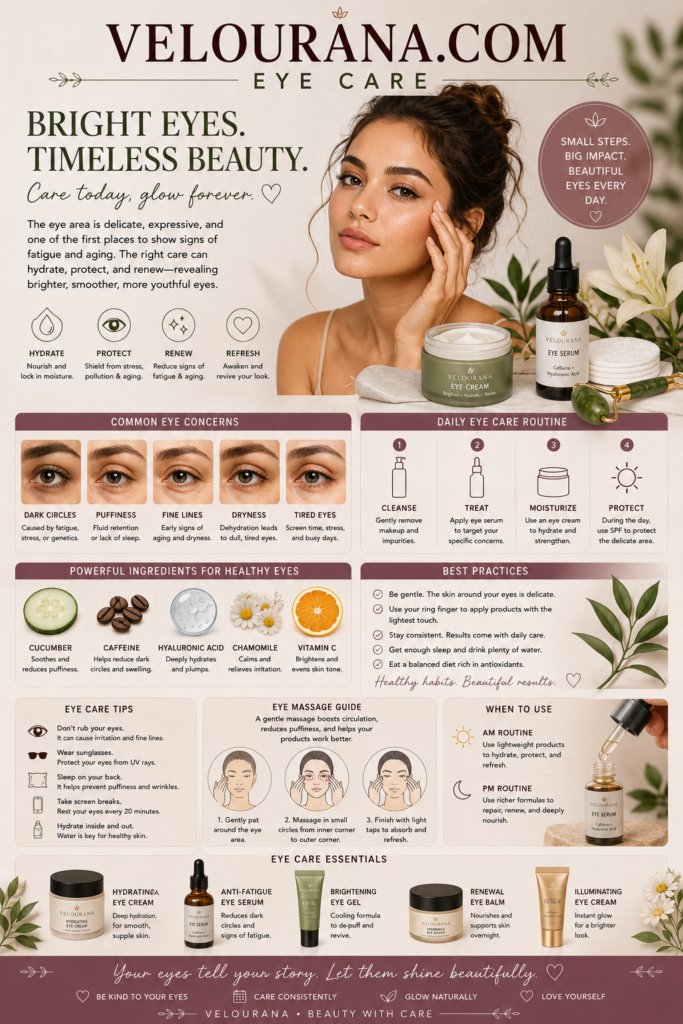
CATEGORY: Fine Lines Around Eyes
The first fine lines to become visible on the face often appear around the eyes. They may emerge as delicate creases beneath the lower eyelids, faint lines extending from the outer corners, or subtle textural changes that seem to become more noticeable when smiling, squinting or looking closely in bright light. Their early appearance is not accidental. The eye area combines exceptionally thin skin, constant muscular movement and relatively limited structural cushioning, creating conditions in which small changes in hydration, collagen organization and elasticity can become visible sooner than they do elsewhere on the face.
Fine lines around the eyes are also unusually dynamic. A line that appears pronounced after a long day may look considerably softer the following morning. Dry weather can make the area appear more creased, while careful moisturization can temporarily improve its smoothness. Some lines exist mainly during facial expression; others gradually remain visible when the face is relaxed. This changing appearance explains why eye lines cannot be understood simply as a fixed sign of age.
The more useful perspective is to consider what is happening within the skin and the tissues surrounding it. Hydration, sun exposure, facial movement, genetics, environmental conditions and natural structural change all contribute to the way the eye contour evolves. Effective care begins not with attempting to eliminate every visible crease, but with understanding which factors can realistically be influenced and how the delicate area can be supported without unnecessary irritation.
Why the Eye Area Reveals Fine Lines So Easily
Skin is not identical across the face. Around the eyes, it is considerably thinner than in many other facial regions. The underlying tissue is delicate, and there are fewer sebaceous glands supplying protective oils. This means the eye contour can lose moisture relatively easily and may display surface dehydration more dramatically than areas with thicker or naturally oilier skin.
The anatomy of the region adds another layer of complexity. The orbicularis oculi muscle surrounds the eye and participates in blinking, squinting and many facial expressions. These movements occur thousands of times during an ordinary day. Smiling contracts the tissues around the outer corners of the eyes; concentration may produce repeated squinting; bright sunlight can intensify muscular contraction. Each movement temporarily folds the skin.
Young, resilient skin generally returns smoothly after these contractions. Over time, however, repeated folding interacts with gradual changes in collagen and elastin. The skin may not rebound quite as completely as it once did, allowing expression lines to become more persistent.
This transition usually happens gradually rather than suddenly. Initially, fine creases may be visible only during expression. Later, a faint trace may remain after the muscles relax. Eventually, some lines can become established features of the eye contour.
Yet movement alone does not explain everything. Two people of similar ages may have dramatically different patterns of eye lines despite making similar facial expressions. Genetic differences in skin thickness, pigmentation, facial structure, collagen characteristics and natural oil production influence how quickly visible changes develop. Lifestyle and environmental exposure then interact with this biological foundation.
The eye contour is therefore best understood as an area where several influences converge. Thin skin makes subtle changes easier to see, frequent movement repeatedly folds the surface, and comparatively limited natural lubrication can amplify dryness. When structural aging and environmental damage are added to this combination, fine lines become increasingly apparent.
The Difference Between Dehydration Lines and Structural Lines
Not every visible crease around the eyes represents the same type of change. One of the most important distinctions is between temporary surface lines associated with dehydration and more persistent lines related to changes in the skin's supporting structure.
Dehydrated skin lacks sufficient water in its outer layers. Around the eyes, this can create a finely crinkled appearance that may resemble premature aging. These tiny lines can become particularly noticeable after cleansing, during cold weather, in air-conditioned environments or after using products that disrupt the skin barrier.
When hydration is restored and moisture loss is reduced, these superficial creases may soften considerably. Humectant ingredients can attract water into the outer skin, while emollient and occlusive components help reduce evaporation and improve surface flexibility. The resulting improvement can sometimes be striking because hydrated skin reflects light more evenly and appears smoother.
Structural fine lines behave differently. They are associated with changes occurring deeper within the skin, including the gradual decline and reorganization of collagen and elastin. These lines may still look better when the area is well moisturized, but hydration alone cannot remove the underlying structural change.
The distinction matters because unrealistic expectations often begin when every line is treated as though it were caused by dryness. A rich eye cream can make dehydrated skin appear noticeably smoother, but it cannot rebuild years of structural change overnight. Conversely, aggressively treating minor dehydration as though it requires powerful corrective ingredients can create irritation that makes the eye area look worse.
The two conditions can also exist simultaneously. Mature skin with established expression lines may become dehydrated, causing existing lines to appear deeper. Once hydration improves, the lines remain but may look softer and less pronounced.
This interaction explains why consistency in basic skin-barrier care can produce meaningful cosmetic improvement even when it does not fundamentally reverse structural aging. Comfortable, hydrated skin tends to appear more supple, while irritated or dehydrated skin exaggerates texture.
Observing when lines become most visible can offer useful clues. Creases that fluctuate substantially according to weather, cleansing habits or moisturization are likely to have a significant dehydration component. Lines that remain relatively stable despite these changes are more likely to reflect established structural characteristics.
Collagen, Elasticity and the Gradual Evolution of Eye Lines
The dermis contains structural proteins that help give skin its strength, flexibility and resilience. Collagen provides much of its supportive framework, while elastin contributes to its ability to stretch and return toward its original position. These structures are continually maintained and remodeled throughout life, but the balance between production and breakdown changes over time.
As collagen support gradually decreases, the skin becomes less resistant to repeated folding. The effect is particularly noticeable in thin, mobile regions such as the eye contour. The change does not necessarily begin as a deep wrinkle. It can first appear as a subtle loss of smoothness or a faint line that remains visible after smiling.
External factors can accelerate this process. Ultraviolet radiation is especially important because repeated exposure contributes to the breakdown of collagen and other components of the extracellular matrix. Over years, accumulated photodamage can influence texture, elasticity, pigmentation and the depth of visible lines.
The outer corners of the eyes are particularly exposed to sunlight and are also repeatedly folded during squinting. This combination helps explain why radiating lines commonly develop there. Their formation reflects both intrinsic biological aging and cumulative environmental exposure rather than one isolated cause.
Changes in facial volume and underlying support can also influence how the eye region looks. The skin does not exist independently from the fat pads, muscles and bones beneath it. As these supporting structures evolve, shadows and folds around the eyes can become more noticeable. What appears to be a simple surface wrinkle may therefore be influenced by deeper anatomical changes.
This is one reason topical skincare has limits. Products can improve hydration, support the skin barrier and, depending on their ingredients, influence certain biological processes within the skin. They cannot completely recreate deeper facial architecture.
That limitation does not make skincare irrelevant. Protecting collagen from avoidable environmental damage and maintaining a healthy surface environment can influence how gracefully the eye area changes. The realistic objective is preservation and improvement rather than the impossible promise that skin can be permanently frozen at one stage of life.
Sun Exposure and the Long Memory of Delicate Skin
Few environmental influences are as significant to visible skin aging as ultraviolet exposure. The effects accumulate slowly, which can make them easy to underestimate. A single ordinary day outdoors may seem inconsequential, yet repeated exposure across years contributes to changes in collagen, pigmentation and elasticity.
The eye area faces an additional challenge because people frequently squint in bright conditions. Sunlight therefore affects the region through two interconnected mechanisms: ultraviolet radiation influences the skin itself, while brightness encourages muscular contraction that repeatedly folds the outer eye area.
Daily sun protection is consequently one of the most rational approaches to preserving the appearance of the eye contour. The benefit is preventive rather than immediately dramatic. Sunscreen will not erase an existing line when applied in the morning, but consistent protection can reduce one of the major external forces contributing to future photodamage.
Application around the eyes requires practicality. Some sunscreen formulas migrate or sting when they reach the eyes, particularly during heat, sweating or exercise. A formula that performs beautifully on the cheeks may therefore be uncomfortable near the eyelids. Finding a product that can be used consistently without irritation is more valuable than choosing a theoretically perfect sunscreen that is repeatedly avoided.
Sunglasses provide an additional physical advantage. They reduce direct light exposure around the eyes and can decrease the instinctive squinting produced by bright conditions. Wide frames may protect more of the surrounding area than very small lenses, although sunglasses should complement rather than replace appropriate skin protection.
Shade and other forms of physical sun avoidance also matter. Photoprotection is most effective when considered as a broader behavior rather than a single cosmetic product.
The long-term nature of ultraviolet damage makes prevention particularly valuable for younger skin, but protection remains worthwhile at every age. Skin continues to respond to environmental exposure throughout life. There is no point at which avoiding unnecessary damage becomes meaningless.
Building an Eye-Care Routine Without Overworking the Skin
The desire to correct fine lines can lead to surprisingly complicated routines. Multiple serums, eye creams, exfoliating products and active treatments may be layered around an area that is inherently less tolerant than much of the rest of the face. More intervention does not automatically produce more improvement.
A successful routine begins with preserving the barrier. Cleansing should remove makeup, sunscreen and environmental residue without leaving the eye contour persistently tight or irritated. Vigorous rubbing is unnecessary and can aggravate sensitive skin. Waterproof eye makeup may require an effective remover that dissolves the product rather than forcing repeated mechanical friction.
Moisturization then helps maintain surface flexibility. Ingredients that support hydration can reduce the appearance of dehydration-related creasing, while emollients improve softness and smoothness. Richness should be matched to individual skin rather than assumed to be universally beneficial. Some people prefer a light lotion or gel texture; others find that a more substantial cream keeps the area comfortable for longer.
Dedicated eye cream is not automatically essential. A well-formulated facial moisturizer may be suitable around the eyes if it is comfortable and intended for use in that region. Eye-specific products can nevertheless be useful when their texture, packaging or formulation better suits the sensitivity of the area.
The most important quality is tolerance. Persistent stinging, burning, redness or peeling is not evidence that a product is working more effectively. Inflammation can compromise the barrier and exaggerate the very texture the routine is intended to improve.
Introducing products gradually also makes it easier to understand how the skin responds. When several new formulas are started simultaneously, identifying the cause of irritation becomes difficult. A restrained routine creates a clearer relationship between intervention and result.
Consistency usually matters more than novelty. Fine lines evolve over long periods, and meaningful improvement in skin quality rarely comes from constantly changing products. A routine that can be maintained comfortably through different seasons and daily circumstances has greater practical value than an elaborate collection used sporadically.
Retinoids and Other Ingredients Used for Visible Fine Lines
Retinoids are among the most extensively studied topical ingredients associated with improvements in visible signs of skin aging. Depending on the specific compound and formulation, they can influence epidermal turnover and processes related to collagen within the skin. Their potential makes them attractive for fine lines, but the eye area requires particular restraint because irritation can develop easily.
Not every retinoid product is designed for direct application close to the eyelids. Product instructions matter, and stronger does not necessarily mean better for delicate skin. Excessive use can produce dryness, flaking and irritation, making lines temporarily appear more obvious.
Gradual introduction is generally more sensible than aggressive application. The surrounding skin must tolerate the formulation well enough for consistent use to be possible. Moisturizer can help maintain comfort, and sun protection remains especially important within any routine focused on visible aging.
Other ingredients can contribute through different mechanisms. Humectants such as glycerin and hyaluronic acid primarily improve hydration, creating a plumper surface appearance. Ceramides and other barrier-supportive lipids help maintain the outer skin's protective organization. Peptides appear in many eye products, although their effects depend heavily on the specific peptide, formulation and available evidence rather than the word "peptide" itself.
Antioxidant ingredients are often included to help address oxidative stress and environmental exposure. Again, formulation matters. An ingredient with promising laboratory characteristics does not automatically guarantee dramatic clinical results when incorporated into every cosmetic product.
This distinction between immediate cosmetic effects and longer-term biological effects is useful. Hydrating ingredients may make the eye contour look smoother relatively quickly because they alter water content and surface appearance. Ingredients intended to influence structural processes generally require substantially more time.
A sophisticated routine does not need to contain every fashionable active ingredient. Combining too many potentially irritating substances can undermine consistency and barrier health. The eye area often responds better to carefully chosen interventions supported by reliable hydration and photoprotection.
Expression Lines Are Part of a Moving Face
Fine lines around the eyes are strongly connected to expression. This makes them different from many other forms of skin texture because they exist within one of the most animated areas of the face.
Smiling naturally compresses the skin around the outer corners. Genuine expressions can produce pronounced folds even in relatively young skin. Photographs taken at different moments can therefore create very different impressions of the same person's eye area.
This dynamic quality is important when evaluating skincare results. Comparing a relaxed photograph with one taken during a broad smile can falsely suggest dramatic worsening. Lighting, camera angle, makeup, hydration and facial expression can all change how lines appear.
Even static lines should be interpreted within this moving architecture. Years of expression contribute to their development, but attempting to prevent ordinary facial movement is neither realistic nor necessary. The objective of skin care is not to create a motionless surface.
This perspective also helps separate healthy cosmetic interest from impossible standards. Completely line-free skin during a strong smile is not a reasonable benchmark for most adult faces. Images used in advertising may involve controlled lighting, retouching, makeup or selective expressions that minimize texture.
Natural skin contains pores, folds and variation. The eye area is particularly expressive, and its movement inevitably creates temporary lines. Care can support hydration, resilience and smoothness without requiring the disappearance of every crease.
When Fine Lines Become More Noticeable
Many people first become concerned about eye lines because they seem to appear suddenly. In reality, the underlying changes may have developed gradually while circumstances make them temporarily more visible.
Dry winter air can increase moisture loss. Indoor heating and air conditioning may reduce environmental humidity. Travel, disrupted routines and changes in skincare can affect hydration. Irritating cosmetics can compromise the barrier. Makeup can settle into dry texture, drawing attention to lines that are much less obvious on bare, moisturized skin.
Fatigue can alter the appearance of the entire eye area through puffiness, shadows and changes in facial expression. Although lack of sleep does not suddenly create permanent wrinkles overnight, a tired eye contour can make existing texture look more pronounced.
Lighting is another major variable. Strong overhead illumination creates shadows within small creases, while soft frontal light minimizes them. Magnifying mirrors can transform normal skin texture into something that appears far more dramatic than it does at ordinary conversational distance.
Recognizing these variables can prevent unnecessary escalation of skincare. A temporary increase in visible creasing does not always mean rapid structural aging has occurred.
When the area suddenly becomes unusually dry, irritated, swollen or uncomfortable, the priority should shift from anti-aging treatment toward identifying and removing potential irritants. Restoring comfort and barrier stability may improve appearance more effectively than adding stronger corrective ingredients.
A More Realistic Standard for the Eye Contour
The language surrounding eye care often encourages an all-or-nothing interpretation of wrinkles. Products promise erasing, eliminating or reversing lines, while highly controlled imagery establishes unrealistic visual expectations.
A more useful standard considers improvement in texture, hydration, comfort and resilience. Fine lines may soften without disappearing. The skin may look smoother under makeup, recover better from seasonal dryness or maintain a more even appearance throughout the day.
These changes can be meaningful even when expression lines remain.
The eye area also changes naturally throughout adulthood. The presence of lines does not automatically indicate poor skincare. Genetics, anatomy and decades of facial movement remain influential regardless of how carefully someone maintains a routine.
What skincare can offer is support. Protecting the area from unnecessary ultraviolet exposure, maintaining hydration, minimizing irritation and using evidence-based ingredients appropriately can help preserve skin quality. These practices work with biology rather than pretending to override it completely.
The most effective eye-care philosophy is therefore surprisingly restrained. Protect what can be protected, hydrate what becomes dry, treat the skin gently and introduce corrective ingredients with patience. Fine lines around the eyes are complex because they reflect both the condition of the skin and the life of the face beneath it.
Understanding that complexity makes it easier to choose care that is rational, sustainable and respectful of the delicate architecture surrounding the eyes.
THE END VELOURANA
 Discover More From Our Family of Websites
 ZodiacBearing (Astrology, Tarot, Numerology, Angel Numbers & Spiritual Guidance)
 Velourana (Beauty, Makeup, Hair Care, Skincare & Beauty Tips)
 HavenBearing (Home, Living, Organization, Décor & Everyday Inspiration)
 PawBearing (Pet Care, Dog Breeds, Animal Health, Training & Pet Products)
 PsyCatherine (Notes From the Journal of a Psychologist on Real Life)

