
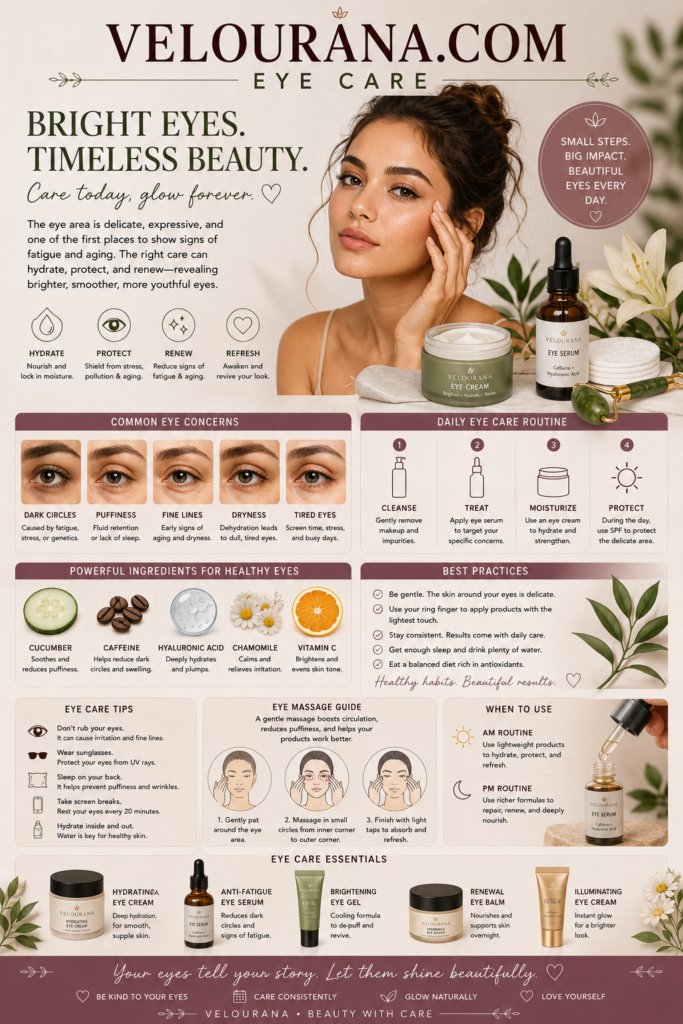
CATEGORY: Fine Lines Around Eyes
Fine lines around the eyes occupy an unusual position in skincare. They are among the most common visible changes people notice, yet they are also among the easiest to misinterpret. A few delicate creases can result from ordinary facial expression, temporary dehydration, cumulative sun exposure, gradual collagen change or several of these influences acting together.
Because the eye contour is thin and constantly moving, relatively small alterations in its condition can produce noticeable visual differences. The area may appear smooth immediately after moisturizing and more textured several hours later. Lines may almost disappear when the face is relaxed and become dramatically visible during a smile. Makeup can emphasize them, certain lighting can deepen their shadows, and environmental dryness can create an almost papery texture.
This variability means that treating fine lines effectively requires more than selecting a product labelled for wrinkles. The condition of the skin barrier, daily ultraviolet exposure, product tolerance, hydration and long-term structural support all matter. Understanding how these elements interact allows eye care to become less reactive and more strategic.
The goal is not to force delicate skin into an artificially smooth appearance at every moment. It is to maintain the best possible environment for healthy skin function while reducing avoidable factors that accelerate visible change.
The Biological Environment Around the Eyes
The skin surrounding the eyes has distinctive anatomical characteristics. Its thinness allows underlying structures, vascular coloration and small textural changes to become more visible than they might be elsewhere on the face. This is one reason multiple eye concerns often overlap. Fine lines may coexist with dark circles, puffiness or dryness, producing a more complex appearance than any single concern would create independently.
The area also contains relatively few oil glands compared with naturally oilier facial regions. Sebum contributes to the skin's surface lipid environment, helping limit moisture loss and maintain flexibility. Where natural oil is less abundant, environmental conditions and cleansing practices can have a stronger influence on comfort and hydration.
Movement is almost continuous. Blinking protects and lubricates the eyes, while smiling, squinting and ordinary expression repeatedly contract the surrounding muscles. These movements create temporary folds in the overlying skin.
In resilient skin with strong structural support, the folds largely disappear when the muscle relaxes. As the skin's mechanical properties gradually change, some creases begin to linger. The process is incremental. A dynamic line associated exclusively with expression can slowly develop a static component that remains visible at rest.
The precise timing differs enormously between individuals. Genetic factors influence skin thickness, facial anatomy, pigmentation, collagen characteristics and natural aging patterns. Environmental exposure and personal habits then modify this inherited baseline.
This explains why chronological age alone is a poor predictor of the exact appearance of the eye contour. One person may develop noticeable outer-eye lines relatively early while maintaining smooth lower eyelid skin; another may experience fine under-eye creasing but relatively little change at the outer corners.
The pattern reflects anatomy and history rather than a universal schedule.
Hydration Can Change Appearance More Than Expected
The outermost layer of skin depends on an organized barrier to retain water and protect the tissues beneath it. When this barrier functions well, the surface remains relatively flexible and smooth. When water content falls, tiny irregularities become more pronounced.
Around the eyes, dehydration can be visually dramatic because the skin is already thin. Fine superficial lines may multiply, and the surface can develop a crinkled appearance. Concealer that previously blended smoothly may begin collecting within small creases.
This does not necessarily mean that permanent wrinkles have suddenly developed.
Hydration-focused skincare can improve this appearance by increasing water content and reducing excessive moisture loss. Humectants attract and bind water within the outer skin. Emollients fill microscopic spaces between surface cells and improve softness. Occlusive components reduce evaporation by forming a protective layer.
These functions often overlap within a well-formulated moisturizer. The result is not merely a sensation of softness. Better-hydrated skin can appear temporarily fuller and more reflective, making superficial lines less noticeable.
The effect should nevertheless be understood accurately. Moisturization primarily changes the condition and appearance of the surface. It does not permanently replace lost collagen or erase established expression lines.
This distinction protects against both disappointment and overtreatment. When hydration produces substantial improvement, maintaining that hydration may be exactly what the skin needs. There is no reason to attack every remaining line with increasingly aggressive ingredients.
The skin barrier itself deserves attention because irritation increases water loss. Harsh cleansing, frequent exfoliation or poorly tolerated active products can produce a cycle in which the attempt to improve fine lines causes dryness that makes them look deeper.
Breaking that cycle can require simplification rather than escalation.
Photoaging and the Importance of Long-Term Protection
Natural biological aging and environmental aging occur simultaneously, but ultraviolet exposure is one of the most significant modifiable contributors to premature visible skin aging.
Ultraviolet radiation can influence collagen and elastin within the dermis and contribute to uneven pigmentation and changes in texture. Because these effects accumulate, their visual consequences may not become obvious until years after the exposure that helped produce them.
The eye contour is especially vulnerable because it is both delicate and exposed. The outer corners receive considerable environmental exposure, while bright conditions encourage squinting. Over time, photodamage and repeated muscular folding can reinforce one another.
Sun protection therefore belongs at the center of a long-term strategy for fine lines. Its value is not measured by whether existing lines disappear after several applications. The purpose is to reduce ongoing exposure that contributes to future structural deterioration.
Consistency matters more than occasional perfection. A sunscreen that is comfortable enough to use regularly around the eye contour has practical advantages over a formula that causes persistent stinging or migration into the eyes.
Application should respect product directions because not every facial sunscreen is intended for use directly on mobile eyelids. People with sensitive eyes may need to experiment carefully with textures designed to remain stable around the area.
Sunglasses add another useful layer. They physically shield part of the eye contour and reduce the need to squint in bright conditions. Hats and shade can further decrease direct exposure.
These measures illustrate an important principle of skincare: prevention often looks less dramatic than correction, but its cumulative influence can be greater. Protecting collagen before extensive damage develops is inherently easier than attempting to restore structural changes after they are established.
Sun protection also supports other elements of an eye-care routine. There is little logic in investing heavily in corrective products while leaving the skin repeatedly exposed to a major environmental contributor to visible aging.
The Role of Retinoids in a Thoughtful Eye Routine
Retinoids have earned a prominent position in discussions of visible skin aging because certain forms have substantial evidence supporting their ability to improve features associated with photoaging and fine lines. Their effects relate to cellular processes within the epidermis and dermis, including pathways associated with collagen.
The eye contour, however, is not the ideal place for aggressive experimentation.
Retinoids can cause irritation, dryness and peeling, particularly during the early stages of use. On thicker facial skin these effects may already be uncomfortable. Around the eyes, where the barrier is more delicate, excessive application can produce pronounced sensitivity.
A product specifically formulated for the eye area may use a concentration and delivery system designed with this vulnerability in mind. Even then, tolerance varies considerably.
The temptation to accelerate results by applying more product or using it more frequently can be counterproductive. Irritated skin becomes dry and textured, potentially making fine lines appear temporarily worse. Sustainable use is more valuable than brief periods of aggressive treatment followed by prolonged recovery.
Moisturization can support tolerance. Some routines place moisturizer around the eye contour before or after a retinoid product to reduce dryness, although the appropriate method depends on the specific formulation and its instructions.
Retinoids also require patience. Changes in established fine lines do not occur at the speed of hydration effects. The skin's structural remodeling processes operate over extended periods, so evaluating a product after only a few applications gives little useful information.
This slower timeline is characteristic of many genuinely meaningful skincare interventions. Immediate tightening sensations or temporary plumping can create visible short-term effects, but they should not be confused with long-term structural change.
The most effective use of active skincare is therefore rarely dramatic. It is controlled, consistent and supported by basic barrier care.
Why More Eye Products Do Not Necessarily Produce Better Skin
The beauty market treats the eye area as a separate universe of creams, serums, patches, masks, balms and concentrated treatments. Some can be pleasant and useful, but the number of available products can create the impression that a complex routine is necessary.
In reality, delicate skin often benefits from restraint.
Every additional formula introduces more ingredients and therefore more opportunities for irritation or incompatibility. Fragrance, botanical extracts, strong acids and highly concentrated actives may be tolerated perfectly by some people and poorly by others.
When the primary concern is fine lines, persistent irritation is especially counterproductive. Inflamed or dehydrated skin reflects light unevenly and develops more visible surface texture. The pursuit of smoother skin can therefore produce the opposite result when the routine becomes excessive.
A coherent routine has a clearer purpose. Cleansing removes accumulated products and impurities without stripping the area. Moisturization maintains hydration and barrier comfort. Sun protection reduces environmental damage. Carefully chosen corrective ingredients can then address longer-term concerns.
That foundation may sound less exciting than an extensive collection of treatments, but skin physiology does not reward complexity for its own sake.
Eye patches illustrate the difference between temporary cosmetic enhancement and structural treatment. Hydrating patches may leave the area looking smoother for a period because they increase surface hydration and create an occlusive environment. This can be useful before makeup or when the skin feels dry. The effect should simply be understood as temporary rather than mistaken for permanent wrinkle correction.
Similarly, cooling products can reduce the appearance of puffiness in some circumstances but do not rebuild collagen. Makeup primers can visually blur texture without changing the skin itself. These products can still have value when their purpose is accurately understood.
The most intelligent routine distinguishes between appearance management and biological treatment rather than expecting every product to perform both functions.
Makeup, Concealer and the Visibility of Fine Lines
Fine lines often become most frustrating when makeup is applied. Concealer can settle into creases, powder can emphasize dryness, and formulas that initially look smooth may become textured after several hours.
The problem is partly mechanical. The eye area moves constantly, while makeup forms a layer over that moving surface. Products naturally migrate toward folds as the skin contracts and relaxes.
Skin preparation can influence the result. A comfortably moisturized eye contour generally provides a more flexible surface than dry skin. However, excessive layers of rich skincare immediately before makeup can cause slipping, separation or uneven adhesion.
Allowing skincare to settle before applying complexion products can help create a more stable base.
The amount of concealer also matters. Heavy coverage creates more material that can collect within expression lines. A thinner layer concentrated where correction is actually needed often behaves more naturally than coating the entire under-eye region.
Powder presents a similar balance. It can improve longevity and reduce migration, yet too much may absorb surface oils and emphasize dryness. The ideal amount varies according to skin type, climate and formula.
These makeup considerations reinforce a broader truth: visible fine lines are not determined solely by the depth of the lines themselves. Surface hydration, product texture, lighting and movement all influence how noticeable they become.
A person may therefore see meaningful aesthetic improvement without any structural change simply by improving the relationship between skincare and makeup.
This is not an illusion in a negative sense. Cosmetic products exist partly to modify visual appearance. Problems arise only when temporary optical effects are confused with permanent biological transformation.
Lifestyle Influences Without Simplistic Promises
Fine lines are sometimes discussed through an exaggerated lifestyle lens in which individual foods, supplements or sleeping positions are presented as direct solutions. Skin biology is considerably more complex.
Nutrition contributes to general health and provides the materials required for normal tissue function, but no single food can selectively erase lines around the eyes. Adequate dietary protein, essential fatty acids, vitamins and minerals support normal physiology as part of a broader nutritional pattern.
Smoking is more directly relevant because tobacco exposure is associated with accelerated visible skin aging through multiple biological mechanisms. Avoiding smoking therefore has implications that extend beyond the eye contour.
Sleep influences how rested the eye area appears, particularly through puffiness, shadows and overall facial vitality. A poor night's sleep may make lines look more obvious, but it does not instantly create years of structural aging. The relationship is better understood as an influence on appearance and general health rather than an overnight wrinkle mechanism.
Hydration is similarly misunderstood. Drinking adequate fluids supports normal bodily function, but consuming excessive water does not directly flood the epidermis with moisture or erase established lines. Topical barrier function and environmental conditions remain important determinants of skin hydration.
Stress can influence behavior, sleep and inflammatory processes, but translating these complex relationships into claims that relaxation alone prevents wrinkles would be misleading.
Lifestyle is relevant because skin exists within the whole organism. It should not, however, become a source of simplistic rules or unrealistic promises.
Professional Treatments and the Limits of Topical Care
There is a point at which the expectations placed on skincare exceed what topical products can reasonably accomplish. Established lines involving substantial structural change cannot always be significantly altered by creams alone.
Professional dermatological and aesthetic treatments can address certain aspects of eye-area aging through mechanisms unavailable to ordinary cosmetics. Different procedures may target muscular activity, collagen remodeling, pigmentation, surface texture or volume.
The appropriate approach depends on the nature of the concern. Dynamic lines created primarily by muscle movement are biologically different from fine surface texture caused by photodamage or dehydration. Volume changes beneath the eye require a different analysis again.
This is why professional assessment can be valuable when someone wants a degree of correction beyond what skincare can realistically provide. The eye area contains important anatomical structures, and treatments performed near it require appropriate expertise.
Topical skincare still remains relevant before and after professional intervention because healthy barrier function and photoprotection support overall skin quality. Procedures and skincare should not necessarily be viewed as competing strategies. They operate at different levels.
Understanding these limits also protects consumers from exaggerated cosmetic claims. A cream may improve hydration, texture and the appearance of fine lines, but claims implying that a topical moisturizer can reproduce every effect of a medical procedure should be approached cautiously.
Realistic expectations make it easier to appreciate genuine improvements.
Patience Is an Essential Part of Eye Care
The beauty industry is built around visible novelty. New launches appear constantly, encouraging consumers to move from one formula to another before the previous product has been used long enough to evaluate properly.
Fine-line care does not fit comfortably into this rapid cycle.
Hydration effects can appear quickly, but improvements related to longer-term skin remodeling require patience. Photoprotection is even more difficult to evaluate because much of its value lies in changes that are prevented rather than changes that become immediately visible.
Consistency therefore becomes a form of sophistication. Maintaining a well-tolerated routine for months can provide more meaningful information than repeatedly replacing products after a few days.
Photographs taken under similar lighting and facial expression can sometimes provide a more objective comparison than daily inspection in a magnifying mirror. Fine changes are difficult to perceive when the face is examined constantly.
The eye area also fluctuates naturally. Weather, fatigue, allergies, makeup and hydration can alter its appearance from day to day. Judging a long-term routine according to one unusually dry morning can lead to unnecessary changes.
A stable routine creates the conditions for distinguishing temporary fluctuations from genuine trends.
Preserving Skin Quality Rather Than Chasing Perfect Smoothness
The most sustainable approach to fine lines around the eyes begins by redefining success. Perfectly smooth, motionless skin is neither a realistic nor particularly useful standard for an expressive human face.
Healthy-looking eye skin can contain lines.
What distinguishes well-cared-for skin is often its overall quality: comfortable hydration, resilience, even texture and protection from unnecessary environmental damage. Fine lines may remain visible while becoming softer and less dominant within the overall appearance.
This broader perspective changes the role of skincare. Moisturizer is no longer judged by whether it permanently removes wrinkles but by whether it maintains hydration and barrier comfort. Sunscreen is valued for protecting the future condition of the skin rather than creating an immediate transformation. Corrective ingredients are assessed according to evidence, tolerance and gradual results.
Such an approach is less dramatic than promises of overnight rejuvenation, but it is considerably more aligned with how skin actually functions.
The eye contour records movement, environment and time with unusual clarity because of its delicate structure. Its fine lines are therefore not produced by one failure or corrected by one miracle ingredient.
They emerge through the interaction of anatomy, expression, hydration, ultraviolet exposure and gradual biological change. Care works best when it addresses those influences intelligently rather than attempting to erase every visible sign of them.
Protecting the area from excessive sun, maintaining a strong moisture barrier, avoiding unnecessary irritation and using appropriate evidence-based ingredients can collectively support smoother, more resilient-looking skin.
The objective is not to stop the eye area from changing. It is to give delicate skin the conditions it needs to remain as healthy, comfortable and well supported as possible while those changes occur.
THE END VELOURANA
 Discover More From Our Family of Websites
 ZodiacBearing (Astrology, Tarot, Numerology, Angel Numbers & Spiritual Guidance)
 Velourana (Beauty, Makeup, Hair Care, Skincare & Beauty Tips)
 HavenBearing (Home, Living, Organization, Décor & Everyday Inspiration)
 PawBearing (Pet Care, Dog Breeds, Animal Health, Training & Pet Products)
 PsyCatherine (Notes From the Journal of a Psychologist on Real Life)

