
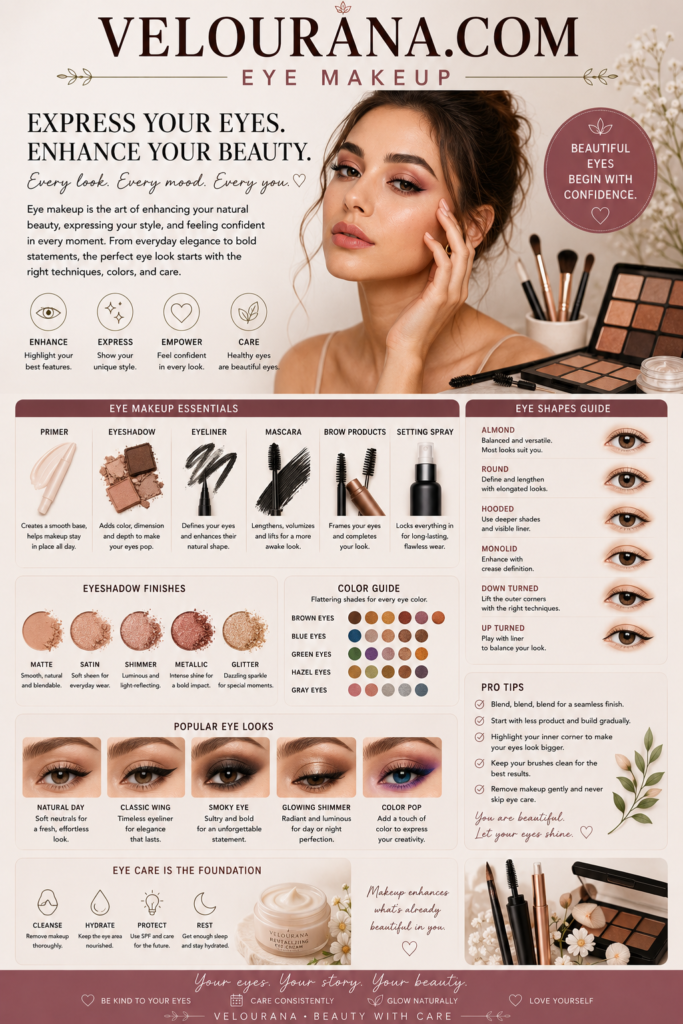
CATEGORY: Felt-Tip Eyeliner
There is something unusually decisive about eyeliner. A small amount of pigment placed along the upper lashes can alter the visual structure of the entire eye area, strengthening contrast, changing apparent proportions and giving makeup a clearer sense of direction. Among the many tools created for this purpose, felt-tip eyeliner has become one of the most accessible ways to achieve the clean intensity of liquid liner without relying on a separate brush.
Its pen-like construction suggests simplicity, but the results can be remarkably varied. A fine black trace pressed close to the lashes may be almost impossible to identify as eyeliner from conversational distance, yet it can make the lash line appear fuller. A thicker sweep creates obvious definition. Extend the outer edge by only a few millimetres and the apparent shape of the eye begins to change.
This ability to move from invisible enhancement to deliberate graphic design explains why felt-tip eyeliner occupies such a useful position in modern makeup. It is not defined by one particular look. It is a precision instrument whose effect depends on where the pigment is placed and how the line relates to the face around it.
Why a Line Can Change the Appearance of the Eye
Eyeliner works through contrast and geometry. Dark pigment placed immediately above the lashes strengthens the boundary between the eye and surrounding skin. This can make lashes appear denser even when no additional volume has actually been added.
The width of that boundary influences how much attention the liner commands. A very narrow line tends to support the lashes. A broader line becomes an independent feature. Neither approach is inherently better; they simply create different visual priorities.
Placement matters equally. Concentrating greater weight toward the outer eye can encourage an elongated impression. Keeping the line consistently narrow maintains a more natural contour. Extending the line upward beyond the outer corner introduces an apparent lift, while a straighter extension emphasizes horizontal length.
These effects explain why copying an eyeliner shape from another person can produce an unexpected result. The same line exists within different proportions of lid space, brow position, eye depth and natural folds. Makeup that looks delicate on one eye may appear dominant on another.
Felt-tip eyeliner allows those proportions to be adjusted in very small increments. Because the point can create narrow marks while the side can deposit more pigment, the line can be sculpted rather than simply drawn.
The most refined results often use this variation almost invisibly. The liner does not maintain identical thickness from beginning to end. Instead, it responds to the eye, becoming finer where space is limited and stronger where additional definition contributes to the desired shape.
Felt, Fibre and the Importance of Tip Behaviour
The term felt-tip is commonly used for a broad family of pen-style liquid eyeliners, although applicator construction can vary. What matters to the user is how the point behaves against the skin.
A firmer tip provides stability. It tends to move where the hand directs it and can be reassuring for someone who dislikes an applicator bending unexpectedly. It can also make small marks near the lash roots relatively straightforward.
A more flexible tip responds dynamically to pressure and direction. This can create graceful tapered lines, but greater flexibility also requires a more sensitive hand. Too much pressure can widen the stroke rapidly.
Length influences control as well. A long flexible point can produce expressive movement, while a shorter tip often feels more rigid and predictable. Neither design universally outperforms the other. The preferred balance depends on the type of line being created and the way the user naturally holds the pen.
Pigment flow must complement the applicator. If the tip releases too little formula, the line may skip, particularly over eye shadow. If it releases too much, precision becomes difficult and pigment can collect unpredictably around folds or lashes.
A satisfying felt-tip liner therefore creates a sense of continuity between barrel, formula and point. The hand moves, the tip responds and pigment appears without the user having to consciously manage the delivery system.
Building Definition Without Overwhelming the Lid
The most dramatic eyeliner techniques receive considerable attention, yet one of the strongest uses of felt-tip liner is extremely restrained definition.
Working close to the upper lash roots creates depth without necessarily producing the appearance of a conventional visible stripe. Small areas of pigment can visually close pale gaps between lashes and make their base appear stronger. Mascara then emerges from a darker foundation, which can make the entire lash arrangement look more cohesive.
This approach is particularly valuable when maintaining visible eyelid space is important. A thick line inevitably occupies part of the lid. On an eye with limited exposed space, that can change the balance between liner, lashes and any eye shadow above them.
The inner portion of the eye usually requires particular restraint. Beginning with a heavy line near the inner corner and maintaining that width outward can visually compress the eyelid. Starting finely and allowing the definition to develop gradually often creates a more fluid result.
The felt-tip point is useful precisely because it permits this progression. The applicator can touch down lightly near the lashes, then rotate gradually as more width is needed. Instead of drawing a line of predetermined thickness, the user is effectively designing a contour.
This also makes mistakes easier to contain. Beginning thin preserves room for adjustment. Beginning thick leaves only the option of becoming thicker.
Working With Hooded, Deep-Set and Textured Eyelids
Eyeliner technique becomes more interesting when the eyelid does not behave like the smooth, uninterrupted surface often shown in simplified makeup diagrams.
Hooded eyes may conceal part of the mobile lid when open. Deep-set eyes create their own relationship between lashes, socket and brow bone. Mature or naturally textured eyelids may contain fine folds that interrupt a perfectly straight path. None of these characteristics prevents precise eyeliner, but each rewards an approach based on the eye as it actually appears.
For hooded eyes, designing with the eye open can be particularly revealing. An outer extension positioned entirely according to the closed eyelid may disappear into a fold or change direction when the eye opens. Establishing key points while looking forward allows the visible result to guide the design.
Textured skin benefits from controlled, shorter movements rather than excessive dragging. Trying to force the applicator across natural folds can produce skipping or an uneven edge. Small connected strokes allow the point to move with the surface.
This illustrates a broader principle: precision does not mean pretending the eyelid is perfectly smooth. Precision means adapting the line accurately to the surface that exists.
The same reasoning applies to asymmetry. One eye may have slightly more visible lid space or a differently positioned fold. Matching the apparent result can require subtly different liner placement on each side. The objective is not identical measurements but visual balance.
From a Small Flick to a Graphic Wing
The wing is where felt-tip eyeliner reveals its architectural possibilities most clearly. A tiny extension beyond the outer lashes can subtly lengthen the eye. A longer, sharper line creates a stronger directional effect, while a broad wing becomes an unmistakable graphic statement.
The starting direction is more important than immediate thickness. Once the outer trajectory has been established, the shape can be connected back toward the lash line and gradually refined. This gives the user a chance to evaluate the angle before committing substantial pigment.
Looking straight ahead during this process provides essential information. The line should be judged in the position in which other people will normally see it. Closing the eye can make application easier, but repeatedly returning to a natural open position reveals whether the shape remains coherent.
The two wings should also be developed together rather than completing one elaborate eye before beginning the other. Establishing the general direction on both sides first makes it easier to compare their visual relationship before either becomes too large to adjust gracefully.
Perfection at extremely close range can become misleading. Human faces move continuously, and eyeliner is normally viewed as part of an entire face rather than as an isolated macro image. Small variations that appear significant in a magnifying mirror may be invisible at normal distance.
A polished wing therefore depends on proportion more than microscopic uniformity. Its angle should make sense with the eye, its thickness should suit available lid space and its endpoint should feel intentional.
Color Changes the Personality of Precision
Black remains strongly associated with felt-tip eyeliner because it creates maximum contrast and makes the crispness of the format immediately visible. But precision does not have to mean black.
Brown can preserve the structure of a defined line while creating a softer transition against many complexions and eye looks. Deep charcoal occupies an intermediate territory, retaining cool definition without the absolute intensity of saturated black. Other shades can transform eyeliner from structural framing into a more expressive color element.
Finish changes the effect further. Matte pigment tends to emphasize shape because light does not distract from the edge. A subtly reflective finish can appear softer or more dimensional as the face moves.
The surrounding makeup determines how prominent these distinctions become. Against a bare or minimally shaded eyelid, a dark felt-tip line can become the central eye feature. Within a smoky or strongly colored eye look, the same liner may function primarily as reinforcement at the lash line.
This is one reason eyeliner should not be evaluated independently from mascara, shadow and brow definition. Each element contributes contrast. Strengthening all of them simultaneously creates a very different visual result from allowing eyeliner to dominate while the surrounding makeup remains understated.
The felt-tip format provides enough control to participate in either approach.
Wear, Transfer and the Reality of a Moving Eyelid
A beautiful line immediately after application tells only part of the story. Eyelids blink thousands of times during ordinary life, skin produces oil, eyes may water and facial expressions continually alter the folds around them.
Transfer occurs when liner pigment makes contact with another area before it has fully set or when the formula softens during wear. This can be especially noticeable when the upper lash line naturally touches the skin above it.
Allowing the formula time to set can improve performance. Surface preparation also influences the outcome. Heavy emollient residue may interfere with adhesion, while an appropriately prepared eyelid provides a more stable base.
Waterproof or highly resistant formulas can offer additional durability, but resistance brings its own practical consideration: removal. The delicate eye area does not benefit from aggressive rubbing simply because the liner is reluctant to move. Effective removal should soften and dissolve the formula so it can be lifted away with minimal friction.
Comfort matters as much as longevity. Eyeliner that survives exceptional conditions but feels unpleasant during ordinary wear is not automatically superior to a formula designed for easier daily use. Performance should be judged according to purpose.
The best felt-tip eyeliner experience is therefore not merely the sharpest initial stroke. It is a line that applies predictably, remains attractive for the intended period and can ultimately be removed without turning the end of the day into a struggle.
Precision Without Perfectionism
The greatest misconception surrounding liquid-style eyeliner may be the idea that success requires exceptional natural steadiness. Technique matters, but much of what appears to be effortless precision is simply the result of sensible construction.
Thin lines can become thicker. Small wings can become longer. Connected short strokes can become visually continuous. Slight differences between eyes can be balanced rather than erased. The felt-tip pen supports this gradual approach particularly well because it allows the user to alternate between tiny marks and decisive strokes without changing tools.
Over time, familiarity also changes the process. The hand learns how much pressure the tip tolerates, how quickly pigment emerges and which angle creates the preferred width. Application becomes less about consciously controlling every millimetre and more about recognizing the movement that produces a familiar result.
That is ultimately why felt-tip eyeliner remains such a compelling format. It gives structure to one of makeup's most transformative gestures while leaving enormous room for individuality.
A line can be barely visible or unapologetically graphic. It can strengthen lashes, elongate the eye, create a wing or simply introduce a small amount of contrast exactly where it is wanted. The tool remains the same; what changes is the relationship between pigment, proportion and intention.
Felt-tip eyeliner is therefore not simply an easier version of traditional liquid liner. At its best, it is a distinct precision medium—compact, responsive and capable of turning a few carefully placed strokes into an entirely different interpretation of the eyes.
THE END VELOURANA
 Discover More From Our Family of Websites
 ZodiacBearing (Astrology, Tarot, Numerology, Angel Numbers & Spiritual Guidance)
 Velourana (Beauty, Makeup, Hair Care, Skincare & Beauty Tips)
 HavenBearing (Home, Living, Organization, Décor & Everyday Inspiration)
 PawBearing (Pet Care, Dog Breeds, Animal Health, Training & Pet Products)
 PsyCatherine (Notes From the Journal of a Psychologist on Real Life)

