
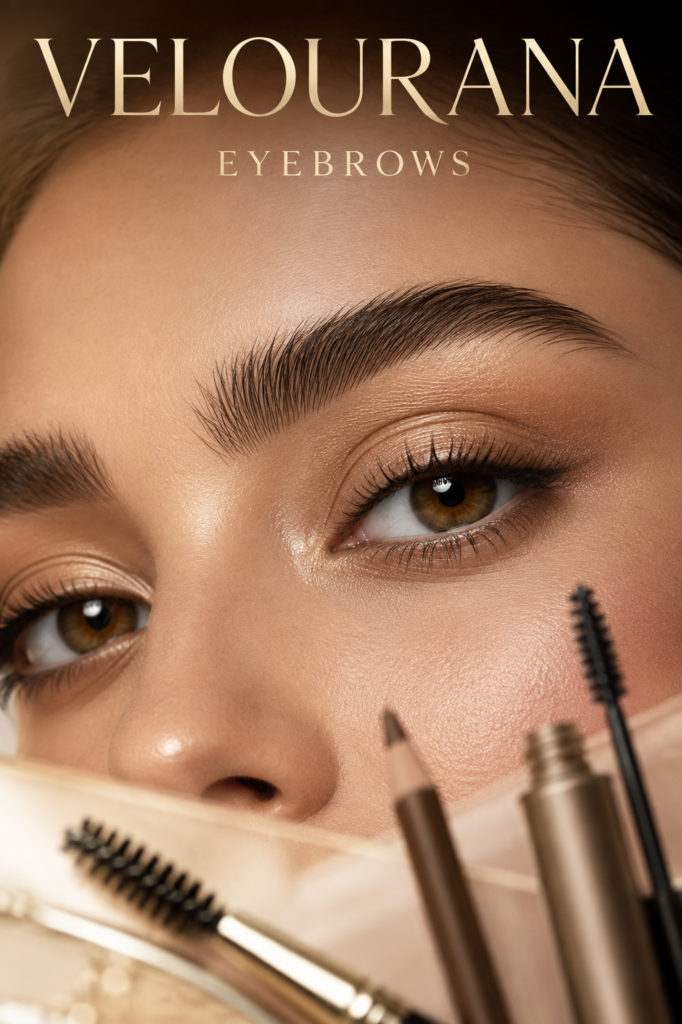
CATEGORY: Waxing
Eyebrow waxing has remained one of the most established methods of professional brow grooming because it combines speed, precision, and the ability to remove multiple unwanted hairs at once. A carefully performed wax can transform an untidy brow into a cleaner, more intentional shape while preserving the natural character of the face. Unlike techniques that remove individual hairs one by one, waxing works across small areas of skin, making it especially useful when there is noticeable growth beneath the brow, between the brows, or around the outer edges.
The apparent simplicity of eyebrow waxing can be misleading. Applying wax and removing hair may take only moments, but creating attractive brows requires considerably more judgment. Brow symmetry, facial proportions, natural hair direction, skin sensitivity, existing density, and the desired degree of definition all influence the final result. Removing only a few hairs too many can alter an arch, shorten a brow, or create a shape that takes weeks or months to correct.
Modern brow waxing therefore works best when it is approached as controlled grooming rather than aggressive reshaping. The objective is generally not to manufacture identical brows or force every face into a fashionable template. Instead, waxing can refine what is already present, eliminate distracting growth, and reveal a clearer version of the natural brow.
Why Waxing Works So Well for Brow Grooming
Waxing removes hair from the root rather than cutting it at skin level. When the wax grips the unwanted hair and is removed correctly, the entire hair is pulled from its follicle. This creates a noticeably cleaner appearance than shaving and usually keeps the treated area smoother for considerably longer.
The technique is particularly effective around eyebrows because brow growth frequently includes a mixture of important structural hairs and finer surrounding hairs. These small hairs may not appear significant individually, yet collectively they can soften or blur the outline of a brow. Waxing can remove these scattered hairs efficiently and create a sharper distinction between the brow itself and the surrounding skin.
Speed is another reason waxing remains popular. Tweezing an extensive area beneath two brows can be time-consuming because each hair must be grasped separately. Waxing can remove numerous hairs with one controlled application. A brow professional may then use tweezers for individual hairs that require additional precision.
The resulting smoothness also contributes to the polished appearance associated with waxing. Because the hair is removed from the root, there is no immediately visible stubble. The skin surrounding the brow can appear cleaner, which may make the shape itself look more defined.
However, greater efficiency does not mean greater freedom to remove hair. Waxing can remove many hairs extremely quickly, which makes planning especially important. A poorly positioned strip can remove hairs that were intended to remain. Precision must therefore begin before wax touches the skin.
Understanding the Natural Architecture of the Eyebrow
Successful waxing begins with recognizing that eyebrows have an existing structure. Although brows differ dramatically between individuals, they usually contain a beginning near the inner eye area, a body extending outward, an arch or highest point, and a tail that gradually becomes narrower.
The position and prominence of these features depend on genetics, previous grooming, age, hair density, facial anatomy, and personal style. Some people naturally have pronounced arches, while others have relatively straight brows. Some brows are dense from beginning to tail, whereas others become sparse toward the outer section. Waxing should respond to these differences rather than attempt to erase them.
Before removing hair, it is useful to observe where the densest portion of the brow naturally sits. This often reveals the shape that can be refined with the least disruption. Hairs growing significantly outside this main structure are usually more obvious candidates for removal than hairs located directly along the principal brow line.
The upper boundary deserves particular caution. Historically, some grooming advice suggested that the tops of eyebrows should never be waxed. That rule is unnecessarily absolute. Fine stray hairs above the brow can be removed successfully, but substantial reshaping from the upper edge can change the brow's natural proportions quickly. Conservative removal is generally more forgiving.
The underside of the brow frequently offers more opportunities for visible refinement. Removing scattered growth beneath the arch can open the appearance of the eye area and make the brow seem more deliberate. Even here, however, repeated removal of hairs from the main body can gradually create a brow that is thinner than intended.
The tail requires similar restraint. An excessively long or downward-growing tail may visually pull the brow downward, but shortening it too dramatically can leave the brow looking incomplete. The goal is balance rather than simply removing every hair that appears outside a rigid geometric line.
Brow Mapping Before Waxing
Brow mapping is the process of identifying important reference points before hair removal begins. Professional mapping can be elaborate, but the fundamental purpose is straightforward: it helps establish where the brow should approximately begin, rise, and end in relation to the face.
These reference points are guidelines rather than mathematical laws. Faces are not perfectly symmetrical, and natural brows rarely match exactly. Mapping should help prevent accidental over-removal rather than force both eyebrows into artificial duplication.
The inner brow is often considered in relation to the side of the nose and inner eye area. If brows extend too far inward, the expression may appear heavier; if excessive hair is removed between them, the brows can appear unusually far apart. The correct balance depends on facial proportions and natural growth.
The arch is similarly influenced by anatomy. Moving an arch too close to the center can create a surprised or sharply angled appearance, while pushing it too far outward may flatten the central portion of the brow. Frequently, the most flattering result comes from refining the natural high point rather than constructing an entirely new one.
The endpoint of the brow also influences facial balance. A tail that extends too far downward can visually close the eye area, while one that is excessively shortened may make the brow look abrupt. Mapping helps identify a reasonable boundary before waxing begins.
Professionals may mark these points with brow pencils or specialized mapping products. At home, simply studying the brows carefully before beginning can make an important difference. Waxing should never become a process in which the shape is discovered only after the hair has already been removed.
Hard Wax and Soft Wax Around the Brows
Not all waxing products behave in the same way. Two broad categories commonly encountered in beauty treatments are hard wax and soft wax.
Hard wax is applied warm and allowed to cool sufficiently to become removable without a separate fabric or paper strip. It adheres primarily around the hairs and forms its own flexible strip. Because of this characteristic, many professionals find it useful for smaller or more sensitive areas.
Soft wax remains relatively thin and is generally removed using a waxing strip. It can grip fine hair effectively and produce a very clean result. Because it also adheres strongly to the skin, technique becomes especially important when it is used on the delicate brow area.
Neither category automatically guarantees a better result. Product formulation, temperature, application thickness, skin condition, operator technique, and the number of times an area is treated all influence how the skin responds.
Wax specifically designed for facial use is preferable to products intended primarily for larger body areas. The skin surrounding the eyes is comparatively delicate, and eyebrow waxing demands far more precise application than waxing areas such as the legs.
Temperature also matters. Wax should never be excessively hot. A product can be warm enough to spread while still being inappropriate for immediate application if its temperature has not been checked. Following the manufacturer's instructions is essential because different formulations have different heating requirements.
Preparing the Skin for Eyebrow Waxing
The condition of the skin before waxing can influence both hair removal and the likelihood of irritation. Clean skin provides a better working surface because makeup, skincare residue, oils, and perspiration can interfere with the wax.
Preparation does not require aggressive cleansing. In fact, excessive scrubbing immediately before waxing can make the skin more vulnerable. The aim is to create a clean, dry surface without unnecessarily disrupting the skin barrier.
Recent exfoliation deserves particular attention. Strong exfoliating products can leave the surface of the skin more sensitive. The same applies to certain skincare ingredients and dermatological treatments that increase skin turnover or affect the outer layers of the skin. Waxing compromised or highly sensitized skin can cause more than ordinary temporary redness; in some circumstances, superficial skin can lift with the wax.
People using prescription topical treatments, strong retinoids, undergoing certain cosmetic procedures, or experiencing active irritation should seek appropriate professional guidance before waxing. Product instructions and advice from a qualified clinician or experienced brow professional should take priority over generic grooming recommendations.
Sunburned skin should not be waxed. Neither should areas with cuts, abrasions, active rashes, or obvious inflammation. Waxing is elective grooming, so there is little justification for proceeding when the skin is visibly compromised.
Hair length matters as well. Wax requires enough exposed hair to establish a grip. Extremely short hairs may remain behind, while excessively long hairs can make the treatment less comfortable or less controlled. Brow hairs rarely require the same preparation as larger body areas, but recently shaved or heavily trimmed growth may be difficult to wax effectively.
Precision During the Waxing Process
The most important principle during eyebrow waxing is controlled placement. Wax should be applied only where hair has intentionally been selected for removal. The application should not extend casually into the body of the brow.
Working in small sections offers greater control. Although it may seem efficient to cover a large portion of the brow area at once, smaller applications reduce the consequences of inaccurate placement and allow the natural shape to be assessed continuously.
Hair growth direction also matters. Waxing systems generally have specific recommendations regarding application and removal direction, and those instructions should be followed carefully. Skin should be supported appropriately during removal because unnecessary pulling can increase discomfort and irritation.
The same patch of delicate facial skin should not be repeatedly waxed simply because several hairs remain. Persistent reapplication can irritate the skin and increase the risk of superficial damage. Remaining individual hairs can often be handled more precisely with tweezers once the primary waxing is complete.
This combination of waxing and tweezing is one reason professional brow treatments can look particularly polished. Wax handles the broader cleanup efficiently, while tweezers allow isolated hairs near important structural boundaries to be removed individually.
The brow should be checked repeatedly throughout the process. Removing hair from one eyebrow completely before considering the other can sometimes make balance more difficult. Alternating attention between the two allows gradual comparison.
Creating Symmetry Without Making Brows Identical
One of the most common misconceptions in brow grooming is that successful eyebrows must be perfectly identical. Human faces are naturally asymmetrical. Eye position, brow bone shape, muscle movement, hair density, and growth direction can differ from one side to the other.
Trying to eliminate every difference through waxing may require removing significant amounts of healthy brow hair from the fuller or differently positioned eyebrow. The result can be two thinner brows that technically resemble each other more closely but suit the face less effectively.
A better objective is visual balance. The brows should appear related in thickness, general length, and degree of refinement while still respecting their individual growth.
Small differences can often be managed through makeup rather than permanent hair removal. A slightly sparse arch can be filled with a pencil or powder. A minor difference in tail density can be corrected cosmetically. Waxing should be reserved for hair that genuinely needs removal rather than being used to solve every asymmetry.
This conservative philosophy is particularly important because removed hair cannot be immediately restored. Makeup can always add temporary definition, while an over-waxed section may require weeks of regrowth.
Waxing Thick and Full Eyebrows
Full brows can respond beautifully to waxing because the technique can create definition without sacrificing their natural density. The principal danger is assuming that thick brows require substantial thinning.
Often, a dense brow needs only cleanup around its perimeter. Removing stray growth beneath the main line, tidying the space between the brows, and refining the tail may be enough to create a dramatic improvement.
The interior of a full brow usually benefits from preservation. Excessive removal within the main body can create gaps that interrupt the natural flow of hair. Once these gaps appear, the brow may require makeup to regain the fullness it originally possessed.
Long hairs can sometimes create the illusion of excessive density. In these situations, careful trimming may be more appropriate than waxing additional hairs from the root. Waxing, trimming, and tweezing perform different functions, and combining them intelligently can preserve fullness while improving shape.
Fashion trends also change. Brows that appear excessively thick according to one era's aesthetic may become desirable a few years later. Maintaining a strong natural foundation provides more flexibility than repeatedly reducing the brow to follow temporary trends.
Waxing Fine, Sparse, or Previously Over-Plucked Brows
Sparse brows require a different strategy. When there is limited hair available, every structural hair becomes more valuable. Waxing should generally concentrate on obvious stray growth rather than aggressively defining boundaries.
A sparse brow can look thinner after waxing even when relatively few hairs have been removed because fine surrounding hairs sometimes contribute visually to the overall sense of fullness. Careful assessment is therefore essential.
Previous over-plucking can complicate the situation further. Some hairs may regrow slowly, irregularly, or not at all. If someone is attempting to restore fuller brows, frequent waxing along the desired growth zone can work against that objective.
During a regrowth period, the brows may temporarily look less polished because new hairs appear at different stages. Selective grooming can maintain neatness while protecting hairs that may eventually become part of the restored shape.
Cosmetic brow products can be especially useful during this phase. Instead of removing hair to create a perfectly sharp shape, makeup can establish the desired outline while natural growth develops.
What to Expect Immediately After Waxing
Temporary redness is common after eyebrow waxing. Hair has been removed from the follicles and the skin has experienced mechanical stress, so a mild reaction immediately afterward is not necessarily unusual.
The degree of redness varies considerably. Some people experience little visible reaction, while others develop noticeable pinkness around the treated area. Skin sensitivity, wax formulation, technique, temperature, and individual physiology all influence the response.
The freshly waxed area should generally be treated gently. Rubbing, scratching, aggressive exfoliation, and unnecessary touching can increase irritation. Heavy fragranced products or strongly active skincare ingredients may also feel uncomfortable on recently waxed skin.
Heat and perspiration can contribute to temporary sensitivity. Very hot showers, steam, saunas, or intense exercise immediately after treatment may make an already reactive area feel more irritated.
Makeup application directly over freshly waxed skin is another consideration. Some people prefer to allow the area time to settle before covering it with cosmetics, particularly when redness or sensitivity is present.
A soothing product may be used when appropriate, but simplicity is often valuable. More products do not necessarily produce faster recovery. A gentle approach that protects the skin barrier is usually preferable to applying numerous treatments to an area that has just been waxed.
Persistent pain, blistering, substantial skin lifting, unusual swelling, or other severe reactions are not simply routine grooming redness and should be evaluated appropriately.
How Long Eyebrow Waxing Results Last
Because waxing removes hair from the root, results generally last longer than methods that cut hair at the surface. However, there is no universal schedule that applies to everyone.
Hair grows in cycles, meaning not every brow hair is at the same stage simultaneously. Some hairs that were too short to be removed during one session may become visible relatively soon afterward. Others may take considerably longer to return.
Individual growth rate, hormones, age, genetics, previous hair-removal habits, and the specific area of the brow all influence how quickly regrowth becomes noticeable.
Many people establish a waxing rhythm based on how their own brows behave rather than following a rigid calendar. Waxing too frequently can encourage unnecessary removal of hairs that should remain part of the shape. Waiting until there is enough meaningful regrowth usually allows the next session to be more deliberate.
Occasional isolated hairs can be tweezed between appointments when they clearly sit outside the established shape. However, constant home tweezing can gradually change the professional outline if hairs are removed impulsively.
Professional Waxing Versus At-Home Brow Waxing
At-home waxing products make eyebrow grooming accessible, but professional services offer advantages that are particularly relevant to shape.
A trained brow professional sees the eyebrows from a different visual perspective. It can be difficult to judge one's own brows objectively at very close range, especially when using a magnifying mirror. Professionals can assess both brows simultaneously in relation to the entire face.
Experience also improves product control. Knowing how much wax to apply, where to stop, how to support the skin, and when not to wax is part of professional technique.
At-home waxing can still be appropriate for people who understand their established brow shape and are comfortable maintaining obvious stray growth. The safest aesthetic approach is usually conservative. Removing obvious hairs well outside the desired brow is less risky than attempting a complete redesign.
Pre-shaped facial waxing strips may appear convenient, but brow shapes are individual. A predetermined curve cannot account for every person's bone structure, brow density, or natural arch. Any product should therefore be used according to its instructions rather than assuming that its shape represents an ideal eyebrow template.
When uncertainty exists, tweezing may offer more control because each decision affects only one hair. Waxing magnifies both efficiency and mistakes.
Avoiding the Over-Waxed Brow
Over-waxing can happen suddenly or gradually. A single overly broad application can remove an obvious section, but repeated minor adjustments can also make brows progressively thinner over months or years.
The process often begins with the pursuit of perfect symmetry. One eyebrow is slightly thinner, so hair is removed from the other. The second then appears differently shaped, prompting another correction. Gradually, both brows lose density.
Another common cause is chasing an increasingly clean outline. After waxing removes the obvious stray hairs, the newly sharpened boundary can make the next row of hairs appear untidy by comparison. Removing that row reveals another boundary, and the process continues.
Viewing the brows from normal conversational distance helps prevent this. Brows are part of the entire face, not miniature drawings intended to be examined centimetres from a mirror.
Natural texture also deserves acceptance. Real brows contain hairs of different lengths, thicknesses, and directions. A polished eyebrow does not need to look artificially stamped onto the face.
Waxing as Part of a Complete Brow Routine
Waxing is most effective when its role is clearly defined. It removes unwanted hair; it does not necessarily solve every grooming concern.
Trimming can manage excessively long hairs without reducing density. Tweezing can refine isolated hairs with exceptional precision. Brow gels can redirect unruly growth. Pencils, powders, pomades, pens, and tinted gels can enhance areas where natural density is limited. Brow tinting can deepen the appearance of pale hairs, while lamination can alter the way hairs lie and create a fuller, more structured effect.
These methods can complement one another, but they should not automatically be performed together without considering skin condition and treatment compatibility. Some chemical brow services require careful timing around waxing because the skin and hair have already been exposed to other processes.
The best routine depends on what the brows actually need. Someone with dense, orderly brows may require only occasional waxing. Another person may benefit from light waxing combined with trimming. Someone with sparse brows may use minimal hair removal and rely more heavily on cosmetics for definition.
The Enduring Appeal of Waxed Brows
Beauty trends continually reinterpret eyebrow shape. Extremely thin arches have been fashionable at certain times, while dense, brushed-up brows have dominated others. Straight brows, soft arches, dramatic tails, laminated textures, and barely groomed natural brows have all moved through periods of popularity.
Waxing remains relevant across these changes because it is a technique rather than a single aesthetic. The same method can support a soft natural brow or a highly defined one depending on how much hair is removed and where.
Its greatest strength is therefore not its ability to create dramatic transformation. It is the control it can provide when used thoughtfully.
A successful eyebrow wax should make the brows appear intentional without making the hair removal itself the dominant feature. The eyes can appear more open, the brow structure clearer, and makeup easier to position, while enough natural hair remains to preserve softness and individuality.
The most sophisticated approach is often the least aggressive. Brow waxing does not need to reinvent the eyebrow every time it is performed. By respecting natural growth, working conservatively around structural hairs, and treating the surrounding skin carefully, waxing can remain an efficient and elegant part of long-term brow grooming.
THE END VELOURANA
 Discover More From Our Family of Websites
 ZodiacBearing (Astrology, Tarot, Numerology, Angel Numbers & Spiritual Guidance)
 Velourana (Beauty, Makeup, Hair Care, Skincare & Beauty Tips)
 HavenBearing (Home, Living, Organization, Décor & Everyday Inspiration)
 PawBearing (Pet Care, Dog Breeds, Animal Health, Training & Pet Products)
 PsyCatherine (Notes From the Journal of a Psychologist on Real Life)

