
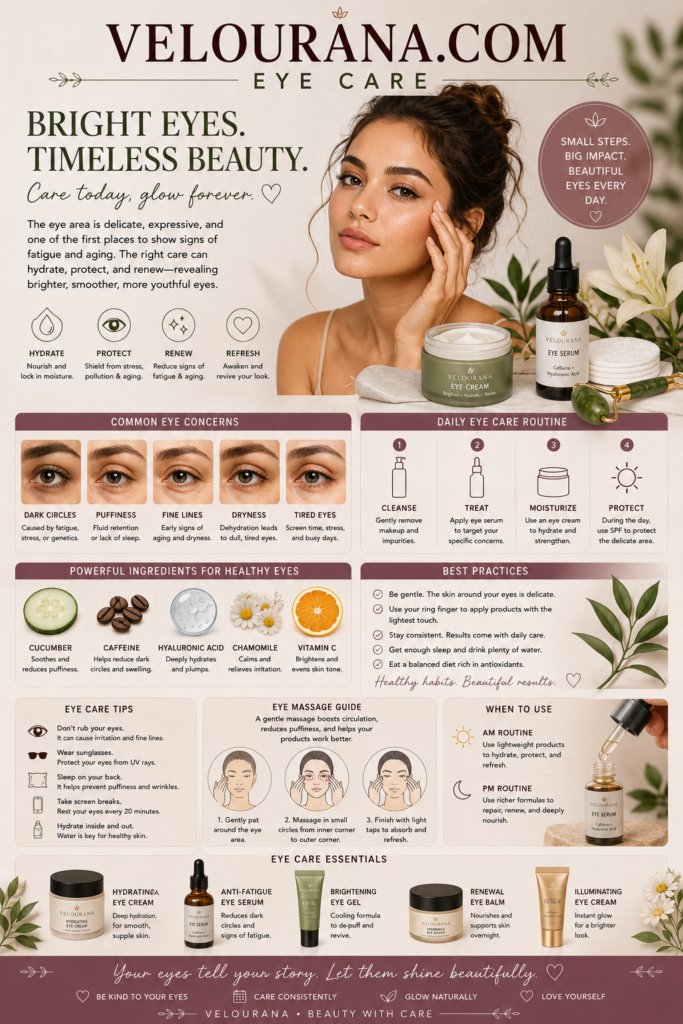
CATEGORY: Eye Masks
The eye area has a remarkable ability to reveal what is happening beneath the surface of everyday life. A short night, a long flight, hours spent looking at screens, seasonal dryness, or simple dehydration can make the skin around the eyes appear less smooth and more fatigued. Because this area is delicate and visually prominent, even relatively small changes in hydration and texture can become noticeable. Eye masks have developed around this reality, offering concentrated, temporary treatment in formats designed specifically for the contours beneath and around the eyes.
Eye masks are sometimes presented as dramatic beauty fixes, but their real strengths are more practical. A well-formulated mask can provide an intensive dose of hydration, create a temporarily occlusive environment that reduces water loss, soothe skin that feels uncomfortable, and improve the appearance of fine dehydration lines. Cooling formats may also help the eye contour look temporarily fresher and less puffy. These are useful cosmetic effects, particularly when expectations remain realistic.
What makes eye masks interesting is not simply the serum or cream they contain. Their format changes the way a skincare formula interacts with the skin. A patch placed over a hydrating essence can hold that formula against the surface for several minutes, while an overnight eye mask can create a richer protective layer than a lightweight daily product. Understanding that relationship between formula, format, skin condition, and application makes it easier to see where eye masks genuinely belong in a thoughtful skincare routine.
Why the Eye Area Benefits From Concentrated Hydration
Skin around the eyes is structurally different from many other areas of the face. It is relatively thin, contains fewer sebaceous glands than oilier facial regions, and is subjected to almost constant movement through blinking, smiling, squinting, and facial expression. These characteristics do not automatically make the area unhealthy or deficient, but they can make changes in surface hydration particularly visible.
When the outermost layer of skin lacks sufficient water, its surface may appear less supple. Very fine lines can become more obvious, concealer may settle differently, and the area can develop a slightly creased or papery appearance. This is one reason an eye mask can sometimes produce a surprisingly noticeable short-term improvement even though it has not fundamentally changed the structure of the skin.
Hydrating masks commonly rely on humectants, which attract and hold water within the upper layers of the skin. Glycerin, hyaluronic acid, panthenol, beta-glucan, and various sugar-derived moisturizing ingredients may appear in formulas designed for this purpose. Emollients can complement them by smoothing the spaces between surface skin cells, while occlusive ingredients can help reduce evaporation.
The patch itself may contribute to this effect. When a hydrogel or fabric mask covers the skin, evaporation from the treated surface can be temporarily reduced. The serum remains in contact with the skin rather than drying immediately in the open air. The result can be a more hydrated-looking surface after the mask is removed.
This improvement should be interpreted correctly. A fine line caused or emphasized by dehydration may appear softer after effective moisturization. A deeper expression line or established wrinkle is different. Hydration can improve its surface appearance, but an eye mask cannot permanently erase structural changes in the skin.
This distinction does not diminish the value of the treatment. Skincare does not need to create permanent anatomical change to be worthwhile. Making skin feel comfortable, supple, smooth, and well conditioned is itself a legitimate objective.
Hydrogel Patches, Cream Masks, and Overnight Treatments
The term eye mask covers several different product formats, and their behavior can vary substantially.
Hydrogel patches are perhaps the most recognizable. Their flexible, jelly-like material is shaped to fit beneath the eyes and usually contains a water-rich serum. The physical coolness of the patch can feel refreshing, while the close contact encourages temporary hydration. Some people refrigerate compatible patches for an additional cooling sensation, although product storage instructions should always take priority because not every cosmetic formula is intended to be refrigerated.
Fabric or bio-cellulose eye patches operate on a similar principle. They act as carriers for a liquid essence and maintain contact between the formula and the skin. Their effectiveness depends less on the novelty of the material than on the quality and suitability of the formula they deliver.
Cream-based eye masks behave differently. Rather than placing a separate patch over the skin, these products are applied as a richer layer. They may contain humectants alongside emollients such as squalane, plant-derived oils, fatty alcohols, ceramides, or other barrier-supportive ingredients. They can be particularly appealing when dryness rather than puffiness is the dominant concern.
Overnight eye masks extend this principle further. They are intended to remain on the skin while the user sleeps, functioning somewhat like a rich eye cream with an emphasis on prolonged moisturization. Because there is no need for a patch to remain physically attached, the product can create a comfortable protective film without the inconvenience of wearing hydrogel pieces for hours.
Reusable silicone eye masks represent another approach. The silicone itself generally does not supply active skincare ingredients. Instead, it is placed over a serum or cream already applied to the skin, creating temporary occlusion. This can reduce evaporation and keep the underlying product in place. Reusable formats can also reduce reliance on individually packaged disposable patches, although they need appropriate cleaning and drying between uses.
None of these formats is inherently superior. A lightweight hydrogel patch may suit someone looking for a quick pre-makeup hydration treatment, while a richer cream mask may be more appropriate for persistently dry-feeling skin. The best format is the one whose formulation and use pattern match the actual condition of the eye area.
What Eye Masks Can Realistically Do for Puffiness
Puffiness is one of the most common reasons people reach for eye masks. It is also one of the areas where the immediate visual effect can be satisfying, particularly when cooling is involved.
The under-eye area can look swollen for many reasons. Fluid distribution changes overnight, sleep patterns can influence appearance, allergies may contribute, and individual facial anatomy plays an important role. Some people naturally have more prominent tissue beneath the eyes, while others experience occasional temporary swelling.
A cool eye mask can cause superficial blood vessels to constrict temporarily and may make the area feel calmer and look less swollen. The gentle pressure of a patch can also contribute to the sensation of de-puffing. This is why chilled eye patches are popular in morning routines and before special occasions.
However, temporary puffiness and permanent under-eye bags should not be treated as the same concern. Structural fullness associated with fat pads, genetics, facial anatomy, or age-related changes will not disappear because of a cosmetic mask. A patch may improve hydration and create a fresher surface appearance, but it cannot remodel underlying anatomy.
This is an important example of why skincare language matters. Describing an eye mask as refreshing or temporarily de-puffing is reasonable when the formula and cooling effect support that outcome. Suggesting that it permanently eliminates under-eye bags creates expectations that topical skincare cannot reliably meet.
Used with realistic expectations, cooling masks remain useful. Their value may lie precisely in their temporary nature: they can make the eyes look fresher at the moment when that effect is wanted.
Brightening Ingredients and the Complexity of Dark Circles
Dark circles are another frequent target of eye-mask marketing, but they are considerably more complicated than they initially appear.
Under-eye darkness can have multiple causes. Pigmentation may contribute, particularly when melanin is concentrated in the area. Thin skin can allow underlying vascular coloration to remain visible. Facial anatomy can create shadows beneath the eyes, especially when there is a pronounced tear trough. Puffiness can deepen those shadows. Genetics, sun exposure, irritation, rubbing, and changes associated with age can all influence appearance.
Because different mechanisms can produce a similar visual result, no single eye mask can address every form of dark circle.
Masks containing ingredients such as niacinamide or vitamin C derivatives may support a broader brightening routine when pigmentation is part of the concern. Hydration can also make the surface appear smoother and more reflective, which may subtly improve overall luminosity. Caffeine is frequently included in eye products because of its association with a more refreshed appearance and its interaction with superficial circulation.
Yet even a sophisticated formula cannot remove a shadow caused primarily by facial structure. This is why some people use brightening eye products consistently and still retain visible darkness beneath the eyes. The skincare may be working perfectly well on the surface without being capable of changing the anatomical cause of the shadow.
Sun protection also matters when pigmentation is involved. An occasional brightening eye mask cannot compensate for repeated ultraviolet exposure. Sunglasses, shade, and carefully applied broad-spectrum sunscreen suitable for the surrounding facial skin can therefore be more important to a long-term pigmentation strategy than any single masking treatment.
Eye masks work best here as supporting products rather than isolated solutions.
Fine Lines, Smoothness, and the Difference Between Hydration and Remodeling
Few cosmetic effects are as immediate as the smoothing produced by good hydration. When dry surface cells absorb water and the skin becomes more supple, tiny creases may appear softened. This can make eye masks especially appealing before makeup.
The effect is often most obvious with dehydration lines. These superficial lines can fluctuate according to skin condition and environment. After a hydrating mask, the eye area may look plumper and concealer may sit more evenly.
Established wrinkles are more complex. Repeated facial movement, changes in collagen and elastin, cumulative ultraviolet exposure, genetics, and age-related structural changes all contribute. A twenty-minute mask cannot reverse these processes.
Some eye masks contain ingredients associated with longer-term skincare goals, including peptides, antioxidants, niacinamide, or retinoid-related formulations. Their potential value depends on concentration, stability, frequency of use, tolerance, and the overall formulation. A product that is applied occasionally for a few minutes should not automatically be expected to perform like a carefully formulated treatment used consistently over months.
This is why the instant visual result and the long-term skincare role of an eye mask should be considered separately. Immediate hydration can be real without being permanent. Long-term improvement, where possible, requires consistent skincare habits rather than occasional intensive treatments alone.
The Importance of a Gentle Formula Around the Eyes
The eye contour deserves particular attention when choosing cosmetic formulas because irritation in this region can quickly become uncomfortable. Products may migrate toward the eyes, and highly fragranced or aggressive formulations can be difficult for sensitive users to tolerate.
More ingredients do not necessarily create a better eye mask. A relatively simple formula focused on hydration and barrier support may be preferable to a heavily loaded product containing numerous botanical extracts, fragrance components, exfoliating acids, and multiple active ingredients.
Fragrance deserves individual consideration. Many people tolerate fragranced cosmetics without difficulty, but the eye area can be less forgiving. Someone with reactive skin may prefer fragrance-free products, especially if previous eye products have caused watering, burning, itching, or redness.
Strong exfoliating acids also require caution around the eyes. The desire to smooth fine lines can encourage overly aggressive treatment, but irritation can leave the area looking drier and more textured rather than smoother. The same principle applies to potent retinoids. Products specifically formulated for use around the eyes should be used according to their instructions rather than assuming that stronger application produces faster results.
The physical patch material can also matter. Adhesives, gels, preservatives, or botanical ingredients may occasionally provoke sensitivity. A mask should not produce persistent stinging or burning. Discomfort is not evidence that a treatment is working.
Applying an Eye Mask Without Overcomplicating the Routine
Eye masks are easiest to use when they complement rather than disrupt the rest of a skincare routine. Most disposable patches are designed for clean skin, allowing the serum to contact the eye area without sitting over layers of heavy cream or makeup.
Placement should follow the product instructions while avoiding excessive proximity to the lash line or direct contact with the eye. The skin does not need to be stretched aggressively to position a patch. Gentle placement is sufficient.
Wearing a mask for longer than recommended is not necessarily beneficial. A product designed for ten or twenty minutes has been formulated around that use pattern. Leaving certain patches on until they become completely dry may reduce comfort rather than increase results.
After removal, remaining serum can usually be gently patted into the surrounding skin unless the manufacturer directs rinsing. A moisturizer can then be applied when additional barrier support is wanted. During the daytime, sun protection remains important.
The same restraint applies to frequency. Some hydrating eye masks may be suitable several times per week or even more frequently, while stronger formulations may be intended for occasional use. Product directions and individual tolerance should determine frequency rather than the assumption that daily masking is automatically superior.
Eye Masks Before Makeup and Special Occasions
One of the most convincing uses for an eye mask is also one of the simplest: preparing the skin before makeup.
Concealer tends to reveal texture when the underlying skin is dry. Adding more makeup rarely solves the problem because pigment can collect around fine surface lines. Hydrating the area beforehand can create a smoother canvas.
A well-tolerated eye mask used before makeup can temporarily increase surface hydration and leave the area feeling more supple. After the serum has absorbed, makeup may spread more evenly and require less manipulation.
Timing matters. Extremely rich masks can leave an oily film that interferes with concealer, while excessively wet serum can encourage makeup to slide. Allowing the skincare to settle before applying cosmetics usually produces a more predictable result.
Cooling patches can also be useful on mornings when the eye contour appears temporarily puffy. Their combination of hydration and cool contact may create a visibly fresher appearance without requiring complicated techniques.
This event-oriented role illustrates what eye masks do particularly well. They can deliver a concentrated cosmetic improvement at a chosen moment. There is nothing inferior about a temporary result when temporary enhancement is exactly what is needed.
Where Eye Masks Fit in Long-Term Eye Skincare
A sophisticated skincare routine does not need an eye mask, but an eye mask can make that routine more adaptable.
Daily fundamentals remain more influential over time. Gentle cleansing, appropriate moisturization, protection from ultraviolet radiation, avoiding unnecessary irritation, adequate sleep where possible, and consistent use of suitable treatment ingredients generally matter more than occasional masking.
Eye masks add another dimension. They provide concentrated hydration when the skin feels unusually dry, cooling when the eye area looks temporarily puffy, and a convenient preparation step before makeup. They can also turn skincare into a deliberate moment of rest, which has value even when it cannot be measured as a biological transformation.
The strongest reason to use an eye mask is therefore not because the eye area somehow requires one. It is because the product performs a specific function that the user appreciates.
A hydrating mask can make dry skin look smoother. A cooling patch can make morning puffiness appear less prominent. A rich overnight formula can improve comfort when the eye contour feels dry. A brightening formula can complement a broader pigmentation-conscious routine. These are meaningful but appropriately limited roles.
Eye masks become less useful when they are expected to accomplish what topical cosmetics cannot realistically deliver: permanently erase deep wrinkles, remove anatomical under-eye bags, restructure tear troughs, or eliminate every type of dark circle.
Understanding those boundaries allows the category to be appreciated on its real merits. Eye masks are targeted skincare tools rather than miracles in miniature. Chosen carefully and used appropriately, they can hydrate, soothe, smooth, and refresh one of the face's most delicate areas while providing an immediate cosmetic benefit that fits comfortably within a larger, consistent approach to eye care.
THE END VELOURANA
 Discover More From Our Family of Websites
 ZodiacBearing (Astrology, Tarot, Numerology, Angel Numbers & Spiritual Guidance)
 Velourana (Beauty, Makeup, Hair Care, Skincare & Beauty Tips)
 HavenBearing (Home, Living, Organization, Décor & Everyday Inspiration)
 PawBearing (Pet Care, Dog Breeds, Animal Health, Training & Pet Products)
 PsyCatherine (Notes From the Journal of a Psychologist on Real Life)

