
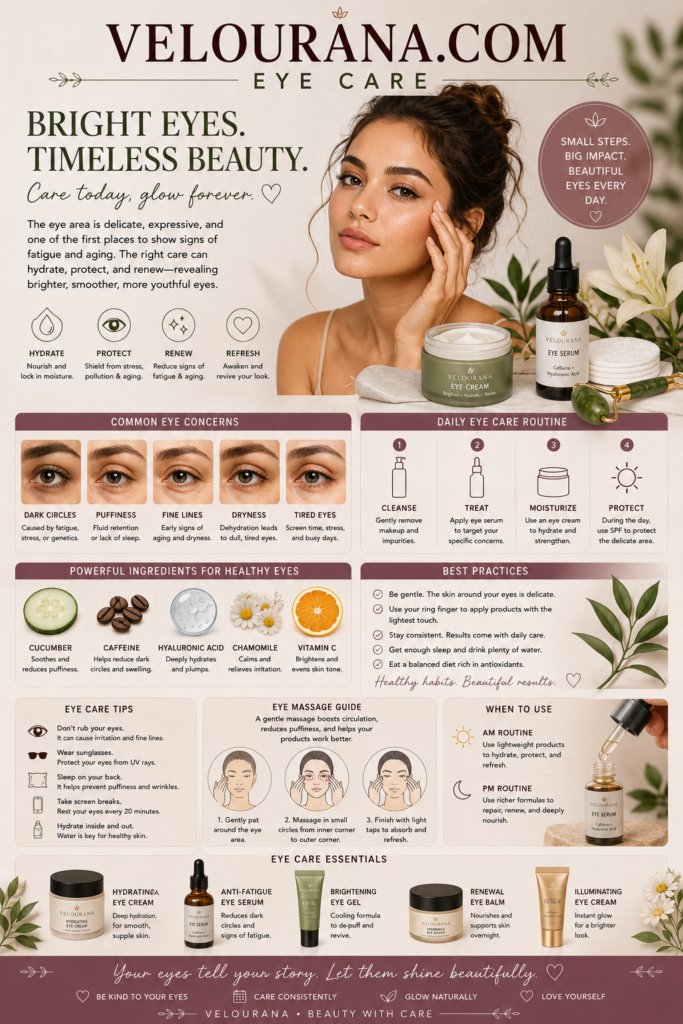
CATEGORY: Dry Under-Eyes
The skin beneath the eyes can reveal dryness long before other parts of the face begin to feel uncomfortable. A complexion that otherwise appears balanced may still develop a papery, tight, or finely creased texture around the eyes, particularly after cleansing, during colder weather, or beneath makeup. Because this area is naturally thin and delicate, even a relatively small disturbance in hydration or barrier function can become highly visible.
Dry under-eyes are often discussed as though they were simply a matter of applying a richer eye cream. The reality is more nuanced. The appearance and comfort of the under-eye area are influenced by the structure of the skin itself, the condition of its protective barrier, environmental exposure, cleansing habits, cosmetic routines, age-related changes, and individual sensitivity. Hydration can certainly improve the way the area looks and feels, but understanding why moisture is being lost is usually more useful than continually adding heavier products.
There is also an important distinction between dryness and dehydration. Skin may be constitutionally dry because it produces relatively little oil, while dehydrated skin lacks sufficient water and may occur in almost any skin type. Around the eyes, the two conditions can overlap. The result may be tightness, roughness, temporary fine lines, flaking, sensitivity, or makeup that settles unevenly into the skin.
A thoughtful approach therefore begins not with the strongest treatment available, but with respect for an unusually fragile part of the face.
Why the Under-Eye Area Behaves Differently
The skin surrounding the eyes is structurally different from many other facial areas. It is comparatively thin and contains fewer sebaceous glands, meaning it has less natural oil available to reinforce its surface and reduce moisture loss. The under-eye region is also in almost constant motion. Blinking, smiling, squinting, and facial expression repeatedly fold and stretch the skin throughout the day.
This combination helps explain why dryness can become noticeable so quickly. The outermost layer of the skin, the stratum corneum, acts as a protective interface between the body and the environment. It consists of skin cells surrounded by lipids that help prevent excessive water from escaping. When this barrier is functioning well, the surface remains relatively flexible and comfortable. When it becomes disrupted, transepidermal water loss can increase, allowing moisture to evaporate more readily.
Around the eyes, there is less margin for disruption. A cleanser that feels perfectly acceptable across the forehead or cheeks may leave the eye area uncomfortable. A retinoid that the rest of the face tolerates may produce dryness when it migrates too close to the orbital region. Long-wearing concealers, powders, waterproof makeup removers, or repeated wiping can also influence the condition of the surface.
The thinness of the skin additionally makes texture more visible. When adequately hydrated, superficial skin cells lie more smoothly and reflect light relatively evenly. When water content falls, the surface can become less flexible and fine lines may appear more pronounced. Some of these lines are not necessarily permanent wrinkles; they may simply become more obvious when the skin is dehydrated.
This is why an under-eye area can look dramatically different from one morning to another without any meaningful structural aging having occurred overnight.
Dryness, Dehydration, and the Skin Barrier
Although the terms are frequently used interchangeably, dry skin and dehydrated skin describe different characteristics. Dryness generally refers to insufficient lipids or sebum, while dehydration refers to insufficient water within the upper layers of the skin. A person with naturally oily facial skin can therefore still experience dehydrated under-eyes.
The distinction matters because water and oil perform different functions. Humectants attract or bind water within the outer skin layers. Emollients soften rough surfaces and help fill microscopic spaces between skin cells. Occlusive ingredients reduce evaporation by creating a protective film. Effective formulas for dry under-eyes often combine these functions rather than relying exclusively on one.
A compromised barrier may create a cycle in which the skin loses water more readily and becomes increasingly reactive. The person experiencing the dryness may respond by adding more products, exfoliating visible flakes, or repeatedly cleansing away cosmetic residue. Each additional intervention can potentially create more irritation, particularly when fragranced products, strong acids, retinoids, or aggressive rubbing are involved.
Barrier recovery tends to benefit from consistency rather than intensity. Ceramides, cholesterol, fatty acids, glycerin, hyaluronic acid, squalane, panthenol, and other well-established moisturizing ingredients may support comfort depending on the formulation and individual tolerance. The presence of a fashionable ingredient is less important than whether the complete formula provides hydration without causing irritation.
The amount used also matters. More cream does not necessarily create proportionally more hydration. Excess product can migrate into the eyes, interfere with makeup, or encourage rubbing if it feels sticky or heavy. A modest, evenly distributed layer is usually more practical than repeatedly coating the area.
Healthy-looking under-eye skin is therefore less about saturating the surface and more about maintaining an environment in which water can remain within the skin while the barrier is protected from unnecessary disturbance.
How Everyday Habits Can Intensify Dry Under-Eyes
Some of the most persistent under-eye dryness develops not because moisturizing products are inadequate, but because daily habits continually remove the benefits those products provide.
Cleansing is one example. Long-wearing eye makeup often requires more effort to remove, yet vigorous rubbing introduces friction to an area that does not tolerate repeated mechanical stress particularly well. Allowing an appropriate remover time to dissolve makeup before gently wiping it away can reduce unnecessary pulling. The goal is effective removal with as little repetitive friction as possible.
Hot water can also contribute to discomfort. Very warm showers and prolonged washing may strip surface lipids and leave already dry skin feeling tighter. The eye area does not require aggressive cleansing to become clean. Gentle contact and thorough but careful removal of residue are generally preferable.
Cosmetic treatments deserve similar attention. Retinoids, alpha hydroxy acids, beta hydroxy acids, benzoyl peroxide, and other active ingredients can be valuable elsewhere on the face but may cause irritation when used too close to the eyes. Products applied several centimetres away can sometimes migrate as creams move across the skin during the night. Someone experiencing unexplained under-eye dryness may therefore need to consider not only what is deliberately placed beneath the eyes but also what is being applied nearby.
Weather introduces another variable. Cold outdoor temperatures, wind, indoor heating, air conditioning, and low humidity can accelerate moisture loss from exposed skin. Frequent travel between contrasting environments may make the problem particularly noticeable. The under-eye area can feel comfortable in a humid climate and suddenly become tight or flaky after several days in a dry heated room.
Sun exposure contributes differently. Ultraviolet radiation does not simply produce temporary dryness; cumulative exposure can affect collagen, elasticity, pigmentation, and overall skin quality. Because the eye area is already structurally delicate, daily sun protection has value beyond preventing immediate discomfort.
Even habitual touching can matter. Rubbing tired or itchy eyes, repeatedly correcting makeup, or wiping watering eyes throughout the day introduces friction that may gradually weaken an already vulnerable surface.
When dryness persists, examining these small repeated exposures can reveal more than simply changing from one eye cream to another.
The Relationship Between Dryness and Fine Lines
Dry under-eyes frequently appear more lined, which can create the impression that the skin has suddenly aged. Hydration cannot erase established structural wrinkles, but it can significantly influence how visible superficial texture appears.
Water contributes to the flexibility and plumpness of the outer skin layers. When those layers become dehydrated, fine surface lines can deepen visually because the skin no longer reflects light as smoothly. Concealer and powder may settle into these lines, exaggerating them further.
This distinction is especially important when evaluating skincare results. A moisturizing product may make fine lines look softer within a relatively short period because the outer layers of the skin have become better hydrated. That improvement should not automatically be interpreted as collagen rebuilding or permanent wrinkle reversal. It is nevertheless cosmetically meaningful. Skin that feels comfortable and looks smoother can change the entire appearance of the eye area.
Longer-term aging involves deeper processes. Collagen and elastin change with age, cumulative ultraviolet exposure influences structural integrity, and facial movement contributes to expression lines. The distribution of fat and supporting tissues around the eyes also evolves over time. No moisturizer can independently reverse all of these changes.
The most realistic skincare strategy separates immediate surface improvement from long-term protection. Moisturization can improve hydration and texture. Sunscreen helps reduce additional ultraviolet damage. Carefully selected active ingredients may address particular concerns when tolerated. None requires treating the eye area aggressively.
In fact, repeated irritation in pursuit of smoother skin can produce precisely the opposite cosmetic effect. Inflamed, dehydrated skin often looks rougher and more lined. Maintaining barrier stability may therefore be one of the most effective ways of keeping the under-eye area visually refined.
Choosing Moisture Without Overloading the Eye Area
The enormous number of eye products available can make dryness seem more complicated than it needs to be. Packaging may emphasize peptides, botanical extracts, caffeine, marine ingredients, precious oils, or elaborate proprietary complexes, but a dry under-eye area still depends fundamentally on adequate hydration and barrier support.
Humectants such as glycerin and hyaluronic acid help maintain water in the upper layers of the skin. Glycerin in particular has a long history of use in effective moisturizers and does not require glamorous marketing to perform its role. Hyaluronic acid can provide useful hydration, although the overall formulation matters more than the mere presence of the ingredient.
Emollients help the surface feel softer and smoother. Squalane, various esters, fatty alcohols, and carefully formulated plant-derived oils may contribute to this effect. Ceramides and other skin-identical or skin-compatible lipids can be particularly relevant when barrier support is the priority.
Occlusive components reduce water loss. Petrolatum is among the most effective examples, although its heavier texture is not preferred by everyone. Dimethicone and other film-forming ingredients can provide a lighter-feeling protective effect in some formulas.
A good eye moisturizer does not necessarily need to contain every category in high concentration. Formulation determines how ingredients interact, how easily the product spreads, whether it migrates, and how comfortable it remains over several hours.
People who are prone to milia may prefer lighter textures or use richer products more selectively. Milia are small keratin-filled cysts and are not simply proof that a moisturizer is “too rich,” but individual product preferences and tendencies still matter. A formula that repeatedly seems associated with unwanted texture can reasonably be replaced even if its ingredient list looks excellent on paper.
Fragrance and aromatic essential oils are another consideration. Not everyone reacts to them, but the eye area is a poor location for unnecessary irritation. For persistently dry or sensitive under-eyes, simpler fragrance-free formulations often make practical sense.
The best product is ultimately one that can be used consistently without stinging, redness, excessive migration, or the feeling that the skin must constantly recover from the skincare itself.
Makeup Can Reveal Dryness Before Skincare Does
Many people first recognize under-eye dehydration when concealer stops behaving normally. A product that once blended smoothly may suddenly look patchy, collect around fine lines, or cling to small areas of flaking. Adding more concealer often makes the texture more obvious rather than disguising it.
The problem is partly optical. Pigmented cosmetics create a visible layer across the skin, making irregularities easier to see. Matte and long-wearing formulas may be especially unforgiving because they are designed to resist movement and often contain ingredients that create a drier finish.
Preparing the skin does not mean applying a thick layer of cream immediately before makeup. If too much emollient product remains on the surface, concealer may slide, separate, or lose longevity. Hydration works better when it has time to settle.
A thin moisturizing layer can be applied and allowed to absorb before complexion products are introduced. Concealer can then be used selectively rather than covering the entire under-eye region with a dense opaque film. Strategic placement often requires less product and therefore produces less visible texture.
Powder deserves particular restraint. Setting powder can improve longevity, but large amounts can absorb surface oils and emphasize dryness. The assumption that every under-eye concealer must be heavily powdered is largely a matter of makeup style rather than a universal requirement.
Texture also changes throughout the day. An under-eye area that looks smooth immediately after makeup application may become increasingly dry after hours in air conditioning or heated rooms. Flexible, thin layers generally accommodate facial movement better than a rigid stack of moisturizer, primer, corrector, concealer, foundation, and powder.
This does not mean people with dry under-eyes must abandon long-wearing makeup. It means the relationship between skincare and cosmetics should be considered as a complete system. When each layer is chosen without regard for the others, even individually good products may perform poorly together.
Aging Changes What the Under-Eye Area Needs
The tendency toward dryness often increases with age. Sebum production can decline, barrier recovery may become slower, and structural changes make the skin appear thinner and less resilient. Hormonal changes can also influence skin moisture and lipid composition.
This does not mean mature under-eye skin requires an extremely complicated routine. In many cases it benefits from greater consistency, gentler cleansing, richer moisturization where appropriate, and careful sun protection.
Expectations matter. Skincare can improve hydration, softness, luminosity, and the appearance of superficial lines. It cannot reproduce the anatomical changes achievable through medical or procedural treatments. Confusing these categories often leads consumers toward unnecessarily aggressive products or unrealistic claims.
The under-eye region may simultaneously display dryness, pigmentation, vascular darkness, hollowness, puffiness, and wrinkles. One cream is unlikely to address all of these because they arise from different mechanisms. Hydrating the area may make the overall appearance more rested and refined, but it cannot eliminate shadows caused by facial anatomy or substantially reposition underlying tissue.
This is not a failure of skincare. It is simply the boundary between surface care and anatomy.
Understanding that boundary can make a routine more rational. Instead of constantly changing products because a moisturizer has not corrected every visible concern, it becomes possible to judge it according to what it is actually designed to accomplish: maintaining hydration, supporting the barrier, and improving comfort and surface quality.
When Dryness Is Actually Irritation
Persistent dryness around the eyes should not automatically be assumed to be ordinary dehydration. Redness, burning, itching, swelling, scaling, or recurrent patches may indicate irritation or dermatitis rather than a simple need for more moisturizer.
The eye area is exposed to an unusually broad collection of potential triggers. Skincare products are obvious possibilities, but shampoo, conditioner, hair dye, nail products, fragrance, makeup, makeup remover, sunscreen, eye drops, and substances transferred from the hands can all come into contact with the region.
This makes identifying a cause difficult. A person may repeatedly replace eye creams while the actual trigger remains elsewhere in the routine.
Allergic contact dermatitis is also different from straightforward dryness. An ingredient may have been tolerated previously and later begin to produce a reaction after sensitization develops. Conversely, a product can sting simply because the barrier is already damaged without the person being genuinely allergic to it.
Repeated swelling, significant redness, pain, discharge, visual symptoms, or persistent dermatitis warrants professional assessment rather than endless cosmetic experimentation. The proximity of the skin to the eye itself makes caution especially appropriate.
When irritation is suspected, simplification is often more informative than adding new products. A restrained routine makes it easier to observe whether the skin recovers and to identify products that may be contributing to the problem.
The objective is not to make the under-eye area tolerate as many active ingredients as possible. It is to maintain healthy, comfortable skin.
Building a More Resilient Under-Eye Environment
The most effective approach to dry under-eyes is usually cumulative. Gentle cleansing preserves the surface. Appropriate moisturization replenishes water and lipids. Sun protection limits avoidable environmental damage. Thoughtful makeup application prevents cosmetic products from exaggerating texture. Restraint with irritating actives gives the barrier an opportunity to remain stable.
Timing can improve performance as well. Moisturizer applied to slightly damp skin can help retain water, provided the product itself is suitable for the eye area. In the evening, a somewhat richer texture may be comfortable because makeup compatibility is no longer relevant. During the day, a lighter formula may sit more elegantly beneath sunscreen and concealer.
Seasonal adjustment is reasonable. Skin does not exist in a controlled laboratory environment, and a routine that works in humid summer weather may not provide enough protection during a dry winter. Conversely, a dense winter balm may feel excessive during warmer months.
Consistency is more valuable than chasing novelty. Under-eye skin rarely benefits from constant rotation among exfoliating treatments, masks, patches, serums, oils, and creams simply because each promises a different improvement. A smaller number of compatible products can provide a more stable environment and make genuine changes easier to evaluate.
The same principle applies to expectations. Hydrated skin should feel comfortable rather than tight. It should look more supple and allow makeup to sit more naturally. Flaking should diminish when simple dryness is the cause. These are meaningful improvements even if natural folds, expression lines, and anatomical shadows remain visible.
The eye area is supposed to move, crease, and reflect facial expression. Perfectly smooth, poreless under-eye skin is not a realistic biological standard.
A More Intelligent View of Under-Eye Hydration
Dry under-eyes are a small concern anatomically, but they demonstrate many of the principles that define good skincare. The barrier matters. Formulation matters. Environment matters. More treatment is not automatically better treatment, and visible texture does not always require an aggressive corrective response.
The delicacy of the eye area makes moderation especially valuable. When dryness appears, the first question should not necessarily be which powerful ingredient to add. It may be more useful to ask whether cleansing has become too harsh, whether actives are migrating toward the eyes, whether makeup removal involves excessive friction, whether environmental conditions have changed, or whether the current moisturizer provides enough barrier support.
Once those factors are addressed, moisturizing products can perform their intended role more effectively.
Healthy under-eye skin does not need to look artificially smooth. Its more meaningful qualities are comfort, flexibility, resilience, and a surface that remains reasonably stable throughout the day. When hydration and barrier function improve, the visual benefits tend to follow naturally: fine dehydration lines become less prominent, makeup sits more evenly, and the area appears softer and more rested.
The most successful care is therefore rarely dramatic. It is protective, consistent, and appropriately gentle for skin that has very little tolerance for unnecessary stress.
THE END VELOURANA
 Discover More From Our Family of Websites
 ZodiacBearing (Astrology, Tarot, Numerology, Angel Numbers & Spiritual Guidance)
 Velourana (Beauty, Makeup, Hair Care, Skincare & Beauty Tips)
 HavenBearing (Home, Living, Organization, Décor & Everyday Inspiration)
 PawBearing (Pet Care, Dog Breeds, Animal Health, Training & Pet Products)
 PsyCatherine (Notes From the Journal of a Psychologist on Real Life)

