
CATEGORY: Demi-Permanent Hair Color
Demi-permanent hair color occupies one of the most useful and frequently misunderstood positions in professional hair coloring. It is neither a fleeting surface tint nor a conventional permanent dye, and that distinction gives it an unusual degree of versatility. For people who want richer tone, more dimensional brunette shades, softened gray blending, refreshed lengths, or a subtle change without committing to permanent color throughout the hair, demi-permanent formulas can offer an elegant middle ground.
The appeal lies partly in restraint. Permanent color is designed to create a lasting chemical alteration within the hair, particularly when substantial gray coverage or lightening is required. Temporary and many semi-permanent colors work much closer to the surface and generally disappear more quickly. Demi-permanent color sits between those approaches. It typically uses oxidative dye technology with a low-strength developer, allowing color molecules to develop within and around the hair without providing the significant lifting action associated with stronger permanent-color systems.
That chemistry changes what demi-permanent color can realistically accomplish. It is particularly effective when the goal is to deepen, tone, neutralize, enrich, blend, or restore. It is far less suited to dramatic lightening. Understanding this difference is the foundation of using demi-permanent color intelligently rather than expecting it to behave like a gentler version of every other coloring method.
What Makes Demi-Permanent Color Different
Hair color categories are sometimes presented as though they differ only in how many shampoos they survive. Longevity matters, but it does not fully explain the distinction. The more important difference concerns how each coloring system interacts with the hair fiber.
Demi-permanent color generally combines oxidative dye precursors with a low-volume developer. Once mixed, the formula undergoes an oxidation process that develops the final color. Because the developer is relatively mild, the system is primarily designed for depositing color rather than significantly lightening the natural pigment already present in the hair.
This is why demi-permanent color excels at tonal transformation. A faded brunette can become richer and more polished. Previously lightened hair can receive a more sophisticated beige, caramel, copper, chocolate, or cool-toned finish. Excess warmth can be moderated. Natural hair can be taken deeper. Early gray can be softened into the surrounding shade rather than necessarily being covered with the opacity of permanent color.
The result is often visually softer because there is usually less dramatic structural contrast between newly colored hair and future regrowth. As the color gradually loses intensity, the transition can appear more diffused than the defined root line commonly associated with permanent color.
Demi-permanent does not mean that every trace of pigment disappears on a predictable date. Hair condition, porosity, previous chemical treatments, shade selection, washing habits, heat exposure, water quality, and the individual formula all affect how color fades. Some residual tonal change may remain considerably longer on porous or previously lightened hair.
For that reason, the word “demi-permanent” should describe the coloring technology rather than be interpreted as a guarantee that the hair will return perfectly to its original appearance after a fixed number of washes.
The Beauty of Deposit Without Significant Lift
One of the defining characteristics of demi-permanent color is its emphasis on deposit. This creates both its greatest strength and its most important limitation.
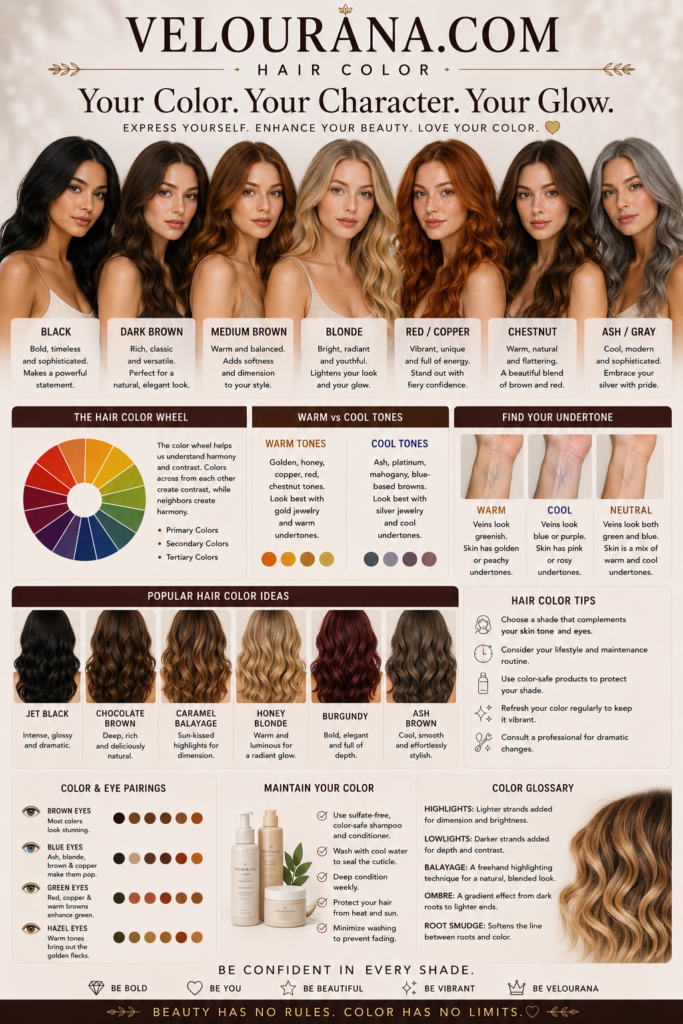
When hair is already light enough for the desired result, enormous visual changes can be created through tone alone. Pale blonde hair can move toward champagne, beige, pearl, strawberry, rose-brown, smoky blonde, or deeper dimensional shades without needing additional lightening. Medium brown hair can become cooler, warmer, richer, deeper, or more reflective. Copper can be intensified. Faded red can regain vibrancy. Highlights that appear overly bright can be softened into a more integrated result.
These transformations demonstrate an important principle of hair color: changing tone can dramatically alter the way hair is perceived even when its underlying lightness changes very little.
A warm medium brunette and a cool medium brunette may exist at approximately similar depth levels yet create completely different impressions. One may reflect amber, chestnut, or caramel; another may appear mushroom, mocha, ash, or neutral brown. Demi-permanent color is exceptionally useful for making these kinds of controlled tonal adjustments.
What it generally cannot do is transform naturally dark hair into genuinely lighter hair. Depositing a pale shade over a darker natural base does not create the lightening necessary for that pale shade to become visible as intended. Hair must first possess sufficient underlying lightness.
This distinction becomes especially important when people choose colors from photographs. A glossy honey brunette, for example, may depend on pre-existing highlights beneath the final toner. Applying a honey-toned demi-permanent formula to uniformly dark brown hair cannot reproduce the same distribution of light and depth because the lighter foundation is absent.
The finished shade is always a relationship between the starting canvas and the color placed over it.
Why Demi-Permanent Color Creates Such Beautiful Dimension
Modern hair color increasingly favors dimension over flat uniformity. Expensive-looking brunette, softly blended blonde, luminous copper, lived-in balayage, and sophisticated gray blending all depend on controlled variation rather than a single opaque shade covering every strand identically.
Demi-permanent color is particularly compatible with this philosophy because it can modify an existing pattern without necessarily destroying it.
Consider highlighted hair. The lightened strands and natural base contain different levels of pigment and porosity. A carefully chosen demi-permanent glaze can influence both while allowing their underlying contrast to remain visible. The highlights may become warmer or cooler, while the deeper sections acquire greater richness and shine. Instead of replacing the existing dimension, the color refines it.
The same principle applies to natural variations in brunette hair. Human hair rarely reflects one perfectly uniform color. Different sections respond differently to light because of density, texture, previous sun exposure, natural pigment distribution, and surface condition. A translucent or moderately depositing color can enhance these differences rather than completely flattening them.
This helps explain why demi-permanent color is so often associated with glossy, dimensional finishes. The visual effect comes not simply from “shine” but from the interaction between deposited tone and pre-existing variation.
However, translucency must not be confused with unpredictability. Porous areas may absorb substantially more pigment than resistant areas. Ends that have been repeatedly lightened can become darker, cooler, or more saturated than healthy roots when the same formula is applied indiscriminately throughout the hair.
Professional-looking demi-permanent color therefore depends as much on understanding the canvas as on choosing an attractive shade.
Gray Blending Rather Than an Artificial Wall of Coverage
Gray hair introduces another area in which demi-permanent color can be especially valuable. Permanent color remains important when strong, consistent gray coverage is the objective, but not everyone wants an opaque result or the maintenance pattern that accompanies it.
Demi-permanent color can create a softer relationship between pigmented and non-pigmented strands. Instead of forcing every gray hair to match the surrounding base exactly, it may tint the gray sufficiently to reduce contrast. The result can resemble naturally occurring highlights or subtle tonal variation.
This approach is often described as gray blending.
Its beauty becomes particularly apparent during regrowth. When permanent opaque color covers a high percentage of gray hair, new growth can create a clearly visible division between the colored lengths and emerging silver roots. A softer demi-permanent treatment may create less severe contrast because the original result was more translucent.
That does not make demi-permanent color universally superior for gray hair. Resistant gray, very high gray percentages, and clients seeking complete coverage may require a different formulation strategy. The objective matters more than the label attached to the product.
Someone who wants every silver strand hidden has a fundamentally different coloring goal from someone who wants the overall appearance to look more blended while retaining some natural variation.
Demi-permanent color is especially compelling for the second objective because it allows gray hair to participate in the finished dimension rather than automatically treating it as something that must be completely erased.
The Essential Role of Demi-Permanent Color in Blonde and Balayage Work
Many of the sophisticated blonde shades seen in modern salons are not produced by lightener alone. Lightening creates the necessary foundation, but the final personality of the blonde is often established afterward through toning.
When pigment is removed from hair, underlying warm tones become visible. Depending on the starting depth and degree of lift, these may appear red, orange, gold, yellow, or pale yellow. That exposed foundation rarely represents the final intended shade.
A demi-permanent toner can refine it.
The transformation can be subtle but visually significant. Yellow may become creamy beige. Gold may become champagne. Strong warmth may be softened toward neutral. Very pale hair may receive pearl, violet, smoky, or softly iridescent nuances. Highlights may be toned slightly deeper so they blend more naturally with the base.
Balayage benefits enormously from this process because the technique depends on transitions. Lightened sections should relate harmoniously to the natural hair rather than appearing as disconnected pale pieces. A demi-permanent formula can help establish that relationship by adjusting the tone and sometimes slightly deepening selected areas.
The same approach can rescue blonde that has become visually harsh without requiring immediate additional lightening. Sometimes the problem is not that the hair needs to become lighter. It needs a better tonal relationship.
This is an important distinction because unnecessary lightening increases chemical stress without necessarily solving the aesthetic issue. When sufficient lightness already exists, intelligent toning can be the more refined intervention.
Porosity Determines More Than Most People Realize
The condition of the hair profoundly influences demi-permanent results. Two strands that appear similar in color before application may respond differently because their internal structure and surface condition are not identical.
Porous hair tends to absorb color readily. This can be beneficial when faded lengths need pigment restored, but excessive porosity may cause certain tones to become unexpectedly dark or intense. Cool pigments can be particularly noticeable because an over-deposited ash or blue-violet influence can make highly porous sections appear dull, smoky, or hollow.
Healthier, more resistant hair may accept pigment more gradually.
This difference explains why roots, mids, and ends sometimes require separate formulas or different application timing. A single bowl applied uniformly from scalp to ends may sound simple, but simplicity is not always compatible with an uneven canvas.
Previously highlighted ends, for example, may have experienced several rounds of lightening while the root area remains largely natural. Applying the same dark demi-permanent brunette to both areas can create disproportionate absorption at the ends. What looked like a soft brown formula in the bowl may produce a deeper, denser result where the hair is most porous.
Hair history therefore matters. Previous permanent dye, bleach, highlights, smoothing treatments, environmental damage, heat styling, and repeated toning can all influence how the next color behaves.
A sophisticated coloring approach reads the hair before choosing the formula.
Fading Is Part of the Design
The gradual evolution of demi-permanent color should not automatically be considered a defect. In many applications, it is one of the reasons the category is so useful.
Freshly toned hair may initially appear slightly richer or more concentrated than it will after several washes. As excess surface pigment leaves and the color settles, the underlying dimension becomes increasingly visible. Over subsequent weeks, warmth may slowly re-emerge, cool tones may soften, and overall saturation may decline.
The direction of this fade depends on what exists beneath the deposited color.
A cool brunette placed over warm underlying pigment may gradually reveal more warmth. Beige toner over yellow blonde may become increasingly golden. Copper deposited onto a lighter foundation may become softer and less intense. Deepened porous blonde may gradually expose brighter pieces again.
This is why maintenance should be understood as tonal management rather than an attempt to freeze hair permanently at the exact appearance it had on coloring day.
Cleansing frequency, shampoo type, water temperature, UV exposure, heated tools, swimming, mineral accumulation, and the condition of the cuticle all influence how quickly the visible tone changes. Frequent washing generally accelerates pigment loss, while damaged porous hair may behave inconsistently—sometimes absorbing large amounts of color initially yet releasing it rapidly afterward.
A realistic demi-permanent color plan anticipates this movement.
Choosing Demi-Permanent Color for the Right Reasons
The strongest results occur when the coloring technology matches the objective.
Demi-permanent color is compelling when the hair already possesses approximately the required lightness and the primary goal concerns tone, depth, richness, blending, or refinement. It is also valuable when previously colored lengths need refreshing without repeatedly exposing them to stronger permanent formulas.
It can provide an introduction to hair color for someone who wants a meaningful but comparatively softer commitment. It can help brunettes explore richer or cooler tonal families. It can support red and copper maintenance, refine highlights, tone balayage, soften excessive brightness, blend early gray, or create glossy tonal shifts.
But its gentler reputation should never encourage unrealistic expectations.
It cannot reliably replace bleach when substantial lightening is necessary. It cannot guarantee that porous blonde will return perfectly to its previous shade. It cannot make every gray strand behave identically. It does not eliminate the chemistry of oxidative coloring simply because the developer is weaker.
Its sophistication comes precisely from knowing what it is designed to do.
Demi-permanent hair color is at its best when treated not as a compromised version of permanent dye, but as a specialized coloring instrument. It works with an existing canvas, altering the way depth, warmth, coolness, reflection, and contrast interact. In skilled hands, that restraint can create results that appear more dimensional, more natural, and often more luxurious than a heavier approach.
The modern beauty of hair color increasingly lies in this kind of control. Rather than changing everything, demi-permanent color can change exactly what needs changing—and allow the rest of the hair to remain part of the story.
THE END VELOURANA
 Discover More From Our Family of Websites
 ZodiacBearing (Astrology, Tarot, Numerology, Angel Numbers & Spiritual Guidance)
 Velourana (Beauty, Makeup, Hair Care, Skincare & Beauty Tips)
 HavenBearing (Home, Living, Organization, Décor & Everyday Inspiration)
 PawBearing (Pet Care, Dog Breeds, Animal Health, Training & Pet Products)
 PsyCatherine (Notes From the Journal of a Psychologist on Real Life)

