CATEGORY: Defined Brows
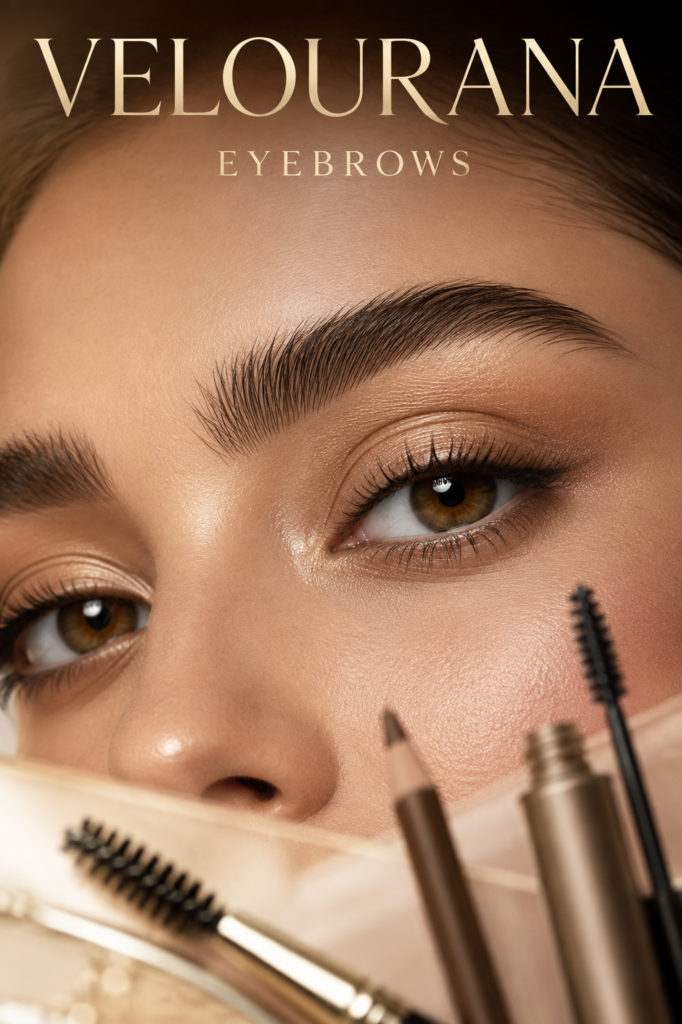
Defined brows occupy a distinctive place in modern beauty because they are neither simply groomed nor dramatically transformed. Their defining quality is intention. The shape appears considered, the borders have clarity, sparse areas are controlled, and the overall eyebrow contributes visibly to the architecture of the face. Yet the most sophisticated versions of defined brows do not look rigid or artificial. They retain the texture, variation, and individuality of natural brow hair while introducing enough structure to make the eyes and surrounding features appear more polished.
The idea of definition has changed considerably over time. At different moments, sharply outlined brows, highly sculpted arches, extremely thin shapes, and dense block-like finishes have all represented fashionable interpretations of a "perfect" eyebrow. Contemporary brow definition is more flexible. Instead of imposing one universal shape, it increasingly works with existing proportions, hair patterns, facial structure, and personal style.
This shift has made defined brows more interesting rather than less precise. Creating definition is no longer primarily about drawing a strong perimeter around the eyebrow. It is about deciding where clarity is beneficial, where softness should remain, and how several small adjustments can combine to create a balanced result.
What Actually Makes a Brow Look Defined
Definition is often associated with dark color or sharp edges, but neither characteristic is essential. A pale eyebrow can be highly defined, while a very dark eyebrow may still appear visually diffuse. What creates definition is the relationship between shape, density, direction, and contrast.
The lower edge of the eyebrow is particularly influential because the eye tends to read it as a structural line. When this boundary is relatively controlled, the entire brow can appear more deliberate even if the upper edge remains soft. The tail also contributes strongly to definition. A tail that gradually narrows gives the brow a visible conclusion, whereas a tail that becomes scattered or disappears abruptly can make an otherwise full eyebrow seem unfinished.
Density matters differently. Natural eyebrows rarely have completely uniform hair distribution. The front is often lighter and more irregular, the central body is denser, and the tail may become progressively finer. Preserving some of this variation is important because it prevents definition from turning into visual heaviness.
Hair direction adds another layer. Brows can contain plenty of hair but still appear undefined when the hairs point unpredictably or obscure the intended shape. Grooming them into a coherent direction may produce more visible structure than adding additional pigment.
For this reason, defined brows are best understood as an exercise in controlled contrast. Some areas are made clearer, some are made fuller, and others are deliberately left softer.
Facial Architecture and the Role of the Brow
Eyebrows have an unusual visual position because they sit between the expressive movement of the eyes and the broader geometry of the forehead, temples, and nose. Even modest changes to their shape can alter how these areas appear in relation to one another.
A clearly defined lower brow line can make the eye area seem more open. A slightly extended tail can visually broaden the upper face. A higher arch can create a lifting impression, while a straighter shape may contribute to a calmer or more contemporary appearance. None of these effects exist independently of facial proportions, which is why copying another person's brow measurements often produces disappointing results.
Definition should therefore support the natural framework of the face rather than compete with it.
The inner brow is particularly important. When it begins too close to the center of the face, the expression can appear compressed or severe. When the starting point is pushed too far outward, the nose may appear wider and the eyes more separated. Similar proportional relationships apply to the arch and tail.
Traditional brow mapping can provide useful reference points, but these should not be treated as inflexible mathematical laws. Facial asymmetry, bone structure, natural hair growth, eye shape, and personal preference all influence what looks harmonious.
The objective is not geometric perfection. It is visual coherence.
Why the Front of the Brow Requires Restraint
One of the most recognizable characteristics of an overly constructed eyebrow is an excessively solid front. Natural brow hairs near the bridge of the nose usually have more visible skin between them and often grow upward or diagonally rather than horizontally.
When this area is filled with the same intensity as the middle and tail, the eyebrow can develop a rectangular appearance. The eye notices the abrupt beginning immediately, making the cosmetic work more obvious.
A sophisticated defined brow generally allows the front to breathe.
This does not mean the area must remain untouched. Sparse fronts can benefit from strategically placed strokes or subtle shading. The important distinction is between correcting gaps and creating a dense wall of pigment.
The direction of application matters as much as the amount of product. Marks that imitate the natural upward movement of the hairs tend to integrate more convincingly than a horizontal block of color. Soft transitions also help. The front can begin relatively sheer and become progressively more substantial toward the body of the brow.
This gradient is one of the simplest ways to combine definition with realism.
Building Definition Through the Body and Arch
The central portion of the eyebrow usually carries the greatest visual weight. It connects the softer front with the narrowing tail and often contains the highest natural density of hair.
Because of this, the body is where subtle filling can have a significant effect.
Rather than treating every visible patch of skin as a flaw, it is useful to consider whether filling that space improves the overall silhouette. Tiny natural openings between hairs can create texture. Larger interruptions, however, may visually break the shape. Filling selectively allows the eyebrow to appear complete without becoming flat.
The arch deserves particular care because exaggeration in this area can alter expression dramatically. Raising the arch too aggressively may create a surprised appearance, while pulling it downward can make the eye area seem heavier.
For many brows, the most convincing arch is not manufactured through a dramatic peak. It emerges naturally from the transition between the upper line, the densest part of the body, and the beginning of the tail.
Definition can be increased by strengthening the underside slightly around this region while maintaining a softer upper boundary. This gives the brow structure without enclosing it between two equally strong lines.
The Tail as the Finishing Point
The tail is frequently underestimated, yet it can determine whether a brow looks polished or incomplete.
Natural tails are often vulnerable to thinning. Hair may be finer, lighter, or less densely distributed in this region. Previous over-tweezing can also leave persistent gaps. Because the tail occupies relatively little space, even a small amount of carefully positioned pigment can noticeably improve the eyebrow's balance.
The challenge is maintaining taper.
A defined tail should generally become narrower as it extends outward. When the end remains as thick as the central brow, the result can appear heavy and artificially extended. A tail that becomes extremely thin too early, however, may seem disconnected.
The transition matters more than the exact length.
Product choice can influence the result. A fine pencil or brow pen offers control when individual strokes are required. Pomade can produce greater intensity but demands restraint. Powder creates softer density and can be useful when the goal is to reinforce an existing tail rather than reconstruct one.
Whatever medium is used, the final section should visually belong to the rest of the brow.
Definition Is Not the Same as Darkness
One of the most persistent misconceptions in brow makeup is that stronger definition requires deeper color.
In reality, excessive darkness can obscure shape rather than clarify it. Once the entire eyebrow becomes a single dense mass, the eye sees color before it sees hair pattern, taper, or structure.
Successful shade selection takes several factors into account, including natural brow hair, scalp hair, skin undertone, makeup intensity, and the desired level of contrast.
Someone with very dark hair does not necessarily require the deepest available brow product. A slightly softer shade can reveal texture and prevent the brow from dominating the face. Conversely, very light eyebrows may benefit from slightly increased contrast when additional structure is desired.
Undertone is equally significant. Brow colors that are excessively warm can appear orange or reddish against cooler hair, while very ashy products can seem dull on naturally warm coloring.
Definition works best when color appears integrated with the person rather than sitting visibly on top of the face.
Texture Separates Modern Definition From the Block Brow
Texture has become central to contemporary eyebrow aesthetics.
Earlier highly sculpted styles often relied on smooth, uninterrupted pigment. The brow was treated almost like a graphic shape. Modern approaches increasingly preserve the impression of individual hairs, even when substantial correction is taking place underneath.
This does not require every mark to be a literal imitation of hair. Powder and softly blended pencil can still create natural-looking texture when applied with variation rather than uniform pressure.
Real eyebrows contain irregularities. Some hairs overlap. Some areas are denser. Certain strands are darker or thicker. The direction changes gradually from the front toward the tail.
When makeup acknowledges these variations, the brow remains believable.
This is why brushing through pigment can be so effective. A spoolie does more than remove excess product. It redistributes color among the hairs, softens obvious marks, and restores separation between strands.
Texture can also be emphasized with gel. Clear gel controls direction without altering color significantly, while tinted gel adds subtle density and can make fine hairs more visible.
The objective is not necessarily a fluffy brow. Defined brows can be sleek, polished, soft, laminated, or naturally textured. What matters is that the hair remains visually present.
Choosing Products According to the Brow's Needs
Different brow products create different kinds of definition, and sophisticated results often come from choosing a medium according to the problem being corrected.
Pencils offer controlled placement and are particularly useful for refining boundaries, reconstructing tails, and filling moderate gaps. A very fine pencil can imitate individual hairs, while a broader pencil creates softer shading more quickly.
Brow pens emphasize hair-like detail. They can be particularly effective in sparse areas where individual marks need to remain visible. Their success depends heavily on pressure, shade, and direction. Strokes that are too dark or repetitive can look drawn on.
Powders create diffused density. They are useful when the natural shape is already present but requires greater fullness or visual consistency. Because the finish is softer, powder can also balance stronger eye makeup without making the brows excessively graphic.
Pomades provide intensity, hold, and precision. They can be valuable for brows with significant gaps or for makeup styles requiring stronger structure. Their concentrated pigment means that a small amount is usually sufficient.
Gels primarily influence texture and direction. They can transform a naturally full but unruly eyebrow into a defined one without substantial filling. Tinted formulas add color and apparent density, while clear formulas preserve the natural shade.
These products are not mutually exclusive. A brow might require pencil only at the tail, powder through a sparse central section, and gel across the entire shape. The most refined approach is often selective rather than uniform.
The Importance of Grooming Before Pigment
Definition begins before makeup.
Long hairs can extend beyond the intended silhouette and make the eyebrow appear less controlled. Stray hairs beneath the brow can soften the lower boundary. Dense areas may obscure the natural shape when hairs overlap heavily.
Yet aggressive grooming can create a different problem. Removing too much hair reduces the very texture that makes a defined brow look natural.
The most effective grooming preserves the brow's fundamental density while eliminating distractions.
Brushing the hairs before making any decisions reveals their actual length and growth pattern. Some hairs that initially seem unnecessary may settle perfectly into the shape once directed correctly. Others may genuinely extend well beyond the desired boundary.
Trimming also requires caution. Cutting many hairs to the same short length can create blunt sections or visible gaps when the brow moves. Selective trimming usually preserves a more natural finish.
Tweezing should similarly support the intended silhouette rather than continuously redesign it. Brow trends change, but removed hair may not always return with its previous density.
Defined brows benefit from having enough natural material to work with.
Creating Clean Edges Without Making Them Harsh
A controlled edge can dramatically enhance definition, particularly along the underside of the eyebrow. However, an edge does not need to resemble a drawn line.
One approach is to place pigment close to the hair roots and then diffuse it upward into the brow. This establishes a subtle boundary while keeping the visible hair texture intact.
The upper edge can usually remain softer. Creating identical sharpness along both upper and lower boundaries risks turning the brow into a closed graphic shape.
Concealer is sometimes used around the eyebrow to sharpen the perimeter. When applied sparingly and blended thoroughly, it can clean small imperfections and increase contrast. When the concealer is much lighter than the surrounding skin or forms a visible halo, however, it can make the brow appear detached from the face.
Skin preparation also affects edge quality. Heavy skincare, foundation, or oil around the eyebrow may cause pencil and powder to spread unpredictably. Conversely, excessively dry skin can make pigment catch unevenly.
A stable, naturally finished surface generally provides the greatest control.
Defined Brows and Makeup Intensity
The ideal level of brow definition changes according to the rest of the makeup.
With minimal makeup, extremely sculpted brows can become the dominant feature. This may be intentional, but a softer interpretation often creates greater harmony. Light filling, controlled grooming, and a refined tail can provide sufficient structure without overwhelming bare or lightly made-up skin.
Stronger eye makeup can support greater brow definition. Smoky eyes, graphic liner, dramatic lashes, and richly pigmented eyeshadow introduce visual weight around the eyes. Brows may need slightly more density or clarity to maintain balance.
Complexion makeup matters as well. Full-coverage foundation can reduce some of the natural variation and contrast of the face. Brows that looked sufficiently strong against bare skin may appear less prominent once the complexion is perfected.
Lip color can also influence the balance of the face. A bold lip creates a strong lower focal point, and defined brows can help anchor the upper face without requiring dramatic eye makeup.
There is therefore no isolated formula for how strong a brow should be. Definition belongs to the makeup composition as a whole.
Asymmetry and the Problem With Chasing Identical Brows
Human faces are naturally asymmetric, and eyebrows are rarely exceptions.
One brow may sit slightly higher. One arch may occur earlier. Hair density may differ from side to side. Bone structure and facial expression can also affect how each eyebrow appears.
Trying to force both brows into absolute mathematical identity can result in excessive correction. One side may gradually become thicker, longer, or more heavily filled as repeated adjustments are made.
A more useful objective is visual balance.
The brows should feel related without needing to be mirror images. Their starting points, general thickness, arch character, and tail direction can be harmonized while allowing small natural differences to remain.
This approach usually produces a more convincing result because the brows continue to belong to the face.
It also reduces the tendency to overwork them. Brow makeup often looks most natural before the final few unnecessary corrections are added.
Longevity Without Sacrificing Natural Appearance
Defined brows are particularly dependent on durability because small areas of fading can interrupt the shape.
The tail is often the first region to disappear through accidental touching, perspiration, or contact with hair. The lower edge may also soften throughout the day.
Long-wearing products can help, but durability does not require applying heavy layers everywhere. Strategic placement is usually more effective.
A resistant pencil or pomade can reinforce vulnerable sections, while softer products are used elsewhere. Gel can help maintain hair direction and prevent the shape from becoming disordered.
The amount of skincare around the eyebrow can also influence wear. Rich creams and facial oils may migrate into the brow area and weaken certain formulas. Allowing skincare and sunscreen to settle before applying makeup can improve consistency.
Setting the surrounding complexion carefully can reduce transfer without making the eyebrow itself look powdery.
The aim is to preserve the original architecture throughout wear rather than simply maximizing product quantity.
Defined Brows as an Expression of Personal Style
Although brow technique is often discussed in terms of proportion and correction, eyebrows are also an expressive feature.
Some people prefer a soft, barely structured brow. Others enjoy a visibly sculpted finish. Straight brows, pronounced arches, elongated tails, feathered fronts, and sleek laminated textures can all be intentional aesthetic choices.
Defined brows therefore do not have a single correct appearance.
What distinguishes successful definition is coherence. The brow shape should appear deliberate, the product should perform the intended function, and the finished result should complement the broader beauty look.
A dramatic brow can be beautifully executed when drama is the objective. A subtle brow can be equally defined when every small adjustment contributes to clarity.
The most contemporary understanding of brow definition moves away from the idea that perfection requires removing individuality. Instead, precision is used selectively to emphasize what already makes the brow distinctive.
When shape, texture, color, and facial proportion are considered together, definition becomes less about drawing an eyebrow and more about revealing its strongest possible form.
THE END VELOURANA
 Discover More From Our Family of Websites
 ZodiacBearing (Astrology, Tarot, Numerology, Angel Numbers & Spiritual Guidance)
 Velourana (Beauty, Makeup, Hair Care, Skincare & Beauty Tips)
 HavenBearing (Home, Living, Organization, Décor & Everyday Inspiration)
 PawBearing (Pet Care, Dog Breeds, Animal Health, Training & Pet Products)
 PsyCatherine (Notes From the Journal of a Psychologist on Real Life)