
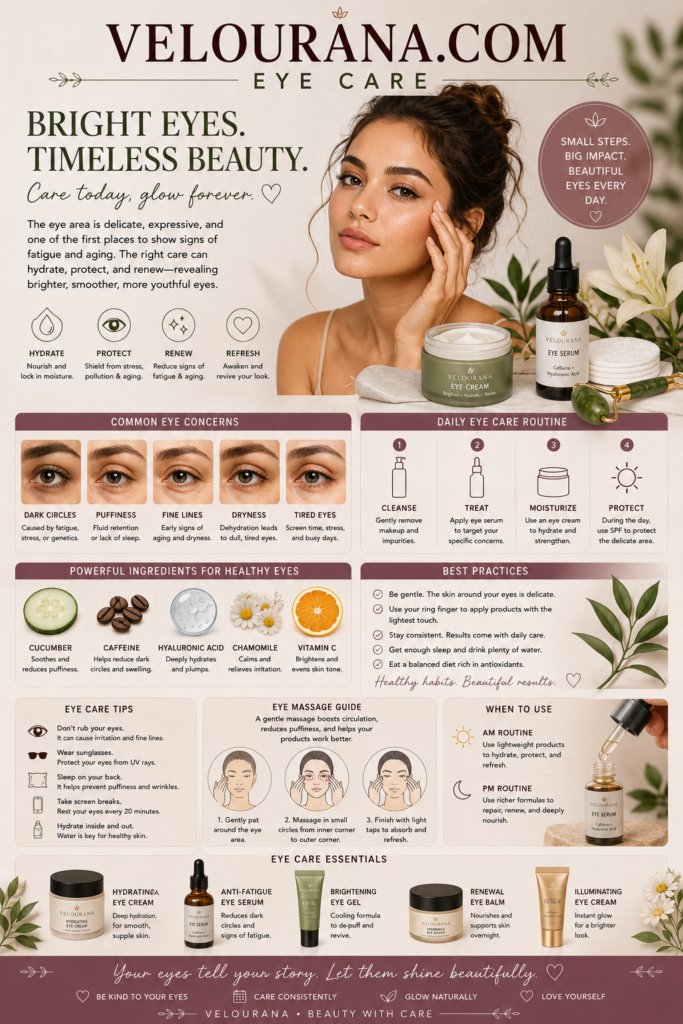
CATEGORY: Dark Circles
Dark circles are among the most familiar eye-area concerns, yet they are also among the most misunderstood. They are often treated as though they were a single condition with a single solution: brighten the skin, sleep longer, apply an eye cream, and wait for the shadows to disappear. In reality, the appearance commonly described as dark circles can arise from several very different characteristics of the eye area. Pigment may be involved, but so may visible blood vessels, exceptionally thin skin, natural facial structure, age-related volume changes, allergies, irritation, dehydration, or simply the way light falls across the contours beneath the eyes.
This complexity explains why two people with apparently similar darkness may respond very differently to the same skincare routine. One person may have genuine brown pigmentation beneath the eyes, while another has bluish or violet tones showing through translucent skin. A third may have little actual discoloration at all; the impression of darkness may come primarily from a hollow beneath the lower eyelid that creates a persistent shadow.
Understanding these distinctions changes the entire approach to eye care. Instead of trying to erase every trace of darkness, effective care begins by identifying what is creating the appearance and deciding which elements can realistically be improved through skincare, lifestyle changes, cosmetic techniques, or professional treatment. The eye area is delicate, expressive, and structurally complex. Treating it intelligently requires more than searching for the strongest brightening ingredient.
Why the Eye Area Reveals So Much
The skin surrounding the eyes behaves differently from much of the skin elsewhere on the face. It is comparatively thin and contains less of the underlying tissue that can conceal vascular color and structural irregularities. Beneath this delicate surface lies an intricate network of blood vessels, muscles, connective tissue, fat compartments, and bone. Small differences in any of these structures can influence how bright or shadowed the eye area appears.
Because the skin is thin, colors beneath it can become visible. Depending on skin tone and individual anatomy, this may produce blue, purple, reddish, gray, or muted brown tones. The effect can become more noticeable when the skin is dehydrated or when fatigue temporarily changes circulation and facial appearance, but it does not follow that every person with dark circles is sleep deprived.
The geometry of the face matters just as much. The transition between the lower eyelid and upper cheek is not completely flat. Some people naturally have a deeper groove in this region, commonly referred to as the tear trough. When overhead or frontal light reaches the face, this depression can cast a shadow that resembles pigmentation. The effect may remain even when the skin itself is relatively even in color.
Age can make these structural influences more pronounced. Collagen and elastin gradually change, the skin becomes thinner, and the distribution of facial volume evolves. A contour that was barely noticeable at twenty-five may create a much stronger shadow decades later. This is why an eye cream that improves hydration and surface smoothness can make the area look better without completely removing what is fundamentally an anatomical feature.
Dark circles therefore occupy an unusual position between skincare and facial structure. Their appearance is created not only by the condition of the skin but also by what lies beneath it and by the interaction between the face and light.
Brown, Blue, Purple, and Shadowed Darkness Are Not the Same
The color of dark circles can provide useful clues about their origin, although appearance alone cannot always establish the cause with certainty. Brown or brown-gray darkness is more suggestive of increased pigmentation. This can be constitutional, meaning that it is simply part of a person's natural coloring, or it may become more noticeable after repeated irritation and inflammation.
The eye area is especially vulnerable to this type of pigmentation because rubbing, scratching, allergic irritation, dermatitis, and aggressive cosmetic practices can repeatedly disturb delicate skin. In people who are prone to post-inflammatory hyperpigmentation, even relatively subtle chronic irritation can leave the region looking darker.
Blue, violet, or reddish darkness often reflects vascular visibility through thin skin. This appearance may be particularly evident toward the inner corners of the eyes, where the skin can be extremely translucent. Brightening ingredients designed to reduce melanin cannot fundamentally remove blood vessels beneath the skin, which is one reason a conventional pigmentation routine sometimes produces disappointing results.
There is also a mixed form, which is extremely common. A person may simultaneously have mild pigmentation, vascular visibility, thin skin, and a structural hollow. Trying to assign the entire concern to one mechanism oversimplifies what the mirror is showing.
Shadow-related darkness deserves particular attention because it can easily be mistaken for discoloration. A simple change in lighting can sometimes reveal how much structure contributes to the effect. Darkness caused mainly by pigment tends to remain visible under different lighting conditions, while a contour-related shadow can change considerably when light is directed more evenly toward the face.
This distinction has practical consequences. Surface skincare may improve texture, hydration, and certain forms of pigmentation, but it cannot completely reshape the underlying anatomy. Recognizing that boundary prevents the endless escalation of products when the limitation belongs not to the formula but to the nature of the concern.
Genetics, Skin Tone, and the Natural Architecture of the Face
For many people, dark circles are not something that suddenly develops because of poor habits. They are a longstanding feature of the face. Childhood photographs may reveal that some degree of under-eye darkness was present years before concerns about skincare, stress, or inadequate sleep entered the picture.
Genetics can influence pigmentation, skin thickness, vascular visibility, facial bone structure, the depth of the tear trough, and the distribution of fat around the eyes. Family resemblance frequently extends to the eye area. Several members of the same family may share a similar pattern of darkness despite having very different lifestyles.
Skin tone also affects how under-eye darkness appears. In deeper complexions, pigment-related darkness may be more prominent, while post-inflammatory pigmentation following rubbing or irritation can create a particularly persistent contrast. In lighter complexions, vascular tones may appear more visibly blue, violet, or red. These are broad tendencies rather than rigid rules; every skin tone can experience multiple forms of dark circles.
The important point is that natural pigmentation should not automatically be treated as damage. Beauty culture sometimes encourages the assumption that the ideal eye area must be perfectly uniform with the surrounding face. Human faces are rarely that visually flat. Natural variations around the eyes contribute to depth, expression, and individuality.
Skincare can still be used to improve unwanted unevenness, but expectations should remain connected to biology. A person whose eye area has always been naturally deeper in tone may achieve greater brightness and smoother texture without turning the under-eye region into exactly the same color as the upper cheek.
Fatigue Matters, but Sleep Is Only Part of the Story
Dark circles are strongly associated with tiredness in popular culture because insufficient sleep can indeed make the eye area look worse. The mistake lies in assuming that fatigue explains every persistent case.
After a poor night's sleep, the face may look paler or less vibrant, making existing darkness appear more contrasted. Temporary puffiness can also alter the contours around the lower eyelids. When swelling occurs beside an existing hollow, the resulting transition between raised and recessed areas may intensify shadowing. Dehydration and general fatigue can further make the skin look less smooth and luminous.
Rest can therefore improve the overall appearance of the eyes, particularly when tiredness is contributing to the problem. Consistent sleep is also important for health far beyond cosmetic concerns. But additional hours in bed cannot remove genetically determined pigmentation, thicken naturally translucent skin, or eliminate a structural tear trough.
This explains the frustrating experience of people who sleep adequately yet are repeatedly told that they look tired. Their eye area may simply possess characteristics culturally associated with fatigue. Treating a permanent anatomical feature as evidence of poor sleep creates both inaccurate expectations and unnecessary self-consciousness.
A better approach is to view sleep as one influence among many. When dark circles suddenly become more pronounced during periods of exhaustion, improving rest may restore the person's usual appearance. When darkness remains essentially unchanged despite healthy sleep, other mechanisms deserve greater attention.
Allergies, Rubbing, and the Cycle of Irritation
The connection between allergies and dark circles is frequently underestimated. Nasal congestion associated with allergic conditions can influence the appearance around the eyes, while itching encourages repeated rubbing. Over time, friction and inflammation can contribute to darker, rougher, or more sensitive skin.
Rubbing is particularly problematic because the eye area is not designed to tolerate persistent mechanical stress. The immediate relief of scratching an itchy eyelid can become a repeated habit, especially during seasonal allergy periods. When inflammation is followed by increased pigmentation, the darkness may remain long after the original episode has settled.
Cosmetics can create a similar cycle. Eye makeup, cleansers, fragranced products, lash adhesives, or skincare formulas that are poorly tolerated may produce subtle irritation rather than dramatic redness. A person may respond by cleansing more aggressively or experimenting with stronger brightening products, inadvertently adding another layer of irritation.
This is one of the situations in which doing less can produce a better cosmetic result. Restoring comfort and protecting the skin barrier may be more valuable than immediately introducing another active ingredient. Persistent itching, swelling, scaling, or dermatitis around the eyes deserves appropriate medical assessment rather than repeated cosmetic experimentation.
Dark circles associated with irritation demonstrate an important principle of skincare: brightness is difficult to achieve when the skin is chronically inflamed. Calm skin usually reflects light more evenly, tolerates treatment better, and is less likely to develop additional discoloration.
What Topical Skincare Can Realistically Accomplish
Eye creams are often marketed with language suggesting dramatic transformation, but their realistic strengths are more specific. A well-formulated product can improve hydration, support the skin barrier, soften the appearance of fine dehydration lines, and sometimes help address pigmentation or general dullness. These changes can make the eye area look significantly fresher even when the underlying anatomy remains unchanged.
Hydration is particularly valuable because dry under-eye skin can look crepey and uneven. Humectants such as glycerin and hyaluronic acid can help attract and retain water, while emollients and barrier-supporting ingredients reduce roughness. The resulting surface reflects light more smoothly, which can subtly reduce the visual severity of darkness.
Niacinamide is useful in many facial routines because it supports barrier function and can contribute to a more even-looking complexion. Vitamin C and related antioxidant formulations may also support brightness, although tolerance and formulation quality matter considerably in the delicate eye area. Ingredients aimed at pigmentation require patience because changes in melanin-related discoloration occur gradually.
Retinoids can improve aspects of skin texture and photoaging, and over time they may support collagen-related changes. Around the eyes, however, strength is not synonymous with effectiveness. The region can become dry and irritated easily, and irritation itself may worsen the appearance a person is trying to improve. Products intended for facial use should not automatically be placed close to the eyelids without considering their instructions and individual tolerance.
Caffeine is common in eye products because of its association with a temporarily more refreshed appearance. It may be useful in formulas aimed at puffiness and tired-looking eyes, but it should not be interpreted as a permanent treatment for genetically determined circles.
The most successful topical routine is usually one that improves the conditions skincare is capable of changing while respecting the conditions it cannot.
Sun Protection and the Long-Term Appearance of the Eye Area
Sun exposure plays an important role in uneven pigmentation and skin aging, making protection relevant to many forms of dark circles. Ultraviolet exposure can encourage pigment production and contributes over time to collagen degradation and other structural changes that affect the appearance of delicate skin.
The eye area, however, can be challenging to protect. Some sunscreens migrate into the eyes and cause stinging, while others feel uncomfortable close to the lash line. Finding a formula that is personally tolerable is more useful than forcing continued use of one that causes irritation.
Sunglasses provide another valuable layer of protection. Large frames can reduce direct exposure around the eyes while also decreasing squinting in bright conditions. Hats and shade further support a broader photoprotection strategy.
Sun protection should be understood as a long-term measure rather than a quick brightening treatment. It helps reduce the environmental influences that can intensify pigmentation and visible aging, allowing other elements of the routine to work without constantly competing against additional ultraviolet exposure.
For people addressing pigment-related dark circles, this consistency can be especially important. Brightening treatments make limited sense if the area continues to receive significant unprotected exposure that encourages renewed pigmentation.
Puffiness Can Make Darkness Look Deeper
Under-eye puffiness and dark circles are separate concerns, but they frequently interact. Swelling changes the contours around the eyes, and every contour changes the way light behaves. A slightly raised under-eye area may cast a shadow beneath it, making the region appear darker even when pigmentation has not increased.
Temporary morning puffiness is common. Fluid distribution changes while lying down, and factors such as sleep, allergies, dietary patterns, alcohol consumption, and individual anatomy can influence how noticeable swelling becomes. Cooling products or a cool compress may temporarily make the area feel refreshed and reduce the appearance of mild puffiness, but the effect should be understood as temporary rather than corrective treatment for every form of dark circle.
Persistent bags beneath the eyes may involve structural changes in the tissues and fat compartments around the lower eyelids. In such cases, skincare can improve the quality of the overlying skin but has limited ability to change the underlying projection.
This interaction between puffiness and shadow demonstrates why eye concerns should not always be considered separately. Darkness, bags, hollows, fine lines, and skin texture can overlap visually. Improving one element may make the entire eye area look brighter even when another remains.
Makeup Works Differently Because It Addresses Color and Light Immediately
Skincare is gradual, whereas makeup can alter the perception of dark circles within minutes. This makes concealer and color correction particularly useful when the underlying cause cannot be completely changed through topical care.
Successful correction depends less on applying a thick layer of product than on understanding the color that needs to be neutralized. Peach, salmon, orange, or related corrective tones can counteract blue or violet darkness depending on skin depth and undertone. The appropriate shade should integrate with the complexion rather than creating an obvious contrasting patch.
Texture is equally important. Heavy concealer placed across the entire lower eyelid can settle into fine lines and make the skin look dry. Strategic placement often produces a more natural result. Concentrating correction where darkness is strongest, frequently around the inner under-eye region, allows the natural dimension of the face to remain visible.
A luminous but controlled finish can also help because reflected light reduces the perception of shadow. Excessive shine, however, may emphasize texture or puffiness. The goal is not to create a completely flat, uniformly bright surface but to soften distracting contrast.
Makeup therefore succeeds where skincare sometimes cannot because it works directly with visual perception. It changes color, reflectivity, and contrast without pretending to alter anatomy.
When Professional Treatments Enter the Conversation
Some dark circles remain prominent despite excellent skincare because their primary cause lies deeper than the skin's surface. Dermatologists and other appropriately qualified medical professionals can evaluate whether pigmentation, vascular visibility, volume loss, or structural anatomy is the dominant factor and discuss suitable options.
Professional approaches vary considerably depending on the cause. Treatments aimed at pigmentation are not interchangeable with treatments intended for vascular concerns or structural hollows. Procedures around the eye also require particular expertise because the anatomy is delicate and complications can be significant.
This is especially important when injectable treatments are considered for tear-trough hollows. The under-eye region is not an area in which treatment should be chosen casually or solely on the basis of social-media transformations. Individual anatomy, medical history, expected benefit, and risk all require professional evaluation.
Likewise, lasers, peels, and other procedures vary in suitability across skin types and pigmentation tendencies. A treatment that is appropriate for one complexion may carry a different risk profile for another.
Professional treatment should therefore begin with diagnosis rather than with the name of a fashionable procedure. The most important question is not which treatment promises brighter eyes, but what is actually producing the darkness.
A More Intelligent Definition of Improvement
The expectation that dark circles should disappear completely can turn ordinary facial anatomy into a permanent beauty problem. A more useful objective is improvement: healthier skin, better hydration, less irritation, more even pigmentation where possible, reduced puffiness when relevant, and a brighter overall relationship between the eye area and the rest of the face.
Progress may be subtle. The under-eye region may become smoother before it becomes visibly brighter. Pigmentation may soften while structural shadow remains. Better allergy control may reduce rubbing, preventing future darkening even before existing discoloration has faded.
These are meaningful changes.
Dark circles also fluctuate. Lighting, sleep, hydration, seasonal allergies, stress, makeup, and even camera exposure can make the same face look dramatically different from one day to another. Judging progress from a single mirror check or photograph can therefore be misleading.
Consistency provides a better perspective. Gentle cleansing, adequate moisturization, appropriate sun protection, careful use of tolerated actives, and attention to irritation create a strong foundation. Beyond that, treatment should reflect the specific mechanism involved rather than the generic label of dark circles.
The eye area does not need to be perfectly uniform to look healthy or attractive. Its natural shadows contribute to facial expression and dimension. The purpose of thoughtful eye care is not to erase those characteristics indiscriminately, but to understand them well enough to improve what can be improved without damaging delicate skin in pursuit of an unrealistic ideal.
THE END VELOURANA
 Discover More From Our Family of Websites
 ZodiacBearing (Astrology, Tarot, Numerology, Angel Numbers & Spiritual Guidance)
 Velourana (Beauty, Makeup, Hair Care, Skincare & Beauty Tips)
 HavenBearing (Home, Living, Organization, Décor & Everyday Inspiration)
 PawBearing (Pet Care, Dog Breeds, Animal Health, Training & Pet Products)
 PsyCatherine (Notes From the Journal of a Psychologist on Real Life)

