
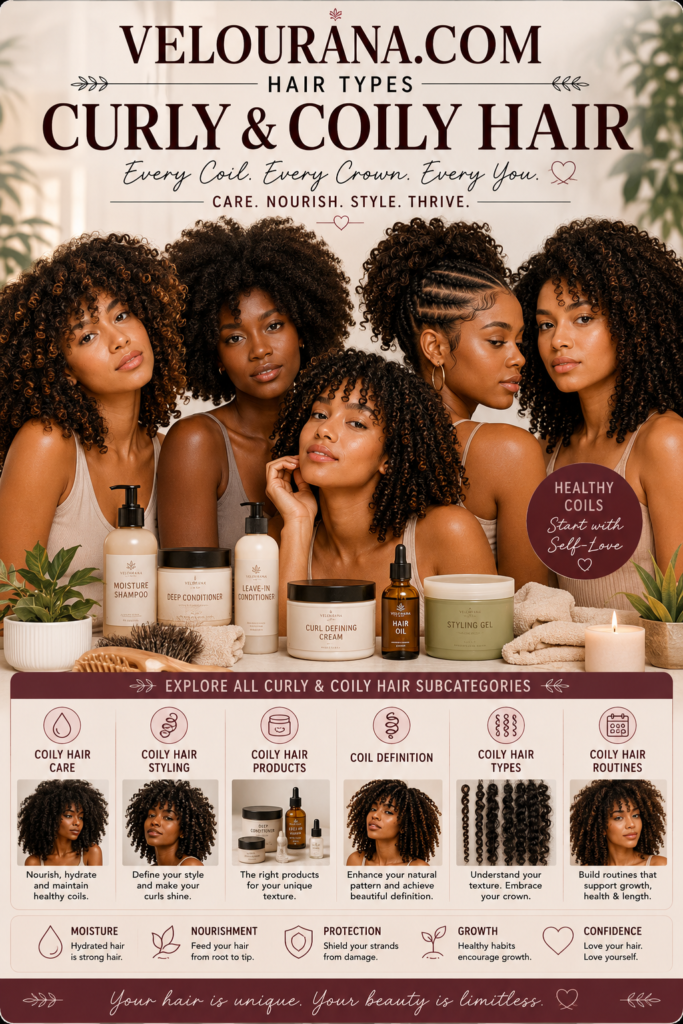
CATEGORY: Curly Hair Products
Curly hair products occupy one of the most crowded corners of modern beauty. Shelves are filled with shampoos designed for curls, conditioners promising intense moisture, leave-ins, creams, custards, mousses, gels, foams, serums, oils, refresh sprays and masks. The abundance can create the impression that curly hair requires an enormous collection simply to behave normally.
It does not.
Curly hair does require thoughtful care, but the usefulness of a product depends less on how many curl-related claims appear on the label and more on whether its function matches the actual condition, structure and styling needs of the hair. One person may achieve excellent results with a shampoo, conditioner and gel. Another may genuinely benefit from a richer leave-in, cream and stronger holding product. Neither routine is inherently more advanced.
The difficulty is that product categories overlap. A leave-in may provide enough conditioning to replace a cream. A gel may provide both slip and hold. A mousse may create definition and volume simultaneously. An oil may improve surface feel without solving dryness. A mask may be useful occasionally but unnecessary at every wash.
Understanding curly hair products therefore begins with understanding function.
The most effective routine is not the one containing the greatest number of products. It is the one in which every product has a clear reason to be there.
Cleansers Establish the Foundation
The curly-hair conversation has often treated shampoo with suspicion, as though cleansing and healthy curls are naturally opposed. Yet styling products cannot perform indefinitely on hair that is never adequately cleansed.
Sebum, sweat, conditioner, styling polymers, oils and environmental residue accumulate on the scalp and hair. Water alone does not necessarily remove all of them. Over time, buildup can make curls feel heavy, coated or strangely resistant to products that once worked beautifully.
A suitable cleanser resets that environment.
This does not mean every wash requires an aggressive clarifying shampoo. The appropriate cleanser depends on how much product is used, how oily the scalp becomes, whether the hair is frequently exposed to sweat and how easily residue accumulates.
Milder cleansers may be ideal for regular use when the scalp remains comfortable and the hair is not heavily coated. More thorough cleansing can be valuable periodically when curls become limp, difficult to saturate or persistently dull.
The important distinction is between effective cleansing and unnecessary stripping.
Curly hair products work best when the hair begins from a reasonably clean, responsive state. When that foundation is neglected, additional creams and oils can sometimes intensify the problem rather than correct it.
Conditioner Is Often the Most Important Product
If curly hair tends to tangle, conditioner becomes more than a softening product. It creates a workable surface.
Curved fibres naturally intersect. When the hair is wet and tangled, friction between strands can make detangling difficult. Conditioner improves slip, reducing the resistance encountered by fingers, combs or brushes.
This can help minimize unnecessary mechanical stress.
Conditioners also influence how the fibre feels after washing. Some are lightweight and rinse cleanly, leaving fine curls flexible. Others contain richer conditioning agents that may suit coarser, denser or more weathered hair.
The richest product is not automatically the most effective.
Fine hair can become flat under a conditioner designed for very dry, dense curls. Conversely, a very lightweight formula may leave heavily processed curls feeling rough and difficult to manage.
Product selection becomes easier when the question changes from “Is this made for curly hair?” to “What does my hair feel like after I use it?”
A good conditioner should leave the hair easier to detangle and more manageable without producing persistent heaviness.
Leave-In Conditioner Should Earn Its Place
Leave-in conditioner is frequently presented as essential for curls, but its necessity depends on what remains after rinsing.
If the hair already feels soft, manageable and adequately conditioned, another layer may not be needed. If the lengths become rough or difficult to style once rinse-out conditioner is removed, a leave-in can provide additional support.
The difference matters because unnecessary layering can accumulate quickly.
A leave-in is usually lighter than a styling cream, though the distinction between categories is not absolute. Some formulas are nearly weightless sprays; others resemble rich creams.
Fine curls often benefit from lighter leave-ins if one is needed at all. Thick, dry or chemically treated curls may tolerate more substantial conditioning.
The best leave-in disappears into the routine rather than announcing itself through residue, greasiness or collapsed curls.
Curl Creams Shape Softness More Than Hold
Curl creams are popular because they combine conditioning, smoothing and styling in one category. They can improve softness, encourage clumping and reduce a rough surface.
Their limitation is that many creams provide less structural hold than gels or mousses.
This distinction explains a common experience: curls look beautiful while wet and immediately after styling but gradually expand or lose shape as they dry.
The cream may have improved feel and clumping, yet provided insufficient support to preserve the formation.
Creams are particularly useful when softness and flexibility are priorities. They may also suit hair that naturally maintains its shape without strong hold.
For fine curls, however, creams can become excessive surprisingly quickly. Heavy butters and oils may stretch the pattern and reduce root lift.
The question is not whether curl cream is good or bad. It is whether the hair needs what the cream is designed to contribute.
Gels Provide Structure
Gel is one of the most effective products for preserving curl definition because its primary contribution is often hold.
When curls are shaped while wet, they remain vulnerable during drying. Water leaves, the hair contracts and movement can separate neighbouring fibres. A holding product supports those groups until they become stable.
Strong gels may form a firm cast around the curl. This temporary stiffness is often intentional.
Once the hair is completely dry, the cast can usually be softened through gentle scrunching, leaving much of the underlying structure intact.
This process allows curls to remain defined without necessarily feeling rigid in the finished style.
Different gels vary considerably. Some produce strong hold and substantial shine. Others are flexible and lightweight. Some suit humidity better than others. Some work particularly well over creams, while others perform best alone.
The ideal hold level depends on the desired result.
A person prioritizing longevity may prefer stronger hold. Someone seeking softness and volume may accept less control in exchange for greater movement.
Mousses and Foams Can Transform Fine Curls
Mousse and foam products are especially valuable when curls need support without substantial weight.
These formulations can distribute easily, create volume and provide varying degrees of hold. Fine or loose curls that collapse under creams may respond much better to airy styling products.
Foams can also be useful at the roots because they generally feel lighter than many gels or custards.
The trade-off is that some provide less lasting control than strong gels.
For certain hair types, combining a lightweight foam with a small amount of gel creates a useful balance between lift and longevity.
Others may find a single mousse sufficient.
Again, the point is not to create a mandatory layering formula. It is to identify what the hair lacks.
If curls already have softness but need lift, another cream is unlikely to be the most logical addition. A lighter holding product may be far more effective.
Custards Sit Between Cream and Gel
Curl custards occupy a less clearly defined space.
Many combine conditioning ingredients with film-forming components, creating both softness and hold. They can be particularly effective for curls that benefit from substantial clumping but still require structural support.
The texture can be thicker than traditional gel, which makes application technique important.
Too much custard can overwhelm fine hair. On dense or coarser curls, however, a richer formulation may distribute beautifully when applied to very wet sections.
The best way to evaluate a custard is not by category name but by finished behaviour.
Does it provide enough hold? Does the hair remain flexible? Does it dry cleanly? Does it create residue when layered?
Product categories are marketing conveniences. Performance is what matters.
Oils Are Finishing Products, Not Universal Moisturizers
Hair oils occupy a powerful place in beauty culture, but they are often misunderstood.
Oil can improve shine, reduce friction and make the surface feel smoother. A small amount applied after styling may help soften a gel cast or reduce roughness at the ends.
What oil does not do is reproduce the effects of water and conditioner.
Dry-feeling curls may benefit from an oil as part of a broader routine, but repeatedly applying oil to hair that is inadequately cleansed or conditioned can create buildup without addressing the original issue.
Heavy oils can also weigh down fine curls.
The appropriate amount may be only a few drops distributed through the hands before touching the hair.
Curly hair products become more effective when oils are used according to their actual cosmetic function rather than treated as a cure for every form of dryness.
Masks Have a Role, but Not Every Wash Needs One
Hair masks are often marketed as concentrated rescue treatments.
Some provide richer conditioning than ordinary conditioners. Others contain proteins, strengthening ingredients or formulations designed for chemically processed hair.
They can be valuable, especially when the hair is weathered, coloured or difficult to detangle.
But a mask used automatically at every wash can become unnecessary.
If ordinary conditioner already leaves the hair manageable, adding a heavy mask simply because it feels luxurious may increase product load without improving results.
The frequency should therefore respond to the condition of the hair rather than a fixed beauty ritual.
When curls begin feeling rough or less flexible, a richer treatment may be useful. If they become limp and coated, reducing treatment intensity may be more appropriate.
Protein Products Require Context
Protein is one of the most confusing subjects in curly hair care because it is often described in extremes.
Some routines warn against protein entirely. Others recommend frequent strengthening treatments.
Neither approach fits everyone.
Protein-containing products can improve the feel and manageability of certain damaged or highly processed fibres. Hair exposed to bleaching, chemical treatments or repeated heat may respond particularly well.
But hair that is already in good condition may not benefit from intensive protein use.
Some people notice stiffness or roughness when they use strengthening treatments too frequently.
The solution is not to fear protein but to use it purposefully.
Products should respond to what the hair is doing.
Product Order Changes the Result
Even excellent products can perform poorly when layered without thought.
A common routine might place leave-in conditioner beneath cream and then gel on top. This can work beautifully, but it is not universally necessary.
Layering changes weight, drying time and the behaviour of holding films.
A strong gel applied directly to well-conditioned hair may outperform the same gel placed over several rich products. Fine curls especially can lose structure beneath excessive conditioning layers.
Dense, coarse hair may respond differently.
The most useful strategy is experimentation with controlled variables.
If the hair feels heavy, remove one layer rather than replacing the entire routine. If definition disappears during drying, increase hold before increasing moisture. If curls become rough, investigate conditioning before adding more gel.
Understanding product roles makes troubleshooting far more precise.
Compatibility Matters More Than Popularity
A product can be excellent and still be wrong for a particular head of hair.
Popular recommendations often fail because they overlook individual differences.
Density affects how much product is required for even distribution. Strand diameter influences how easily the hair becomes weighed down. Porosity and damage affect how products interact with the fibre. Curl geometry changes the amount of support needed to maintain shape.
Climate matters as well.
A gel that performs beautifully in a dry environment may behave differently in high humidity. A rich cream that feels luxurious in winter may become too heavy in warm weather.
Product compatibility is therefore dynamic rather than permanent.
A routine can change as the hair grows, becomes coloured or moves through different seasons.
Buildup Is Often Mistaken for Dryness
One of the most common product-related mistakes is responding to heavy, unresponsive hair by adding even more conditioning products.
Buildup can make hair feel strangely dry despite being coated. Water may not seem to penetrate easily. Curls lose spring. Styling products sit on top rather than integrating with the hair.
The instinct is to add oil, cream or mask.
Sometimes the correct response is the opposite.
A more thorough cleanse can restore movement and improve the performance of products that had seemed ineffective.
This illustrates why curly hair care cannot be reduced to the instruction to add moisture whenever something feels wrong.
Products work within a system.
Cleansing, conditioning and styling must remain in balance.
The Best Curly Hair Routine Is Usually Smaller Than Expected
The beauty industry benefits when routines expand.
Consumers are encouraged to believe that every category fills a separate essential role. Shampoo cleanses. Conditioner softens. Leave-in moisturizes. Cream defines. Gel holds. Oil seals. Spray refreshes. Mask repairs.
In reality, one product may perform several of these functions at once.
A good conditioner may eliminate the need for a leave-in. A lightweight cream may provide enough styling for curls with strong natural pattern. A gel may offer both slip and hold. A mousse may replace both cream and gel when volume is the priority.
The most elegant routine is often the one in which products are selected by necessity rather than category completion.
That does not mean minimalism should become another rigid rule. Some hair genuinely benefits from several layers.
The point is that complexity should be earned.
Every bottle should solve a problem or contribute a result that would otherwise be missing.
Curly Hair Products Should Follow the Hair, Not Lead It
The most sophisticated way to shop for curly hair products is to stop beginning with the product.
Begin with the hair.
Does it feel rough after washing? Conditioning may need adjustment. Does it look excellent when wet but lose shape while drying? Hold may be insufficient. Does it remain flat and heavy? The routine may contain too much weight. Does it tangle constantly despite rich products? Damage, buildup or detangling technique may deserve attention.
The hair provides clues.
Products are tools used to respond to those clues.
When that relationship is reversed, routines become unnecessarily expensive and confusing. Every disappointing wash day becomes an excuse to purchase something new.
When function comes first, product selection becomes calmer.
Curly hair does not need endless correction. It needs a clean foundation, enough conditioning to remain manageable and the appropriate amount of styling support for the desired finish.
Everything beyond that should have a reason.
The End Velourana
 Discover More From Our Family of Websites
 ZodiacBearing (Astrology, Tarot, Numerology, Angel Numbers & Spiritual Guidance)
 Velourana (Beauty, Makeup, Hair Care, Skincare & Beauty Tips)
 HavenBearing (Home, Living, Organization, Décor & Everyday Inspiration)
 PawBearing (Pet Care, Dog Breeds, Animal Health, Training & Pet Products)
 PsyCatherine (Notes From the Journal of a Psychologist on Real Life)

