
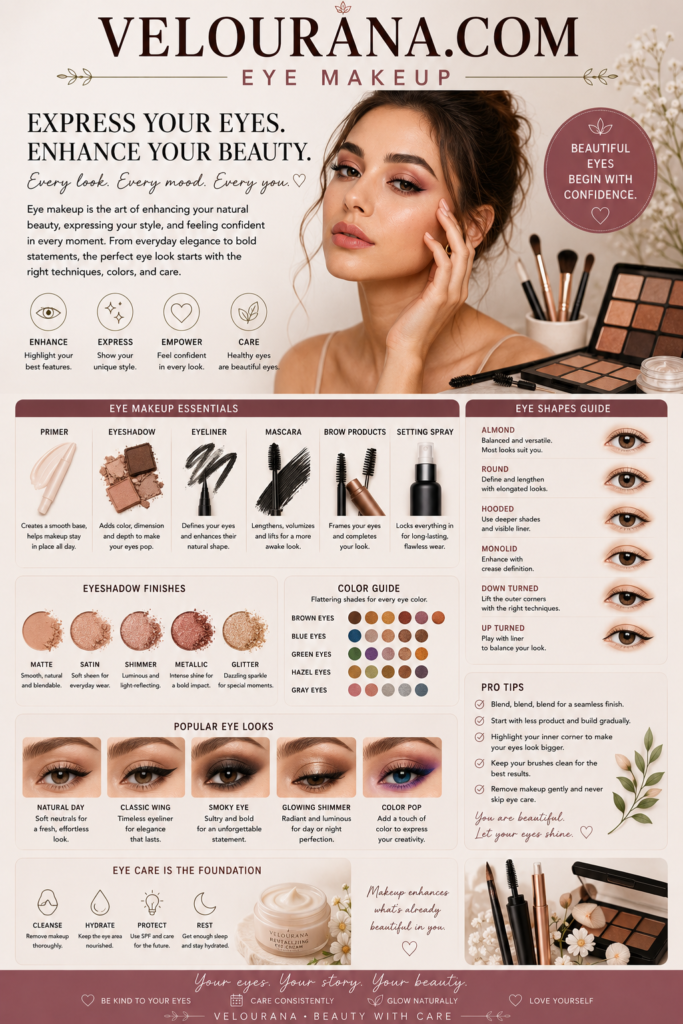
CATEGORY: Curling Mascara
There is a particular moment during mascara application when the eyelashes seem to change the expression of the entire face. The color may not have become dramatically darker and the lashes may not yet be heavily coated, but once their direction shifts upward, the eye appears more exposed. The upper lash line looks cleaner, the iris becomes more prominent and the surrounding makeup often seems more deliberate.
This is the territory of curling mascara.
Unlike mascara designed primarily around maximum volume or extreme length, curling mascara is concerned with position. Its success depends on whether the eyelashes remain elevated after the product has dried and whether that elevation survives ordinary wear. The cosmetic must therefore do something surprisingly sophisticated: remain fluid enough to spread through fine hairs, provide enough grip to influence their direction and then form a coating capable of supporting that shape without making the lashes unnecessarily heavy.
The wand has to participate in the process. The hand has to participate too. Curling mascara is one of those beauty products in which technique cannot be separated completely from formulation because the product is applied to hairs that are being physically directed while they are coated.
Understanding curling mascara begins with understanding the eyelashes not as a flat fringe around the eye, but as a collection of individual hairs with different lengths, angles and degrees of natural curvature.
Lash Direction Changes Everything
Imagine looking directly at a long eyelash that projects almost horizontally toward you. Much of its physical length is hidden by perspective. Turn that same lash upward and suddenly its full silhouette becomes easier to see.
This simple change explains why curl can create such a powerful lengthening illusion.
The lash itself has not grown. No fiber necessarily needs to be added. Its orientation has changed, allowing more of the hair to become visible from the observer's viewpoint.
The effect becomes particularly obvious on straight lashes. Before curling, the tips may barely rise above the upper lash line when viewed from the front. After curling, those same tips become clearly visible against the eyelid or surrounding space.
This is why mascara advertising frequently combines the language of lift, curl and length. The effects are visually connected even when the mechanisms producing them are different.
Direction also influences the apparent shape of the eye. Lashes lifted strongly through the center emphasize vertical openness. Lashes directed upward and outward at the outer corner create a more elongated impression. A uniformly elevated fan can make the lash line appear expansive and symmetrical.
Curling mascara therefore offers a form of subtle eye shaping.
The transformation can be accomplished without changing the underlying eyeliner or eyeshadow. Someone wearing an identical neutral shadow look on two different days can create a noticeably different result simply by altering how the eyelashes are directed.
This makes curling mascara especially valuable in minimalist makeup. When there are few other elements competing for attention, the architecture of the eyelashes becomes much more noticeable.
Why Some Lashes Refuse to Stay Curled
Anyone with naturally straight lashes knows that creating a curl and keeping a curl are different achievements.
Eyelashes have their own natural growth pattern and physical characteristics. Some are fine and responsive, while others are comparatively coarse and resistant. Some emerge from the lash line already angled upward. Others grow forward or downward.
A mechanical eyelash curler can temporarily reshape resistant lashes, but the application of mascara introduces another variable. The coating adds mass and moisture, and the lashes may begin moving back toward their natural position if the product does not set in a way that supports the newly created shape.
This is why a mascara that looks magnificent immediately after application may be less impressive several hours later. Initial curl demonstrates shaping ability; lasting curl demonstrates retention.
Formula weight becomes crucial. A thick deposit can create beautiful darkness and volume while simultaneously placing more load on the hair. If the lashes naturally resist curling, that additional weight can accelerate their return toward a straighter position.
The challenge for a curling mascara is consequently different from simply making the richest possible coating. It must create enough cosmetic presence to make the lashes visible while respecting the structural limitations of the hair.
Environmental conditions can complicate the situation. Moisture and humidity may affect the performance of some formulas and the behavior of styled lashes. Oils around the eye can influence wear. Repeated touching or rubbing can disturb the coating.
Curl retention is therefore the product of several interacting factors rather than a single ingredient or brush shape.
This explains the enormous variation in personal mascara preferences. A formula capable of maintaining spectacular curl on one lash type may behave quite differently on another.
The Formula as Invisible Scaffolding
Once mascara dries, what remains on the eyelashes is not simply color. It is a thin cosmetic structure.
Waxes contribute body and texture. Pigments create the visible shade. Film-forming materials help the coating remain continuous and attached to the lashes. Other components influence spreadability, flexibility, consistency, drying behavior and resistance to wear.
For curling mascara, the dried film is particularly important because it helps support the arrangement created during application.
The concept can be compared loosely to hairstyling, although mascara operates on a much smaller scale and uses products specifically formulated for the eye area. Styling hair involves establishing a shape and using a product to help preserve it. Curling mascara follows a related cosmetic logic: direction is created physically, then supported as the coating sets.
A useful curling formula cannot simply become as hard as possible. Extreme rigidity would create its own problems. Eyelashes move when the eyes blink, and the surrounding skin is constantly changing position. A coating needs enough flexibility to remain comfortable and resist cracking or flaking.
At the same time, a formula that remains excessively soft may provide insufficient support for lashes that naturally want to straighten.
This tension between flexibility and hold is central to mascara performance.
Drying speed matters for similar reasons. If mascara stays very wet, the lashes remain coated with a relatively mobile material while gravity and their natural structure work against the newly created curl. If it sets almost immediately, however, there may be little opportunity to comb through clumps or refine the shape.
Good performance comes from controlled transition: spread, shape, separate, set.
The user experiences this as texture and working time, but behind those sensory qualities lies the fundamental requirement that a liquid or creamy cosmetic become a stable lash coating.
Why Curved Mascara Wands Make Sense
A curved mascara wand is one of the most recognizable features of the curling category. Its popularity is not merely decorative.
The upper lash line itself follows a curve. A suitably shaped brush can therefore contact a broad section of lashes while sitting close to their roots. As the wand moves upward, the curve can help gather and guide the lashes.
Used deliberately, the inner side can function almost like a small support beneath the lashes. The applicator meets them near their base and encourages them upward while depositing mascara. This combines coating and shaping in one movement.
Yet curvature alone does not determine performance.
A brush can be strongly curved but too large for a particular eye. Another can have a subtle curve but excellent bristle placement that provides much greater control. Some brushes are dense and plush, while others use shorter molded teeth designed for separation.
The spacing between bristles affects how much product remains on each lash and how effectively neighboring lashes are separated. The stiffness of the brush influences how much physical control the user has. A flexible wand may feel gentle but behave differently from a firmer applicator when trying to lift resistant hairs.
The tip is important too. Inner-corner lashes are short and can be difficult to reach with the broadest part of a brush. A well-controlled tip allows these smaller hairs to be coated without placing excessive mascara on the surrounding skin.
Outer lashes require another type of precision. Directing them upward and outward can enhance the natural fan of the lash line. The applicator must be maneuverable enough to change direction as it approaches this area.
A curling mascara brush is therefore better understood as a styling tool than as a simple delivery device.
The First Coat Determines the Structure
The temptation with mascara is to judge success by how much transformation can be created in a few strokes. Curling mascara rewards a more architectural approach.
The first coat should establish direction.
Starting close to the roots allows the mascara to define the base of the lashes, where visual density is particularly effective. The brush then travels upward, carrying the lashes with it. The motion should reinforce the desired curve rather than merely depositing pigment.
When the brush reaches the tips, continuing the upward direction for a moment can help maintain the shape while the product begins settling.
The central lashes can be encouraged almost vertically if the goal is an open-eyed effect. Outer lashes can follow a diagonal path toward the temple. Inner lashes naturally require a smaller movement because they are shorter and more delicate.
Once this structure exists, additional mascara can deepen the effect without reinventing it.
A second coat applied indiscriminately can obscure the careful separation achieved initially. Applied selectively, however, it can add richness exactly where needed. The roots may receive greater density while the tips remain relatively fine. Sparse sections can be reinforced without making the entire lash line equally heavy.
This creates dimensional volume rather than uniform thickness.
The distinction is important because uniformly thick lashes can lose some of the visual delicacy that makes curl attractive. The eye reads a lifted lash partly because it can follow the line from dark root to visible tip.
When every lash becomes a thick column, that progression is less apparent.
The best curling application therefore often involves less product than expected, placed more intelligently.
Working with an Eyelash Curler
For naturally straight or downward-pointing lashes, an eyelash curler can provide the foundation that allows curling mascara to perform at its best.
The tool creates the initial lift mechanically. Mascara then adds visibility and helps maintain the resulting shape.
A natural-looking curve is usually more flattering than a single severe bend. The objective is to create an arc rather than a right angle. Positioning the curler carefully near the base provides elevation, while progressively shaping farther along the lash can soften the transition.
The lashes should be clean and free from hardened mascara when a conventional curler is used. Curling after mascara has dried can cause the lashes to adhere to the tool or experience unnecessary stress. Establishing the shape first avoids clamping a rigid cosmetic film.
Once the lashes have been curled, mascara application becomes an exercise in preservation.
The brush should follow the direction already created rather than pressing the hairs back downward. Heavy product at the tips should be avoided when curl retention is difficult. The root area can carry greater definition because weight positioned there has less leverage over the end of the lash than a thick coating concentrated at the tip.
For some people, the difference is dramatic. Curling mascara alone may create moderate lift, while the combination of mechanical curling and a compatible formula can produce an effect approaching the appearance associated with professionally lifted lashes.
The important point is that mascara and curler are complementary rather than interchangeable. The curler reshapes; the mascara defines and supports.
Waterproof, Water-Resistant and Everyday Curl
Curling mascaras appear in conventional, water-resistant and waterproof forms, and each can offer a different balance of convenience and hold.
People with extremely stubborn lashes often favor formulas that resist moisture because they may maintain the initial shape particularly well. This can be useful in humid conditions, during long days or whenever curl retention is more important than effortless removal.
However, strong wear resistance introduces a cleansing consideration. A mascara designed to remain intact around water should not be expected to disappear instantly with a minimal cleanser. Removal needs to match the formula.
For everyday use, many people prefer a washable curling mascara that offers adequate lift with simpler cleansing. The ideal choice depends on how resistant the lashes are, how long the makeup must remain intact and how much emphasis the wearer places on easy removal.
There is no universal reason that the strongest possible mascara must always be chosen.
Someone whose lashes naturally curl upward may gain little from an extremely persistent waterproof formula. A lighter washable product may provide all the necessary support while feeling more convenient.
Conversely, someone whose carefully curled lashes fall almost immediately with conventional mascara may find that stronger resistance fundamentally changes the result.
Lifestyle also matters. Contact lens wearers, people with sensitive eyes and anyone prone to touching the eye area may have additional preferences regarding texture, removal and wear.
Curling performance should therefore be considered within the entire experience of using the product rather than judged in isolation.
Separation Makes Curl Look More Dramatic
Curl and separation have a surprisingly close relationship.
Imagine ten lashes perfectly curled upward but stuck together into three thick groups. The direction remains elevated, yet much of the visual fan has disappeared. Now imagine the same lashes separated individually. Suddenly the curve looks broader, lighter and more dimensional.
Separation reveals architecture.
This is one reason curling mascaras frequently use brushes designed to comb through the lashes rather than simply load them with product. Each visible tip contributes to the impression of width and lift.
Clumping tends to occur when too much mascara is deposited, when several wet coats are added without adequate control or when the brush cannot move cleanly through the hairs.
A slight side-to-side movement near the roots can help distribute product, but excessive horizontal movement throughout the lengths may encourage lashes to cross or collect into groups. Transitioning into a clear upward sweep allows the brush to separate while maintaining direction.
The outer lashes deserve particular attention because they naturally create much of the eye's horizontal width. If they collapse into a single cluster, the lash line can look abruptly truncated. Separating and directing them outward preserves the fan.
The same principle applies centrally. Several distinct lifted lashes above the iris can create more apparent openness than one heavily coated spike.
This does not mean curling mascara must always create a natural look. Dramatic lashes can still be strongly defined and substantial. The objective is intentional grouping rather than uncontrolled clumping.
A sophisticated mascara look may contain both density and separation: deeper mass near the roots, distinct lengths through the middle and clearly readable tips.
Curling Mascara for Hooded and Deep-Set Eyes
Eye structure influences how visible mascara becomes and where transfer is most likely to occur.
On hooded eyes, lifted lashes can be especially useful because they draw visual attention forward and upward. When much of the mobile eyelid is less visible with the eyes open, eyelashes become an important component of the eye makeup that remains continuously visible.
Curl can expose the lashes against the upper lid area, creating definition without requiring large amounts of visible eyeshadow.
At the same time, highly lifted lashes may come into closer contact with the skin above them. A mascara prone to transferring can therefore become noticeable. Allowing the product to set before repeated blinking or manipulating the eye area can help, but formula compatibility remains important.
Deep-set eyes present another spatial relationship. The lashes may sit relatively close to surrounding structures depending on their length and direction. Curling can bring the tips forward and upward, making them more visible, while a controlled formula helps prevent excessive transfer.
For prominent eyes, curl can create elegant framing without necessarily relying on thick eyeliner. The lashes can provide enough definition to balance the eye while retaining softness.
Monolids and varying eyelid anatomies also interact differently with lash direction. There is no single mascara technique dictated by eye shape. Natural lash angle, eyelid structure and personal aesthetic preference all matter.
The advantage of curling mascara is its adaptability. Direction can be adjusted more easily than the fundamental properties of the lashes themselves.
Natural Curl Versus Dramatic Lift
Not every curling mascara look needs to announce itself.
For natural makeup, the goal may simply be to make the lashes appear awake and defined. A light coat focused at the roots can enhance their curve while leaving the tips fine. Brown or softer black shades can make the effect even more understated, depending on coloring and preference.
The lashes should remain recognizably individual. Their natural differences in length contribute to the softness of the result.
Dramatic curling mascara follows the same structural principles but increases contrast. Darker pigmentation, greater root density and additional layers make the curve more visible. The outer lashes can be exaggerated for an elongated shape or the central lashes emphasized for a more rounded, doll-like effect.
The danger in dramatic application is losing the curl beneath excessive volume.
Once the tips become heavily coated, the lashes can appear visually blunt. Once several hairs merge together, the fan narrows. Once the coating becomes too heavy, physical curl may begin to relax.
The most effective dramatic curling looks therefore maintain discipline. Intensity is built where it contributes to the desired architecture rather than simply everywhere.
This is a recurring principle in sophisticated makeup: more impact does not necessarily require more product. Strategic placement can create greater transformation than uniform accumulation.
Curling Mascara as Part of a Complete Eye Look
Mascara rarely exists entirely on its own. Its direction interacts with eyeliner, eyeshadow, brow shape and even the placement of concealer or highlighter around the eye.
A lifted central lash pattern pairs naturally with softly brightened inner corners and neutral shadow because all three elements encourage openness.
An outward curl complements elongated eyeshadow. When shadow extends toward the temple and the outer lashes follow the same trajectory, the entire eye makeup appears cohesive.
Winged eyeliner gains a similar benefit. A sharply extended liner beneath lashes that point straight downward can create competing directions. Sweeping the outer lashes upward and outward allows them to echo the movement of the wing.
Smokey eye makeup can also benefit from curl. Dark shadow surrounding the eye sometimes reduces the visible contrast between lashes and eyelid. Elevating the lashes brings their tips into clearer view, preventing them from disappearing completely against the shadow.
Curling mascara can therefore function as the final structural adjustment that unifies the makeup.
Even when false lashes are used, understanding curl remains useful. Natural lashes and false lashes should visually cooperate rather than forming two obviously separate layers. The natural lashes may need gentle elevation so they integrate with the shape above them.
The principle remains consistent across makeup styles: lash direction should belong to the geometry of the complete look.
When Curling Mascara Does Not Perform as Expected
Mascara dissatisfaction is often described simply as a bad formula, but identifying the specific failure makes it easier to understand what needs to change.
If lashes curl initially and fall later, retention or product weight may be the issue.
If they never appear lifted despite remaining separated, the natural lash angle may require mechanical curling before mascara.
If curl is good but the lashes look sparse, the formula may provide insufficient volume for the wearer's preference.
If the lashes become thick but lose their fan, excessive deposition or an unsuitable brush may be contributing.
If the mascara holds curl but feels brittle, the balance between hold and flexibility may not suit the wearer.
If transfer appears above the eyes, the combination of lash length, curl, eyelid anatomy, skin oils and formula wear characteristics should be considered.
These distinctions prevent mascara selection from becoming a cycle of buying products based only on marketing terminology.
"Curling" on the packaging describes an intended benefit. It does not guarantee identical performance across every lash type.
The more accurately someone understands their own lashes, the easier the category becomes to navigate.
Caring for Lashes When Curling Is a Daily Habit
Beautiful curl should not depend on aggressive handling.
Eyelashes are small, and the desire for dramatic lift can encourage people to manipulate them more forcefully than necessary. A curler should shape rather than pull. Mascara should coat rather than require repeated scraping. Removal should dissolve and release the product rather than strip it mechanically.
Clean tools matter. Product residue accumulating on an eyelash curler can make its surfaces sticky and less comfortable to use. Keeping the contact area clean allows the tool to function more predictably.
Mascara itself should be handled hygienically because of its proximity to the eyes. It should not be shared, and water or other substances should not be added casually to alter an aging formula.
A mascara that has changed noticeably in odor, consistency or behavior deserves attention rather than continued use simply because product remains in the tube.
Removal at the end of the day should be patient. Waterproof formulas in particular need a compatible remover and enough contact time for the coating to loosen. Pulling repeatedly at resistant mascara is not an efficient substitute for proper cleansing.
These habits are not glamorous, but they support the continued ability to enjoy dramatic mascara. Healthy-looking lashes provide a better canvas for curl than lashes subjected to unnecessary mechanical stress.
Why Curl Can Be More Transformative Than Thickness
The beauty industry has long celebrated enormous lashes, but size is only one component of their visual impact.
Direction may be equally important.
A dense fringe pointing downward can cast visual weight over the eye. A lighter fringe lifted upward can expose the eye and appear surprisingly dramatic despite containing less product.
Curl creates space.
It separates the lashes visually from the eye itself, allowing their silhouettes to become visible. It exposes the area above the lash line. It changes the relationship between the tips and the eyelid. It allows light to reach the eye differently and gives surrounding makeup more room to be seen.
This is why curling mascara can make someone look noticeably more awake without creating an obviously heavy cosmetic effect.
The transformation comes from geometry rather than sheer quantity.
The Lasting Place of Curling Mascara
Beauty trends continually redefine the ideal eyelash. At different moments, fashion favors enormous volume, delicate separated lashes, extreme length, spiky editorial definition, brown mascara, glossy lashes or intensely black dramatic finishes.
Curl survives these shifts because it is not merely a trend-driven surface effect. It is a method of framing the eye.
The degree of curl can change. The amount of mascara can change. The preferred brush technology can change. Yet the desire to lift the lashes away from the eye and make their full length visible remains relevant across many styles.
Modern curling mascara is particularly versatile because it no longer needs to exist as a narrowly specialized product. A formula can combine lift with length, volume, separation or extended wear. What matters is that those additional benefits do not overwhelm the fundamental architecture.
For the wearer, success comes from recognizing that curling mascara is not simply brushed onto the lashes and forgotten. It is shaped into them.
The roots establish elevation. The brush determines direction. The formula provides the coating. Drying establishes the structure. Separation reveals the result.
When all of these elements cooperate, the transformation can be striking without looking complicated.
The lashes appear longer because more of them can be seen. They appear more defined because their individual shapes are visible. The eyes appear more open because the upper fringe travels away from them instead of covering them.
That is the enduring appeal of curling mascara. It does not need to create entirely different eyelashes. It changes how the existing lashes occupy space, and through that seemingly small adjustment, it can change the character of the entire eye.
THE END VELOURANA
 Discover More From Our Family of Websites
 ZodiacBearing (Astrology, Tarot, Numerology, Angel Numbers & Spiritual Guidance)
 Velourana (Beauty, Makeup, Hair Care, Skincare & Beauty Tips)
 HavenBearing (Home, Living, Organization, Décor & Everyday Inspiration)
 PawBearing (Pet Care, Dog Breeds, Animal Health, Training & Pet Products)
 PsyCatherine (Notes From the Journal of a Psychologist on Real Life)

