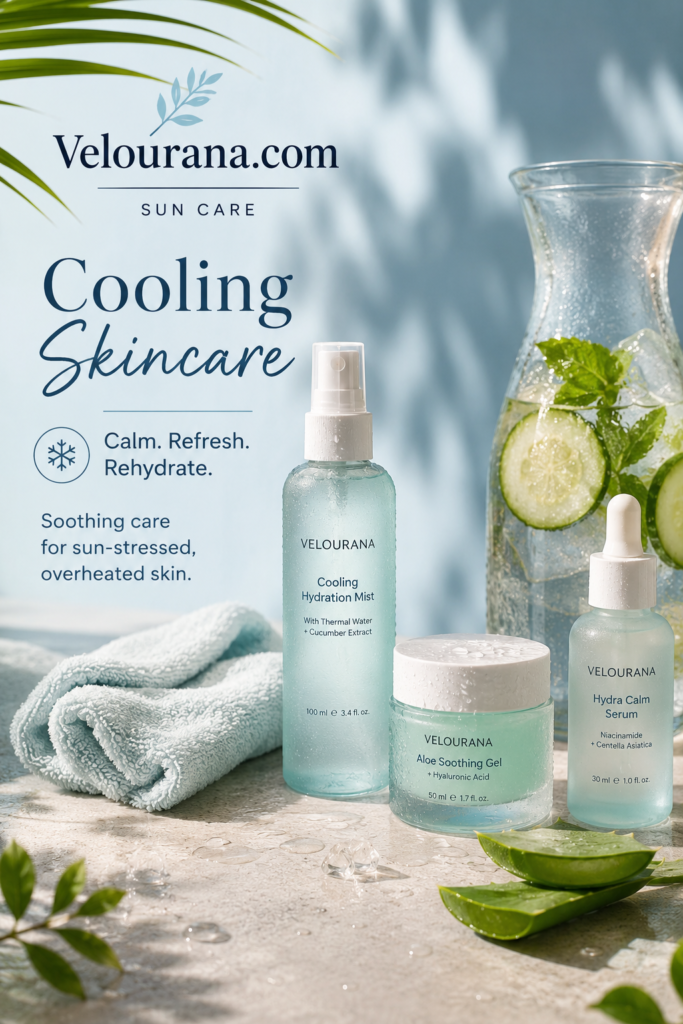
CATEGORY: Cooling Skincare
Hot weather can make nighttime skincare feel very different from the same routine in winter. After a day of sun exposure, perspiration, sunscreen, makeup, air conditioning, swimming, or travel, the skin may feel warm, sticky, tight, dry, or simply overloaded.
A heavy evening routine can make that discomfort worse.
This is where cooling skincare can become especially useful. Nighttime provides an opportunity to remove the accumulated residue of the day, lower the sensation of heat, restore hydration, and simplify the routine so the skin can settle comfortably before sleep.
The best nighttime cooling routine is not necessarily the one with the coldest products or the greatest number of steps. It is the one that makes the skin feel clean, calm, hydrated, and balanced without leaving an uncomfortable film.
Why Nighttime Is Ideal for Cooling Skincare
During the day, skincare has to work alongside sunscreen, makeup, environmental exposure, perspiration, and movement.
At night, those demands are removed.
This makes evening the ideal time to assess how the skin actually feels.
Does it feel tight?
Does it feel greasy?
Does it feel hot?
Does it feel dry after swimming?
Does it feel sensitive after being outside?
The answers can guide the routine.
Rather than repeating the same fixed sequence every night, summer skincare works better when it responds to the condition of the skin.
Begin by Leaving the Heat Behind
The first step is not skincare.
Move into a cooler environment.
If the skin still feels overheated from outdoor activity, there is little value in immediately applying multiple products while the body remains hot.
Allow the body temperature to settle.
Airflow, shade, or a comfortable indoor environment can help.
Once the sensation of heat begins to reduce, cleansing becomes more comfortable.
A Cool Shower Can Change the Entire Routine
A comfortably cool shower can be one of the most effective parts of nighttime cooling skincare.
It removes perspiration, sunscreen, salt, chlorine, environmental particles, and body-care residue while also reducing the sensation of warmth.
The water should not be painfully cold.
The goal is comfort.
Avoid extremely hot water after a long day in the sun because it can make already dry or reactive skin feel more uncomfortable.
A gentle shower creates a much better base for the skincare that follows.
Remove Sunscreen Thoroughly
Sunscreen is essential during the day, but it should be removed appropriately at night.
Water-resistant sunscreen can be particularly persistent.
If makeup is also present, a thorough but gentle cleansing method may be needed.
Some people prefer double cleansing.
An oil-based or balm cleanser can dissolve makeup and sunscreen, followed by a gentle water-based cleanser.
The exact method depends on the products being used.
The important point is that clean skin should not feel stripped.
Do Not Over-Cleanse
After a hot day, the temptation to wash the face repeatedly can be strong.
This is especially common when the complexion feels oily.
However, repeated cleansing can leave the skin tight and uncomfortable.
One careful evening cleanse is usually more appropriate than multiple aggressive washes.
The purpose is to remove the day, not to remove every trace of the skin's natural surface lipids.
Pat the Skin Gently
After cleansing, avoid vigorous towel drying.
Pat the skin gently.
A slightly damp complexion can be ideal for the next hydrating step.
This also reduces friction, which can be particularly useful when the skin feels sensitive or warm.
The First Cooling Layer
A hydrating mist, essence, or lightweight toner can create an immediate refreshing sensation after cleansing.
This first layer should feel simple and comfortable.
If the product is stored cool according to its instructions, the sensory effect can be even more pleasant.
There is no need for the product to feel icy.
Mild cooling is enough.
Why Hydration Matters at Night
Hot weather can create a misleading combination of oiliness and dehydration.
The skin may look shiny while still feeling tight.
This can happen after perspiration, cleansing, air conditioning, swimming, or prolonged outdoor exposure.
A lightweight hydrating serum can help restore comfort without adding excessive heaviness.
Ingredients such as glycerin, hyaluronic acid, panthenol, or beta-glucan are common in these kinds of products.
The exact formula matters less than how well the skin tolerates it.
Cooling Serums
Water-based serums are particularly suited to nighttime summer skincare.
They can provide hydration without creating a thick layer.
A refrigerated serum, when storage instructions permit, can feel especially refreshing.
Apply a modest amount.
More serum is not always better.
Too much product can become sticky, pill beneath moisturizer, or simply feel heavy.
Gel Moisturizers at Night
Gel moisturizers are often associated with daytime use, but they can work beautifully at night.
They spread easily, feel refreshing, and tend to be less dense than traditional creams.
For oily or combination skin, this may be enough.
For dry skin, a gel cream may provide a better balance.
The correct product is the one that leaves the skin comfortable later in the evening, not just during the first minute of application.
When Dry Skin Needs More
Dry skin should not be forced into an ultra-light routine simply because the weather is hot.
A cooling serum can provide the refreshing first step.
Then a richer moisturizer can be applied in a smaller amount.
This approach allows the routine to feel cool without leaving the skin under-moisturized.
The cheeks, jawline, and other dry areas may need more product than the oilier parts of the face.
Nighttime Cooling for Oily Skin
Oily skin often benefits from simplicity.
After cleansing, a lightweight hydrating serum may be enough before a gel moisturizer.
If the skin feels comfortable without an additional cream, there is no need to add one automatically.
The important thing is to avoid stripping the skin simply because it produces oil.
Cooling skincare should balance rather than punish.
Nighttime Cooling for Combination Skin
Combination skin may need different treatment in different areas.
A gel moisturizer can be applied across the entire face.
Dryer zones may receive a second thin layer.
Oilier areas may need less.
This targeted method keeps the routine light while still responding to actual needs.
Nighttime Cooling for Sensitive Skin
Sensitive skin often benefits from fewer products.
Avoid introducing multiple unfamiliar ingredients after a long, hot day.
Choose formulas the skin already knows.
A cool hydrating serum and familiar moisturizer may be enough.
Physical cooling through product temperature is often a better option than relying on strong menthol, fragrance, or tingling ingredients.
Cooling the Eye Area Before Bed
The eye area can feel tired after bright light, heat, travel, or prolonged screen use.
A cool eye gel can provide a refreshing sensation.
A reusable cooling eye mask may also be pleasant.
Extreme cold is unnecessary.
Gentle cooling is sufficient.
A Cool Compress
One of the simplest nighttime cooling tools is a clean, cool cloth.
Apply it gently to the face for a short period.
This can provide refreshment without introducing another product.
For people with very sensitive skin, this may be one of the easiest ways to cool the complexion physically.
Avoid Direct Ice
Direct ice can feel too intense.
It is unnecessary for ordinary cooling skincare.
A cool compress or refrigerated gel can provide the same type of relief more gently.
Cooling should never become painful.
Nighttime Sheet Masks
A hydrating sheet mask can turn nighttime cooling into a relaxing ritual.
When the product allows appropriate refrigeration, the cool mask can feel especially refreshing.
Use it according to the recommended time.
Do not leave it on indefinitely.
Longer application does not automatically create better results.
Sleeping Masks
Sleeping masks are designed differently from standard sheet masks.
They are intended to remain on the skin overnight.
For people who enjoy them, a lightweight sleeping mask can provide hydration without the density of some heavy creams.
Choose textures carefully.
A product that feels pleasant in winter may feel too occlusive on a hot summer night.
Avoid Heavy Layering
One of the most common nighttime mistakes is applying too many products.
Cleanser.
Toner.
Essence.
Serum.
Second serum.
Oil.
Cream.
Sleeping mask.
Each product may be good individually, but together they can feel heavy.
Summer is a good time to reduce redundancy.
Cooling and Active Ingredients
Many people use retinoids, exfoliating acids, or targeted treatment serums at night.
Cooling skincare does not automatically replace these products.
However, if the skin feels unusually irritated after sun or heat exposure, simplifying the routine may be more comfortable.
A stressed complexion does not always need another intense active.
People using prescription products should follow appropriate professional guidance.
Avoid Strong Exfoliation After a Hot Day
Roughness after sun exposure does not automatically mean exfoliation is needed.
Salt, chlorine, wind, sunscreen residue, and dehydration can all change the texture of the skin temporarily.
Strong acids or physical scrubs may be uncomfortable.
Allow the skin to settle first.
The Role of Aloe Vera at Night
Aloe gels are a classic nighttime summer product.
Their water-rich texture can feel refreshing after a shower.
Some people use aloe alone.
Others use it beneath moisturizer.
The important factor is the complete formulation.
An aloe product may contain many other ingredients, so choose according to tolerance rather than relying only on the word "aloe" on the label.
Panthenol at Night
Panthenol often appears in soothing or hydrating products.
It can fit well into a simple nighttime routine.
A lightweight panthenol serum or gel may feel particularly appropriate when the skin needs comfort rather than a complicated treatment.
Centella Asiatica at Night
Centella products are frequently marketed toward stressed or sensitive-looking skin.
Their lightweight textures often suit hot weather.
A centella essence or gel cream can fit naturally into nighttime cooling skincare.
Again, formulation matters more than the popularity of the ingredient.
Ceramides at Night
Ceramides can be useful when the skin feels dry or tight after swimming, cleansing, or air conditioning.
A lightweight ceramide lotion or gel cream can provide additional moisturization without requiring a dense winter cream.
This makes ceramide products especially versatile for hot-weather evenings.
Niacinamide at Night
Niacinamide appears in many summer-friendly serums and moisturizers.
If the skin already tolerates a particular product, it may continue to fit into the routine.
However, a hot and reactive evening is not the ideal moment to introduce a new high-strength formulation.
Keep the routine familiar when the skin feels stressed.
Cooling Skincare After the Beach
Beach days create a specific combination of stressors.
Sunlight.
Wind.
Salt water.
Sand.
Repeated sunscreen application.
Perspiration.
The nighttime routine should begin with a thorough but gentle rinse.
Remove salt and sand carefully.
Cleanse the face properly.
Then hydrate.
A cool serum and moisturizer may be all the skin needs.
Cooling Skincare After the Pool
Chlorinated water can leave some people feeling dry.
Rinsing after swimming is useful.
At night, cleanse the face and body gently.
Apply lightweight hydration and moisturizer.
Do not assume that pool days require aggressive exfoliation.
Cooling Skincare After Exercise
Exercise raises body temperature and increases perspiration.
Once the body has cooled, shower and cleanse appropriately.
A water-based serum or gel moisturizer can provide immediate refreshment.
Avoid leaving sweat mixed with makeup or heavy products for long periods after exercise.
Cooling Body Care at Night
The body deserves the same attention as the face.
Apply a lightweight body lotion or gel after a cool shower.
Use more product on dry areas.
During summer, this can feel far more comfortable than applying a thick body butter over warm skin.
Cooling the Shoulders and Chest
The shoulders and upper chest often receive considerable sun exposure.
These areas can feel especially warm at night.
A lightweight moisturizer or after-sun gel can provide comfort.
Apply gently.
Avoid rubbing irritated skin aggressively.
Cooling the Legs
Legs can feel hot after walking, travel, or prolonged standing.
A cool shower can provide immediate relief.
A lightweight body gel can enhance the sensation.
Massage gently if desired, but avoid aggressive friction on skin that feels sun-stressed.
Cooling the Feet
Hot weather can leave feet feeling tired and overheated.
A cool foot rinse can be refreshing.
Dry carefully and apply a light moisturizer if needed.
The soles may require richer moisturization than the rest of the body.
Cooling the Hands
Frequent washing and sun exposure can leave hands dry despite summer humidity.
A lightweight hand cream can work well at night.
If the hands are very dry, a richer formula may be applied before bed.
Cooling Lip Care
Lips can become dry from wind, sun, air conditioning, and dehydration.
A simple lip balm before bed can help maintain comfort.
There is no need for a complicated treatment.
Bedroom Temperature Matters
Skincare cannot completely compensate for an excessively hot sleeping environment.
A cooler bedroom can make the entire nighttime routine feel more effective.
Airflow may improve comfort.
Breathable bedding can also help.
The objective is to create an environment where the skin does not immediately begin sweating after the routine is complete.
Air Conditioning and Dryness
Air conditioning can improve comfort but may also contribute to dryness.
If the skin feels tight after several hours in a conditioned room, consider using a slightly more moisturizing evening product.
Cooling skincare should balance external temperature with internal skin comfort.
Do Not Apply Too Much Before Bed
Heavy product application can become especially unpleasant during sleep.
Pillowcases may feel sticky.
Hair may adhere to the face.
The skin may feel coated.
Use enough product for comfort, not enough to create a visible layer.
The Importance of Pillowcases
Clean pillowcases are a practical part of nighttime skincare.
Perspiration, hair products, skincare residue, and environmental particles can accumulate on bedding.
Regular washing supports a cleaner nighttime environment.
Cooling skincare works best when the face is not immediately pressed against heavily soiled fabric.
Loose Hair Can Affect the Face
Long hair can increase heat around the neck and face.
Hair products may also transfer to the skin.
Tying hair back loosely can improve comfort during a hot night.
Avoid excessive tension.
The goal is simply to reduce unnecessary warmth and product transfer.
Avoid Sleeping Immediately After Heavy Application
Allow skincare a little time to settle before going to bed.
This can reduce transfer onto the pillowcase.
It can also help the routine feel lighter.
Products should not remain visibly wet or sticky for long periods.
Refrigerated Mists Beside the Evening Routine
A cool facial mist can become an enjoyable part of nighttime skincare.
Use it after cleansing or before serum.
Avoid excessive repeated spraying.
A mist provides refreshment, but lasting hydration may still require a serum or moisturizer.
The Minimalist Night Routine
A complete cooling routine can be very simple.
Cleanse.
Apply a hydrating serum.
Apply moisturizer.
That is enough for many people.
Everything else is optional.
When One Product Is Enough
Some gel creams combine hydration and moisturization effectively.
For certain skin types, one well-formulated product after cleansing may be enough.
There is no rule requiring separate toner, serum, and cream.
The skin does not count steps.
When More Moisturization Is Needed
If the face feels tight later in the evening, the routine may be too light.
Add a small amount of moisturizer.
Dryness should not be ignored simply because the weather is warm.
The perfect cooling routine still has to provide enough support.
When the Routine Feels Too Heavy
If the skin feels sticky or coated, reduce the number of layers.
Use smaller quantities.
Choose a lighter moisturizer.
The solution is often adjustment rather than replacement of the entire routine.
Cooling Skincare and Night Sweating
If someone becomes warm again during sleep, heavy skincare can feel uncomfortable.
Using fewer layers may help.
A lighter gel cream may be preferable to a dense occlusive formula in very hot conditions.
The bedroom environment also matters.
The Difference Between Refreshing and Numbing
Cooling skincare should feel refreshing.
It should not make the skin numb.
Extremely cold products are unnecessary.
The objective is gentle comfort.
Cooling Skincare and Fragrance
Fragrance can make nighttime skincare feel luxurious.
However, people with sensitive skin may prefer fragrance-free products.
A strong mint or herbal fragrance does not make a product more cooling.
Temperature and texture can provide the sensory effect without fragrance.
Avoid Strong DIY Treatments
Homemade lemon treatments, concentrated essential oils, or improvised mixtures are unnecessary.
Skin that feels stressed after heat usually benefits from simpler, predictable formulations.
Professional cosmetic products provide a more controlled approach.
Cooling Skincare for Travel Nights
Travel can combine air conditioning, sun exposure, long journeys, unfamiliar water, and lack of sleep.
A simple travel routine works best.
Cleanser.
Hydrating serum.
Lightweight moisturizer.
Lip balm.
Sunscreen for the next morning.
Avoid carrying an excessively complicated collection.
Cooling Skincare After a Long Flight
Aircraft cabins can feel dry.
After arrival, cleanse gently and apply hydration.
A cool gel moisturizer can feel particularly refreshing.
Avoid aggressive exfoliation simply because the skin looks tired.
Rest and hydration often matter more.
Cooling Skincare After a Long Drive
Long car journeys can expose one side of the face and body to sunlight through windows.
Heat can also build inside the vehicle.
At the end of the journey, cleanse and hydrate normally.
Pay attention to exposed areas such as the hands and arms.
Cooling Skincare for City Summers
Cooling skincare is not only for holidays.
Urban heat can be intense.
Commuting, pollution, public transport, walking, and air conditioning all affect how the skin feels.
A simple evening reset can be valuable even without beach or pool exposure.
Cooling Skincare for Humid Nights
Humidity can make thick products uncomfortable.
A gel cream may feel better than a traditional cream.
Use only the amount needed.
The skin can still need hydration even when the air feels moist.
Cooling Skincare for Dry Nights
Dry heat can create a different challenge.
A watery serum may feel refreshing but insufficient.
Add a moisturizer with more emollient or barrier-supporting ingredients.
Cooling and moisturization can coexist.
Listen to the Skin the Next Morning
The best way to judge a nighttime routine is to observe the skin in the morning.
Does it feel comfortable?
Does it feel tight?
Does it feel greasy?
Does it look irritated?
These observations can guide the next evening's routine.
Do Not Judge Only by the First Minute
A cooling product may feel wonderful during application.
Wait.
The important question is how the skin feels later.
If tightness appears, more moisturization may be needed.
If stickiness remains, less product may be better.
The initial sensation is only part of the experience.
Cooling Skincare Is About Recovery
Nighttime cooling skincare should feel like a reset.
The heat of the day is gone.
The sunscreen is removed.
The perspiration is washed away.
The skin is hydrated.
The routine becomes quieter.
This is the ideal role of cooling skincare before bed.
Keep It Predictable
When skin feels stressed, predictability is valuable.
Use familiar products.
Avoid unnecessary experimentation.
Stick to gentle cleansing and hydration.
A simple routine is easier to understand and adjust.
The Best Nighttime Cooling Routine
The ideal nighttime routine is the one that creates lasting comfort.
Not the coldest routine.
Not the longest routine.
Not the most expensive routine.
Not the one with the most fashionable ingredients.
It is the routine that leaves the skin feeling clean, balanced, hydrated, and comfortable when the lights go out.
Cooling skincare at night works best when it combines sensible temperature, appropriate hydration, lightweight textures, and restraint.
After a hot day, the skin does not necessarily need more stimulation.
Often, it needs less.
A cool shower, careful cleansing, one effective hydrating layer, and a suitable moisturizer can provide everything required.
That simplicity is what makes nighttime cooling skincare so useful: it turns the end of a demanding summer day into a calm and refreshing moment before sleep.
The End
Velourana.
 Discover More From Our Family of Websites
 ZodiacBearing (Astrology, Tarot, Numerology, Angel Numbers & Spiritual Guidance)
 Velourana (Beauty, Makeup, Hair Care, Skincare & Beauty Tips)
 HavenBearing (Home, Living, Organization, Décor & Everyday Inspiration)
 PawBearing (Pet Care, Dog Breeds, Animal Health, Training & Pet Products)
 PsyCatherine (Notes From the Journal of a Psychologist on Real Life)