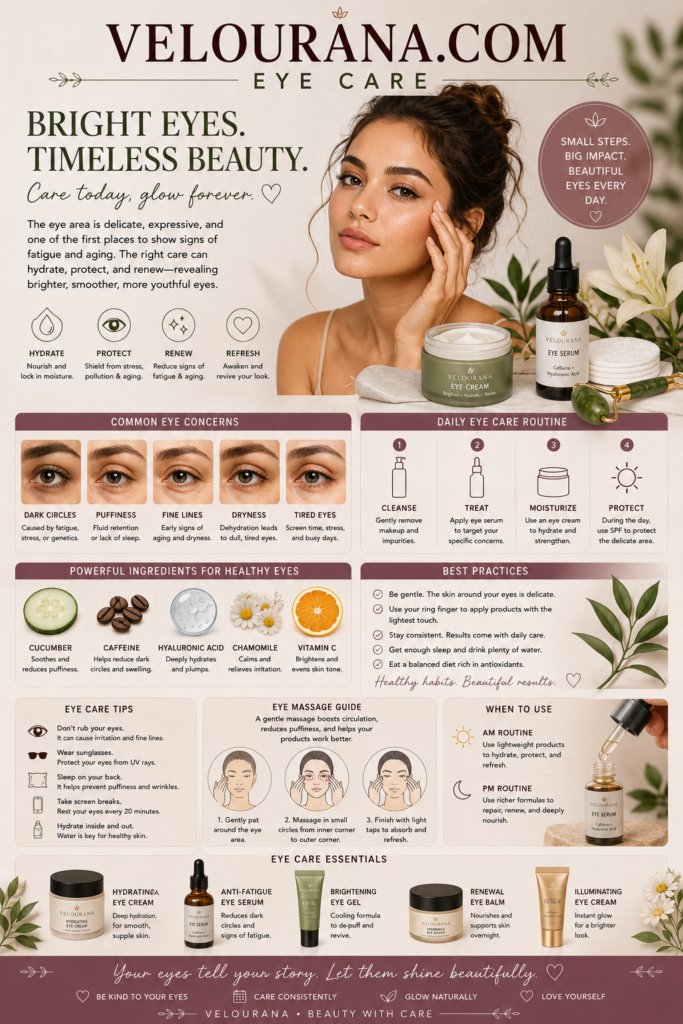
CATEGORY: Cooling Eye Care
Cooling eye care is often presented as a morning solution: wake up, reach for something chilled, reduce visible puffiness and begin the day looking more refreshed. That familiar ritual captures only one part of what temperature can contribute to eye care. The need for cooling changes throughout the day because the eye area responds continuously to sleep, climate, facial movement, cosmetics, screen exposure, hydration and the surrounding environment.
A useful cooling routine therefore does not have to follow the same formula every morning and evening. It can adapt. The treatment that feels ideal after waking may be unnecessary at midday, while a different kind of cooling can feel restorative after hours of screen work or exposure to summer heat. The objective is not constant cold. It is selective, controlled cooling when the eye area actually benefits from it.
This approach also helps separate genuine usefulness from beauty excess. The eye contour does not need to remain chilled throughout the day, and repeated treatment does not automatically produce increasingly dramatic results. Cooling is transient by nature. Its strongest cosmetic role is usually the temporary reduction of visible puffiness and the creation of a refreshed, soothed sensation.
Viewed across an entire day, however, cooling becomes more interesting. It can support the transition from sleep to wakefulness, prepare a puffy eye area for makeup, provide sensory relief during hot conditions and create a calming evening ritual. The method remains simple, but the context changes.
The Morning Eye Area Is a Product of the Night Before
The appearance of the eyes in the morning is influenced by far more than the products applied after waking. Sleep duration and quality, sleeping position, alcohol, sodium intake, allergies, crying and individual anatomy can all affect how much puffiness appears around the eyes.
During the night, remaining horizontal changes the way fluid is distributed compared with the upright position maintained through most of the day. This helps explain why some people experience under-eye fullness shortly after waking that gradually diminishes once they begin moving.
Cooling fits naturally into this period because temporary swelling is one of the conditions most likely to respond visibly to it. A comfortably cool compress or chilled eye product can create mild vasoconstriction near the surface while providing a soothing sensation. The combination may make the eye contour appear less swollen and more defined.
The transformation should not be interpreted as permanent tightening. Once the skin returns to its normal temperature and daily influences continue, the cosmetic effect can diminish. This is expected.
Morning cooling can also change the experience of skincare. A lightweight gel applied at refrigerator temperature may feel significantly more invigorating than the same product at room temperature. This can make the routine feel effective before any long-term skincare benefits could possibly occur.
For someone who wakes with minimal puffiness, there is little reason to treat cooling as mandatory. The technique is most valuable when there is a reason to use it.
This needs-based approach prevents the eye routine from becoming unnecessarily complicated. Beauty habits are often accumulated until a simple morning involves multiple serums, patches, devices and massage tools. The delicate eye contour rarely needs that degree of mechanical attention.
Cooling can remain the quiet intervention it was meant to be.
Preparing the Eye Area Before Makeup
Under-eye makeup presents a particular challenge because concealer sits over skin that is thin, mobile and frequently textured. When the area is noticeably puffy, makeup may emphasize the changing contours rather than conceal them.
Cooling before makeup can be useful because it allows temporary swelling to settle before complexion products are applied. A brief cooling period followed by lightweight hydration can create a more comfortable surface for concealer.
Timing matters. Hydrogel patches or rich eye products used immediately before makeup can sometimes leave excessive residue. If concealer is applied over a surface that is too wet, slippery or heavily coated, it may move, separate or crease more readily. The goal is hydrated skin, not a saturated layer of skincare beneath cosmetics.
Cooling tools paired with a modest amount of eye product can offer more control. The tool provides the temperature sensation while the skincare provides slip and hydration. Once the product has settled, makeup can be applied without the eye contour feeling overloaded.
The visual effect of cooling can also influence how much concealer seems necessary. Puffiness creates highlights and shadows. When swelling decreases slightly, those shadows may appear less pronounced, reducing the temptation to compensate with a thick layer of makeup.
This is important because heavy concealer is not always the best answer to under-eye concerns. Thick application can accumulate in expression lines and make the area look drier. A more balanced preparation may allow thinner layers of makeup to perform better.
Cooling therefore has an indirect cosmetic role. It does not function as makeup, but it can alter the temporary condition of the skin onto which makeup is applied.
The same principle applies to special occasions. When someone wants the eye area to look particularly rested, gentle cooling before makeup can be a practical preparation technique. The method should remain conservative, especially when the event itself is not the ideal moment to experiment with unfamiliar products or extreme temperatures.
Cooling Eye Products and the Skincare Refrigerator Question
The popularity of dedicated skincare refrigerators has made chilled cosmetics part of the visual culture of contemporary beauty. Rows of serums, masks and eye creams arranged inside a miniature refrigerator suggest that cold storage inherently improves skincare.
That assumption is too broad.
Cosmetics are formulated with expected storage conditions in mind. Some products tolerate refrigeration well and may feel especially pleasant when cooled. Others do not need refrigeration, and storage outside the manufacturer's recommended temperature range may alter texture or stability.
Cooling does not automatically increase the potency of an eye cream. A moisturizer that supports hydration at room temperature does not necessarily become a more powerful long-term treatment simply because it is cold. What refrigeration reliably changes is the sensory experience of application.
For eye care, that sensory difference can be valuable. A cool gel can feel immediately refreshing against morning puffiness. A chilled applicator tip can provide temperature without requiring the entire formula to be refrigerated. Hydrogel masks designed for appropriate cool storage can offer a combination of hydration and refreshing contact.
The sensible principle is to follow the storage information supplied with the product. If refrigeration is permitted, cooling can be used for comfort. If the product requires room-temperature storage, there is little reason to override those instructions for the sake of a trend.
A skincare refrigerator is therefore optional rather than foundational. Someone can practice effective cooling eye care without owning one. A reusable mask designed for refrigeration, an appropriate cooling tool or a simple clean cool compress can provide the same fundamental temperature experience.
Beauty equipment becomes useful when it solves a genuine problem. It becomes clutter when the equipment itself becomes the routine.
Midday Cooling and the Reality of Screen-Heavy Life
By midday, morning puffiness may have disappeared, but another kind of eye fatigue can emerge. Work conducted through computers and phones requires prolonged visual concentration, and many people spend hours shifting between screens without meaningful breaks.
The skin around the eyes can feel warm, tight or tired after such periods. A cool treatment over closed eyes can be deeply relaxing because it combines temperature with temporary darkness and stillness.
The benefit should be described carefully. Cooling the eyelids and surrounding skin is not the same as treating digital eye strain. The eyes themselves are complex organs, and discomfort related to focusing, dryness or reduced blinking cannot be fully addressed by a cosmetic patch.
Nevertheless, a brief cooling break can encourage something that screen-heavy routines often lack: actual rest. Closing the eyes removes visual demand temporarily. Stepping away from the screen interrupts continuous close-focus work. A cool mask adds a soothing sensory element.
The ritual can therefore be valuable even when the temperature is not responsible for every part of the relief.
Workplace practicality may determine what form cooling takes. A large refrigerated mask may be realistic at home but inconvenient in an office. A metal-tipped eye product, cool reusable tool or brief clean compress may be easier to incorporate.
Hygiene becomes particularly important when tools are carried in bags, stored in desks or used away from home. A device intended for the eye area should not roll around uncovered among phones, keys and cosmetics and then be applied directly to the skin.
Portable cooling should remain clean, simple and comfortable.
There is also little advantage in repeatedly applying eye cream every time the eyes feel tired. If the sensation comes primarily from visual fatigue, more skincare is not necessarily the solution. Sometimes the most appropriate "eye care technique" is to stop looking at the screen for a while.
Cooling can make that pause more pleasant.
Hot Weather Changes the Experience of Eye Care
Heat influences how skincare feels. Rich textures that seem comforting in winter may feel heavy in humid summer conditions, while gels and fluid formulations often become more appealing. The eye area can also appear slightly puffier when the face feels hot or flushed.
Cooling treatments are particularly satisfying in this environment because they create an immediate contrast with ambient temperature. A refrigerated mask after returning indoors can feel restorative even before any visible change occurs.
This is one reason cooling eye care should not be evaluated only through before-and-after photographs. Sensory comfort is part of skincare. A treatment can be worthwhile because it makes overheated skin feel more comfortable without claiming to produce permanent biological change.
The cooling sensation can also encourage slower application. Instead of rubbing eye cream quickly into the skin, a cool applicator invites controlled movement. This can reduce unnecessary friction when the technique is used properly.
Summer routines should still respect sun protection. Cooling after exposure does not reverse ultraviolet damage. Sunglasses, shade and suitable broad-spectrum sunscreen around exposed facial skin remain far more important for long-term protection.
Sunglasses have an additional relationship with the eye area because they reduce the need to squint in bright light. Repeated facial movement is normal and unavoidable, but reducing unnecessary squinting can improve comfort in intense sunlight.
Cooling belongs after these preventive measures rather than replacing them.
The same distinction applies after a day at the beach or outdoors. If skin is genuinely sunburned, painful or significantly inflamed, the situation is no longer simply a matter of refreshing tired eyes. Cosmetic tools should not be aggressively rolled over compromised skin.
Cooling is gentle care, not a method for forcing damaged skin back to normal.
Travel, Sleep Disruption and the Puffy Eye Problem
Travel creates an almost perfect collection of conditions associated with tired-looking eyes. Sleep schedules change, meals may contain more sodium than usual, alcohol consumption may increase, air-conditioned environments can feel dry, and long periods of sitting alter normal movement.
Air travel adds the sensory strain of low-humidity cabin conditions and prolonged screen use. By arrival, the eye area may look and feel very different from departure.
Cooling products have consequently become popular travel companions. Their appeal is understandable because they offer an immediate ritual of recovery when normal routines have been disrupted.
A cooling mask after checking into a hotel can feel particularly restorative. The combination of cleansing the face, hydrating the skin and resting quietly with closed eyes creates a psychological transition as well as a cosmetic one.
Hygiene should remain central during travel. Reusable tools need clean storage. Eye patches should be handled with clean hands. Products should not be transferred into poorly cleaned containers merely to reduce luggage size.
Temperature control can also be inconsistent during travel. A product that normally lives in a refrigerator may spend hours in transit, so its storage requirements should be considered before packing it. Cosmetics that genuinely require controlled storage are different from products that are merely chilled for sensory pleasure.
A room-temperature eye moisturizer can still function perfectly well even if it normally feels nicer when refrigerated at home.
Cooling is particularly useful after travel when puffiness is temporary. If the under-eye area appears fuller after a sleepless journey, a cool treatment may help it look more rested. What it cannot do is replace sleep itself.
The distinction seems obvious, yet beauty marketing frequently treats visible fatigue as though it were purely a surface problem. Skin can be cosmetically refreshed while the body remains exhausted.
A cooling ritual can help someone look more awake for dinner after a long journey. Recovery still requires rest.
Evening Cooling as a Transition Into Rest
Evening cooling has a different emotional character from morning de-puffing. Morning techniques are often focused on appearance and preparation. Evening cooling is more naturally associated with recovery.
After makeup, sunscreen and environmental residue have been removed, a cool eye treatment can become a quiet final stage before moisturizing. The experience is particularly appealing after prolonged concentration or hot weather.
There is no need for the evening treatment to be intensely cold. In fact, aggressive cold can undermine relaxation. A mild, stable coolness is enough to create contrast with the warmth of the skin.
Reusable gel masks can work well in this context because they require little movement. The mask rests while the user remains still. For an eye area that has already experienced cleansing, makeup removal and perhaps contact with cotton pads, reducing additional friction can be preferable to prolonged massage.
A cooling eye cream can provide a simpler alternative. Applied gently, it combines moisturization with the desired temperature effect without introducing another device.
The evening routine is also a good moment to assess whether the skin actually feels comfortable. If the eye contour is dry, flaky or irritated, the priority should shift toward barrier support rather than increasingly elaborate treatments.
Cooling can sometimes reduce the sensation of irritation temporarily, but temporary relief should not encourage continued use of a product that is causing the irritation in the first place.
This is particularly relevant to active skincare. Retinoids, exfoliating acids and other potent facial treatments can migrate toward the eye contour or be applied too close to it. If the surrounding skin repeatedly becomes dry or sensitive, a cold roller does not solve the underlying routine problem.
A calm evening eye routine may therefore involve doing less.
Puffiness, Dark Circles and the Importance of Identifying the Concern
Cooling eye care is most satisfying when the concern being treated is actually responsive to temperature. Temporary puffiness is the clearest example. Other concerns are more complicated.
Dark circles may arise from pigmentation, visible vascular structures, facial anatomy, shadow, thin skin or combinations of these factors. Cooling may make vascular prominence or swelling look less obvious temporarily, but it cannot remove every source of darkness.
Under-eye hollows are largely structural. A cooling tool can glide beautifully across them, but temperature cannot fill missing volume.
Fine lines may appear temporarily softer when the skin is well hydrated. A chilled hydrating product can therefore create an attractive short-term effect, yet the cooling itself has not erased the lines.
Persistent bags beneath the eyes may include anatomical components that differ from transient fluid accumulation. A dramatic claim that a cold spoon or roller will "eliminate eye bags" ignores this distinction.
Understanding the concern prevents disappointment and excessive treatment.
If puffiness changes substantially from morning to afternoon, responds to sleep or varies with lifestyle factors, cooling may produce noticeable temporary improvement. If a feature remains almost identical regardless of time, temperature and hydration, it is less likely to disappear through cooling alone.
This does not make the ritual useless. A person with hereditary dark circles can still enjoy the sensation of a cool eye mask. The value simply lies in comfort and temporary freshness rather than complete correction.
Beauty care becomes more credible when these distinctions are preserved.
When Cooling Should Give Way to Professional Attention
Most cosmetic eye puffiness is harmless and temporary, but the location of the treatment requires caution. The eyes are not simply another patch of facial skin.
Sudden severe swelling, significant pain, injury, discharge, marked redness, visual changes or persistent symptoms should not be managed solely through beauty techniques. Cooling may sometimes provide temporary comfort, but it should not delay appropriate evaluation.
Likewise, repeated eyelid irritation can indicate that something in the skincare or makeup routine is poorly tolerated. Adding more products because the area looks tired can create a cycle in which irritation is repeatedly concealed rather than resolved.
The same applies to itching. Rubbing the eyes can intensify irritation, and a cooling treatment should not become a tool for repeatedly pressing or massaging an already reactive area.
Cleanliness deserves unusual emphasis because products are being used close to the eyes. Reusable patches, rollers and masks need proper maintenance. Single-use patches should not be treated as reusable unless specifically designed for that purpose. Cosmetics should not be shared.
Products should also remain outside the eye itself. Eye-area skincare refers to the surrounding skin, not the ocular surface.
These boundaries are not obstacles to enjoying cooling treatments. They are what make the practice sustainable.
Building a Cooling Ritual That Does Not Become Excessive
The beauty industry is skilled at turning one useful idea into a collection. Once cooling becomes popular, it is easy to accumulate refrigerated creams, globes, rollers, masks, patches, wands and miniature refrigerators, each apparently responsible for a different version of refreshed eyes.
The skin does not necessarily recognize these commercial distinctions.
Most cooling techniques are variations on temperature, hydration, contact and gentle movement. Owning several devices does not mean they need to be used together.
A coherent routine might rely on one product or tool that is easy to clean and comfortable to use. The choice can then change according to circumstances. Morning puffiness may call for brief cooling. A hot afternoon may make a chilled gel pleasant. An evening after prolonged screen work may be better suited to a mask and quiet rest.
On days when the eyes already look and feel comfortable, nothing needs to be cooled.
This flexibility is particularly valuable for sensitive skin. Constant experimentation introduces new materials, formulas and mechanical contact. A stable, minimal routine makes it easier to understand what the skin tolerates.
It also protects cooling eye care from becoming another obligation. A beauty ritual intended to create relaxation loses some of its purpose when it becomes a compulsory sequence that must be completed regardless of need.
The most refined routines are often selective. They respond to the condition of the skin rather than to the number of products available.
A More Realistic Definition of Refreshed Eyes
The language surrounding eye care is unusually dramatic. Products promise awakening, lifting, tightening, erasing, transforming and reversing. Cooling treatments are especially vulnerable to exaggeration because the immediate sensory effect is so convincing. Something cold feels active.
But activity and permanence are different things.
A cooling eye treatment can create a visible and satisfying short-term improvement when puffiness is present. It can make skin feel firmer while cold, reduce the sensation of heat and provide a soothing break after a demanding day. When combined with appropriate hydration, it can leave the eye contour looking smoother and more comfortable.
These are meaningful benefits without requiring claims of permanent transformation.
The eye area also has a powerful influence on the overall impression of the face. A modest reduction in swelling can make someone appear noticeably more rested even though only a small area has changed. This explains why cooling can feel disproportionately effective.
The effect is enhanced by ritual. Closing the eyes, stepping away from a screen and remaining still for several minutes can change how a person feels as well as how the eye area looks. Cooling provides a physical focus for that pause.
Seen this way, the technique becomes less about attacking signs of fatigue and more about managing them intelligently.
Morning cooling can soften temporary puffiness before the day begins. Pre-makeup cooling can create a calmer surface for cosmetics. Midday cooling can accompany a genuine break from visual concentration. Summer cooling can relieve the sensation of heat. Travel cooling can refresh a face affected by disrupted sleep, and evening cooling can mark the transition from activity to rest.
The temperature is temporary, and so are many of the visible results. That is not a weakness. Cooling eye care belongs to a category of beauty practices whose purpose is immediate comfort, refinement and refreshment.
Used gently, hygienically and with realistic expectations, it can become one of the simplest techniques in an eye care routine. No extreme cold is required. No aggressive pressure is necessary. No elaborate collection of devices is essential.
The eye contour needs delicacy more than intensity.
Cooling works best when it respects that fact.
THE END VELOURANA
 Discover More From Our Family of Websites
 ZodiacBearing (Astrology, Tarot, Numerology, Angel Numbers & Spiritual Guidance)
 Velourana (Beauty, Makeup, Hair Care, Skincare & Beauty Tips)
 HavenBearing (Home, Living, Organization, Décor & Everyday Inspiration)
 PawBearing (Pet Care, Dog Breeds, Animal Health, Training & Pet Products)
 PsyCatherine (Notes From the Journal of a Psychologist on Real Life)