
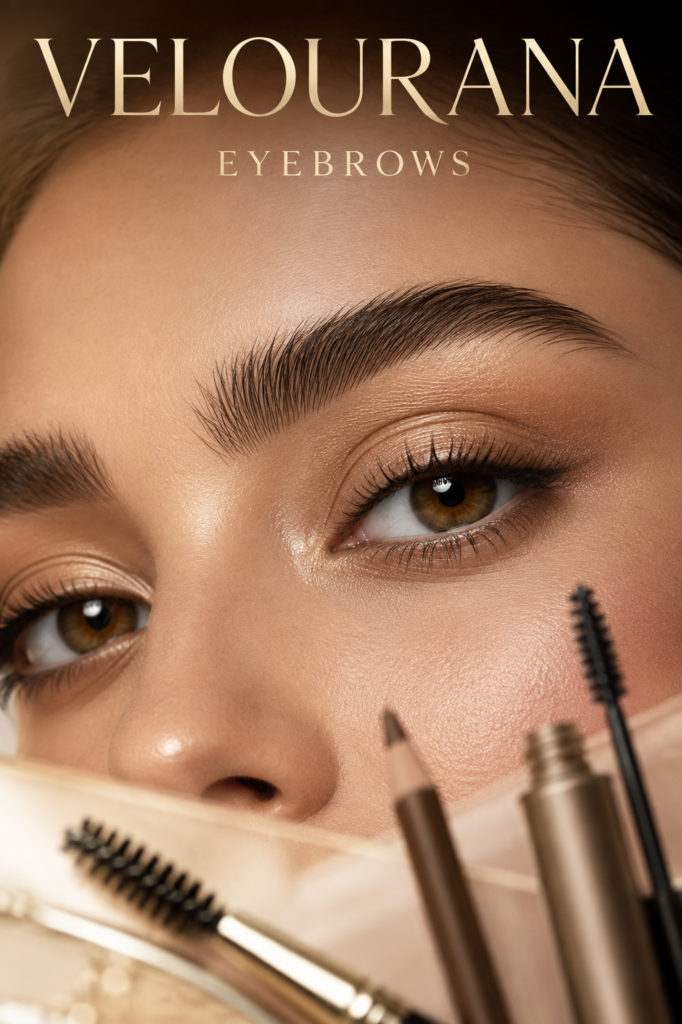
CATEGORY: Brow Gels
Two tubes labeled brow gel can produce dramatically different eyebrows. One may leave the hairs softly groomed and almost untouched in appearance. Another can darken every strand, increase apparent density, and hold the hairs vertically for hours. A third may create a flexible, fluffy finish, while a fourth sets so firmly that the eyebrow resembles the result of professional lamination.
The difference is not merely marketing. Brow gels are formulated around different combinations of styling, pigmentation, texture, and wear. Their applicators also vary considerably, influencing how much product reaches the brow and how accurately the hairs can be positioned.
This diversity is useful, but it creates confusion when brow gel is treated as a single generic product. A person disappointed by one formula may simply have chosen the wrong type for the desired result.
The starting point should therefore be the intended transformation. Does the eyebrow need organization, additional color, apparent density, substantial directional control, or some combination of these? Once that question is answered, the category becomes much easier to navigate.
The Formula Behind the Hold
At the heart of most brow gels is a system designed to leave styling material on the hairs after the wet portion of the formula evaporates.
Film-forming polymers are commonly used for this purpose. Ingredients such as PVP, VP/VA copolymers, and various acrylate-based materials may contribute to the film that helps keep hairs in position. Waxes and other texture-building ingredients can also influence control, consistency, and feel.
The ingredient list alone cannot perfectly predict performance because concentration and interactions between ingredients matter enormously. Two products containing a similar polymer may nevertheless provide different levels of hold because their overall formulas differ.
The drying process is central to the experience. When freshly applied, gel provides enough slip for the hairs to be manipulated. As the volatile portion evaporates, the styling film becomes established.
This creates a window during which shaping should occur. A flexible everyday gel may remain forgiving for longer, whereas a strong sculpting formula can require quicker, more deliberate placement.
The finished film can vary from nearly imperceptible to distinctly firm. Some formulas prioritize flexibility so the brow remains touchable. Others prioritize resistance to movement. Neither approach is universally better.
Understanding this helps explain why simply purchasing the strongest available gel is not always advantageous. If the natural brow hairs are fine and cooperative, extreme fixation may introduce unnecessary stiffness. If the hairs are coarse and resistant, a very flexible formula may fail to maintain the desired direction.
Formula should correspond to the physical behavior of the brow.
Clear Gel and the Beauty of Invisible Structure
Clear brow gel is sometimes dismissed as the simplest member of the category, yet simplicity is precisely what makes it useful.
Because it does not intentionally introduce visible pigment, it can organize the eyebrow while preserving its natural tonal complexity. This is particularly attractive when the brow already has sufficient density and color.
Clear gel can make full brows appear more deliberate. Instead of adding further visual weight, it separates and directs the existing hairs. The result may look cleaner, more lifted, or more symmetrical without appearing conventionally made up.
It also performs an important role in layered brow routines. Pencil, powder, or other filling products can establish missing definition, while transparent gel works over the hairs themselves. This division of labor allows each product to perform the function for which it is best suited.
Clear gel is also useful when experimenting with a new brow shape. Because no pigment is being added, different directions can be tested without simultaneously changing color intensity.
However, clear does not mean consequence-free. Strong transparent gels can dramatically alter the eyebrow's architecture. Brushing all hairs upward and fixing them firmly can create an assertive laminated appearance even though no color has been added.
Likewise, excessive clear gel can become visible as texture or residue. Transparent products still require measured application.
Tinted Gel as Color and Styling in One Step
Tinted brow gel combines two cosmetic actions: positioning hair and modifying its visible color.
This can dramatically simplify a routine. When the natural brow already has a satisfactory shape but lacks definition, a small amount of tint may make the hairs sufficiently visible that additional filling becomes unnecessary.
The effect is particularly useful for lighter brows. Hair that blends closely with the skin can create the impression of sparseness even when the actual number of hairs is reasonable. Pigment increases contrast, revealing structure that was already present.
Tinted gel can similarly integrate gray or pale hairs into the surrounding brow.
Yet pigmentation introduces complexity. The formula can transfer color not only to the hair but also, depending on application and product characteristics, to the skin beneath it. Controlled skin contact may contribute to fullness, but uncontrolled deposits can appear blotchy.
Pigment concentration differs widely. Some gels create a translucent wash, while others approach the intensity of brow mascara. The latter demand a lighter hand.
Shade selection should take both depth and undertone into account. A brow gel that is technically the correct darkness can still appear unnatural if its warmth or coolness conflicts strongly with the natural brow.
The front of the eyebrow usually benefits from the least pigment. Preserving some transparency here prevents the brow from becoming visually heavy. Greater concentration can often be tolerated through the middle and tail, where natural brows commonly have stronger definition.
Fiber Gels and the Illusion of Additional Density
Fiber brow gels are designed for a different visual problem: insufficient apparent volume.
These products contain materials intended to adhere to existing brow hairs, making them appear thicker or more substantial. The effect differs from drawing additional hairs onto bare skin. Instead, it enhances the physical presence of what is already there.
This can be extremely effective for fine eyebrows. A brow composed of numerous delicate hairs may appear sparse simply because each strand contributes little visual weight. Increasing the apparent diameter or texture of those hairs can change the overall impression.
Fiber gels can also provide a softer alternative to extensive pencil work when only moderate fullness is needed.
They do, however, depend on existing hair to achieve their characteristic effect. An area with virtually no brow hair provides little structure for fibers to cling to. Pencil, pen, powder, or another filling method may therefore remain necessary for significant gaps.
Application restraint becomes especially important because excessive fiber product can accumulate unevenly. Instead of producing believable density, too much material may create clumps or visibly coated hairs.
The most convincing result is usually one in which the eyebrow appears naturally more substantial rather than obviously covered in a volumizing product.
Strong-Hold and Laminated-Effect Gels
At the more structural end of the category are high-hold formulas designed to keep hairs in strongly altered positions.
These products have become closely associated with the laminated brow aesthetic. Hairs are lifted and arranged so that their individual length becomes prominent, creating an expanded, feathered silhouette.
For coarse or stubborn eyebrows, high hold may be practical rather than purely fashionable. Some hairs simply require greater fixation to remain where they are placed.
The technique matters enormously. Strong-hold products can make beautiful brows look overworked when every strand is forced into an identical vertical direction. Natural growth changes across the brow, and sophisticated styling can reflect that.
At the inner brow, upward movement can create openness. Through the body, a diagonal direction often follows the natural architecture more gracefully. At the tail, outward movement can preserve length without producing an exaggerated spiked appearance.
Some users prefer to press hairs closer to the skin after brushing, creating a sleek laminated finish. Others use strong gel simply to maintain lift while preserving separation.
The distinction demonstrates that product category does not dictate aesthetic. The same high-hold formula can support dramatic editorial styling or subtle control depending on how it is manipulated.
Flexible Hold for Everyday Brows
Strong fixation attracts attention because its effects are obvious, but flexible-hold gel remains one of the most wearable options.
The objective is not to freeze the eyebrow. It is to create enough organization that hairs maintain a flattering general direction while retaining some natural softness.
This can be particularly attractive on mature skin, delicate facial features, fine brows, and understated makeup, although preference ultimately matters more than demographic categories.
Flexible gels also integrate easily with other products because they tend to introduce less visible texture. A lightly filled eyebrow can be combed through without the gel becoming the dominant element.
For naturally cooperative brows, additional strength may offer no meaningful advantage. If the hairs already remain reasonably stable, moderate hold can provide all the control required.
This illustrates a broader principle in cosmetics: performance should be evaluated against need. More hold, more pigment, and more volume are not automatically improvements. The best product provides enough of each characteristic to achieve the intended result without introducing unnecessary effects.
Water Resistance, Sweat, and Daily Wear
Wear conditions deserve consideration when selecting brow gel.
The eyebrow area is exposed to facial movement, skin oils, perspiration, humidity, hair touching the face, hats, and occasional contact from hands. Skincare and sunscreen can also migrate into the brow region.
Products marketed for water or sweat resistance may be useful for long days, warm climates, exercise, or occasions when dependable hold is particularly important. However, resistance claims should always be understood according to the specific manufacturer's testing and instructions rather than assumed to make every product completely unaffected by moisture.
Application conditions matter too. Gel generally performs most predictably when the brow hairs are not saturated with oily skincare. If moisturizer or sunscreen has collected through the eyebrows, gently removing the excess before makeup can improve the styling surface.
Likewise, layering multiple waxy or emollient products beneath gel can alter adhesion.
Longevity is therefore a relationship between formulation, application, environment, and individual skin rather than a characteristic that can be reduced to a single number.
Conditioning Ingredients and Cosmetic Expectations
Brow gels increasingly include ingredients associated with conditioning, such as humectants, oils, panthenol, or botanical materials. These can influence softness, flexibility, and the sensory experience of the formula.
It is important, however, to distinguish conditioning from hair-growth treatment.
A cosmetic gel can make eyebrow hairs look healthier, smoother, shinier, or more substantial because of the way it coats and conditions them. This does not automatically mean that it causes new eyebrow growth.
Claims involving ingredients commonly associated with hair care should therefore be interpreted carefully. The presence of an ingredient such as castor oil, biotin, or peptides does not by itself establish that a brow styling product will regrow missing eyebrow hair.
For someone purchasing gel primarily for styling, the most relevant questions remain practical: Does it hold? Does it flake? Does it feel comfortable? Does the tint suit the brow? Does the brush provide control? Does the finish remain attractive throughout normal wear?
Conditioning properties can be valuable, but they should complement rather than distract from the central purpose of the product.
The Importance of Product Quantity
Few brow products demonstrate the value of restraint as clearly as gel.
A mascara-style applicator can emerge from the tube carrying considerably more formula than one eyebrow needs. Applying that entire quantity immediately can saturate the hairs, deposit excess color, and make precise shaping difficult.
Reducing the load on the brush before application provides much greater control.
The first pass should establish direction rather than maximum intensity. Once the hairs are positioned, additional product can be introduced selectively where hold or pigment is insufficient.
This approach is particularly effective with tinted and fiber formulas because their effects accumulate visibly.
The same principle applies to strong clear gel. Excess product does not necessarily produce proportionally stronger or more attractive hold. It may simply create a thicker film.
Allowing the formula to perform at an appropriate quantity often produces a cleaner result than repeatedly adding layers.
When Brow Gel Is Enough—and When It Is Not
One of the most useful skills in brow makeup is recognizing what a product can realistically accomplish.
Gel excels at controlling existing hairs. Tinted versions can increase their visibility, and fiber formulas can increase apparent volume. Strong gels can substantially alter their direction.
What gel cannot reliably do is reconstruct large areas where hair is absent.
If the tail is significantly missing, a pencil or brow pen can create the necessary shape on the skin. If the brow has broad diffuse sparseness, powder may establish a soft background of color. If dramatic sculpted definition is desired, another product may provide the required precision.
Gel can then integrate the real hairs into that cosmetic structure.
Conversely, using multiple products simply because they exist can make naturally beautiful brows unnecessarily complicated. Full eyebrows may need nothing beyond clear gel. Light but dense brows may require only tint. Fine brows may respond beautifully to a fiber formula.
The ideal routine is not the one containing the greatest number of products. It is the one in which every product has a specific function.
Reading the Finished Brow
The final assessment should be made from normal viewing distance rather than only in a magnifying mirror.
Close inspection encourages attention to every individual hair and tiny asymmetry. From conversational distance, what matters is the overall relationship between the eyebrows, eyes, and face.
A well-selected gel should create intentional structure without making the brows appear disconnected from the rest of the makeup.
If the eyebrows look too dark, the issue may be shade or quantity rather than shape. If they look stiff, the hold level may exceed what the desired aesthetic requires. If they remain disorderly, either the application direction or formula strength may need adjustment. If a volumizing gel looks clumpy, reducing product may improve the result more effectively than changing the entire brow routine.
This diagnostic approach is more useful than pursuing a universal ideal.
Brows differ dramatically between individuals, and even the two brows on one face are rarely identical. Gel is especially valuable because it permits these differences to remain visible while bringing them into greater harmony.
Finding the Brow Gel That Belongs in Your Routine
Choosing among clear, tinted, fiber, flexible-hold, and strong-hold brow gels becomes easier once the decision begins with the eyebrow rather than the product shelf.
If color is already sufficient, transparent control may be all that is needed. If hairs disappear visually against the skin, tint can reveal them. If individual strands are fine, volumizing texture can increase their presence. If hairs refuse to remain positioned, stronger fixation can provide the necessary structure.
After those functional decisions come aesthetic preferences: natural or polished, soft or laminated, matte or subtly glossy, barely defined or deliberately bold.
The best brow gel is therefore not necessarily the one with the strongest claim or most elaborate formula. It is the one whose hold, pigment, texture, and applicator correspond to the eyebrow it is being asked to style.
Used thoughtfully, gel can be one of the most efficient products in makeup. It can preserve natural fullness, create lift without drawing, introduce subtle color, add the appearance of density, or complete a more detailed brow design.
Its sophistication lies in how little may be required to create a meaningful change.
THE END VELOURANA
 Discover More From Our Family of Websites
 ZodiacBearing (Astrology, Tarot, Numerology, Angel Numbers & Spiritual Guidance)
 Velourana (Beauty, Makeup, Hair Care, Skincare & Beauty Tips)
 HavenBearing (Home, Living, Organization, Décor & Everyday Inspiration)
 PawBearing (Pet Care, Dog Breeds, Animal Health, Training & Pet Products)
 PsyCatherine (Notes From the Journal of a Psychologist on Real Life)

