CATEGORY: Blonde Hair
Choosing blonde hair is sometimes presented as a search for the one shade that supposedly matches a person's skin tone. That idea is appealing because it promises certainty, but blonde is far more nuanced. Human coloring cannot be reduced to a simple equation in which warm skin demands warm hair and cool skin demands cool hair. Complexion, undertone, surface tone, eye color, natural hair depth, eyebrow depth, facial contrast, texture, personal style, makeup, and even the desired degree of transformation all influence how blonde is perceived.
The most successful blonde does not merely "match" the face. It establishes a deliberate relationship with it.
Sometimes that relationship is harmonious. Soft beige blonde may echo a muted complexion, or honey blonde may reinforce naturally warm coloring. At other times the attraction comes from contrast. Icy blonde against warm skin can create striking tension, while rich golden blonde against cooler skin may introduce deliberate warmth. Neither approach is inherently correct or incorrect.
The more useful question is not whether a person is allowed to wear a particular blonde. It is what visual effect that blonde creates and whether that effect supports the identity the person wants to express.
Beginning With Natural Depth Rather Than Ignoring It
Natural hair color provides valuable information when planning blonde because it establishes the starting contrast around the face and influences how dramatically a lighter shade will alter the overall appearance.
Someone whose natural hair is already dark blonde may transition into lighter blonde with relatively modest contrast. Brows, roots, and facial features may remain visually connected to the new color even when the lengths become significantly brighter. The effect can feel evolutionary rather than transformative.
Very dark natural hair creates a different relationship. Moving from deep brunette to pale blonde introduces a substantial change in value, particularly when eyebrows remain dark. This contrast can be visually powerful. It may sharpen facial features, make eye color appear more prominent, and create an intentionally dramatic frame around the face.
There is no requirement to eliminate that contrast. Dark brows with blonde hair can become an important part of the finished aesthetic. Attempting to make every feature equally light can sometimes remove the very definition that makes the transformation compelling.
Natural depth also influences maintenance. When blonde is dramatically lighter than the natural root, regrowth becomes visible sooner. This does not mean pale blonde is unsuitable for darker-haired people. It simply means the relationship between root and length must be considered as part of the design.
Some people enjoy a clean, bright root and frequent maintenance. Others prefer a shadowed root, root melt, balayage transition, or dimensional highlight pattern that allows natural growth to become part of the color rather than an interruption to it.
The starting color therefore matters technically and aesthetically. It affects what must happen to the hair to reach blonde, how the finished color interacts with the face, and how gracefully it will develop over time.
Skin Undertone Is Information, Not a Restriction
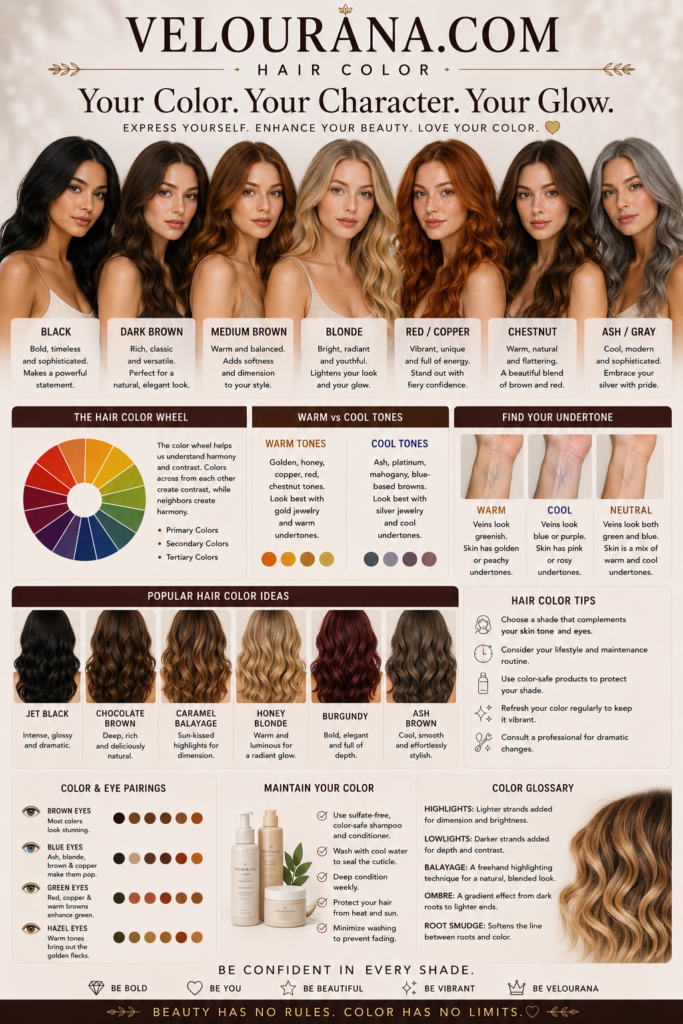
Skin undertone is frequently used to classify blonde shades, and it can certainly provide useful guidance. Warm complexions may contain golden, peach, yellow, or red influences, while cool complexions may display pink, rosy, bluish, or cooler characteristics. Neutral and olive complexions introduce further complexity because they may contain combinations that do not fit neatly into either category.
A harmonious approach often repeats some aspect of the complexion in the hair. Golden blonde can amplify warmth in warm skin, while pearl or beige blonde can echo cooler or more neutral coloring. This creates continuity between the face and hair.
Yet repetition is only one aesthetic strategy.
Contrast can be equally sophisticated. Cooler blonde against warm skin may make the complexion appear more golden by comparison. A warmer blonde beside cool skin can introduce a sense of richness. The important issue is whether the contrast appears intentional and whether the degree of warmth or coolness overwhelms the face.
Extremes often reveal this most clearly. Very yellow blonde can exaggerate yellow in some complexions, while extremely gray ash can drain color from others. But the problem is not that a broad category of blonde is forbidden. The issue is usually the precise balance of depth, saturation, and tone.
Olive skin demonstrates why rigid rules are particularly unreliable. Olive complexions can appear warm in one environment and cooler in another because green, yellow, beige, and muted undertones interact in complex ways. A blonde that is excessively ashy may emphasize greenish tones, while excessive gold may intensify yellow. Beige, neutral, creamy, or carefully balanced dimensional blondes can create beautiful relationships, but individual variation remains substantial.
Undertone should therefore be treated as one source of evidence. It helps predict interaction, but it does not dictate taste.
Facial Contrast Can Matter as Much as Undertone
Two people with similar skin undertones may respond very differently to the same blonde because their natural contrast levels differ.
Contrast refers to the visual distance between features. Deep eyebrows, dark eyes, and relatively light skin create stronger contrast than pale brows, light eyes, and similarly light skin. Changing hair color can either preserve, reduce, or intensify this relationship.
Pale blonde often lowers the amount of darkness surrounding the face. On someone with naturally soft contrast, this can create an ethereal, blended appearance. Features seem to flow into one another with little visual interruption.
On someone with dark brows and eyes, the same blonde may increase contrast because the hair becomes lighter while the central facial features remain deep. The result can be bold and graphic rather than soft. Both outcomes can be attractive, but they communicate very different aesthetics.
A deeper blonde may preserve more connection with naturally dark features. Dark beige, wheat, caramel-blonde, and bronde-adjacent shades can create a bridge between darker eyebrows and lighter lengths. Alternatively, intentionally preserving a dark root can perform the same function while allowing the ends to become much brighter.
Face-framing placement also changes contrast. Bright pieces around the hairline bring light directly beside the complexion, while deeper sections near the face create more shadow and definition. A blonde can therefore be customized without changing the overall color family simply by redistributing brightness.
This is why photographs of a desired shade should be interpreted carefully. The color may look completely different when transferred to another face because the surrounding features alter its visual context.
Blonde does not exist independently of the person wearing it. It becomes part of the architecture of the face.
Warm Blonde Can Be Refined, Complex, and Modern
Warm blonde has sometimes been unfairly confused with unwanted brassiness. The distinction lies in intention and balance.
A controlled warm blonde contains deliberate golden, honey, amber, buttery, or caramel influences. These tones can create extraordinary luminosity because they reinforce the visual warmth naturally associated with reflected light. They can also add richness to hair that might otherwise appear pale or flat.
Honey blonde is particularly expressive because it often combines moderate lightness with substantial tonal depth. Rather than appearing uniformly yellow, sophisticated honey blonde may contain beige, gold, soft amber, and deeper shadow. Movement reveals these tones gradually, giving the hair a dense, luxurious quality.
Golden blonde can be lighter and more reflective. When balanced correctly, gold creates brightness without appearing artificial. Its success depends partly on saturation. A restrained golden influence can produce a soft sunlit effect, while stronger gold creates a more dramatic statement.
Creamy blonde sits in an interesting territory between obvious warmth and neutrality. It can retain enough yellow-gold character to feel soft without becoming distinctly honeyed. This makes it useful for people who dislike gray or strongly ashy tones but do not want an overtly golden result.
Warmth also interacts beautifully with dimension. A deeper caramel or dark-golden base beneath lighter honey sections creates depth that can make the brightest areas appear even more luminous. Instead of trying to make every strand equally light, the color uses variations in warmth and depth to create movement.
The sophistication of warm blonde lies in control. Warm pigment is not simply left uncorrected; it becomes part of the design.
Cool Blonde Depends on Precision Rather Than Absence of Color
Cool blonde is often imagined as blonde from which all warmth has been removed. In practice, cool blonde is created through balance. Hair lightened to pale stages still possesses underlying pigment, and cool tonal deposits influence how that pigment is perceived.
Ash blonde may contain blue, green, violet, or combinations of cool influences depending on the depth and formulation. Pearl blonde often has a softer luminous coolness, while icy blonde generally aims for a clearer, more visibly cold impression. Platinum describes extreme lightness more than one exact tone and can therefore be neutral, pearly, icy, or subtly warm.
Cool blonde requires precision because excessive cool deposit can reduce brightness. Ash pigments visually deepen color, especially when applied strongly to porous hair. A blonde that was physically light enough may appear several shades darker after over-toning.
This explains the difference between sophisticated coolness and flatness. Beautiful cool blonde still needs light. Even when obvious gold is minimized, the hair benefits from tonal transparency and surface shine.
Dimension can make cool blonde more wearable as well. A slightly deeper neutral root combined with pale pearl lengths creates visual grounding. Beige lowlights can prevent icy highlights from appearing disconnected from the face. Subtle differences in tone keep the overall result from becoming monochromatic.
Cool blonde is particularly sensitive to environmental changes. Mineral deposits, product buildup, fading toner, and warm artificial lighting can alter its appearance noticeably. What looks silvered immediately after toning may gradually become creamier as deposited pigment fades.
This evolution is normal. Blonde is not a static paint layer. It changes as the hair is washed, exposed, styled, and retreated.
Beige and Neutral Blonde Occupy the Sophisticated Middle Ground
Some of the most versatile blondes resist obvious classification as warm or cool. Beige, sand, wheat, biscuit, champagne, and neutral blonde shades often contain carefully moderated mixtures of temperature.
Their appeal comes from complexity. Instead of seeing immediate yellow, silver, or ash, the eye perceives a softened blonde whose undertone is less dominant than its overall luminosity.
Beige blonde may contain enough cool influence to mute excessive yellow while retaining sufficient warmth to avoid grayness. This creates a natural-looking neutrality that works especially well in dimensional color. Darker beige roots can transition into lighter creamy ends without producing an obvious tonal break.
Sandy blonde often feels slightly cooler and more muted, recalling the mixture of warm and grayish particles found in natural sand. Wheat blonde may lean warmer while remaining subdued. Champagne can carry a subtle pearly or even faintly rosy quality depending on formulation.
These names are descriptive rather than standardized, but they demonstrate how sophisticated blonde frequently exists between extremes.
Neutrality is also useful when facial coloring contains multiple signals. Someone may have neutral skin, warm freckles, cool eyes, and dark brows. A blonde that is strongly polarized toward either gold or ash may emphasize one feature at the expense of another. Balanced beige can allow those different characteristics to coexist.
The beauty of neutral blonde lies in restraint. It does not need to announce its undertone immediately. Its interest comes from the interaction of small tonal differences.
Eye Color and Blonde Create Shifting Relationships
Eye color is another element that can influence how blonde is perceived, although it should not become another restrictive matching rule.
Light blonde can increase the visibility of dark eyes because reducing the depth of the hair makes the eyes relatively more prominent. Brown and very dark eyes may appear particularly striking against pale blonde for this reason. The contrast concentrates attention toward the center of the face.
Blue and gray eyes can interact strongly with cooler blondes because similar tonal qualities are repeated, creating a cohesive effect. Yet warm blonde can make blue eyes appear more vivid through temperature contrast. Gold beside blue creates visual opposition, often intensifying the apparent clarity of both.
Green and hazel eyes are especially responsive to surrounding warmth. Honey, caramel, and golden tones can echo amber or yellow elements within the iris, while cooler blonde may emphasize greener or grayer aspects.
The effect is not simply a matter of matching color names. Hair occupies a large visual area around the face, so changing its temperature changes the context in which the eyes are seen.
This is one reason blonde transformations can make someone feel that their eye color has changed even though it has not. The surrounding palette has changed, altering perception.
Root Design Determines Whether Blonde Feels Soft or Dramatic
The root is one of the most powerful design elements in blonde hair because it determines how the color begins around the scalp and face.
A bright root with minimal visible depth creates an immediate blonde identity. The effect can be clean, bold, and highly polished, especially when the lengths are similarly light. Pale platinum frequently uses this approach because uninterrupted brightness supports its graphic character.
A deeper root creates another kind of blonde. Natural depth can soften the transition between facial features and light lengths, create dimension, and make the brightest sections appear more intense through contrast.
Shadow roots and root melts can also influence maintenance by allowing regrowth to integrate more naturally. Instead of a clear line between natural hair and blonde, depth gradually transitions into brightness.
This does not make rooted blonde inherently more natural or superior. It simply creates a different visual rhythm. Some people prefer the unmistakable impact of blonde beginning directly at the scalp. Others prefer the depth and flexibility of a rooted design.
The root can also be strategically adjusted around the face. Slightly brighter hairline sections can create illumination while depth remains elsewhere. Conversely, preserving deeper sections near the face can provide definition.
Blonde design is therefore not only about selecting the color of the lengths. The way brightness enters the composition is equally important.
Hair Condition Sets the Practical Boundary of Blonde
A desired shade must ultimately exist on real hair, and the structural condition of that hair matters more than any photograph or shade name.
Very pale blonde generally requires substantial reduction of natural pigment. The amount of processing needed depends on starting depth, previous color, hair structure, and the intended result. Hair that has already experienced repeated lightening, permanent color, heat damage, or mechanical stress may not tolerate the same journey as stronger, less processed hair.
This is where aesthetic ambition must meet material reality.
Stopping at a slightly deeper blonde can sometimes produce a more beautiful result than forcing compromised hair toward extreme paleness. A healthy-looking beige or honey blonde with movement and shine may appear considerably more luxurious than a lighter shade accompanied by severe dryness and breakage.
Condition also determines how the color behaves after the service. Porous hair may lose toner rapidly or absorb it unevenly. Damaged ends can appear dull, making them look different from healthier roots even when their measured level is similar.
Blonde therefore cannot be separated from hair care. The shade is carried by the fiber, and the quality of that fiber influences every visible aspect of the result.
This does not mean processed blonde cannot look healthy and beautiful. It means successful blonde respects the limits of the material and recognizes that structural preservation is part of color design.
Personal Style Is More Important Than Following a Blonde Formula
Hair color is ultimately part of personal presentation. Someone drawn to understated clothing, muted makeup, and soft contrast may prefer a dimensional beige blonde that integrates quietly with the rest of the appearance. Another person may deliberately choose icy platinum because its artificial clarity creates exactly the visual impact they want.
Neither person needs to justify the choice through complexion theory.
Blonde can communicate softness, glamour, rebellion, minimalism, nostalgia, luxury, playfulness, or high-fashion severity depending on its execution. A warm tousled blonde creates a different identity from a perfectly polished pearl bob even if both sit at a similar level of lightness.
Haircut reinforces this message. Long layered blonde can emphasize movement and tonal variation. A blunt pale bob may make color appear more graphic. Pixie cuts can transform blonde into a concentrated statement because the color sits so close to facial features. Curls can distribute brightness through multiple planes, while sleek straight hair presents tonal transitions with greater visual precision.
Makeup and clothing can shift the relationship further. A blonde that initially seems cool against bare skin may feel entirely different beside warm lipstick, bronzed makeup, black clothing, or saturated color. Personal styling continuously changes the context around the hair.
The goal is therefore not to discover a universal blonde formula but to understand the effect of each choice.
A Successful Blonde Evolves Rather Than Remaining Frozen
Freshly colored blonde represents only one moment in the life of the shade. Roots grow, toner fades, hair experiences washing and environmental exposure, and the surface condition changes. A thoughtful blonde design anticipates this evolution.
Some blondes soften beautifully as toner fades, becoming slightly warmer and creamier. Others depend heavily on maintaining a cool tonal direction and therefore require more deliberate upkeep. Dimensional blondes may become increasingly natural-looking as roots grow, while uniform scalp-to-end blonde may show regrowth much more clearly.
Neither maintenance pattern is inherently better. The appropriate choice depends on how much upkeep fits the person's preferences and lifestyle.
This consideration can influence the initial design. Someone who wants long intervals between major color services may enjoy a rooted, dimensional blonde that incorporates natural growth. Someone who loves the precision of bright platinum may willingly accept more frequent maintenance because the exact aesthetic is worth preserving.
The best blonde is not merely beautiful on the day it is created. It remains understandable as it changes. Its transitions make visual sense, and its maintenance demands correspond to what the wearer genuinely wants to sustain.
Blonde Is Most Convincing When It Feels Intentional
The enormous variety within blonde hair makes rigid rules particularly unhelpful. Warmth is not automatically brassiness. Coolness is not automatically sophistication. Pale blonde is not automatically more desirable than dark blonde, and a natural-looking result is not automatically better than an intentionally dramatic one.
What distinguishes successful blonde is intention.
Depth should support the desired contrast. Tone should interact thoughtfully with the complexion rather than being selected from a simplistic chart. Root design should complement the desired maintenance and visual effect. Dimension should be present when movement and naturalism are desired, or deliberately minimized when uniformity is the aesthetic goal. Most importantly, the structural condition of the hair should remain part of every color decision.
Blonde becomes personal when these elements are considered together.
A person may discover that the shade that feels most natural is not the one closest to their childhood hair color. Another may find that a dramatically pale blonde feels more authentic to their style than a technically harmonious beige. Someone else may prefer rich honey because its warmth brings energy to the face, while another is drawn to muted sand because it creates softness.
There is no contradiction in these differences. Blonde is broad enough to accommodate them.
The most compelling result is the blonde that belongs convincingly within the complete visual identity of the wearer. It does not need to obey a universal formula. It needs to establish a coherent relationship among face, hair, texture, contrast, condition, and style.
When that relationship works, blonde stops looking like a shade selected from a chart. It becomes part of the person wearing it: responsive to light, expressive in movement, and distinctive precisely because it was designed around individuality rather than rules.
THE END VELOURANA
 Discover More From Our Family of Websites
 ZodiacBearing (Astrology, Tarot, Numerology, Angel Numbers & Spiritual Guidance)
 Velourana (Beauty, Makeup, Hair Care, Skincare & Beauty Tips)
 HavenBearing (Home, Living, Organization, Décor & Everyday Inspiration)
 PawBearing (Pet Care, Dog Breeds, Animal Health, Training & Pet Products)
 PsyCatherine (Notes From the Journal of a Psychologist on Real Life)