
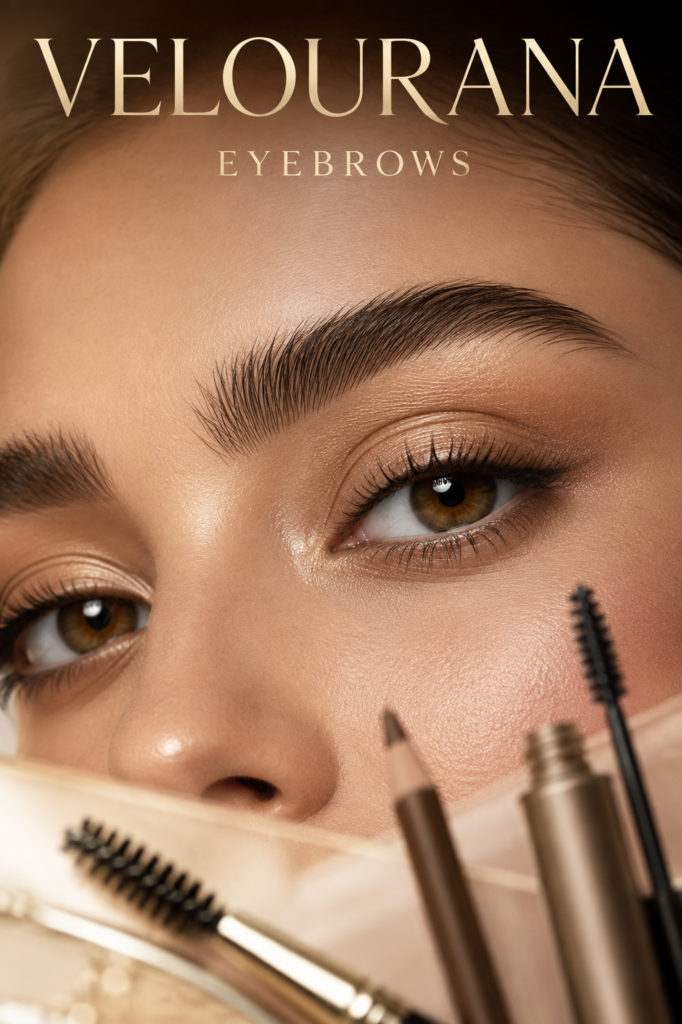
CATEGORY: Brow Waxes
Brows occupy a relatively small area of the face, yet their influence on overall appearance is substantial. Their shape can alter the perceived proportions of the eyes, create a stronger sense of facial symmetry, and give an otherwise minimal makeup look a more intentional finish. Within the wide range of products designed to enhance brows, wax has a particularly distinctive role. It is not primarily about adding dramatic pigment or drawing entirely new hairs. Instead, brow wax is concerned with structure: positioning existing hairs, encouraging them to remain where they have been placed, and creating a controlled framework that can support additional brow makeup when desired.
The appeal of brow wax has expanded alongside changing attitudes toward eyebrow styling. Earlier brow trends often concentrated heavily on color and sharply drawn outlines. Contemporary approaches are generally more interested in the texture of the brow itself. Individual hairs are allowed to remain visible, movement is celebrated rather than completely concealed, and fullness can be created through strategic placement rather than simply filling the entire brow with pigment. Wax is particularly suited to this approach because it works directly with the physical behavior of brow hairs.
At the same time, the apparently simple idea of applying wax to eyebrows contains more complexity than it first appears. Formula texture, hold, flexibility, application quantity, hair density, skin condition, climate, and the other products used around the brows can all affect the finished result. A wax that produces beautifully lifted definition on one person may create stiffness or visible residue on another. Understanding the product therefore means understanding not only what brow wax does, but how its physical characteristics interact with brow hair and the skin beneath it.
Why Brow Wax Has a Distinct Role in Brow Makeup
Many eyebrow products are designed primarily to change what the eye sees. Pencils create lines that resemble hairs. Powders introduce soft shadows that make sparse areas appear denser. Pomades combine strong color with definition. Pens can create extremely fine marks in areas where natural hairs are missing. Brow wax operates differently because its central purpose is mechanical rather than purely visual.
A wax grips the brow hairs and helps maintain their direction. When hairs naturally grow downward, outward, diagonally, or in several competing directions, this control can make the brow appear considerably more organized. The effect can be surprisingly transformative even without adding much color. A brow containing exactly the same number of hairs can look fuller simply because those hairs have been lifted and distributed more effectively across the brow.
This distinction explains why wax can be useful for both very full and relatively sparse brows. Dense brows often benefit from control because individual hairs can overlap, twist, or fall outside the intended silhouette. Sparse brows benefit for a different reason: arranging the available hairs strategically can help them cover more visual space. The product does not create additional hairs, but it can change how efficiently the existing hairs contribute to the appearance of fullness.
Wax can also provide a foundation for pigment. Once hairs have been positioned, a pencil, powder, or pen can be applied selectively where genuine gaps remain. This often produces a more natural-looking result than applying extensive pigment before understanding how much coverage the repositioned hairs themselves can provide.
The Relationship Between Hold and Flexibility
The word hold is frequently used as though it describes a single quality, but brow wax performance is more nuanced. Strong hold is not automatically superior. The ideal level depends on the thickness, length, density, and natural growth direction of the brow hairs, as well as the appearance the wearer wants to achieve.
Fine brow hairs may require relatively little force to remain lifted. An extremely rigid formula can overwhelm them, making the brow look flattened against the skin rather than naturally groomed. Coarse hairs, particularly those that naturally point downward or resist repositioning, may need significantly stronger adhesion. A formula that feels elegant and flexible on fine brows may provide insufficient control for these more resistant hairs.
Flexibility is equally important. Some waxes set firmly and create an almost fixed structure. Others retain a degree of movement after application. Flexible hold can suit softly groomed brows in which the objective is simply to improve direction and reduce disorder. Firmer hold becomes more useful when creating distinctly lifted or laminated-looking effects.
The finish also changes as the formula sets. Immediately after application, a wax may feel creamy, tacky, or slightly wet. As volatile components evaporate or the wax settles around the hairs, the product may become less noticeable. Evaluating the final result too quickly can therefore be misleading. A brow that initially feels heavily coated may become comfortable after a short setting period, while another formula may remain sticky throughout wear.
An effective brow wax creates enough resistance to prevent unwanted movement without making the brows look artificially coated. That balance between strength and invisibility is one of the qualities that separates refined brow styling from simply using the maximum possible amount of product.
Clear, Tinted, and Pigmented Brow Waxes
Brow wax is available in several visual forms, and the amount of pigment incorporated into the formula significantly changes how the product functions.
Clear wax places almost all attention on texture and structure. Because it does not intentionally alter brow color, it is particularly useful when the natural brow already has sufficient density or when other products will provide any necessary definition. Clear formulas can also be versatile because there is no need to match a shade precisely. The challenge is that residue becomes more noticeable when the product accumulates. A formula described as clear can still become whitish or cloudy if too much is layered onto the hairs or if it interacts poorly with products underneath.
Tinted wax combines styling with subtle color. The tint can deepen pale hairs, visually increase density, and make the overall brow shape more apparent. Unlike highly pigmented pomades, many tinted waxes preserve a degree of translucency. The natural variations among individual hairs remain visible, which can help maintain dimension.
More strongly pigmented waxes move closer to the territory traditionally occupied by pomades. They can shape and color simultaneously, making them useful for people who prefer a more defined brow. However, increased pigmentation requires greater precision. Any product extending beyond the intended brow line becomes more visible, and an overly generous application can make the brow appear heavy.
Shade selection also matters differently with wax than with an opaque brow product. Because wax coats existing hairs, the natural hair color remains part of the final effect. A slightly lighter or more neutral shade can sometimes provide sufficient definition without making the brows appear unusually dark. Warmth and coolness should also be considered. A wax that is too warm can create an obvious contrast against cool-toned brow hair, while an excessively ashy shade may look dull against warmer coloring.
Brow Texture Determines How Wax Behaves
No brow product performs independently of the hair to which it is applied. Brow hairs vary considerably in diameter, length, density, curl pattern, and growth direction, and these characteristics influence how wax should be used.
Fine hairs generally accept repositioning easily. They can often be brushed upward or diagonally with relatively little product. Because fine hairs are visually delicate, excessive wax can quickly make them appear grouped together. A lighter application preserves separation and softness.
Thicker hairs behave differently. Their greater diameter gives them more physical resistance, particularly when the desired direction differs from their natural growth pattern. Stronger wax or more deliberate pressing may be required. Yet adding more and more product is not always the solution. Once too much wax accumulates, the hairs can become slippery, clumped, or visibly coated. Technique and formula strength are therefore often more important than sheer quantity.
Long brow hairs can create impressive fullness when lifted, but their length can also make them difficult to control. When every long hair is brushed vertically, the result may extend far beyond the natural upper boundary of the brow. Directing the front hairs somewhat upward while guiding the central and tail sections diagonally often creates a more balanced silhouette.
Curved or naturally unruly hairs introduce another consideration. Trying to force every hair into perfectly identical alignment can produce a stiff appearance. Brow wax is frequently most flattering when it organizes natural texture rather than erasing it entirely. The objective can be coherence rather than absolute uniformity.
Sparse brows require a particularly strategic approach. Brushing all hairs straight upward may expose gaps that were previously less noticeable. A more diagonal arrangement can distribute the existing hairs across sparse areas while maintaining lift. Wax therefore becomes part of visual architecture: the direction chosen for each section influences where density appears to exist.
Preparing the Brow Before Wax Application
Brow wax performs best when it can interact directly and predictably with the hair. The condition of the brow before application can therefore influence hold, finish, and longevity.
Skincare products frequently extend into the eyebrow area. Moisturizers, facial oils, sunscreens, and complexion products can leave emollient films on the brow hairs. These films may reduce the wax's ability to grip. The problem is particularly noticeable with formulas intended to provide strong lift, because even a small amount of slip can allow resistant hairs to return gradually toward their natural direction.
This does not mean the surrounding skin should be aggressively dried. Comfortable skin remains important, especially because the brow area can become irritated by excessive cleansing or repeated brushing. The goal is simply to avoid leaving the hairs heavily coated with skincare immediately before wax application.
Foundation and concealer can create another interaction. When wax is brushed through hairs that already contain complexion makeup, the spoolie may collect pigment and redistribute it through the brow. Clear wax can then appear beige or cloudy. Applying brow wax before heavy complexion products reach the brow area can reduce this effect.
The brow itself should also be considered before styling begins. Observing its natural growth pattern reveals where control is genuinely required. The hairs near the inner brow may naturally rise upward, while those through the arch may travel diagonally and the tail hairs may grow almost horizontally. Working with these differences usually produces a more harmonious result than imposing one identical direction across the entire eyebrow.
Application Is Primarily About Distribution
Brow wax is one of those products for which quantity can dramatically alter performance. More product does not necessarily create more elegant hold. In many cases, a thin and evenly distributed layer provides better control than a thick coating.
The spoolie is central to this process. Its bristles distribute wax around individual hairs while simultaneously determining their direction. When the brush is heavily loaded, however, it may deposit concentrated patches of product. Removing or redistributing excess wax before working through the brow can help prevent visible buildup.
The initial pass through the brow can be used to coat the hairs rather than immediately forcing them into their final position. This allows the wax to reach different sides of the hair shafts. Subsequent brushing can then establish direction. For stronger laminated effects, the hairs may be pressed closer to the skin after they have been positioned. This increases contact between the waxed hairs and the underlying surface, helping maintain the lifted arrangement.
Pressure changes the appearance. Light brushing creates separation and movement. Firmer pressing produces a sleeker, flatter finish. Neither is inherently better; they represent different aesthetics. A softly groomed everyday brow benefits from visible dimension between individual hairs, whereas a deliberately laminated brow may emphasize smoothness and vertical lift.
The front of the brow deserves particular restraint. Because this area is highly visible and often contains finer hairs, excessive wax or overly rigid positioning can make the brow appear block-like. Leaving slight variation between the hairs tends to preserve a more natural transition.
Creating Lift Without Losing the Natural Brow Shape
The popularity of lifted brows has sometimes encouraged the idea that every hair should point vertically upward. In practice, brow architecture is more sophisticated. Direction should usually evolve from the inner brow toward the tail.
Near the bridge of the nose, upward movement can create openness and texture. Moving toward the center, a slight outward angle helps the hairs follow the natural length of the brow. Around the arch, the direction can become more diagonal, supporting the shape without creating excessive height. At the tail, outward positioning generally maintains a clean taper.
This gradual change in direction is important because the eyebrow itself is horizontal. If every hair is forced vertically, the upper edge may become irregular and dramatically expanded while the horizontal flow of the brow disappears. Strategic lift retains both dimensions: individual hairs rise, but the brow still reads as a coherent shape from front to tail.
The underlying bone structure also influences what appears balanced. A brow does not need to imitate a universal template. Some faces suit a straighter brow, while others are complemented by a more pronounced arch. Wax allows the existing shape to be refined rather than replaced.
This flexibility is one reason brow wax can create results ranging from almost invisible grooming to editorial styling. The formula may remain the same while the direction and pressure used during application completely change the final impression.
Layering Wax With Pencils, Powders, and Pens
Brow wax rarely exists in isolation within a complete makeup routine. Its interaction with other brow products is therefore important.
When wax is applied first, the natural hairs can be positioned before missing areas are evaluated. This approach often reduces the amount of pigment required because lifted hairs cover more space. Once the wax has set, fine pencil or pen strokes can be introduced selectively. However, very waxy or heavily coated skin can make certain pencils and pens difficult to use. The tip may drag, skip, or collect product.
Applying pigment first solves some of these issues but introduces others. Brushing wax through freshly drawn lines can blur or redistribute them. Powders are particularly susceptible because the spoolie can physically move loose pigment. A very wet wax may also darken or alter the appearance of powder underneath.
The most effective sequence therefore depends on the formulas involved. A light pencil that adheres firmly to the skin may tolerate wax application well. A delicate brow pen may perform better after the wax has fully set. Powder can be used strategically in areas where the wax has not heavily coated the skin.
Rather than assuming that all brow products must follow one universal order, it is more useful to understand the physical interaction between them. Products that require a dry surface generally perform poorly over fresh, emollient wax. Products that are easily disturbed may be better applied after the brushing stage has been completed.
The Laminated Brow Effect and the Role of Wax
Professional brow lamination chemically changes the way eyebrow hairs can be positioned. Cosmetic brow wax does not reproduce that chemical process, but strong-hold formulas can imitate some aspects of its visual appearance.
The characteristic laminated effect comes from hairs that appear elongated, lifted, separated, and carefully aligned. Wax achieves this temporarily by coating and holding the hairs in a new direction. Pressing the hairs against the skin can increase the sleekness of the result.
The resemblance has practical limits. A cosmetic wax cannot permanently alter the internal structure of the hair. Once the product is removed, the brow returns to its natural behavior. Resistant hairs may also gradually move during wear, particularly in humid conditions or when touched.
A convincing laminated effect depends as much on restraint as on strength. When too much product is visible, the illusion of naturally lifted hair is replaced by the appearance of a coating. The best result allows the viewer to notice the brow texture before noticing the styling product.
Not every brow needs extreme lift to benefit from this technique. A softened version, in which the hairs are simply encouraged upward and outward, can create freshness without dramatically changing the natural brow silhouette.
Why Brow Wax Can Sometimes Turn White or Flake
Visible residue is among the most common frustrations associated with brow wax. Several different mechanisms can produce it.
The simplest is overapplication. Clear formulas are transparent only when distributed in sufficiently thin layers. As product accumulates, waxes and film-forming ingredients can become visible, especially when they collect between hairs or dry on the skin.
Repeated brushing after the product has begun setting can also create flakes. Once a film has formed, mechanically disturbing it may cause the dried layer to break apart. This is similar to what can happen when certain hair styling products are repeatedly manipulated after drying.
Interactions with skincare, foundation, powder, or sunscreen can create additional residue. The spoolie may combine these materials with the wax, producing a pale paste that becomes visible around the hairs. This is one reason a relatively clean brow surface is helpful.
Water activation can also matter with formulas designed to be used with moisture. Too much water may dilute the product excessively, while too little may prevent smooth distribution. The specific instructions associated with a formula should therefore be taken seriously rather than assuming that all waxes behave identically.
Residue does not necessarily indicate that the concept of brow wax is unsuitable for the wearer. Often it signals a mismatch between quantity, application method, underlying products, and formula characteristics.
Wear Throughout the Day
A freshly styled brow and a brow after many hours of normal activity can look quite different. Long-term performance depends on several environmental and individual factors.
Sebum is particularly relevant. Natural oils from the skin can gradually soften the grip of certain waxes. People with oilier skin around the brows may therefore notice that hairs begin to relax as the day progresses. Heat can have a similar effect because many waxy substances become softer as temperature rises.
Humidity creates another challenge. Hair itself responds to moisture in the environment, and resistant brow hairs may increasingly attempt to return toward their natural orientation. Strong film-forming formulas can provide greater resistance, but no cosmetic product completely eliminates the physical behavior of hair.
Touching the brows is another underestimated factor. Hands, clothing, hats, and even habitual facial gestures can disturb carefully arranged hairs. Because wax creates structure rather than permanently fixing the hair, repeated friction inevitably reduces the precision of the original styling.
Good wear therefore involves more than simply choosing the strongest product available. A compatible formula, appropriate quantity, proper preparation, and minimal disturbance all contribute to longevity.
Brow Wax for Different Makeup Aesthetics
The versatility of brow wax becomes particularly clear when it is considered across different makeup styles.
For minimal makeup, clear wax may be almost all that is needed. Brushing the hairs into a slightly more organized position can make the face appear polished without obvious cosmetic definition. This works particularly well when the natural brow already has a recognizable shape.
For soft everyday makeup, wax can be paired with restrained pencil or powder. The wax establishes texture while pigment fills only genuine gaps. The finished brow remains dimensional because individual hairs continue to dominate the visual effect.
For glamorous makeup, stronger structure may be appropriate. The arch can be more deliberately controlled and the tail more precisely defined. Pigmented wax or additional brow products can increase contrast so that the eyebrows remain balanced against stronger eye or lip makeup.
Editorial brow styling can push the product further. Hairs may be lifted dramatically, separated into visible spikes, or arranged in deliberately unconventional directions. Here, wax becomes not merely a grooming product but a creative styling medium.
The ability to move between these aesthetics demonstrates that brow wax does not impose one particular brow trend. Its fundamental function is control. The wearer determines how subtle or dramatic that control becomes.
Avoiding the Over-Styled Brow
Strong brow products can create impressive transformations, but there is a point at which control begins to remove the characteristics that make brows look naturally expressive.
Perfectly identical hair direction can appear artificial because natural brows contain variation. The inner hairs often differ from those at the arch and tail, and preserving some of that variation gives the brow dimension. Likewise, an extremely sharp upper boundary created entirely through vertical lifting may dominate the face rather than complement it.
Texture should remain readable. Even when the brow is sleek, individual hairs ideally remain identifiable. Thick layers of wax that merge hairs into broad sections can reduce this definition.
Balance between the two brows is also more useful than absolute duplication. Human faces are naturally asymmetrical, and brows frequently differ in growth pattern, density, or arch position. Wax can improve visual harmony without forcing both eyebrows into precisely identical shapes.
The most refined use of wax often involves editing rather than reconstruction: lifting a downward-growing section, guiding a few unruly hairs into alignment, opening the front of the brow, or strengthening the direction of the tail. Small changes can have a disproportionately large effect.
Removal and the Importance of Gentle Brow Care
Strong-hold wax is designed to resist movement, which means removal deserves attention. Aggressively rubbing the brows can place unnecessary mechanical stress on the hairs and the surrounding skin.
A suitable facial cleanser or makeup remover can soften and dissolve the cosmetic film before the brows are gently cleansed. The exact method depends on the formula and the rest of the makeup being worn, but the principle remains the same: allow cleansing products to loosen the wax rather than relying entirely on friction.
This is particularly important for people who style their brows frequently. Brow hairs have their own growth cycle, and unnecessary pulling or rough brushing does not improve their appearance. Spoolies should also be kept clean, especially when they are repeatedly dipped into a product. Accumulated wax, pigment, skincare, and skin oils can affect both hygiene and future application.
The skin beneath the brows should not be forgotten. Because wax may sit directly against it for many hours, persistent irritation, redness, or discomfort is a reason to discontinue a particular formula and reassess what is being used. Cosmetic control should never require enduring irritation.
Choosing Brow Wax According to the Result You Actually Want
The enormous variety of brow styling products can make selection unnecessarily confusing when products are judged only by claims such as strong, extreme, laminated, flexible, or natural. A clearer approach begins with the desired result.
Someone whose brows already grow neatly may simply want a lightweight formula that prevents occasional movement. Someone with thick downward-growing hairs may prioritize substantial hold. A person seeking a glossy editorial brow may value finish, while another who wants an undetectable everyday effect may prefer a product that dries with minimal visible sheen.
Packaging can also influence application. Compacts allow the user to control how much product reaches the spoolie, while stick or pencil-like waxes can place formula directly onto specific areas. Products with integrated applicators emphasize convenience, whereas separate brushes may provide greater control over pressure and distribution.
Clear and tinted formulas answer different needs, and neither is universally superior. The useful question is whether color is required in addition to structure.
Once brow wax is understood as a styling tool rather than simply another brow cosmetic, choosing among formulas becomes more logical. Hold, finish, flexibility, pigmentation, and application method can each be evaluated according to the characteristics of the brow and the intended aesthetic.
The Quiet Precision of a Well-Waxed Brow
Brow wax illustrates an important principle in makeup: transformation does not always depend on adding more color. Sometimes changing texture and direction is enough.
A few millimeters of movement can make a brow appear higher. Separating overlapping hairs can reveal fullness that was previously hidden. Guiding the tail outward can sharpen its shape without drawing a heavy line. Lifting the front can create softness and dimension without increasing pigment. These are subtle adjustments, yet they influence the entire frame around the eyes.
The modern appeal of brow wax comes partly from this ability to make natural brow hair an active component of the finished makeup. Rather than covering the brow with a new graphic shape, wax can emphasize what is already present and improve its arrangement.
Successful application ultimately depends on balance. There must be enough product to create control but not so much that the formula becomes the most visible element. There must be enough direction to establish shape without eliminating every trace of natural movement. Pigment, when used, should support the structure rather than automatically overwhelm it.
When these elements are balanced, brow wax becomes remarkably sophisticated. It can create polished restraint, airy fullness, strong lamination, or subtle everyday grooming while allowing the eyebrow to retain its identity as hair rather than merely a drawn feature. That combination of structure and natural texture is what gives brow wax its enduring place within contemporary brow styling.
THE END VELOURANA
 Discover More From Our Family of Websites
 ZodiacBearing (Astrology, Tarot, Numerology, Angel Numbers & Spiritual Guidance)
 Velourana (Beauty, Makeup, Hair Care, Skincare & Beauty Tips)
 HavenBearing (Home, Living, Organization, Décor & Everyday Inspiration)
 PawBearing (Pet Care, Dog Breeds, Animal Health, Training & Pet Products)
 PsyCatherine (Notes From the Journal of a Psychologist on Real Life)

